

Most of us have had that moment.
You open your phone camera by accident, it lands on the front-facing view, and suddenly you are staring at your own face from the most unforgiving angle known to humankind. One eye looks slightly smaller. One cheek seems fuller. Your smile pulls more to one side. Your jawline looks different depending on which way you turn.
Then you wonder, “Wait… is my face uneven?”
The answer is probably yes.
And also, welcome to being human.
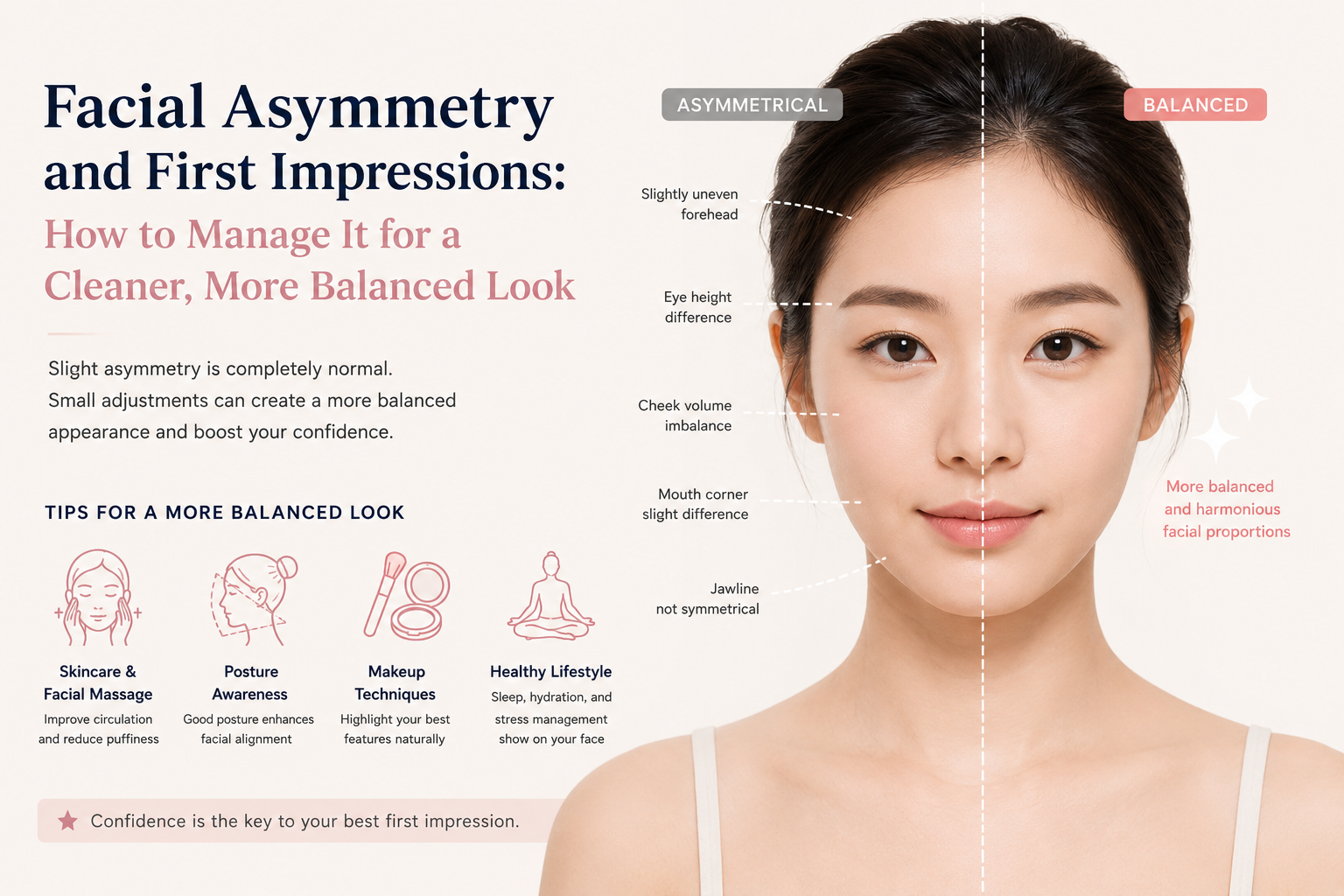
Facial asymmetry is incredibly common. In fact, perfectly symmetrical faces are rare. One eyebrow may sit higher. One side of the mouth may move more when smiling. One eyelid may be slightly heavier. The nose may tilt a little. The jaw may look stronger on one side. Even the way we chew, sleep, smile, talk, and hold our posture can make one side of the face look different from the other.
Most of the time, facial asymmetry is normal and not something that needs “fixing.”
But if you want a cleaner, more balanced impression, there are gentle ways to manage how asymmetry appears. Not by obsessing over every tiny difference, but by working with your face, your posture, your grooming, and your styling choices.
Because a clean impression is not about looking perfectly symmetrical.
It is about looking fresh, intentional, and comfortable in your own face.
First, Your Face Looks Different to You Than It Does to Other People
This is the part people forget.
You are used to seeing yourself in the mirror. That mirrored version becomes your “normal” face. But photos often show you in reverse, and suddenly everything looks strange. Your part line seems wrong. Your smile looks tilted. Your features feel unfamiliar.
That does not mean you suddenly became asymmetrical.
It means you are seeing yourself from a version your brain is not used to.
Other people see your face in motion. They see you talking, laughing, reacting, blinking, turning your head, making expressions. They are not studying your left cheek versus your right cheek like a forensic analyst.
You notice your asymmetry because you live with your face up close.
Most people notice your expression, grooming, energy, and overall neatness much more.
This is comforting, but also slightly annoying because we still care. I know. Logic only helps so much when a photo catches your face at a weird angle.
What Causes Facial Asymmetry?
Some facial asymmetry is simply natural. Your bones, muscles, fat distribution, and facial features are not perfectly identical on both sides. That is normal.
But habits can make asymmetry look more noticeable.
Chewing mostly on one side may build or use muscles unevenly. Sleeping on the same side every night may create temporary puffiness or pressure-related differences. Poor posture can affect how your jaw, neck, and shoulders sit. Constantly resting your face in one hand may put pressure on one cheek or jaw. Dental issues, jaw tension, teeth grinding, or bite imbalance can also influence the look and feel of the face.
Even facial expressions matter. Some people naturally raise one eyebrow more. Some smile stronger on one side. Some squint one eye more in bright light.
Life leaves little patterns on the face.
Not always in a bad way. Sometimes it is just character.
But if the goal is a cleaner, more balanced look, noticing these patterns can help.
Start With Posture Before You Blame Your Face
This sounds unrelated, but posture can change how your face looks.
If your head tilts to one side, one shoulder sits higher, or your neck leans forward, your face may look more uneven in photos and in real life. A slightly tilted head can make one eye look lower, one jawline look sharper, or one cheek look fuller.
Many of us spend hours looking down at phones or leaning toward laptops. Over time, that forward-head posture can affect the way we carry our face and neck.
Try this simple check: stand in front of a mirror and relax. Notice whether your head naturally tilts. Are your shoulders level? Is your chin pushing forward? Is your jaw clenched?
Then gently lengthen your neck, relax your shoulders, and bring your head back into a more neutral position. Do not force it. Just align yourself.
You may be surprised how much cleaner your face looks when your posture is not quietly betraying you.
A balanced face starts lower than we think.
Sometimes at the neck. Sometimes at the shoulders. Sometimes at the desk chair we should have replaced two years ago.
Jaw Tension Can Make Asymmetry More Noticeable
If you clench your jaw, grind your teeth, or chew mostly on one side, your jaw muscles may feel tighter or more developed on one side.
This can make the lower face look uneven. One side may seem fuller, stronger, or more angular. You may also feel tightness near the temples, jaw joint, or neck.
Jaw tension often happens without us noticing. Stress, concentration, poor sleep, caffeine, dental alignment, and even posture can contribute. Some people clench while working. Others grind at night. Some hold tension in their jaw the way others hold it in their shoulders.
If your jaw feels sore, clicks, locks, or causes pain, it is worth seeing a dentist or healthcare professional. That is not just a beauty concern.
For everyday tension, gentle awareness helps. Relax your jaw during the day. Your teeth should not be touching all the time. Let your tongue rest lightly, shoulders drop, and jaw soften.
It sounds small.
But a relaxed face usually looks cleaner and more balanced than a tense one.
Puffiness Can Create Temporary Asymmetry
Sometimes your face is not structurally uneven. It is just puffy.
And puffiness loves to be uneven.
Maybe you slept on one side. Maybe you had salty food. Maybe you cried. Maybe allergies are acting up. Maybe your pillow attacked one cheek all night. Morning face is not always a reliable measurement of reality.
One side may look fuller because fluid collected there while you slept. The eye on that side may look smaller. The cheek may look heavier. The jawline may look softer.
Before you panic, give your face time.
Wash your face with cool water. Drink water. Move around a little. Do a gentle facial massage if your skin tolerates it. Avoid aggressive rubbing, especially around the eyes. A cold spoon, chilled roller, or cool compress can help with temporary puffiness.
Puffy asymmetry often improves as the day goes on.
Morning mirrors are dramatic. Do not let them make major decisions for you.
Skincare Can Improve the Overall Impression
Skincare will not change your bone structure, but it can make your face look cleaner and more even.
Uneven skin tone, dryness, redness, acne marks, texture, and dullness can make asymmetry more noticeable. When one side of the face has more blemishes or irritation, the whole face can look less balanced.
A simple routine helps more than people think.
Cleanse gently. Moisturize. Use sunscreen. Treat acne or dark spots consistently. Avoid picking at one side of your face. Keep your phone clean if you hold it to one cheek. Change pillowcases regularly. Be careful if one side gets more sun exposure, like the window side when driving.
Sunscreen matters a lot. Uneven pigmentation can make the face look more visually imbalanced. If one cheek has more sun spots, redness, or post-acne marks, your features may seem more uneven even if the shape of your face is normal.
Healthy, calm skin creates a cleaner impression overall.
Not perfect skin. Just cared-for skin.
There is a difference.
Eyebrows Can Change Everything
Eyebrows have a huge effect on facial balance.
Even small differences in eyebrow height, thickness, arch, or tail length can make the eyes look uneven. Sometimes what people think is eye asymmetry is partly eyebrow asymmetry.
The solution is not to make both brows identical. That often looks unnatural and can make things worse. Brows are sisters, not photocopies. Very annoying sisters, sometimes.
Instead, aim for visual balance.
If one brow sits higher, avoid over-arching it. If one tail is shorter, lightly fill it in. If one brow is thicker, clean up only the extra stray hairs rather than thinning both too much. If one brow is sparse, use small hair-like strokes instead of drawing a heavy block.
A good brow shape can make the whole face look more polished.
If you are not confident shaping them yourself, getting them professionally shaped once can help. Then you can maintain the shape at home.
Eyebrows are tiny, but they are powerful.
Respect the tiny architecture.
Hair Parting Can Balance the Face
Your hairstyle can either highlight asymmetry or soften it.
A middle part can look clean and elegant, but it also emphasizes facial symmetry because it creates a straight central line. If your features are uneven, a strict middle part may make you notice it more.
A soft side part can balance the face by shifting attention. Face-framing layers can soften jaw or cheek differences. Curtain bangs can help if one side of the forehead or eyebrow area feels more noticeable. Loose waves can add movement and reduce the focus on exact facial structure.
That does not mean everyone with asymmetry needs a side part. Wear what you like.
But if you feel your face looks uneven in a certain hairstyle, experiment. Move your part slightly. Try volume on the flatter side. Avoid pulling hair back too tightly if it exposes every small difference and makes you feel uncomfortable.
A little softness around the face often creates a cleaner, more effortless impression.
Also, hair has a way of doing 40% of the work when it behaves.
Unfortunately, that is not every day.
Makeup Can Create Visual Balance
Makeup can help manage asymmetry, but the key is subtlety.
Heavy contouring or trying to redraw your face completely can look obvious in real life. For a clean impression, soft correction usually works better.
If one eye looks smaller, you can adjust eyeliner thickness slightly. Use a little more mascara on the smaller-looking side. Curl lashes evenly. Keep eyeshadow blended rather than harsh, because sharp lines can highlight unevenness.
If one brow is lower or thinner, fill it lightly to create balance.
If one cheek appears fuller, blush placement can help. Apply blush evenly but consider slightly lifting the placement on the side that needs more lift. Keep it soft and blended.
If your lips are uneven, use lip liner gently to balance the shape, but do not overdraw dramatically unless that is your style. A soft blurred lip can be more forgiving than a sharp, dark outline.
Makeup should help you feel more polished, not turn your face into a math project.
Nobody wants to spend 25 minutes measuring eyeliner wings with emotional distress.
Smile Asymmetry Is Normal
Most people do not smile perfectly evenly.
One side of the mouth may lift more. One cheek may crease deeper. One eye may close more when smiling. This is incredibly normal.
A smile is controlled by muscles, habits, expression, and personality. It is not supposed to look like a digital mirror effect.
In fact, slightly uneven smiles can be charming. They can make a face more memorable and expressive.
If you feel awkward in photos because of your smile, try practicing different relaxed smiles in a mirror or camera. Not in a fake influencer way. Just enough to see what feels natural.
Sometimes a gentle smile looks more balanced than a forced big smile. Sometimes turning your face slightly gives a better angle. Sometimes laughing naturally looks better than trying to hold a perfect expression.
The more you force symmetry, the more tense you may look.
And tension is usually less flattering than asymmetry.
Photo Angles Matter More Than You Think
Photos can exaggerate asymmetry.
Phone lenses distort faces, especially up close. If the camera is too low, one side of the jaw may look heavier. If it is too close, the nose or center of the face may look larger. If lighting hits one side strongly, shadows can make your face look uneven.
Before deciding your face is dramatically asymmetrical, change the photo conditions.
Hold the camera slightly farther away. Use natural light from the front rather than harsh side lighting. Keep the camera around eye level. Turn your face slightly instead of facing the camera dead-on if that feels better. Relax your jaw.
Also, remember that selfies are not neutral evidence. They are tiny distorted negotiations between your face, a lens, and bad lighting.
Do not let one weird selfie ruin your mood.
We have all been victimized by front cameras.
Avoid Constantly Resting Your Face on One Hand
This habit is small but common.
Resting your chin or cheek in one hand can create pressure on one side of the face. It may not change your bone structure overnight, obviously, but it can contribute to temporary puffiness, skin irritation, acne, and muscle habits.
If you always lean into the same hand while working, studying, or scrolling, that side may experience more pressure and friction.
It can also affect posture. Your head tilts, your jaw shifts, your shoulders round, and suddenly your whole upper body is participating in the habit.
Try to catch yourself when you do it. Sit back. Support your posture differently. Keep both feet on the floor. Adjust your screen height.
I know, very boring advice.
But clean impressions are often built from boring habits.
Chewing on One Side
Many people chew more on one side without realizing it.
Sometimes it is because of dental sensitivity, a missing tooth, jaw discomfort, or just habit. Over time, using one side more can make the muscles on that side feel stronger or more developed.
If you notice you always chew on the same side, try to become more balanced. But do not force chewing on a painful side. If one side hurts, clicks, or feels weak, see a dentist.
Balanced chewing is not about beauty perfection. It is about comfort and function too.
Your jaw is not just there to look nice in photos. It has a job.
A fairly important one, considering snacks exist.
Sleep Position and Facial Imbalance
Sleeping on one side can create temporary facial compression and puffiness. Over years, some people worry it may contribute to lines or asymmetry, though many factors are involved.
If you always wake up with one side puffier, your sleep position may be part of it.
Sleeping on your back may reduce pressure on the face, but not everyone can comfortably do that. Some people try and wake up sideways anyway, because the body has its own opinions.
A silk or satin pillowcase may reduce friction. Keeping your pillowcase clean can help with skin. If you sleep on one side, try switching sides occasionally, but do not destroy your sleep quality over it.
Bad sleep will show on your face faster than side-sleeping guilt.
Comfort matters too.
When Facial Asymmetry Needs Medical Attention
Most facial asymmetry is normal.
But sudden asymmetry is different.
If one side of your face suddenly droops, feels weak, becomes numb, or you have trouble speaking, smiling, moving your face, seeing, walking, or controlling your body, seek emergency medical help. Sudden facial changes can be a sign of a serious condition.
If asymmetry develops gradually with jaw pain, bite changes, swelling, dental problems, or difficulty chewing, see a dentist or healthcare professional.
If one eyelid suddenly droops, one side swells, or the face changes noticeably without an obvious reason, get it checked.
Beauty advice is for normal, mild asymmetry.
New or sudden changes belong in medical territory.
The Mental Side of Facial Asymmetry
It is easy to become too focused on facial asymmetry.
You start checking every mirror. Flipping selfies. Comparing both sides. Staring at photos too long. Asking whether one eye looks smaller. Zooming in. Drawing imaginary lines across your face.
This can become exhausting.
The truth is, your face is not meant to be examined as two separate halves. It is meant to be seen as a whole. In motion. With expression. With personality.
A clean impression comes from many things: good hygiene, calm skin, neat hair, fresh breath, posture, clothing, expression, and confidence. Facial symmetry is only one small part.
And honestly, too much perfection can look a little strange.
Natural faces have variation. That variation makes them human.
How to Create a Cleaner, More Balanced Impression
If you want to look more polished without obsessing, focus on the basics.
Keep your skin calm and hydrated.
Shape your brows gently.
Choose a hairstyle that frames your face well.
Use soft makeup correction if you like.
Improve posture.
Relax your jaw.
Avoid constantly leaning on one side.
Clean up grooming details like lips, hairline, and facial hair if you have it.
Sleep enough when possible.
Use lighting and angles wisely in photos.
None of these require changing your entire face. They simply help your features look more balanced and intentional.
Sometimes the best “beauty fix” is not fixing the feature at all.
It is improving everything around it.
The Bottom Line
Facial asymmetry is normal. Almost everyone has it. One eye may be slightly different, one brow may sit higher, one cheek may be fuller, or your smile may lift more on one side.
Most of the time, this is not a flaw. It is just your face being a real face.
But if you want a cleaner, more balanced impression, small habits can help. Pay attention to posture, jaw tension, sleep position, skincare, brows, hairstyle, and makeup placement. Avoid habits that put repeated pressure on one side of the face. And remember that photos often exaggerate differences that people barely notice in real life.
You do not need perfect symmetry to look good.
You need care, balance, and a little softness toward yourself.
Because the goal is not to make your face look like it was copied and pasted from one side to the other.
The goal is to look like you — just a little more rested, polished, and at ease.

Hi, I’m the creator and editor behind ZestyHabit. I research everyday safety, first aid, and practical wellness topics using official guidance and reliable public sources, then turn that information into clear, realistic steps for daily life.
My goal is to help readers make safer, better-informed choices at home and beyond.


