
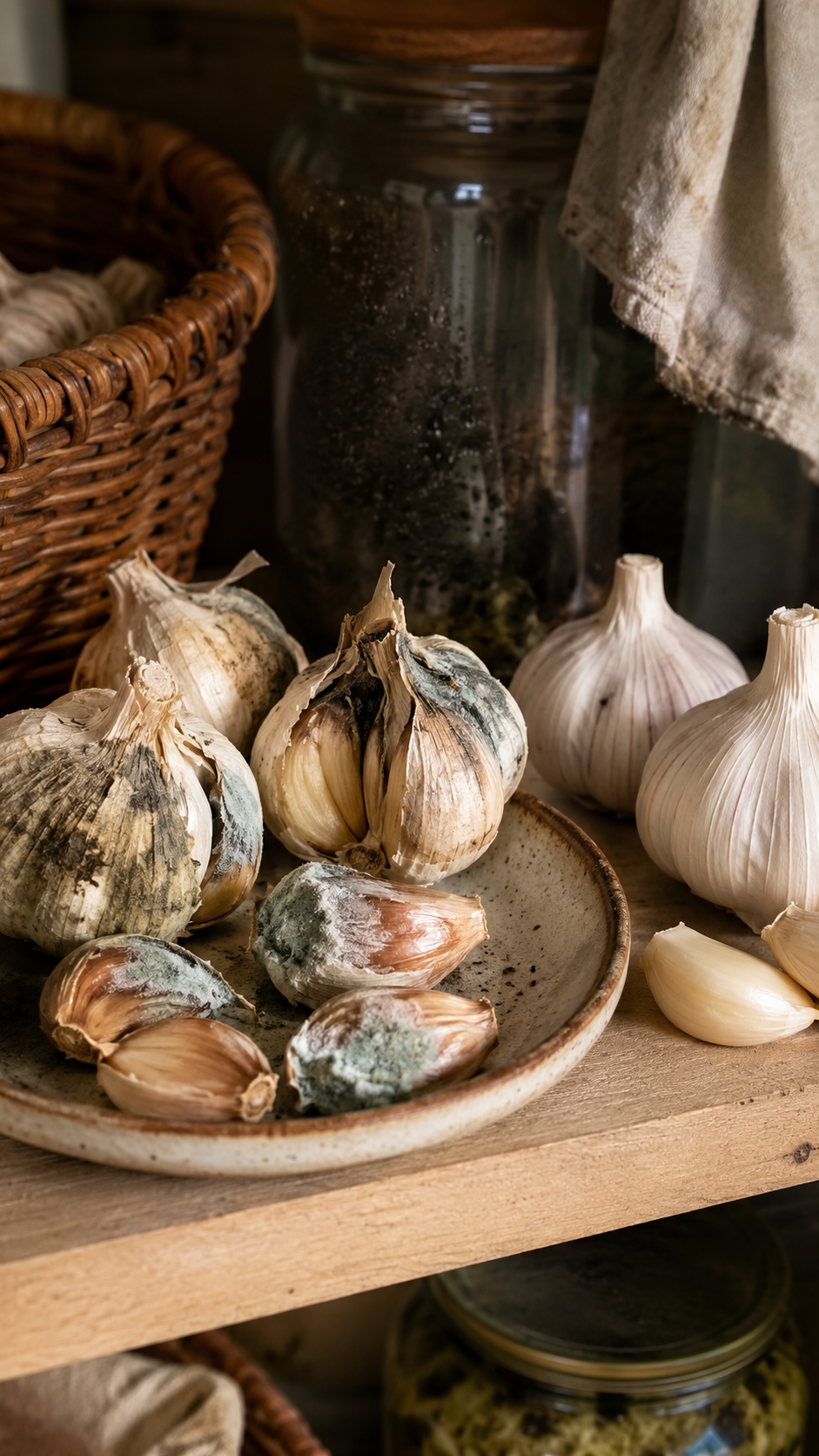

Garlic can grow mold when it is stored in damp, sealed, or poorly ventilated places. Learn why it happens, how to spot warning signs, and the best way to keep garlic fresh at home.
Why Garlic Storage Matters in Everyday Kitchens
Garlic is one of those ingredients that seems almost impossible to live without. It goes into pasta sauce, stir-fries, roasted vegetables, soups, marinades, salad dressings, garlic bread, and weeknight skillet meals. Many of us buy it without much thought, toss it into a drawer or pantry basket, and expect it to last for weeks.
Most of the time, garlic is pretty forgiving. Compared with delicate produce like berries or leafy greens, whole garlic bulbs can last a surprisingly long time when stored properly.
But garlic is not invincible.
When garlic is kept in the wrong conditions, it can become soft, sprout, shrivel, or develop mold. Sometimes the mold is obvious: fuzzy patches, dark spots, or a musty smell. Other times, it starts quietly between the cloves or under the papery skin where you may not notice it right away.
This matters because garlic is often used in small amounts. You might grab one clove, chop it quickly, and throw it into a pan without inspecting the whole bulb. If the garlic has been sitting in a damp bag, a sealed container, or a warm humid corner of the kitchen, it may not be as fresh as it looks from the outside.
The good news is that preventing moldy garlic is usually simple. Once you understand what mold needs to grow, garlic storage becomes much easier.
Why Garlic Can Grow Mold
Mold grows best when it has moisture, warmth, limited airflow, and time. Garlic can develop mold when it is stored in conditions that trap moisture or prevent it from breathing.
Whole garlic bulbs naturally have papery outer layers that help protect the cloves inside. Those layers are useful, but they are not a magic shield. If garlic is exposed to dampness or stored in a sealed environment, moisture can collect around the bulb. Over time, that moisture creates a better environment for mold.
Garlic is especially likely to have problems when it is:
- Stored in plastic without ventilation
- Kept in the refrigerator while still whole and unpeeled
- Stored near the sink or dishwasher
- Left in a damp pantry or humid kitchen
- Packed tightly with other produce
- Put away before it is fully dry
- Stored after cloves have been peeled or cut
Mold is not always a sign that you did something terribly wrong. Sometimes garlic is already old when purchased, or it may have been exposed to moisture during shipping or at the store. But home storage habits can make the problem better or worse.
The Big Storage Mistake: Too Much Moisture
The number one reason garlic gets moldy is moisture.
Garlic prefers dry air. When moisture gets trapped around the bulb, mold has a chance to grow. This is why a sealed plastic bag is often a bad choice for long-term garlic storage.
Many grocery stores sell garlic in mesh bags, and that is not an accident. Mesh allows airflow. Airflow helps keep the garlic dry. When garlic is moved into a plastic zip-top bag, closed container, or tightly covered bin, moisture may build up inside.
A Common Real-Life Example
You buy a bag of garlic, use a few bulbs, and put the rest into a plastic produce bag. Then you place it in a cabinet near the sink.
A week or two later, you reach for a bulb and notice a grayish fuzzy spot near the root end. Another clove feels soft. The garlic smells musty instead of sharp and fresh.
The problem was not just age. The plastic bag trapped moisture, and the cabinet location may have been slightly humid. Together, those conditions gave mold a better chance.
Why Airflow Is So Important
Garlic needs ventilation. It does not need to be exposed to direct air like a fan blowing on it, but it should not be sealed away in a damp, airless space.
Good airflow helps moisture evaporate. It also keeps the papery skins from becoming damp and sticky.
A simple basket, mesh bag, open paper bag, or ventilated garlic keeper can work well. The goal is to let the garlic breathe while keeping it away from excess light, heat, and moisture.
Best Airflow-Friendly Storage Options
Good garlic storage containers include:
- Mesh produce bags
- Wire baskets
- Open ceramic garlic keepers with holes
- Paper bags left slightly open
- Small wooden crates
- Breathable pantry baskets
Poor storage choices include:
- Sealed plastic bags
- Airtight food containers
- Covered glass jars for whole bulbs
- Damp produce drawers
- Closed bins with no airflow
Airtight containers may be useful for some dry goods, but whole garlic is not one of them.
Why the Refrigerator Is Usually Not Best for Whole Garlic
It may seem natural to put garlic in the refrigerator. After all, the fridge helps many foods last longer. But whole, unpeeled garlic usually does better in a cool, dry pantry than in the refrigerator.
Refrigerators are cold, but they can also be humid. Produce drawers especially can hold moisture. That damp environment may encourage garlic to sprout or become soft.
Cold storage can also confuse garlic’s natural dormancy. After garlic has been chilled and then brought back to room temperature, it may begin sprouting more quickly.
This does not mean every refrigerated garlic bulb will instantly go bad. But for everyday home storage, the fridge is usually not the best place for whole garlic bulbs.
When Refrigeration Does Make Sense
There is one important exception: peeled or chopped garlic.
Once garlic cloves are peeled, cut, chopped, or minced, they should be treated differently from whole bulbs. The protective papery skin is gone, and the garlic is more vulnerable to moisture, spoilage, and contamination.
Peeled garlic should be refrigerated in a covered container and used within a short time. Chopped garlic should also be refrigerated and used promptly.
The simple rule is:
Whole garlic bulbs: Store in a cool, dry, ventilated pantry.
Peeled or chopped garlic: Store in the refrigerator and use soon.
Heat Can Also Make Garlic Go Bad Faster
Moisture is the biggest issue, but heat matters too.
Garlic lasts longer in a cool place. A warm kitchen can speed up sprouting, drying, and spoilage. If garlic is stored near the stove, oven, dishwasher, or a sunny window, it may age faster than expected.
Warmth does not directly mean mold every time, but warm conditions combined with moisture can create a much bigger problem.
Places to Avoid
Try not to store garlic:
- Above the stove
- Next to the oven
- Near the dishwasher
- Under the sink
- On a sunny windowsill
- Beside a kettle or coffee maker
- In a warm cabinet near heating vents
A lower pantry shelf, a dry cabinet away from appliances, or a cool corner of the kitchen is usually better.
Why Storing Garlic Under the Sink Is Risky
Many people store extra kitchen items under the sink because it is convenient. But garlic does not belong there.
The area under the sink can be humid, especially if there are small leaks, condensation, or cleaning supplies stored nearby. Even if you do not see standing water, the air may still be damper than the rest of the kitchen.
Garlic stored under the sink may absorb moisture or smells. It may also be exposed to conditions that encourage mold.
If your kitchen is small and storage space is limited, choose a dry shelf or basket away from plumbing instead.
Warning Signs That Garlic Has Mold or Is Going Bad
Garlic does not always look bad from far away. It helps to inspect it before using it, especially if it has been stored for a while.
Look for Visible Mold
Mold may appear as fuzzy, powdery, or discolored patches. It can be white, gray, blue-green, black, or brown. You may see it near the root end, between cloves, or under loose skin.
If mold is visible on a garlic bulb, it is safest to discard the affected bulb.
Check for Soft Spots
Fresh garlic cloves should feel firm. If a clove feels soft, mushy, wet, or sunken, it may be spoiled.
A dry, slightly older clove may be a little lighter or more papery, but it should not feel slimy or damp.
Smell the Garlic
Fresh garlic has a strong, sharp, familiar smell. Moldy or spoiled garlic may smell musty, sour, stale, or unpleasant in a way that does not seem normal.
If the smell makes you hesitate, trust that reaction.
Look for Dark or Wet Areas
Black, brown, or wet-looking patches can be signs of decay. Sometimes the outer skin looks fine, but one clove inside is dark and soft.
When in doubt, break open the bulb and check the cloves before cooking.
Is Sprouted Garlic the Same as Moldy Garlic?
Sprouting and mold are not the same thing.
Garlic sprouts when the clove begins growing a green shoot. This often happens when garlic is older or has been exposed to certain storage conditions.
A small green sprout does not automatically mean the garlic is moldy. Many people simply remove the sprout because it can taste bitter, then use the rest of the clove if it is firm and smells normal.
However, sprouted garlic should still be inspected carefully. If the clove is soft, shriveled, moldy, or smells strange, it is better to discard it.
Simple Sprout Check
You can usually use sprouted garlic if:
- The clove is firm
- There is no mold
- There is no slime
- It smells like normal garlic
- The sprout is small and easy to remove
Discard it if:
- The clove is mushy
- The bulb has fuzzy patches
- It smells musty or sour
- The clove is wet or discolored
- The garlic feels rotten inside
Can You Cut Mold Off Garlic?
With some firm produce, people sometimes cut away a small damaged spot. But garlic is small, layered, and made of individual cloves packed closely together. Mold can hide between cloves or under the skin.
If you see mold on a garlic bulb, the safest everyday habit is to throw away that bulb rather than trying to rescue part of it.
This is especially true if the mold is fuzzy, widespread, or accompanied by softness or a bad smell.
Garlic is usually inexpensive compared with the risk of adding spoiled ingredients to a meal. When the quality is questionable, it is better to let it go.
Common Garlic Storage Mistakes
Most garlic storage problems come from habits that seem harmless. Here are the ones worth correcting.
Mistake 1: Keeping Garlic in a Sealed Plastic Bag
Plastic traps moisture. If garlic cannot breathe, it is more likely to become damp and moldy.
Move garlic to a mesh bag, basket, or ventilated container instead.
Mistake 2: Storing Garlic in the Refrigerator
Whole garlic bulbs usually do not need refrigeration. The fridge can encourage moisture problems and sprouting.
Keep whole bulbs in a cool, dry pantry or cabinet.
Mistake 3: Putting Garlic Near the Sink
The sink area is often damp. Splashes, steam, and humidity can shorten garlic’s shelf life.
Choose a drier spot.
Mistake 4: Storing Garlic With Damp Produce
Garlic should not be packed tightly with wet vegetables or fruits. Moisture from other produce can affect it.
Let garlic have its own dry, ventilated space.
Mistake 5: Buying Too Much at Once
Bulk garlic may seem like a bargain, but not if half of it turns moldy before you use it.
If you cook with garlic daily, buying in bulk may make sense. If you use only a few cloves a week, smaller amounts are often better.
The Best Way to Store Whole Garlic Bulbs
For most households, the best garlic storage method is simple.
Keep whole garlic bulbs in a cool, dry, dark, well-ventilated place.
That might be a pantry shelf, a cabinet away from heat, or a small basket on a shaded counter. The key is to avoid moisture and sealed containers.
Step-by-Step Garlic Storage Routine
When you bring garlic home:
- Check the bulbs for mold, soft spots, or dampness.
- Remove any garlic that looks questionable.
- Keep the bulbs whole until you are ready to use them.
- Place them in a breathable container.
- Store them away from sunlight, heat, and moisture.
- Check them every week or so.
- Use older bulbs first.
This routine takes less than a minute but can prevent a lot of waste.
What About Peeled Garlic?
Peeled garlic is convenient, but it does not last like whole garlic.
Once the papery skin is removed, the clove loses its natural protection. Peeled garlic should be kept in the refrigerator in a clean, covered container.
Use peeled garlic within a reasonable short period, and check it before using. If it becomes slimy, smells sour, or shows mold, discard it.
Do not leave peeled garlic sitting at room temperature for long periods.
What About Minced Garlic in Oil?
Garlic in oil needs extra care because oil creates a low-oxygen environment. Homemade garlic-in-oil mixtures should not be casually stored at room temperature.
For everyday home cooking, it is better to prepare garlic oil fresh and use it right away, or follow trusted food safety guidance for refrigerated storage.
Store-bought garlic-in-oil products are processed and labeled for storage according to the manufacturer’s instructions. Homemade versions are not the same.
This is not meant to scare anyone away from garlic oil. It is simply one of those kitchen habits where storage matters.
How Long Does Garlic Last?
Whole garlic bulbs can last several weeks to a few months when stored properly, depending on how fresh they were when purchased and how your kitchen is set up.
Individual unpeeled cloves do not last as long as intact bulbs because the bulb structure has been broken. Peeled cloves last an even shorter time and should be refrigerated.
Here is a practical way to think about it:
- Whole bulbs last longest
- Broken bulbs last less time
- Peeled cloves need refrigeration
- Chopped garlic should be used soon
The more processed the garlic is, the shorter its storage life becomes.
How to Choose Garlic That Will Store Better
Good storage starts at the store.
When shopping for garlic, choose bulbs that feel firm, dry, and heavy for their size. The papery skin should be mostly intact. Avoid bulbs that feel soft, damp, hollow, or unusually light.
Also avoid garlic with visible mold, dark powdery spots, or lots of green sprouts.
Quick Shopping Checklist
Look for garlic that is:
- Firm
- Dry
- Compact
- Free from mold
- Not sprouting heavily
- Not soft or wet
- Covered with intact papery skin
A good bulb at the store gives you a better chance of good storage at home.
How to Reduce Garlic Waste
Garlic waste usually happens when we buy more than we need or store it in a place that shortens its life.
A few small habits can help:
- Buy smaller amounts if you cook with garlic only occasionally
- Keep garlic visible enough that you remember to use it
- Store older bulbs toward the front
- Use slightly older but still firm garlic in cooked dishes
- Check garlic before grocery shopping so you do not overbuy
- Avoid mixing new garlic with questionable old garlic
If one bulb in a basket becomes moldy, remove it right away. Moldy or rotten produce can affect nearby items, especially in a tight container.
Simple Ways to Use Garlic Before It Goes Bad
If your garlic is still firm but getting older, plan a few meals that use it.
You can add garlic to:
- Pasta sauce
- Roasted vegetables
- Garlic butter
- Stir-fried greens
- Soups and stews
- Marinades
- Homemade salad dressing
- Mashed potatoes
- Sheet-pan chicken or vegetables
Cooking with garlic regularly is one of the easiest ways to prevent waste.
Just remember: “older but firm” is different from “moldy or spoiled.” Use garlic that still looks, feels, and smells normal.
A Practical Garlic Storage Setup for a Small Kitchen
You do not need a fancy garlic container. A simple setup works fine.
Place whole garlic bulbs in a small mesh bag, open basket, or ceramic garlic keeper with ventilation holes. Keep it in a dry cabinet or pantry shelf away from the stove and sink. Do not seal it in plastic. Do not refrigerate whole bulbs. Check it once a week and remove any bulb that looks soft, damp, or moldy.
That is enough for most homes.
If your kitchen gets very humid in summer, buy smaller amounts more often. It may be more practical than trying to store a large bag for a long time.
Final Thoughts: Keep Garlic Dry, Ventilated, and Out of Damp Places
Garlic gets moldy when it is stored in conditions that encourage moisture buildup. Sealed plastic bags, humid cabinets, refrigerator drawers, sink areas, and warm corners can all shorten its shelf life.
The best storage habit is simple: keep whole garlic bulbs in a cool, dry, dark, well-ventilated place.
Use a mesh bag, open basket, paper bag, or ventilated garlic keeper. Keep garlic away from heat, sunlight, moisture, and airtight containers. Check it regularly for mold, soft spots, strange smells, or wet areas.
Peeled and chopped garlic are different. Once garlic is peeled or cut, it belongs in the refrigerator and should be used soon.
With a little attention, garlic can stay fresh longer, taste better in your cooking, and help you avoid unnecessary food waste. It does not take a complicated system—just the right balance of dryness, airflow, and common sense.

Hi, I’m the creator and editor behind ZestyHabit. I research everyday safety, first aid, and practical wellness topics using official guidance and reliable public sources, then turn that information into clear, realistic steps for daily life.
My goal is to help readers make safer, better-informed choices at home and beyond.


