
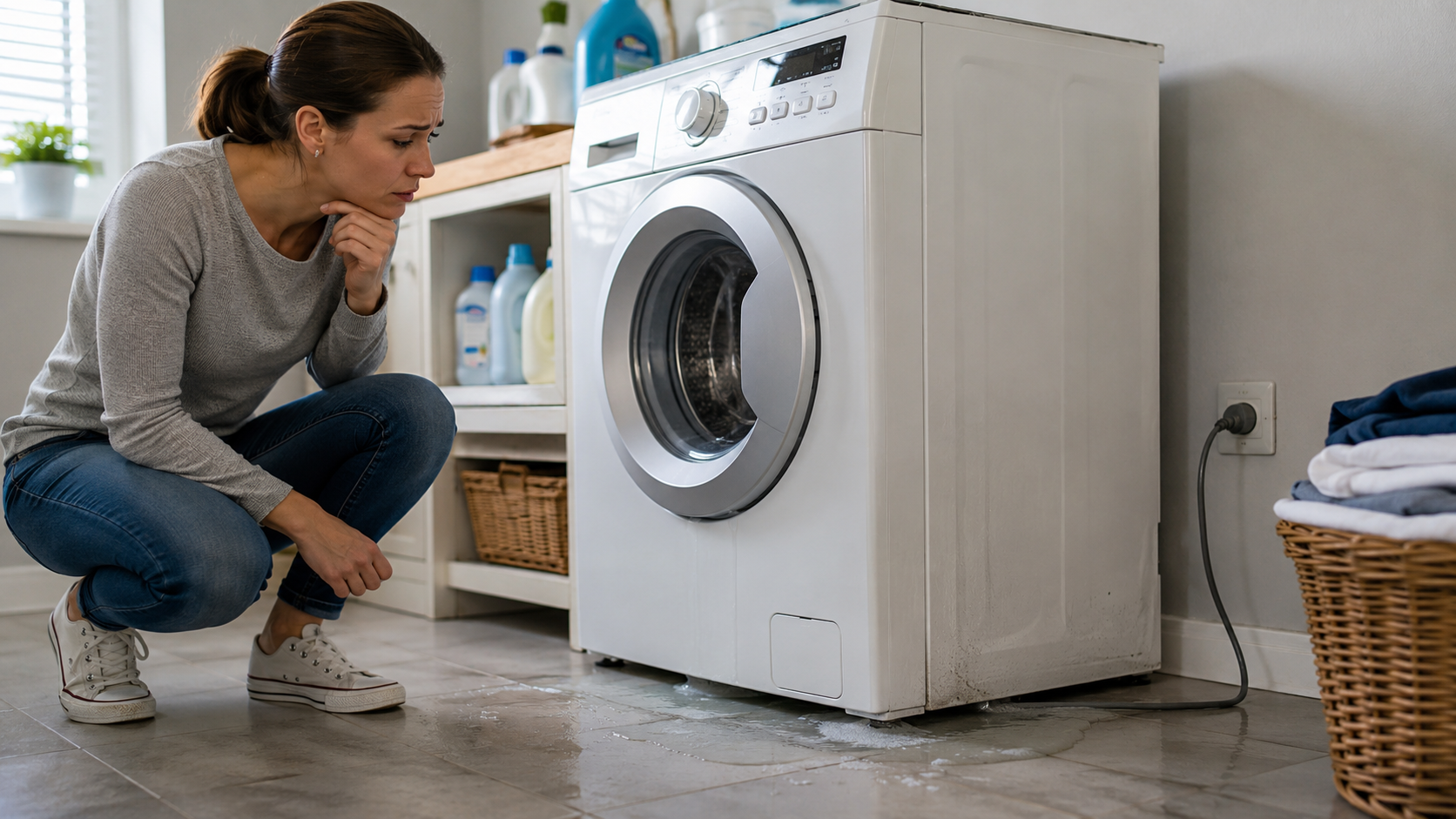

Moisture around a washing machine may seem like a normal laundry room issue, but water, damp floors, and electrical appliances do not mix well. Learn the everyday warning signs, common mistakes, and safer habits that can help reduce electrical risks at home.
The Laundry Room Problem People Often Ignore
A little moisture around a washing machine can feel completely normal.
Laundry rooms are naturally damp places. Clothes come out wet. Detergent spills. Hoses drip. Floors get splashed. Sometimes the washer door is left open and the air feels humid for hours. If the machine is in a basement, garage, utility closet, or small apartment laundry nook, that moisture can linger even longer.
Most of the time, people wipe up big puddles and move on. But smaller damp spots often get ignored.
That can be a problem because a washing machine is not just a water-using appliance. It is also an electrical appliance. It has a power cord, plug, internal wiring, motor, control board, sensors, and sometimes digital displays. When moisture collects around the machine, near the outlet, or under the appliance, it can create conditions where electrical problems are more likely.
This does not mean every damp laundry room is dangerous. A properly installed washer in good condition is designed to work safely in normal laundry conditions. But ongoing moisture, leaks, poor ventilation, damaged cords, loose outlets, or standing water can increase risk.
The goal is not to be scared of your washing machine. It is to understand why moisture matters and how to keep your laundry area safer with simple habits.
Why Moisture and Electricity Are a Bad Combination
Water Can Help Electricity Travel Where It Shouldn’t
Electricity is supposed to stay inside wires, circuits, outlets, and appliance components. Water can interfere with that by creating unwanted paths for electrical current.
Pure water is not a perfect conductor, but household water is rarely pure. Laundry room moisture can contain detergent, dust, lint, minerals, cleaning products, and dirt. Those substances can make water more conductive.
That means a wet floor, damp plug, or moist outlet area may increase the chance that electricity travels somewhere it should not.
In everyday terms, this is why people are always told not to touch electrical devices with wet hands, not to use appliances near standing water, and not to ignore water around outlets.
Moisture Can Damage Electrical Parts Over Time
A single splash may not cause an immediate accident. But repeated moisture exposure can slowly damage electrical parts.
Over time, dampness can contribute to:
- Corrosion on metal parts
- Rust around plugs or outlet plates
- Loose or weakened connections
- Damage to cord insulation
- Short circuits inside appliance components
- Malfunctioning buttons or digital panels
- Tripping breakers or GFCI outlets
The tricky part is that these problems may start quietly. You may not see anything dramatic at first. The washer still turns on. The lights still work. The cycle still runs.
But if moisture is always present, the risk can gradually increase.
Where Moisture Usually Builds Up Around a Washing Machine
Behind the Washer
The area behind a washing machine is one of the most commonly neglected spots in the home. It is hard to see, hard to clean, and often full of hoses, cords, dust, and lint.
A small leak behind the washer can go unnoticed for weeks.
The water supply hoses may drip slowly. The drain hose may not be secured well. The outlet may be close to the floor or hidden behind the machine. The power cord may rest near damp walls or flooring.
Because the washer is heavy, many people do not move it often. That means moisture can sit behind it long enough to cause mold, odor, rust, or electrical concerns.
Under the Washer
Water can also collect under the machine. This may happen if the washer is not level, if the door gasket leaks, if the detergent drawer overflows, or if a hose connection is loose.
A damp area under the machine can be especially easy to miss because the floor may look dry from the front.
If you notice a musty smell, soft flooring, staining, or repeated dampness near the washer’s feet, check underneath with a flashlight.
Around the Outlet
This is one of the most important areas to keep dry.
The outlet that powers your washing machine should not be exposed to splashes, condensation, or leaks. If an outlet cover is cracked, loose, discolored, or damp, it should not be ignored.
Moisture around an outlet can increase the risk of short circuits, shocks, tripped breakers, or damaged wiring.
If the outlet is in a laundry room, basement, garage, or other damp area, it is especially important that it is properly protected and in good condition.
Near the Detergent Drawer and Controls
Modern washing machines often have electronic controls. If detergent, water, or cleaning spray repeatedly gets into control buttons, display panels, or seams, it can cause problems.
Spraying cleaner directly onto the machine is a common mistake. It may look harmless, but liquid can seep into control areas.
A safer habit is to spray cleaner onto a cloth first, then wipe the surface.
Everyday Situations That Can Increase Risk
A Slow Hose Leak
A washing machine hose does not have to burst to create a safety issue. A slow drip can be enough to keep the area damp.
Supply hoses can loosen over time due to vibration. Rubber hoses can age, crack, bulge, or weaken. Connections can leak slightly after the washer has been moved.
A slow leak may show up as:
- A small wet spot behind the washer
- White mineral marks near a connection
- Rust on hose fittings
- A musty smell
- Damp baseboards
- Water stains on flooring
Because the leak is not dramatic, it is easy to delay fixing it. But a slow leak near an electrical appliance is worth taking seriously.
Poor Ventilation in a Small Laundry Closet
Some washers are tucked into closets with little airflow. If the door stays closed, humidity can build up after every load.
This is more noticeable with front-load washers, wet towels, basement laundry rooms, and homes in humid climates.
Poor ventilation can keep surfaces damp longer. Damp air can affect outlets, cords, walls, and appliance parts over time.
Leaving the laundry closet door open for a while after use can help. So can using a fan, dehumidifier, or better ventilation if the area stays humid.
Plugging the Washer Into the Wrong Setup
A washing machine should be plugged into a proper outlet, not a tangled chain of extension cords or power strips.
Because washers use motors and water, they need a safe electrical setup. Using extension cords, overloaded outlets, or damaged plugs can increase risk.
A washer’s power cord should be in good condition, plugged securely into the outlet, and kept away from standing water.
If your washer only reaches power through an extension cord, that is usually a sign the laundry area needs a safer electrical arrangement.
Touching the Washer With Wet Hands
This is a simple habit, but it matters.
If your hands are wet from moving laundry, cleaning spills, or handling soaked towels, dry them before touching plugs, outlets, or electrical controls.
The risk may be small in normal conditions, but wet hands lower your margin of safety. It is better to build the habit of drying your hands first.
Ignoring a Tripped GFCI Outlet
Many laundry areas use GFCI protection because water and electricity are close together. A GFCI outlet is designed to shut off power when it detects certain electrical faults.
If your washer outlet trips repeatedly, do not treat it as an annoying inconvenience and simply reset it over and over.
Repeated tripping can mean moisture, wiring issues, appliance problems, or an overloaded circuit. It is a warning sign that something needs attention.
Warning Signs Around the Washer You Should Not Ignore
You do not need to be an electrician to notice basic warning signs. Pay attention if you see, smell, or hear anything unusual.
Moisture Warning Signs
Look for:
- Puddles around or behind the washer
- Damp flooring that returns after wiping
- Water stains on walls or baseboards
- Musty odor near the appliance
- Rust on hose fittings
- Dripping from supply hoses
- Wetness around the drain hose
- Soft or swollen flooring
- Mold or mildew near the washer
Even if the washer seems to run fine, repeated dampness deserves attention.
Electrical Warning Signs
Be cautious if you notice:
- A burning smell
- Buzzing or crackling near the outlet
- Sparks when plugging or unplugging
- A plug that feels hot
- An outlet plate that is discolored
- A loose outlet
- Breakers that trip repeatedly
- GFCI outlets that keep shutting off
- Flickering lights when the washer starts
- The washer shocking or tingling when touched
- Error codes after moisture exposure
If you notice electrical warning signs, stop using the appliance until the issue is checked. It is not something to “wait and see” for weeks.
Can a Damp Floor Around the Washer Shock You?
A damp floor does not automatically mean you will get shocked. Many factors matter, including the condition of the appliance, outlet, wiring, grounding, and water exposure.
But a wet or damp floor around electrical equipment is still a concern because it can reduce safety margins.
The risk becomes more serious if:
- The outlet is wet
- The power cord is damaged
- The washer has an internal fault
- There is standing water
- The circuit lacks proper protection
- Someone touches a plug with wet hands
- The floor is flooded
- The appliance is old or poorly maintained
The safest habit is simple: keep the area dry and do not operate or touch electrical parts if water is present.
Why Front-Load Washers Need Extra Moisture Attention
Front-load washers are popular because they are efficient and gentle on clothes. But they can hold moisture around the door gasket, detergent drawer, and drum.
If the door stays closed after each wash, damp air can remain inside. That can lead to odor, mildew, and moisture around seals.
This is usually more of a cleanliness issue than an electrical issue, but moisture management still matters.
For front-load washers:
- Wipe the door gasket regularly
- Leave the door slightly open after washing
- Clean the detergent drawer
- Check for small trapped items in the seal
- Use the right amount of detergent
- Run cleaning cycles as recommended by the manufacturer
Keeping moisture under control helps the machine stay cleaner and may reduce long-term problems.
Safer Habits for the Laundry Area
Keep the Floor Dry
After laundry, do a quick floor check.
If you see water, wipe it up right away. Then look for the source. Did water drip from wet clothes? Did detergent spill? Is a hose leaking? Did the washer overflow slightly?
A one-time spill is different from repeated unexplained moisture. If the dampness keeps coming back, investigate.
Check Hoses Regularly
Washing machine hoses work hard. They handle water pressure, movement, vibration, and age.
Every so often, check the hoses for:
- Cracks
- Bulges
- Leaks
- Rusty fittings
- Loose connections
- Kinks
- Dampness at the wall valve
If a hose looks worn or suspicious, replacing it early is usually easier than dealing with water damage later.
Keep the Power Cord Visible and Dry
The washer’s power cord should not sit in a puddle or be pinched behind the machine.
Avoid placing the cord under the washer’s feet or bending it sharply. Do not let it rest against wet walls or flooring.
If you see cracks, exposed wire, burn marks, or melted areas, stop using the cord and have the appliance checked.
Avoid Extension Cords
A washing machine should generally be plugged directly into a suitable wall outlet. Extension cords and power strips are not ideal for large appliances, especially in damp areas.
If the outlet location is inconvenient, it is better to have a proper outlet installed than to rely on a temporary cord setup.
Improve Ventilation
If your laundry area feels damp long after a wash cycle, improve airflow.
Try:
- Leaving the laundry door open
- Using a small fan
- Running a bathroom-style exhaust fan if available
- Using a dehumidifier in a basement
- Keeping the washer door open after use
- Avoiding piles of wet laundry sitting for hours
Moisture that dries quickly is less likely to become a long-term problem.
Use the Right Amount of Detergent
Too much detergent can create excess suds, residue, and overflow issues. That can contribute to moisture around the machine.
High-efficiency washers especially need the correct detergent and amount. More soap does not mean cleaner clothes. It can actually create more buildup and mess.
Follow the washer and detergent instructions, especially for HE machines.
What to Do If You Find Water Around the Washer
If you notice water near your washing machine, take a calm step-by-step approach.
First, avoid touching the plug or outlet with wet hands. Dry your hands and stay aware of where the water is.
If the water is minor and not near the outlet, wipe it up and look for the source.
Check:
- Supply hose connections
- Drain hose placement
- Door gasket
- Detergent drawer
- Floor under the washer
- Nearby sink or utility area
- Water valves behind the washer
If water is close to the outlet, cord, or plug, do not ignore it. Stop using the washer until the area is dry and the cause is found.
If there is standing water, electrical smell, sparks, repeated breaker trips, or any sign that electricity and water may be interacting, treat it as a serious issue and get professional help.
What Renters Can Do
Many renters do not control the electrical setup or plumbing layout, but there are still practical steps they can take.
You can:
- Report leaks quickly
- Take photos of recurring moisture
- Avoid using extension cords
- Keep the laundry area ventilated
- Wipe up spills right away
- Keep the outlet area dry
- Ask maintenance to inspect loose outlets or tripping breakers
- Avoid overloading the washer
- Check hoses if they are accessible
If the laundry area is shared, such as in an apartment building, report damp outlets, standing water, burning smells, or damaged cords immediately.
Shared laundry rooms can be busy, and problems may go unnoticed unless someone speaks up.
A Simple Weekly Laundry Room Safety Check
You do not need a complicated inspection routine. A quick check once a week or every few laundry days can make a difference.
Look at the floor. Is it dry?
Check behind the washer with a flashlight if possible. Any puddles, rust, or dripping?
Look at the hoses. Any bulges, cracks, or damp connections?
Check the outlet area. Is it dry, secure, and free from discoloration?
Smell the area. Any burning, musty, or unusual odor?
Listen while the washer runs. Any buzzing, crackling, or unusual electrical sound?
Touch only safe exterior surfaces. Is anything unusually hot?
This small habit can help you catch problems early, before they become expensive or unsafe.
What Not to Do Around a Damp Washer
Some “quick fixes” can make the situation worse.
Avoid these mistakes:
- Do not ignore recurring puddles
- Do not keep resetting a tripped GFCI without finding the cause
- Do not use a damaged power cord
- Do not run an extension cord through a wet area
- Do not spray cleaner directly into controls
- Do not push the washer tightly against hoses and cords
- Do not block airflow in a damp laundry closet
- Do not assume a small leak is harmless because the washer still works
A washing machine may continue operating even when something around it is not right.
The Main Idea: Moisture Is Manageable, But It Shouldn’t Be Ignored
Laundry rooms will never be perfectly dry all the time. That is normal.
But standing water, repeated dampness, wet outlets, damaged cords, musty hidden areas, and tripping breakers are not things to brush off.
Moisture around a washing machine can contribute to electrical accidents when it reaches outlets, cords, wiring, or damaged appliance parts. It can also slowly create corrosion and connection problems over time.
The safest approach is simple: keep water where it belongs, keep electrical parts dry, and pay attention to small warning signs.
Final Thoughts
Moisture around a washing machine may seem like just another household nuisance, but it deserves a little respect. A washer combines water, vibration, heat, electricity, and regular use. When everything is installed correctly and kept dry, it can operate safely for years. When leaks or dampness are ignored, the risk of electrical trouble can grow.
You do not need to obsess over every drop of water. Just build a few steady habits: wipe up moisture, check hoses, keep cords dry, avoid extension cords, improve airflow, and take warning signs seriously.
A dry, clean, well-ventilated laundry area is not just nicer to use. It is also a safer place for one of the hardest-working appliances in your home.

Hi, I’m the creator and editor behind ZestyHabit. I research everyday safety, first aid, and practical wellness topics using official guidance and reliable public sources, then turn that information into clear, realistic steps for daily life.
My goal is to help readers make safer, better-informed choices at home and beyond.


[…] washing machines are particularly vulnerable because their watertight doors rely on deep rubber gaskets. Water, […]