
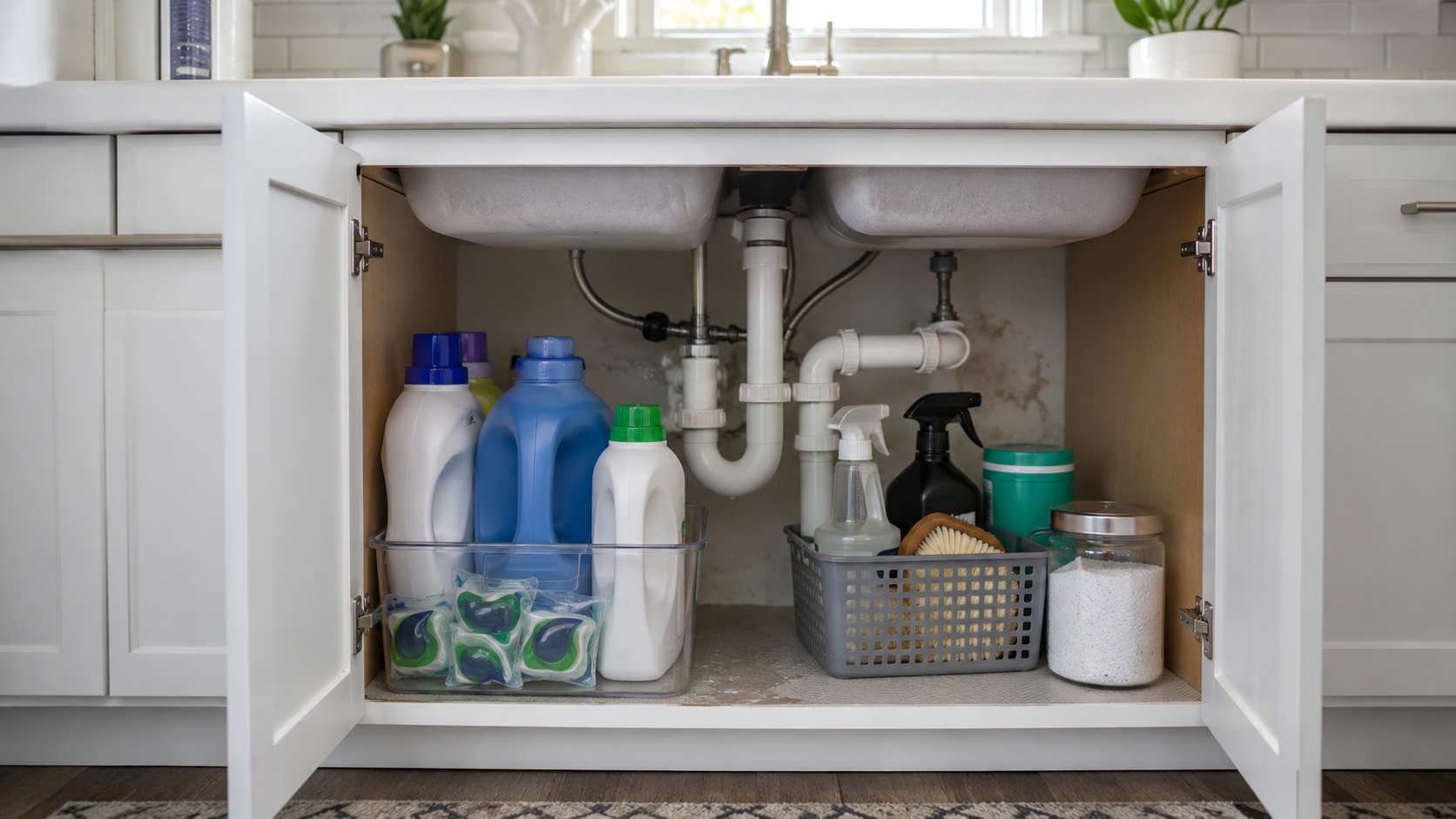

Storing laundry detergent under the sink may seem convenient, but leaks, moisture, child access, pets, and chemical mix-ups can create avoidable household risks. Learn simple storage habits that keep detergent safer and easier to manage.
The Convenient Storage Spot That Deserves a Second Look
Under the sink is one of the most common storage spots in the home.
It makes sense. The cabinet is already there. It is out of sight. It can hold cleaning sprays, sponges, trash bags, dish soap, dishwasher tablets, stain removers, and sometimes laundry detergent too. In small apartments or homes without a separate laundry room, the space under the kitchen or bathroom sink can feel like the only practical place to keep household products.
But laundry detergent is not just another bottle on a shelf.
Liquid detergent, powder detergent, pods, boosters, stain removers, and fabric softeners are concentrated products. They are useful when used correctly, but they need careful storage. Under-sink cabinets can be damp, crowded, dark, and easy for children or pets to reach. They may also contain plumbing pipes, small leaks, and other cleaning products that should not be stored carelessly together.
This does not mean you can never store detergent under the sink. In some homes, that may be the most realistic option. The key is to make the area safer, more organized, and less likely to create spills, mix-ups, or accidental access.
A safe storage habit does not need to be complicated. It starts with noticing what is actually happening inside that cabinet.
Why Under-Sink Storage Can Be Tricky
An under-sink cabinet may look like a simple storage space, but it has a few built-in challenges.
It is often damp
Sinks are connected to water lines, drains, garbage disposals, and pipes. Even when everything works normally, the area can be more humid than a regular cabinet. Small drips may go unnoticed for weeks. A loose pipe, old seal, or leaking bottle can make the bottom of the cabinet wet.
Moisture matters because it can damage packaging, clump powdered products, weaken cardboard boxes, loosen labels, and create musty smells.
It is usually crowded
Under-sink cabinets tend to become catch-all zones. People store cleaning sprays, sponges, trash bags, dishwasher products, extra soap, gloves, brushes, drain tools, and random refills.
When laundry detergent is squeezed into that crowded space, it becomes easier for bottles to tip, caps to loosen, labels to get hidden, and products to be grabbed by mistake.
It is low and accessible
The cabinet is at floor level. That makes it easy for adults to reach, but also easy for young children and pets to access if the door is not secured.
Brightly colored detergent pods, scented liquids, and soft packs can look interesting to children. Pets may chew packaging or lick spills. This is one of the biggest reasons detergent storage needs more attention than ordinary household items.
It is dark
A dark cabinet makes it harder to notice leaks, damaged packaging, or product spills. It also makes product mix-ups more likely, especially if containers are similar in shape or color.
When cleaning products are stored together in a dim cabinet, people may grab too quickly and read too late.
The Biggest Concern: Children and Laundry Products
Laundry detergent should always be stored with child safety in mind.
This is especially true for detergent pods or packets. They are small, colorful, squishy, and often shiny. To a young child, they may look more like candy or a toy than a cleaning product. Liquid detergent bottles and scent boosters can also be attractive because of their colors and smells.
Low cabinets are easy to explore
Young children open doors, pull items out, shake bottles, squeeze soft packages, and put things in their mouths. Even if a child usually listens, curiosity can take over quickly.
An under-sink cabinet without a child-resistant latch is not a safe place for detergent in homes with babies, toddlers, or visiting children.
“Closed bottle” does not mean “safe enough”
A cap may be closed, but that does not mean a child cannot open it, squeeze it, or spill it. Some detergent bottles have child-resistant features, but they are not a substitute for secure storage.
The safest habit is to keep detergent high, locked, or both whenever children are in the home.
Visiting children matter too
Even if you do not have children, think about visitors. Grandchildren, nieces, nephews, neighbors’ kids, or friends’ children may visit and explore spaces your household normally ignores.
Before hosting children, check low cabinets for laundry products, cleaning supplies, dishwasher pods, and other concentrated products.
Pets Can Get Into Detergent Too
Pets are another reason to rethink under-sink storage.
Dogs may chew bottles, soft pouches, or cardboard boxes. Cats may paw at cabinet doors or walk through spills. Rabbits or other small pets may chew packaging if they access the area.
Scented products can be tempting
Laundry products often smell strong. A curious pet may lick a spill or chew a cap because the scent gets their attention.
Even a small leak inside the cabinet can spread onto the floor, where a pet may step in it or investigate it.
Cabinet doors are not always pet-proof
Some pets can nudge open cabinet doors. Others may get access when a door is left slightly ajar. If your pet is curious or food-motivated, do not assume the cabinet is secure just because it closes.
Use a latch if needed, and keep products in a secondary bin that can contain leaks.
Leaks and Spills Are More Common Than People Think
Laundry detergent bottles are designed for pouring, but they are not always perfectly clean.
A little detergent may drip down the side after each use. Caps may collect residue. Measuring cups may be placed back on top while still wet. Soft refill bags may develop tiny leaks. Powder boxes may spill when tilted.
Under the sink, these small messes can build up.
Liquid detergent can spread
Liquid detergent is slippery and sticky. If a bottle leaks, the detergent may spread across the cabinet floor, soak into wood or particleboard, or coat other products.
A small leak can become a bigger cleanup job if it sits unnoticed.
Detergent residue can make bottles slippery
If detergent drips on the outside of the bottle, the bottle becomes harder to grip. That increases the chance of dropping it, especially when pulling it from a crowded cabinet.
Powder detergent can clump
Powder products can absorb moisture under the sink. This can cause clumping, hardening, or messy dust when opened.
Keeping powder detergent in a tightly closed container can help, but it should still be stored away from moisture when possible.
Do Not Mix Laundry Products With Other Cleaners
One of the risks of under-sink storage is that laundry products may sit beside dish soap, bleach, ammonia cleaners, drain cleaners, toilet cleaners, disinfecting sprays, vinegar, and other chemicals.
That crowded mix creates two problems: accidental mixing and accidental grabbing.
Spills can combine
If two products leak in the same cabinet, they may mix on the cabinet floor. Some cleaning products should never be mixed, especially bleach with ammonia, acids, or certain other cleaners.
Laundry detergent itself is not the same as bleach, but many laundry areas include bleach, stain removers, oxygen boosters, and disinfecting products. The safest habit is to separate categories and keep containers tightly closed.
Similar bottles can be confused
In a hurry, someone may grab a bottle without reading closely. This is more likely in a dark under-sink cabinet where bottles face different directions.
Keep laundry products together, labels facing forward, and away from food-related or dishwashing products.
Kitchen Sink vs. Bathroom Sink vs. Laundry Area
Where the sink is located matters.
Under the kitchen sink
The kitchen sink area often contains dish soap, dishwasher pods, trash bags, sponges, and food-related cleaning tools. Storing laundry detergent here can create confusion because laundry products do not belong near food prep items.
If you must store detergent under the kitchen sink, keep it in a separate lidded bin away from sponges, dish brushes, and anything that touches dishes or food surfaces.
Under the bathroom sink
Bathroom sink cabinets often contain personal care products, toilet cleaners, hair tools, towels, and medicines. Laundry detergent may not fit naturally here either.
The moisture level can also be high, especially if the bathroom has poor ventilation.
Near the laundry area
If possible, laundry products are best stored near the washer in a dry, secure, well-ventilated area. A high shelf, locked cabinet, or sturdy bin can work better than under the sink.
But in small homes, this may not be possible. If under-sink storage is your only option, organization and access control matter even more.
Common Mistakes People Make When Storing Detergent Under the Sink
Mistake 1: Leaving detergent pods in an easy-open container
Pods should stay in their original child-resistant packaging, tightly closed, and stored out of reach. Pouring them into a decorative jar may look nice, but it removes important safety information and may make them more tempting.
Mistake 2: Storing detergent next to bleach or drain cleaner
Strong cleaners should be separated as much as possible. If one bottle leaks, you do not want products mixing in the cabinet.
Mistake 3: Ignoring small leaks
A sticky ring under a bottle is a warning sign. Wipe it up and check the cap, spout, or packaging.
Mistake 4: Keeping products in unlabeled containers
Never transfer detergent into an unlabeled bottle, food container, drink bottle, or jar. This can lead to dangerous confusion.
Always keep products in original packaging when possible.
Mistake 5: Overcrowding the cabinet
When the cabinet is too full, bottles tip over and products get lost. Crowded storage makes accidents more likely.
Mistake 6: Forgetting about plumbing leaks
A slow leak under the sink can damage detergent packaging and create a messy, damp environment. Check the cabinet floor regularly.
Warning Signs Your Storage Setup Needs a Change
Your detergent storage may need attention if you notice:
Sticky residue under bottles
A strong detergent smell inside the cabinet
Powder detergent clumping
Damp cabinet floors
Rusty cans or damaged packaging
Caps that are not closing well
Products stored sideways
Loose pods or packets
Children or pets opening the cabinet
Cleaning products crowded together
Labels hidden or unreadable
Sponges or dish tools touching detergent bottles
These signs do not mean you have done something wrong. They simply mean the setup needs a safety reset.
How to Store Laundry Detergent More Safely Under the Sink
If under-sink storage is the best option in your home, use a few practical safeguards.
Use a sturdy bin or tray
Place detergent bottles inside a plastic bin or tray. This helps contain leaks and keeps products grouped together.
Choose a bin that is easy to slide out so you can see everything at once. A shallow tray works well for bottles. A deeper bin may work better for pods or refills.
Keep labels visible
Turn bottles so labels face forward. This reduces the chance of grabbing the wrong product.
If you store several laundry items together, keep them in one clearly marked bin.
Store products upright
Liquid detergents, fabric softeners, stain removers, and bleach products should usually be stored upright with caps tightly closed. Sideways storage increases leak risk.
Keep pods sealed
Detergent pods should remain in their original container, closed tightly after every use. Do not leave the lid loose because “you’ll use it again soon.”
Add a child-resistant latch
If children live in or visit the home, secure the cabinet. A latch is a simple extra barrier.
For higher-risk products like pods, consider storing them somewhere higher and locked instead of under the sink.
Separate incompatible products
Keep bleach, ammonia cleaners, drain cleaners, and strong acids apart. Do not let bottles lean against each other or sit in a shared puddle if something leaks.
Check the cabinet monthly
Look for moisture, leaks, residue, damaged caps, or soft packaging. A quick check can prevent a sticky mess later.
What About Detergent Pods?
Detergent pods need extra caution because of their appearance and concentration.
They are convenient, but they should be treated as concentrated cleaning products, not casual household items. Keep them away from children and pets, dry, sealed, and in their original package.
Do not store pods loose
Loose pods in a bowl, open basket, or decorative jar can be mistaken for candy or toys. They may also break if squeezed, exposed to moisture, or handled roughly.
Keep pods dry
Pods can become sticky or start to dissolve if exposed to moisture. An under-sink cabinet with leaks or humidity is not ideal.
If pods feel sticky, clumped, or damaged, handle them carefully and follow the product’s disposal guidance.
Close the package every time
The package should be closed immediately after use. Do not leave it open while sorting laundry or walking away.
What About Powder Detergent?
Powder detergent can be easier to store in some ways because it does not leak like liquid. But it still has storage issues.
Moisture can cause clumping. Spills can create dust. Boxes can soften if the cabinet is damp. Scoops can get buried or left out.
If you use powder detergent under the sink, keep it tightly closed and away from dripping pipes. A sealed container may help, but keep the original label or product information available.
Do not use food containers unless they are clearly labeled and kept away from food storage.
What About Liquid Detergent?
Liquid detergent is convenient but messy when it leaks.
After pouring, wipe the spout or cap if needed. Make sure the cap is secure. Store the bottle upright in a tray. Avoid placing heavy items on top of soft refill pouches.
If the bottle has a push-button dispenser, check it often. These can drip slowly if not closed properly.
Keep Detergent Away From Food and Food Tools
This matters most under the kitchen sink.
Do not store detergent beside reusable water bottles, lunch containers, dish towels, sponges, cutting board cleaners, or food storage bags. Even if the detergent bottle is closed, residue on the outside can transfer to nearby items.
Laundry products should have their own contained area, separate from anything used for food, dishes, or personal care.
How to Handle a Detergent Spill
If detergent spills under the sink, deal with it sooner rather than later.
Wear gloves if the product irritates your skin. Remove nearby items. Wipe up liquid detergent with paper towels or rags, then clean the area according to the product label and cabinet material. Let the cabinet dry fully before putting items back.
For powder spills, avoid creating a dust cloud. Sweep or scoop gently, then wipe residue with a damp cloth if appropriate.
If products have mixed or there is a strong chemical odor, avoid breathing close to the cabinet and ventilate the area. Do not add other cleaners to the spill. When unsure, follow the product label or contact the manufacturer for guidance.
Better Storage Alternatives
If under-sink storage feels risky or messy, consider another location.
High laundry shelf
A shelf above the washer or dryer can be practical if it is stable and out of reach of children. Make sure heavy bottles are not stored so high that they are hard to lift safely.
Locked utility cabinet
A locked cabinet is a good option for homes with children, pets, or frequent visitors.
Laundry cart with secure storage
A rolling cart can work if it stays in a low-traffic area and products are not accessible to children or pets.
Wall-mounted storage
Wall shelves or cabinets can save space. Just make sure they are installed securely and can hold the weight of detergent bottles.
Closet shelf
A dry closet may be better than a damp under-sink cabinet, as long as products stay away from linens, food, and children’s reach.
A Simple Under-Sink Detergent Safety Checklist
Use this quick checklist if you store laundry detergent under the sink:
Products are in original containers.
Labels are visible.
Caps are tightly closed.
Bottles are stored upright.
Pods are sealed in original packaging.
Detergent is kept in a tray or bin.
The cabinet has a child-resistant latch if needed.
Products are separated from bleach, ammonia, and drain cleaners.
No food tools or dish items touch detergent bottles.
The cabinet floor is dry.
There are no leaks from pipes or bottles.
Pets cannot access the cabinet.
This small routine can make a common storage spot much safer.
Final Thoughts: Convenience Should Not Replace Careful Storage
Storing laundry detergent under the sink can be convenient, especially in small homes. But it is not a storage choice to ignore. Under-sink cabinets can be damp, crowded, dark, and easy for children or pets to access.
The safest approach is to keep detergent sealed, upright, labeled, contained, and separated from other cleaners. Use a bin or tray to catch leaks. Check for moisture. Secure the cabinet if children or pets are around. Keep pods in their original packaging. Never transfer detergent into unlabeled or food-like containers.
Laundry detergent is useful because it is strong enough to clean clothes. That same strength means it deserves a safe storage spot.
A little organization under the sink can prevent spills, mix-ups, damaged packaging, and accidental access. It only takes a few minutes to reset the cabinet, but it can make the whole laundry routine cleaner, calmer, and safer.

Hi, I’m the creator and editor behind ZestyHabit. I research everyday safety, first aid, and practical wellness topics using official guidance and reliable public sources, then turn that information into clear, realistic steps for daily life.
My goal is to help readers make safer, better-informed choices at home and beyond.


