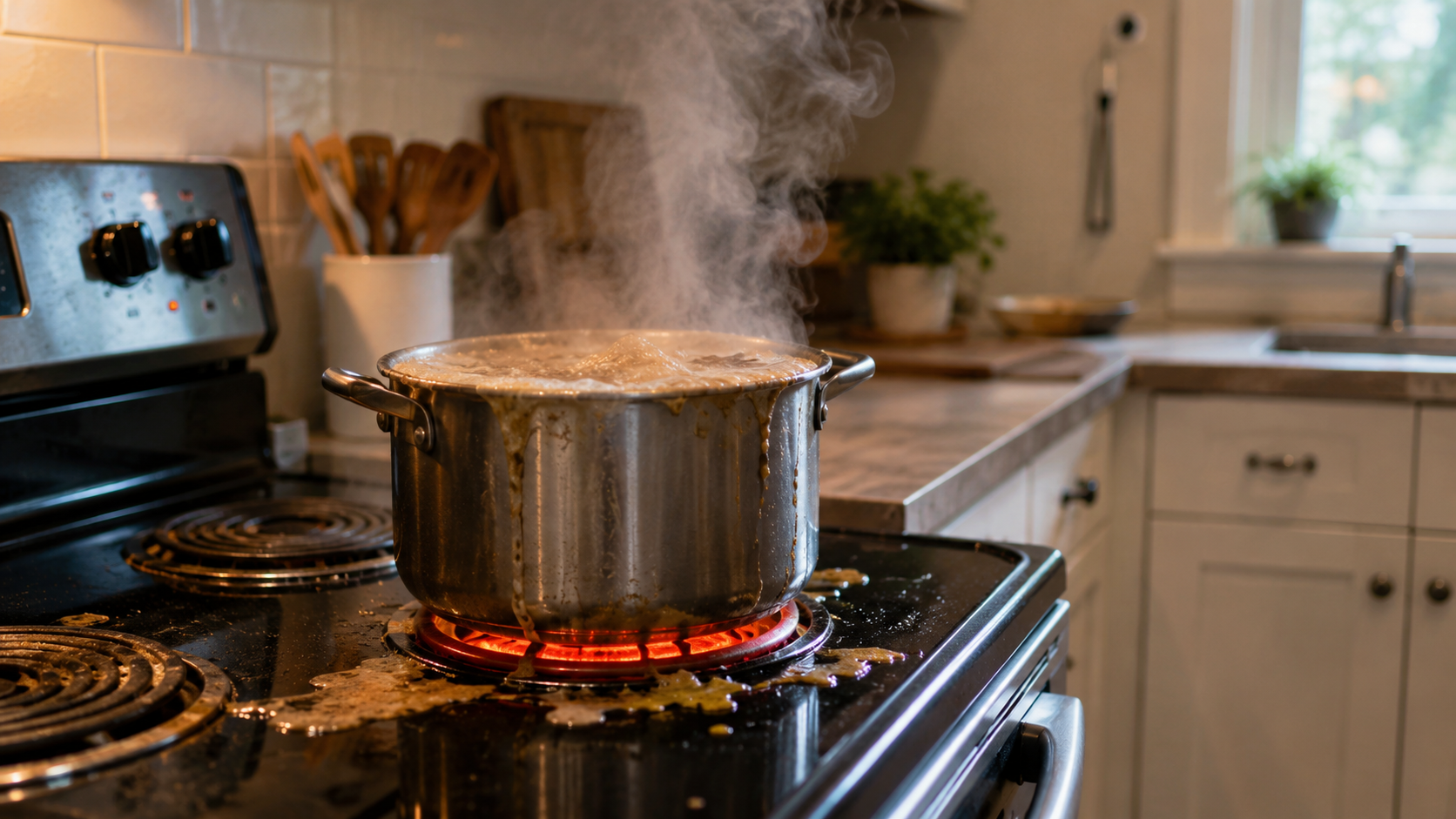
Forgetting a pot on the stove can lead to burnt food, smoke, damaged cookware, fire risks, and stressful kitchen cleanup. Learn why it happens, what warning signs to notice, and simple habits that make cooking safer.
The Kind of Kitchen Mistake That Happens to Real People
Most kitchen accidents do not begin with someone doing something dramatic. They often start with something very normal.
You put a pot of soup on the stove. You turn the heat down. You think, “I’ll just check one message.” Then the laundry buzzes. A child asks a question. The dog needs to go out. A work call comes in. Suddenly, the pot you meant to check “in a minute” has been sitting there much longer than you realized.
Forgetting a pot on the stove is one of those everyday mistakes that can happen to careful people. It does not mean you are irresponsible. It means the kitchen is a place where heat, timing, distractions, and routine all overlap.
The problem is that a pot left unattended can change quickly. Water can boil away. Food can burn. Smoke can spread through the house. A pan can overheat. If oil or grease is involved, the situation can become more serious.
This article is not meant to scare you out of cooking. It is meant to make one simple point: when a pot is on the stove, it needs your attention or a reliable reminder system. A few small habits can make the difference between an ordinary dinner and a stressful mess.
Why a Forgotten Pot Can Become a Problem
A pot on the stove may look harmless, especially if it is just water, soup, rice, or sauce. But once heat is involved, things keep changing even when you walk away.
Heat Keeps Working Even When You Stop Paying Attention
The stove does not know you got distracted. It keeps heating the pot at the setting you chose.
At first, that may not seem like a big deal. Water simmers. Soup bubbles. Pasta cooks. But over time, moisture evaporates. The food gets thicker. The bottom layer can start sticking. Eventually, that stuck food may scorch and burn.
With some foods, this can happen faster than expected. Milk, oatmeal, rice, beans, sauces, and sugary mixtures can all stick to the bottom of a pot if they are not stirred or watched carefully.
Once food burns onto the bottom, smoke and strong odors can follow. Even if there is no fire, the cleanup can be frustrating and the smell can linger.
Liquid Can Boil Away
One of the most common problems with a forgotten pot is that the liquid disappears.
This happens when someone is boiling water, making broth, simmering soup, or reheating leftovers. The pot may seem safe because it contains liquid. But if enough time passes, that liquid can evaporate.
Once the pot is dry, the temperature inside can climb quickly. Food residue can burn. The pot may discolor or warp. Handles can get hotter than usual. In some cases, nearby items may also be affected by the heat.
A dry pot on an active burner is not something to ignore.
Food Can Burn Before You Smell It
Many people assume they will smell something burning right away. Sometimes they do. But not always.
If you are in another room, wearing headphones, running a fan, using the bathroom, working outside, or taking a quick shower, you may not notice the early signs. By the time the smell reaches you, the bottom of the pot may already be badly scorched.
Some kitchen smells also blend together. If you are cooking onions, garlic, spices, or toasted ingredients, the early smell of burning may not stand out immediately.
That is why smell should not be your main reminder system.
Common Accidents That Can Happen When a Pot Is Forgotten
Not every forgotten pot leads to a major emergency. Sometimes it is just ruined oatmeal or a smoky kitchen. Still, it helps to understand the range of possible problems.
Burnt Food and Heavy Smoke
This is probably the most common outcome.
A pot of rice dries out. Pasta water boils over and leaves starchy residue. Soup thickens until the bottom burns. Tomato sauce sticks and scorches. Oatmeal turns into a stubborn layer on the pot.
Burnt food can create a lot of smoke, especially if it keeps heating. Smoke can set off alarms, irritate the eyes, and make the whole house smell unpleasant.
Even after you turn everything off, the smell may cling to curtains, clothing, cabinets, and upholstery. That is a lot of trouble for one forgotten pot.
Boil-Overs That Make the Stove Messy and Slippery
A forgotten pot does not always dry out. Sometimes it boils over first.
Pasta water, rice water, soup, beans, and milk can foam up and spill over the sides of the pot. When that liquid hits a hot burner, it may hiss, smoke, burn, or leave a sticky mess.
On a gas stove, a boil-over can sometimes interfere with the flame. On electric or glass cooktops, it can bake onto the surface and become difficult to clean.
Boiled-over liquid can also drip down the front of the stove or onto the floor, creating a slip hazard. If you rush back into the kitchen, you may not notice the wet spot until your foot slides.
Damaged Cookware
Cookware is made for heat, but it is not meant to be heated empty for long periods.
A pot left dry on a hot burner may discolor, warp, or develop damaged coatings. Nonstick cookware is especially important to use carefully because overheating can damage the surface and shorten the life of the pan.
Even stainless steel or cast iron can suffer if food burns into it badly enough. The pot may survive, but you may spend a long time scrubbing it.
Melted Handles, Utensils, or Nearby Items
Many pots have handles that are heat-resistant, but not all handles are designed for prolonged overheating. If a pot gets too hot, handles can become uncomfortable to touch or, depending on the material, may be damaged.
Nearby items can also be affected. A plastic spatula resting near the burner can melt. A paper towel too close to the stove can scorch. A cutting board, food packaging, oven mitt, or dish towel may be closer to the heat than you realized.
When a pot is forgotten, the pot is not the only thing to worry about. The surrounding area matters too.
Fire Risk
The risk is higher when oil, grease, dry food, or flammable items are involved.
A pot of plain water is different from a pan of oil. A simmering broth is different from frying food. But even ordinary food can burn badly if it dries out and stays on high heat.
The safest mindset is simple: any active burner deserves attention. If you need to leave the kitchen, turn the burner off or use a reliable reminder.
Everyday Situations Where People Forget Pots
Forgetting a pot is usually not about laziness. It is often about timing.
“I’ll Just Step Away for a Second”
This is the classic one.
You lower the heat, leave the kitchen, and assume you will come right back. But then something else grabs your attention. The problem is that “just a second” rarely stays a second.
A safer habit is to take something with you as a reminder. Carry a spoon, oven mitt, or timer if you must leave the kitchen briefly. Better yet, set a timer before you step away.
Cooking While Working From Home
Many people cook lunch while answering emails or joining calls. It feels efficient, but it is also easy to lose track of time.
A pot of noodles or soup may seem low-maintenance. Then a meeting runs longer than expected, or you get pulled into a task.
If you cook while working, use a loud timer. Do not rely on memory.
Late-Night Cooking
Cooking while tired is a common setup for mistakes. You may put on ramen, soup, tea, or leftovers and then sit down “for a minute.”
At night, even a short rest can turn into dozing off. If you are very tired, choose food that does not require active stovetop cooking, or stay in the kitchen until the burner is off.
Cooking With Kids or Pets Around
Children and pets create wonderful chaos, but chaos is not ideal around an active stove.
A child spills something. A pet knocks over a bowl. Someone needs help. You turn away from the pot, and the timing slips.
When the kitchen is busy, timers and simple meals help. It is also smart to use back burners when appropriate and keep handles turned inward, away from the edge.
Warning Signs a Pot Has Been Left Too Long
The earlier you notice a problem, the easier it is to correct.
The Smell Changes
A normal cooking smell may become sharp, smoky, bitter, or overly toasted. Sweet foods may smell like burnt sugar. Starchy foods may smell dry and scorched.
A simmer has a gentle bubbling sound. A boil-over may hiss. A dry pot may become strangely quiet after the liquid is gone.
That quiet can be a clue. If a pot was bubbling and now the kitchen is silent, do not assume everything is fine. Check it.
Steam Stops
Steam usually means moisture is still present. If you expected steam and it has stopped, the liquid may have boiled away.
This is especially important with soups, rice, beans, and sauces.
Smoke Appears
Smoke is a sign to take the situation seriously. Turn off the heat if you can do so safely, avoid moving a dangerously hot pot unnecessarily, and let things cool before cleaning.
For general home safety, make sure your smoke alarms are working and that you know your household’s plan for responding to alarms.
Common Mistakes That Make Forgotten Pots More Risky
Small habits can increase the chance of a problem.
Turning the Heat Too High “To Save Time”
High heat can be useful for boiling water, but it is not always better. Many foods need steady, controlled heat.
If you turn the burner high and then get distracted, things can go wrong faster. Once something reaches a boil, reduce the heat as needed and stay nearby.
Using the Wrong Size Pot
A pot that is too small is more likely to boil over. This is common with pasta, rice, soup, oatmeal, and milk-based foods.
Choose a pot with enough room for bubbling and stirring. Leaving extra space at the top can prevent a lot of mess.
Filling the Pot and Walking Away
Some people put food on the stove and leave before it even starts boiling. That is when boil-overs and timing mistakes happen.
Try to stay in the kitchen at least until you understand how the food is behaving. Once it is at a steady simmer, set a timer and check it regularly.
Leaving Clutter Around the Stove
A forgotten pot is worse when the stove area is crowded.
Paper towels, plastic bags, food packaging, dish towels, mail, wooden utensils, and oven mitts should not sit close to active burners. A clear stove area gives you more room to respond calmly if something overheats or boils over.
Relying on Memory Alone
Memory is not a safety system. Everyone gets distracted.
A timer is better. A smart speaker reminder, phone alarm, stove timer, or kitchen timer can all help. The best timer is the one you will actually hear.
Simple Prevention Tips That Actually Work
You do not need fancy gadgets to reduce the risk. Most of the best habits are simple.
Set a Timer Every Time
Even if the food only needs five minutes, set a timer.
This is especially useful for boiling eggs, simmering soup, cooking rice, heating milk, boiling pasta, making tea, or reheating leftovers.
For longer cooking, set repeat timers. For example, if soup needs to simmer for 45 minutes, set a timer every 10 or 15 minutes to remind you to check and stir.
Stay in the Kitchen for Quick Cooking
If something cooks in under 10 minutes, stay close. Pasta, oatmeal, eggs, sauces, and reheated leftovers can change quickly.
Use that time to tidy nearby counters, prepare plates, or wash a few dishes. Staying nearby does not mean standing frozen in front of the stove.
Keep a Clear Stove Zone
Before turning on the burner, move clutter away from the stove. This includes paper towels, packaging, utensils you are not using, and anything plastic or fabric.
A clean cooking area gives you fewer things to worry about.
Use the Right Burner and Pot
Match the pot size to the burner. A small pot on a large burner can expose handles or sides to too much heat. A large pot on a tiny burner may heat unevenly.
Use a pot that gives food enough space to bubble without spilling over.
Turn Handles Inward
Pot handles should not stick out over the edge of the stove where someone can bump them. Turn them inward, but not directly over another hot burner.
This helps prevent spills and accidental contact.
Make Leaving the Kitchen a Trigger
Create one personal rule: if you leave the kitchen, you set a timer or turn the burner off.
That simple rule removes a lot of guesswork. You do not have to decide whether you will remember. You already know what to do.
What About Slow Simmering?
Some recipes call for long simmering, like soup, stew, beans, broth, or sauce. That does not mean you have to stare at the pot the entire time, but it does mean you need a system.
Keep the heat low enough for a gentle simmer. Use a pot with enough liquid and enough space. Stir regularly. Set check-in timers. Keep the lid positioned as the recipe recommends, and make sure steam can escape when needed.
For long cooking, avoid starting the recipe when you know you are about to leave, take a nap, or get pulled into a task. Long simmering works best when someone is home, awake, and able to check the kitchen.
What to Do After a Pot Burns
Once the burner is off and the pot has cooled, cleanup becomes the next challenge.
Do not rush to grab a hot pot with a thin towel or wet cloth. Use dry oven mitts if you need to move it safely, and give the cookware time to cool before washing.
For burnt-on food, soaking often helps. Warm water and dish soap can loosen residue. Baking soda may help with some stubborn spots, depending on the cookware. Be gentle with nonstick surfaces so you do not damage the coating.
If the pot is badly warped, the coating is peeling, or the handle is damaged, it may be time to replace it. Damaged cookware can be frustrating and may not perform safely or evenly.
A Practical Stove Safety Routine
Here is a simple routine you can build into everyday cooking:
Before cooking, clear the stove area. Choose the right pot. Place utensils, spoon rest, and oven mitts nearby. Set a timer as soon as the burner turns on.
While cooking, stay close for fast foods and check simmering foods regularly. Stir when needed. Keep handles turned inward. Toss used paper towels away from the stove.
After cooking, turn off the burner before serving. Move the pot to a safe surface if needed. Check that the stove is off before leaving the kitchen.
This sounds basic, but basic habits are what make kitchens safer.
Final Thoughts: A Pot on the Stove Needs a Plan
Forgetting a pot on the stove is easy to do, especially in a busy home. The good news is that preventing problems is usually simple.
Use timers. Stay nearby during quick cooking. Keep the stove area clear. Avoid cooking when you are too distracted or too tired to pay attention. Make it a habit to turn the burner off before stepping away.
A forgotten pot can lead to burnt food, smoke, damaged cookware, boil-overs, and avoidable stress. But with a few small changes, cooking can stay what it should be: practical, ordinary, and safe enough to enjoy.
The next time you place a pot on the stove, give it one extra thought. What is your reminder? Where is your timer? Is the area around the burner clear?
Those little checks take only a moment, and they can save you from a much bigger mess later.
Hi, I’m the creator and editor behind ZestyHabit. I research everyday safety, first aid, and practical wellness topics using official guidance and reliable public sources, then turn that information into clear, realistic steps for daily life.
My goal is to help readers make safer, better-informed choices at home and beyond.