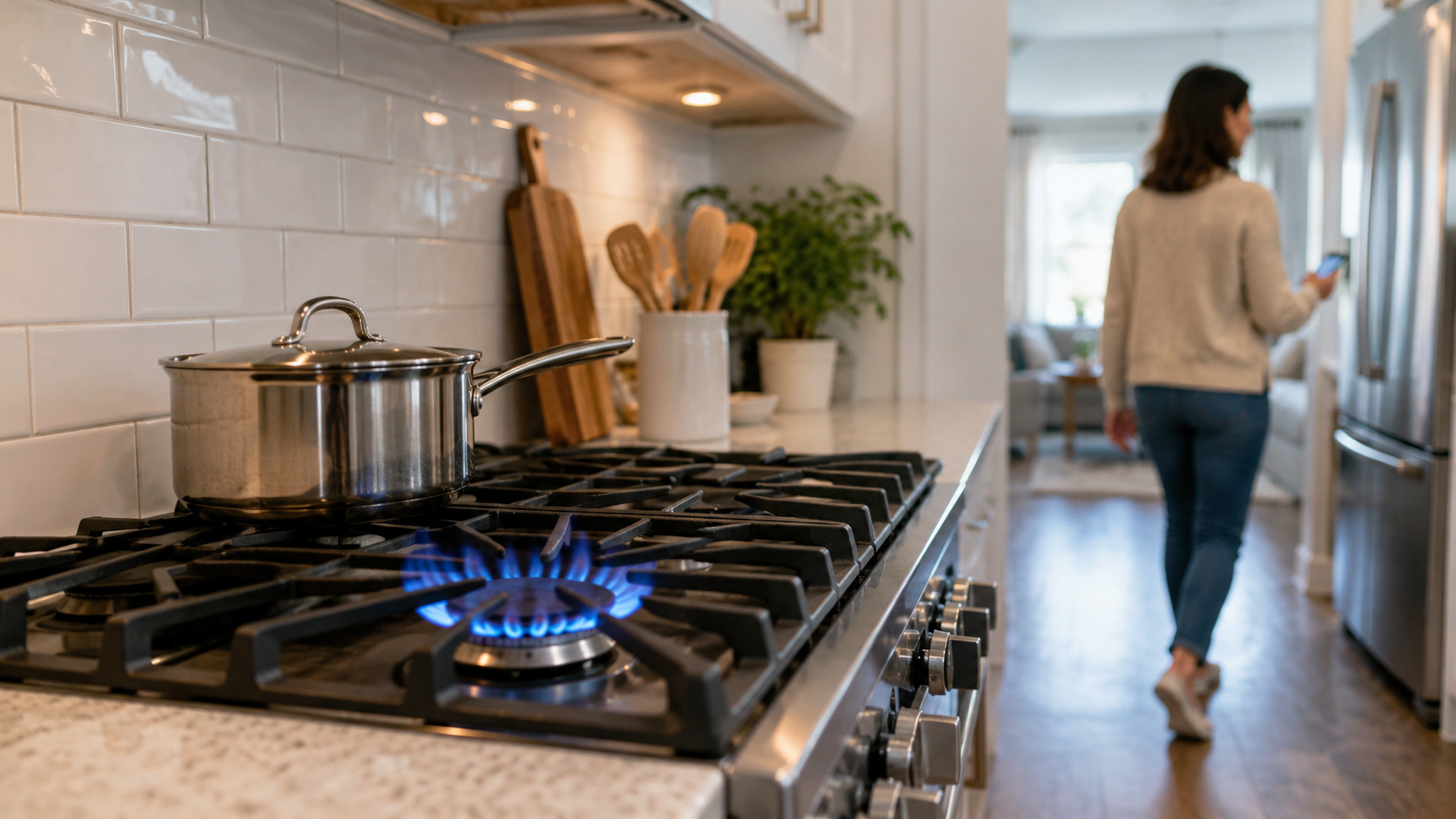
Why Leaving a Gas Stove On “Just for a Minute” Can Be More Dangerous Than You Think
Minjin Park
·
Leaving a gas stove unattended for even a short time can lead to burned food, smoke, flare-ups, gas concerns, and kitchen fires. Learn simple stove safety habits that help prevent everyday accidents.
Most people do not walk away from a gas stove because they are careless. They walk away because real life interrupts.
The doorbell rings. A child calls from another room. The dog starts barking. Your phone buzzes. You remember laundry in the dryer. You think, “I’ll only be gone for a second.”
That “second” can stretch.
A gas stove is one of those household tools that feels familiar because we use it so often. Boiling pasta, simmering soup, heating a pan, frying eggs, warming leftovers — these are ordinary moments. But an open flame is still an open flame, even when the task feels routine.
Leaving a gas stove on while stepping away can create several kinds of problems: food can boil over, grease can overheat, a pan can scorch, nearby items can catch fire, or the flame can go out while gas continues to flow. Most of the time, nothing dramatic happens. That is exactly why the habit can sneak into everyday life.
The danger is not that every unattended stove turns into an emergency. The danger is that when something does go wrong, it can happen faster than people expect.
Why Gas Stoves Need More Attention Than They Seem To
Gas stoves respond quickly. That is part of why many people like cooking with them. You turn the knob, the flame appears, and the heat is immediate. But that same quick heat can also turn a normal cooking situation into a risky one when no one is watching.
Unlike an oven with a closed door, a stovetop flame is exposed. It sits under cookware, close to food, oil, towels, packaging, paper, wooden utensils, loose sleeves, and sometimes curious pets or children.
Even a low flame can cause trouble if the conditions change.
A pot that was calm five minutes ago can suddenly boil over. A pan that looked dry can start smoking. Oil that seemed fine can get too hot. A handle can shift. A towel can slide closer to the burner. A breeze from a window or fan can affect the flame.
Cooking is full of small changes. When you are standing nearby, you notice them. When you leave the room, you do not.
“I’ll Be Right Back” Is the Problem
One of the most common mistakes with stove safety is underestimating how long a short interruption will actually take.
You may step away to grab one thing. Then you notice something else. Then someone asks a question. Then your phone distracts you. A minute becomes five.
This is especially common when cooking something that seems “safe” because it does not require constant stirring. Boiling water, simmering sauce, steaming vegetables, or heating soup can feel low-risk. But those are exactly the moments when people are most tempted to leave the kitchen.
The stove does not know you meant to return quickly. It just keeps heating.
What Can Happen When a Gas Stove Is Left Unattended?
Food Can Boil Over and Affect the Flame
A pot of pasta, rice, oatmeal, soup, or milk can boil over quickly. When liquid spills onto the burner, it can create smoke, mess, and sometimes interfere with the flame.
On a gas stove, a boil-over can cause the flame to sputter or go out. Depending on the appliance and safety features, this may create a gas concern if the burner is still turned on. Some modern stoves have flame-failure safety devices, but not every stove does, and not every situation works perfectly.
Even when the flame stays lit, spilled food can burn onto the burner area. That can cause unpleasant smoke, strong odors, and a harder cleanup job.
Grease Can Overheat
Grease and oil deserve special attention. Frying, sautéing, or cooking fatty foods should never be treated as a “walk away” task.
Oil can heat quietly. It may not look dramatic at first. Then it can begin to shimmer, smoke, or smell sharp and bitter. If the heat continues unchecked, the risk increases.
A common mistake is putting oil in a pan, turning on the burner, and stepping away “while it heats.” Another is leaving bacon, ground meat, or fried foods unattended because they seem to be cooking slowly.
Grease problems can become serious quickly because oil holds heat well. It can also splatter or flare if conditions are right.
Nearby Items Can Catch or Scorch
The burner itself is not the only issue. Many kitchen fires start because something was too close to the stovetop.
These items may not look dangerously close when you first turn on the stove. But kitchens are busy spaces. A towel can get nudged. A wrapper can fall. A long utensil can rest across the edge of a hot pan.
With a gas flame, distance matters. Heat rises and moves around cookware. Something does not have to touch the flame directly to be damaged by heat.
Food Can Burn and Fill the House With Smoke
Not every stove accident becomes a fire. Sometimes the more common result is burned food and smoke.
That still matters.
Smoke can spread through the home, set off alarms, leave odors in fabric, irritate eyes and throats, and create stress for everyone in the house. Burned pots and pans can be damaged, and cleaning scorched food is rarely easy.
A simple example: you leave a pan of sauce simmering and take a phone call. The sauce thickens, sticks, and burns on the bottom. By the time you return, the kitchen smells smoky and the pan may be difficult to save.
It may not be a disaster, but it is still a preventable household problem.
Pets and Children Can Make the Situation Less Predictable
If children or pets are in the home, an unattended stove becomes more unpredictable.
A child may reach for a handle, climb, toss an object, or try to “help.” A cat may jump onto a counter. A dog may bump into someone or knock something near the stove. Even older children who understand basic kitchen rules may not fully judge the risk of a live burner.
This is one reason “I only left for a minute” can be risky. You are not just leaving the stove. You are leaving the stove in a living home where movement continues.
Common Situations That Lead People to Walk Away
Boiling Water
Boiling water feels harmless, but it can still boil over, evaporate, or leave an empty pot heating on the burner if forgotten long enough.
Pasta and potatoes are especially easy to underestimate because the water can foam up suddenly. Rice and oatmeal can do the same.
Simmering Soup or Sauce
A low simmer can feel safe, but thick foods can stick, scorch, or bubble over. Tomato sauce, chili, stew, curry, and cream-based soups can all burn if left too long without checking.
Low heat is not no heat.
Preheating a Pan
Many people turn on the burner to preheat a dry pan and then step away. This is a bad habit because an empty pan can become very hot. Nonstick pans, in particular, should not be overheated.
If you need to preheat a pan, stay close and give it your attention.
Heating Oil
This is one of the biggest everyday mistakes. Oil does not need much time to become too hot, especially in a thin pan over a strong gas flame.
If oil starts smoking, that is a warning sign that it has overheated. Turn the heat down or remove the pan from the burner carefully, depending on the situation.
Multitasking During Breakfast
Morning routines are full of distractions. Coffee brewing, kids getting ready, messages coming in, lunches being packed, and someone asking where their shoes are — it is easy to turn on a burner and forget it.
This is why breakfast foods like eggs, bacon, pancakes, and oatmeal often deserve more attention than people give them.
Warning Signs You Should Never Ignore
A stove problem usually gives small clues before it becomes worse. The key is noticing them early.
Smoke
Smoke means something is too hot, burning, or overheating. Do not ignore it because “it’s just a little smoke.” Turn your attention to the stove right away.
A Sharp or Burnt Smell
A burnt smell can come from food, oil, spills on the burner, or nearby materials heating up. If the smell changes suddenly, check the stove.
Popping, Sputtering, or Unusual Flame Behavior
A gas flame should usually look steady. If it sputters, goes out, flares oddly, or changes because food spilled over, treat that as a reason to stop and check what is happening.
A Pan That Looks Dry
If a pot or pan that once had liquid now looks dry, it can overheat quickly. This often happens with rice, sauces, or small amounts of water left simmering.
Handles Turned Outward
A handle sticking out over the edge of the stove or counter is easy to bump. Turn handles inward, but not over another active burner.
Simple Stove Safety Habits That Actually Help
Stay in the Kitchen When the Burner Is On
This is the simplest rule. If a gas burner is on, stay nearby.
You do not have to stare at the pot every second, but you should remain close enough to notice sounds, smells, steam, smoke, and changes in the flame.
For active cooking with oil, high heat, or frying, stay at the stove.
Turn It Off Before Leaving the Room
If you truly need to leave, turn the burner off first. It may feel annoying, but it is much easier to restart cooking than to deal with smoke, burned food, or a fire risk.
This habit is especially helpful when answering the door, helping a child, taking a phone call, or stepping outside.
A good rule: no flame without a person.
Use Timers, But Do Not Rely on Them Alone
Timers are useful, especially for simmering, boiling, or long cooking tasks. But a timer does not replace supervision.
Use timers as backup reminders, not permission to leave the stove unattended.
A timer can help if you are cooking rice, boiling eggs, or simmering soup. Set it for short check-in intervals, not just the final cooking time. For example, if soup needs 30 minutes, set a timer for 10 minutes so you remember to stir and check the heat.
Keep the Stove Area Clear
Before turning on the burner, take five seconds to clear the area.
Move towels, paper, packaging, utensils, and plastic away from the flame. Check the back burners too. People often focus on the burner they are using and forget what is sitting nearby.
A clear stove area makes cooking calmer and safer.
Match the Burner Size to the Pan
Using a large flame under a small pan can send heat up the sides and toward the handle. It can also make food cook unevenly or oil heat too quickly.
Choose a burner that fits the cookware. Adjust the flame so it stays under the pot or pan rather than climbing around it.
Turn Pot Handles Inward
Handles should not hang over the front edge of the stove. They can be bumped by adults, grabbed by children, or caught by clothing.
Turn handles to the side or back, but avoid placing them directly over another active burner.
Be Extra Careful With Loose Clothing
Long sleeves, robe ties, scarves, and loose tops can get too close to a gas flame. This is especially easy to overlook when cooking early in the morning or late at night.
Roll up loose sleeves and keep fabric away from the stovetop.
Avoid Cooking When You Are Too Tired or Distracted
Cooking while exhausted is a real risk. Late-night meals, early-morning routines, and “I’m just warming something quickly” moments can lead to forgetfulness.
If you are tired, choose a simpler option that does not require an open flame. A microwave, electric kettle, toaster oven, or ready-to-eat food may be safer depending on what you are making. Even then, use appliances according to their instructions.
What to Do Before You Step Away
Sometimes you really do need to leave the kitchen. Before you do, make it automatic:
Turn off the burner.
Move the pan off the heat if needed.
Check that the flame is fully out.
Keep children and pets away from the stovetop.
Come back and restart cooking when you can pay attention.
This may sound basic, but basic habits are what prevent most everyday kitchen problems.
Special Attention: Gas Smell and Burner Issues
A properly working gas stove should not leave you smelling gas during normal cooking. You may smell a brief odor when lighting the burner, but it should not continue.
If you ever notice a strong or lingering gas smell, do not ignore it. Turn off the burner if it is safe to do so, avoid creating sparks or flames, ventilate according to your household safety plan, and contact the appropriate utility or emergency service if you are concerned. Follow the safety guidance for your specific appliance and local gas provider.
For everyday prevention, keep burners clean, make sure knobs are turned fully off after cooking, and have stove issues checked if flames look unusual or burners do not light properly.
Most people cook hundreds or thousands of meals without a major issue. That can make the stove feel harmless. But the habits we repeat matter. Leaving the burner unattended once may not cause a problem. Doing it regularly increases the chances that one distracted moment lines up with a boil-over, overheated oil, a towel too close to the flame, or a pan left dry.
Good safety habits work best when they are simple enough to follow on an ordinary Tuesday night.
You do not need to become anxious every time you cook. You just need a few rules that become automatic.
A Practical Stove Safety Checklist
Before you turn on a gas burner, ask:
Is the stovetop clear of towels, paper, and plastic?
Is the right burner being used for the pan size?
Are handles turned inward?
Am I staying close enough to watch it?
Is anything likely to distract me?
Do I need a timer as a reminder?
Are kids and pets away from the cooking area?
Before you leave the kitchen, ask:
Is every burner turned off?
Is the flame fully out?
Is the pan still sitting on heat?
Are the knobs fully in the off position?
These checks take only a few seconds, but they can prevent a lot of trouble.
Common Mistakes Worth Breaking
“It’s Only on Low”
Low heat can still burn food, dry out a pan, or keep oil hot. Low heat buys time, but it does not remove the risk.
“I’m Just Boiling Water”
Water can boil over or evaporate. If food is in the pot, it can foam, spill, or scorch once the water level drops.
“The Timer Will Remind Me”
A timer helps, but it does not watch the flame, smell smoke, or notice a towel sliding too close to the burner.
“I’ve Done This Before”
That may be true. But safety habits are not only for the days when everything goes normally. They are for the one day when a distraction lasts longer than expected.
Better Habits for Busy Households
If your home is busy, build stove safety into your routine instead of relying on memory.
Keep a clear “no clutter” zone around the stove. Store dish towels away from burners. Use back burners when possible, especially with children nearby. Place a visual reminder near the stove if you often forget burners. Some people like a simple note that says, “Check the stove.”
If you often get pulled away while cooking, choose recipes that are easier to pause. For example, instead of heating oil and walking away, chop ingredients first, clear the area, then start the burner when you are ready to stay nearby.
Cooking goes more smoothly when the stove is not competing with five other tasks.
Final Thoughts: Stay Close, Keep It Clear, Turn It Off
Leaving a gas stove on while stepping away may seem like a small thing, especially when you plan to return quickly. But kitchens change fast. Water boils over, oil overheats, food burns, towels shift, and distractions last longer than expected.
The safest habit is also the simplest: when the flame is on, stay nearby. If you need to leave, turn it off first.
You do not need to cook with fear. Just cook with attention. Keep the stovetop clear, watch oil carefully, use timers as backup, turn handles inward, and make sure every burner is fully off when you are done.
Those small habits make everyday cooking safer, calmer, and a lot less stressful.
Hi, I’m the creator and editor behind ZestyHabit. I research everyday safety, first aid, and practical wellness topics using official guidance and reliable public sources, then turn that information into clear, realistic steps for daily life.
My goal is to help readers make safer, better-informed choices at home and beyond.