Can Scratched Cookware Cause Heavy Metal Poisoning?
Minjin Park
·
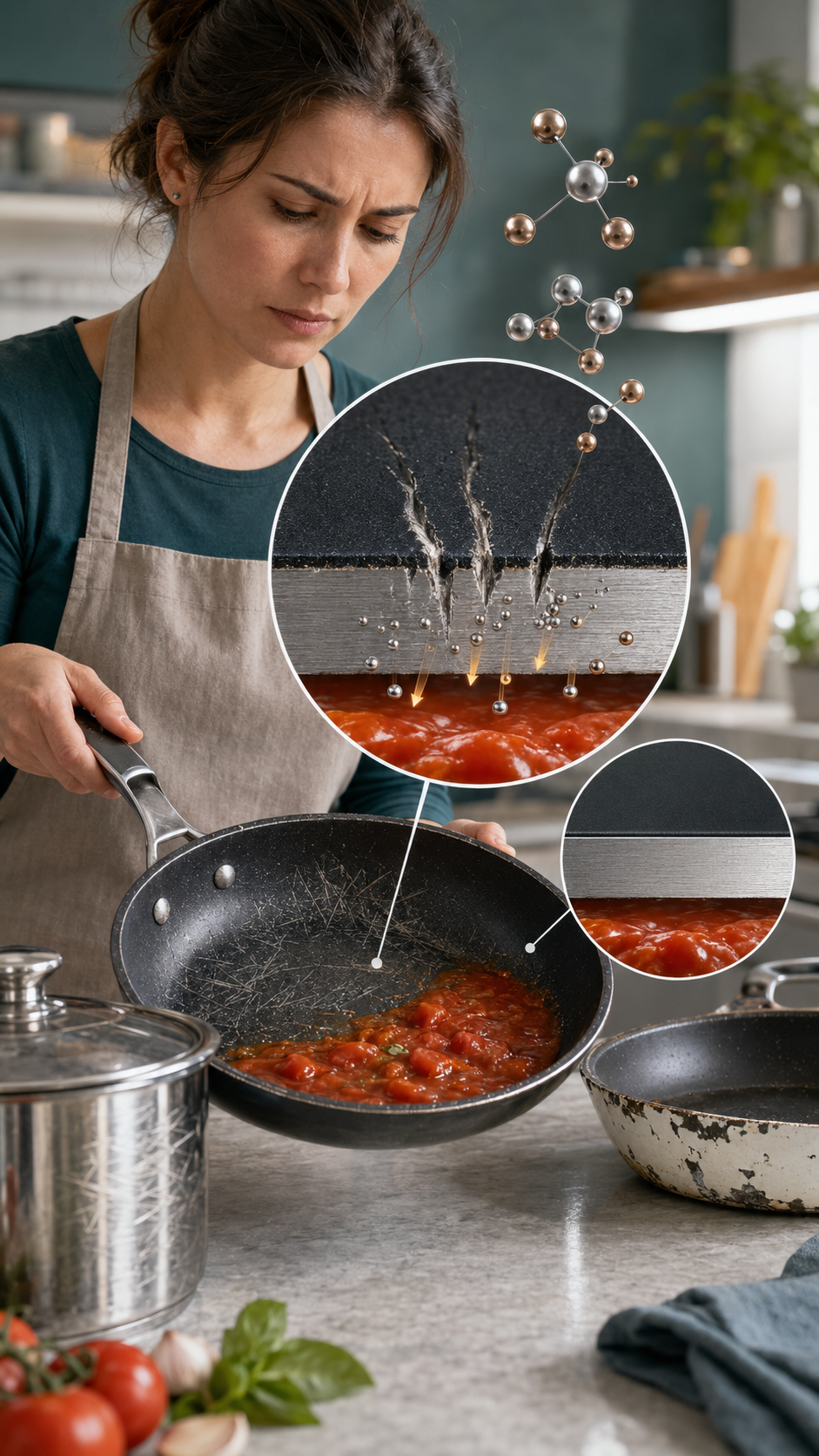
You notice a deep scratch across your favorite frying pan. The coating is peeling, a patch of metal is showing through, and suddenly dinner feels less appetizing. Could that damaged cookware be releasing lead or other toxic metals into your food?
The reassuring answer is that a single scratch on ordinary, regulated cookware is unlikely to cause sudden heavy metal poisoning. However, not all scratches—and not all cookware—present the same risk. Damage becomes more concerning when it removes a protective lining, exposes a reactive metal, or affects old, imported, handmade, or poorly manufactured cookware that may contain lead or cadmium.
The type of material matters far more than the appearance of the scratch alone. A scratched stainless steel skillet is not equivalent to a copper pot with its lining worn away, and a scratched PTFE nonstick pan presents different concerns from a chipped piece of traditional glazed pottery.
Here is how to evaluate damaged cookware without either panicking or ignoring a genuine hazard.
Cookware is not completely inert. Small amounts of its components can sometimes migrate into food during cooking. How much transfers depends on several factors:
The metals used to make the cookware
Whether the cooking surface is coated or uncoated
The depth and extent of the damage
The acidity and salt content of the food
Cooking temperature and duration
How long food is stored in the cookware
The product’s manufacturing quality
Scratches can increase exposure by damaging a protective surface. For example, anodized aluminum has a hardened exterior that reduces the movement of aluminum into food. If that layer becomes badly worn, the underlying aluminum may be more reactive. Similarly, copper pots are normally lined because direct contact between food and copper can result in excessive copper migration.
Acidic ingredients—including tomatoes, citrus juice, wine, vinegar, and fruit sauces—are especially likely to react with exposed metal. Salt can also accelerate corrosion or pitting. Leaving an acidic meal in a damaged pan overnight may therefore create more opportunity for metal migration than briefly cooking a dry, low-acid food.
Still, a visible scratch does not tell you which metals are present or how much is entering the food. The cookware’s material and origin must also be considered.
Scratched Nonstick Pans: Usually Not a Heavy Metal Emergency
Traditional nonstick cookware commonly uses a polytetrafluoroethylene, or PTFE, coating over an aluminum base. People sometimes assume that black flakes from a scratched nonstick pan are pieces of a toxic heavy metal. PTFE, however, is a polymer—not a metal.
The German Federal Institute for Risk Assessment reports that accidentally swallowing tiny particles released from a scratched PTFE coating is not expected to harm health. PTFE is considered inert, and small particles are generally not digested. The institute identifies overheating, particularly heating an empty pan, as a more significant concern than accidentally ingesting a tiny flake. Read the BfR’s PTFE cookware guidance.
This does not mean a badly peeling pan should remain in service. Once the coating has deteriorated, food may stick, the exposed aluminum may react more readily with acidic food, and the damage will probably continue. Replacement is a sensible precaution when:
The coating is peeling or flaking
Large areas of the base metal are exposed
The surface has become rough or blistered
The pan has warped or no longer heats evenly
Never preheat an empty nonstick pan for an extended time or use it over very high heat. Overheated PTFE can release fumes that cause temporary flu-like symptoms known as polymer fume fever. Birds are particularly sensitive to these fumes.
Damaged Aluminum and Anodized Aluminum Cookware
Aluminum is lightweight, affordable, and an excellent heat conductor. It is also reactive, especially when it contacts acidic or salty foods.
Health Canada notes that worn or pitted aluminum cookware may transfer aluminum—and, in some poorly manufactured products, lead—into food more easily. The agency recommends avoiding prolonged cooking or storage in aluminum cookware and not using scratched or worn anodized aluminum pans. See Health Canada’s cookware safety guide.
Aluminum itself is not always classified as a “heavy metal” in the scientific sense, and ordinary dietary exposure from regulated cookware is not the same as lead poisoning. Claims that everyday aluminum cookware directly causes Alzheimer’s disease have also not been established; current evidence remains conflicting.
The more serious issue is that some aluminum cookware, especially products made from uncontrolled scrap metal, has been found to contain lead and other unwanted metals. Surface damage, pitting, acidic food, and long storage can increase migration, but even an unscratched product may be unsafe if contaminated metal was used during manufacturing.
Stop using an aluminum pan if it has extensive pitting, deep grooves, chalky corrosion, a badly worn anodized layer, or an unknown manufacturing history combined with signs of deterioration.
Copper and Brass Cookware With Exposed Metal
Copper is an essential nutrient, but high short-term exposure can be poisonous. Excess copper ingestion may cause nausea, vomiting, abdominal pain, and diarrhea. Severe exposure can damage the liver and kidneys.
For this reason, most copper cookware intended for everyday food preparation is lined with stainless steel, tin, or another protective metal. When the lining becomes scratched through, food can contact the copper underneath.
A small cosmetic mark that does not expose copper is different from a worn area where the reddish copper surface is clearly visible. Do not cook or store food in a copper pan if the interior lining has worn through. Depending on the cookware, a specialist may be able to retin or professionally restore it.
Brass is an alloy primarily made from copper and zinc. Some brass products may also contain lead. Unlined brass is particularly unsuitable for prolonged contact with acidic foods unless the manufacturer specifically certifies it for that use.
Polishing an unsafe copper or brass surface does not remove metals throughout the alloy. It merely changes the appearance of the outer surface.
Chipped Ceramic, Pottery, and Enameled Cookware
Modern ceramic cookware from a reliable manufacturer is generally produced to meet food-contact safety standards. Greater caution is needed with antique, handmade, decorative, heavily worn, or imported pottery of uncertain origin.
Some traditional ceramic glazes and decorative pigments contain lead or cadmium. When properly formulated and fired, a glaze may keep these metals from migrating at unsafe levels. Poor manufacturing, however, can leave the glaze unstable. Cracks, chips, and extensive wear may further increase food’s contact with compromised surfaces.
The FDA identifies pottery that is antique, damaged, excessively worn, handmade, brightly decorated, purchased from street vendors, or obtained from an unknown manufacturer as more likely to present lead concerns. Items marked “Not for Food Use” should never be used for cooking, serving, or storing food. Washing or boiling lead-containing pottery does not make it safe. Review the FDA’s advice on lead-glazed pottery.
Retire a ceramic or enameled item from food use when the cooking surface has substantial chipping, crazing, exposed metal, or unknown glaze safety. Even when heavy metals are not present, chips can harbor residue, continue breaking apart, or leave sharp fragments in food.
“Ceramic nonstick” pans should not be confused with traditional glazed pottery. These pans usually have a manufactured coating over a metal base. Once that coating is significantly chipped or peeling, follow the manufacturer’s replacement guidance.
Scratched Stainless Steel and Cast Iron
Stainless steel is generally one of the more durable cookware choices. It contains iron, chromium, and often nickel. Chromium helps form the thin protective layer that makes stainless steel resistant to corrosion.
Fine utensil marks on stainless steel are common and do not automatically make a pan dangerous. A superficial scratch usually does not justify throwing away otherwise sound cookware. Deep pitting, severe corrosion, failed seams, or layers separating in clad cookware are more meaningful reasons to replace it.
Research has shown that stainless steel can release nickel and chromium into acidic foods, with the amount influenced by the steel grade, cooking duration, and how new the cookware is. One study using tomato sauce found that longer cooking times and new stainless steel produced greater migration, which decreased over repeated cooking cycles. Read the study in the Journal of Agricultural and Food Chemistry.
For most people, normal use of quality stainless steel cookware is not considered a heavy metal poisoning risk. Those with severe nickel sensitivity may need personalized medical advice or nickel-free cookware.
Cast iron can add iron to food, particularly when cooking acidic dishes. Iron is an essential nutrient, although excessive exposure can be dangerous in specific circumstances. Ordinary surface rust is iron oxide, not evidence of lead or cadmium contamination. A rusty cast-iron pan can often be cleaned and reseasoned if it remains structurally sound. People with iron-overload disorders should ask their physician whether frequent cast-iron cooking is appropriate.
A Real Cookware-Related Lead Exposure Investigation
The possibility of toxic metal exposure from cookware is not merely theoretical.
A 2022 investigation examined aluminum cookware used by Afghan refugee families in Washington State after elevated blood lead levels were identified among children in the community. Researchers tested 40 aluminum cookpots. Many contained more than 100 parts per million of lead, while one sample had a measured concentration above 66,000 parts per million. Under simulated cooking conditions, one pressure cooker released enough lead to exceed the childhood dietary limit by approximately 650 times. The researchers concluded that some of this cookware was likely associated with elevated blood lead levels in local children. Read the published investigation.
A later study tested additional aluminum, brass, and stainless steel products sold in the United States. One hindalium pan released enough lead under test conditions to exceed the childhood limit by 1,400 times, and one brass pot exceeded it by more than 1,200 times. Stainless steel products released much lower lead levels. See the follow-up cookware study.
These investigations led to regulatory action. In 2025, the FDA warned consumers not to use certain imported aluminum, brass, and Hindalium or Indalium cookware shown to leach significant amounts of lead. The agency advised consumers to discard affected products rather than donate or refurbish them. Check the FDA’s current cookware warning and product list.
Importantly, these cases involved contaminated cookware—not simply ordinary pans that happened to have a scratch.
Signs of Possible Metal Exposure
Lead exposure often causes no obvious immediate symptoms, particularly in children. When symptoms do occur, they may be vague and could include:
Abdominal pain or constipation
Nausea or vomiting
Fatigue and weakness
Headaches
Irritability or mood changes
Difficulty concentrating
Numbness or tingling
Developmental, learning, or behavioral problems in children
Higher exposures can cause confusion, seizures, severe weakness, or other neurological symptoms. Lead is especially dangerous during pregnancy and early childhood because it can affect the developing nervous system.
The CDC emphasizes that most exposed children do not have clear symptoms and that a blood lead test is the best way to assess exposure. See the CDC’s lead exposure guidance.
Do not wait for symptoms if a recalled or confirmed lead-leaching product has been used regularly. Contact a healthcare provider and explain the suspected source. They can determine whether blood testing is appropriate. Severe abdominal pain, repeated vomiting, confusion, seizures, breathing difficulty, or collapse requires urgent medical care.
What to Do With Suspicious Cookware
First, stop using the item until you can identify its material, manufacturer, and condition. Look underneath the pan and on the packaging for the brand, country of origin, alloy, coating type, and food-use certification.
Next:
Check current FDA alerts and manufacturer recalls.
Photograph the label and damaged cooking surface.
Contact the manufacturer if the material or safety status is unclear.
Do not use unidentified decorative pottery for food.
Replace cookware with exposed copper, extensively damaged anodized aluminum, or badly chipped unknown glaze.
Discard recalled lead-leaching cookware according to local waste rules.
Do not donate a product that may expose another household.
Ask a healthcare provider about testing if the cookware was used frequently, particularly for a child’s or pregnant person’s food.
The FDA notes that consumer lead-test swabs may help screen suspicious pottery. However, cookware safety ultimately depends on whether metals migrate into food under use conditions, so a home test should not be used to overrule an official warning or recall.
How to Prevent Future Damage
Use wooden, silicone, or other manufacturer-approved utensils on coated cookware. Avoid knives, forks, and metal spatulas unless the product is specifically designed for them.
Wash coated, anodized aluminum, copper, and glazed cookware with a soft sponge rather than steel wool or harsh abrasive cleaners. Do not stack pans directly on top of one another without a cloth or pan protector between them.
Avoid storing tomato sauce, citrus dishes, vinegar-based foods, or other acidic meals in reactive cookware. Transfer leftovers to a food-storage container after cooking. Use low or medium heat for nonstick pans, never leave an empty pan on a hot burner, and follow the manufacturer’s temperature limits.
A scratch is not automatically a poisoning event, but it can be a useful signal to inspect what the cookware is made from and whether its protective surface is still intact. Which type of cookware do you use most often, and have you ever wondered whether a scratched or chipped pan needed to be replaced? Share your experience in the comments so other readers can learn from it too.
Hi, I’m the creator and editor behind ZestyHabit. I research everyday safety, first aid, and practical wellness topics using official guidance and reliable public sources, then turn that information into clear, realistic steps for daily life.
My goal is to help readers make safer, better-informed choices at home and beyond.