
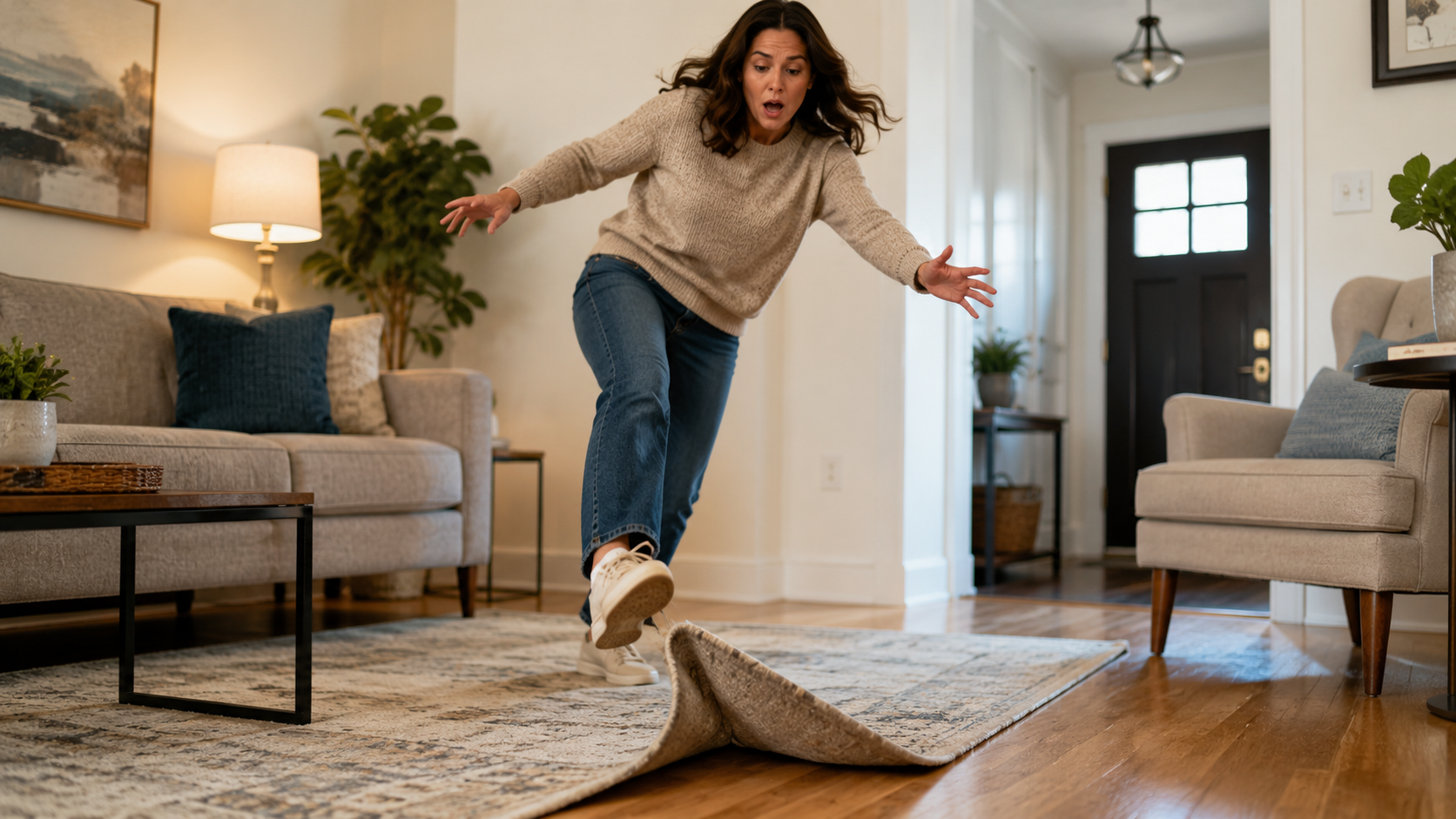

A lifted rug corner may seem like a small annoyance, but it can catch your foot, shift under your weight, and increase the risk of falls. Learn why rug corners curl, where the risk is highest, and how to make rugs safer in everyday spaces.
The Tiny Home Hazard People Step Over Until They Trip
A rug can make a room feel warmer, softer, and more finished. It adds color to a hallway, keeps bare feet off cold floors, and makes a living room feel less empty. Most of the time, we barely think about it.
Then one corner starts to lift.
At first, it is just annoying. You press it down with your foot. It curls back up later. You straighten it when guests come over. A vacuum catches the edge. The dog runs across it and flips it up again. Eventually, that raised corner becomes part of the room, something everyone learns to step around.
That is where the problem starts.
A lifted rug corner may look harmless, but it can easily catch a toe, slipper, walker, cane, pet paw, or chair leg. It can make someone stumble forward, twist an ankle, or lose balance while carrying groceries, laundry, coffee, or a child. The risk is even higher in hallways, bathrooms, kitchens, entryways, and low-light areas where people move quickly.
This does not mean rugs are unsafe. It simply means rugs need to lie flat, stay in place, and match the way your household actually moves.
Why a Raised Rug Corner Is Easy to Miss
One reason rug corners cause trips is that they blend into the room. Unlike a big spill or broken step, a curled corner does not always look urgent.
You may see it every day and think, “I’ll fix that later.” The brain gets used to it. People who live in the home start stepping over it automatically.
But visitors, kids, older adults, delivery helpers, babysitters, and guests do not have that habit. Even household members can forget when they are tired, distracted, or walking in the dark.
Your Foot Does Not Need Much to Catch
A rug corner does not have to be sticking up several inches to cause a problem. Even a small lift can catch the front of a shoe or bare foot.
This is especially true with soft slippers, flip-flops, socks, or shoes with thicker soles. Your foot may slide forward, the toe catches the edge, and your upper body keeps moving. That quick mismatch is what creates a stumble.
If your hands are full, it is harder to recover.
Rugs Can Shift When You Step on Them
A lifted corner is not just something you trip over. It can also cause the whole rug to move.
When your foot catches the edge, the rug may slide, bunch, or wrinkle under you. On smooth floors like hardwood, tile, laminate, or vinyl, a rug without proper backing can shift more than expected.
That sliding motion can turn a small misstep into a larger loss of balance.
Familiar Hazards Feel Less Dangerous
The more often you see the curled corner, the less alarming it feels. This is normal. People adapt to their surroundings.
But home safety often depends on noticing the little things that have become invisible: the cord across the walkway, the loose stair tread, the bath mat that slides, or the rug edge that keeps popping up.
A lifted rug corner is one of those small problems worth fixing before it becomes memorable for the wrong reason.
Why Rug Corners Curl in the First Place
Understanding why the rug corner lifted can help you choose the right fix.
The Rug Was Rolled for a Long Time
New rugs often arrive tightly rolled. Even after you unroll them, the corners may want to curl back into that shape.
This is common and usually fixable, but it takes patience. Some rugs flatten after a few days. Others need help from weight, rug tape, a rug pad, or careful reverse rolling.
The Rug Is Too Thin
Thin rugs and lightweight runners are more likely to curl, slide, and wrinkle. They may look nice, but if they do not have enough weight or grip, they can become annoying in high-traffic areas.
A thin rug in a hallway or entryway may need extra support underneath.
The Rug Pad Is Missing or Wrong
A rug pad helps keep the rug in place and can make it feel more stable underfoot. Without one, a rug may move every time someone walks across it.
But the wrong rug pad can also cause problems. A pad that is too small, too thick, or not suited for the floor type may create uneven edges or allow corners to lift.
Furniture Is Pulling the Rug Unevenly
Sometimes a rug sits partly under furniture and partly in a walking path. If one side is pinned down and the other side shifts, corners can curl or wrinkle.
Dining chairs, coffee tables, recliners, office chairs, and pet beds can all tug or bunch a rug over time.
Vacuuming Pulls Up the Edge
Vacuum cleaners can catch rug corners, especially on lightweight rugs. If the brush roll is strong or the suction is high, it may lift the edge repeatedly.
Over time, the corner may start to stay curled.
Moisture and Cleaning Can Change the Shape
Rugs near bathrooms, kitchens, entryways, or pet bowls may get damp. Moisture can affect the backing, fibers, or edges. After washing, some rugs may curl if they dry unevenly.
A rug that keeps getting wet and curling may not be the right rug for that spot.
Where Curled Rug Corners Are Most Risky
A raised corner is not equally risky everywhere. Some locations deserve more attention because people move through them often or may be less steady.
Hallways
Hallways are natural walking paths. People move through them quickly, often while carrying things. A runner rug with curled edges can become a repeated trip hazard.
Hallways also tend to have lower lighting, especially at night. A small lifted corner may be hard to see.
Entryways
Entryway rugs deal with shoes, moisture, dirt, bags, pets, and fast movement. People step in while looking for keys, carrying groceries, or closing the door behind them.
If the corner of an entry rug lifts, someone may catch a shoe on it before they are even fully inside.
Bathrooms
Bathroom rugs and mats can be risky because wet feet, tile floors, and soft mats already make balance more delicate.
A curled bath mat near the tub, shower, or sink can catch your foot when you are stepping out, drying off, or reaching for a towel. If the mat also slides, the risk increases.
Kitchens
Kitchen rugs often sit near the sink or stove. People step on them while carrying hot pans, knives, dishes, or drinks.
A curled rug corner in the kitchen is more than a fall issue. It can also cause spills, burns, broken glass, or dropped food.
Bedrooms
Bedroom rugs may seem low-risk, but nighttime changes everything. A rug corner near the bed can catch your foot when you get up in the dark.
This matters especially for people who wake up groggy, wear loose slippers, or walk to the bathroom at night.
Stairs and Landings
Loose rugs do not belong on stairs unless they are properly installed as stair runners. A small rug at the top or bottom of stairs can slide or curl at exactly the wrong moment.
Landings and stair edges need clear, stable footing.
Who Is Most Affected by Rug Trip Hazards?
Anyone can trip on a curled rug. But some people have less room for error.
Older Adults
Older adults may have slower reaction time, balance changes, weaker vision, or more serious consequences from a fall. A small rug edge that a younger person might recover from can be much more dangerous for someone older.
If an older parent, grandparent, neighbor, or guest visits your home, take rug corners seriously.
Children
Kids run, slide, jump, and rarely look down. A rug corner can catch a foot during play, especially in hallways, living rooms, and bedrooms.
Children may also flip corners up intentionally while playing, leaving them raised for the next person.
People Carrying Items
A person carrying laundry, groceries, boxes, a baby, or a tray of food may not see the floor clearly. If they trip, they may not have free hands to break the fall.
This is why high-traffic areas should be kept especially clear and flat.
Pets
Pets can get caught in rug edges too. Dogs may skid on rugs while running. Cats may pull up corners while playing. Pets can also create the hazard for humans by flipping, scratching, or bunching the rug.
If your rug corner is always lifted after your pet runs through the room, it needs a better solution.
Warning Signs Your Rug Needs Attention
A rug does not have to cause a fall before you fix it. Look for early clues.
- One or more corners lift repeatedly
- The rug slides when stepped on
- The rug wrinkles or bunches in the middle
- The vacuum catches the edge
- People keep kicking the corner flat
- Pets flip or scratch the rug edge
- The rug pad shows at the corners
- The rug feels uneven underfoot
- The edges are fraying
- The backing is cracked, stiff, or peeling
- Guests or family members step around it
If you notice yourself saying, “Watch that rug,” the rug is already asking for attention.
Common Mistakes People Make With Curled Rugs
Most rug hazards stay around because the “fixes” are temporary.
Pressing It Down With Your Foot
This works for about five seconds. Then the corner pops back up.
If you have to press a rug down every day, the rug is not fixed. It needs a pad, tape, weights, flattening, repositioning, or replacement.
Hiding the Corner Under Furniture
Putting a table leg on a curled corner may help one side, but it can create uneven tension elsewhere. The rug may wrinkle in a new place or lift on another corner.
Furniture can help anchor a rug, but it should not be the only solution for a rug that wants to curl.
Using the Wrong Tape
Some people use whatever tape is nearby: packing tape, duct tape, painter’s tape, or double-sided craft tape.
These may fail quickly, leave residue, damage floors, or become slippery. If you use tape, choose a rug tape designed for your floor type and follow the instructions.
Ignoring the Rug Pad
A rug pad is not just for comfort. It helps with grip, stability, and edge control.
Skipping the rug pad may save money at first, but it can make the rug less safe and more annoying every day.
Keeping a Rug That Does Not Fit the Space
Some rugs are simply wrong for their location. A thin, curling rug in a busy hallway may never behave well. A decorative rug near a shower may stay damp and wavy. A small rug in an entryway may slide constantly.
Sometimes the safest fix is replacing the rug with one that suits the room.
Simple Ways to Fix a Lifted Rug Corner
The right solution depends on the rug, floor, and location. Start with the least complicated fix that works.
Let a New Rug Relax
If the rug is new and was tightly rolled, give it time to flatten. Lay it flat in the room where it will be used. Reverse rolling the curled edge may help, but do it gently so you do not damage the rug backing.
Placing clean, heavy books or flat weights on the corners for a day or two can also help. Protect the rug surface if needed.
Use a Proper Rug Pad
Choose a rug pad made for your floor type and rug size. It should fit under the rug without sticking out. In most cases, the pad should be slightly smaller than the rug so the edges lie smoothly.
For hard floors, look for non-slip pads that grip without damaging the finish. For carpeted floors, use pads designed to keep rugs from creeping over carpet.
Try Rug Corner Grippers
Rug corner grippers are small adhesive pieces made to hold corners down. They can be useful for stubborn corners, especially on flat hard floors.
Read the product instructions carefully. Make sure they are safe for your flooring and removable if needed.
Use Rug Tape Carefully
Rug tape can help keep edges down, but it should be chosen carefully. Some adhesives can damage hardwood finishes, leave sticky residue, or pull at rug backing.
Test in a small area if possible, and avoid using strong tape on delicate or rented flooring without checking first.
Rotate the Rug
If one corner curls because of foot traffic, furniture pressure, or the original roll direction, rotating the rug may help distribute wear more evenly.
This is not always enough, but it can be part of a larger fix.
Replace Damaged or Stretched Rugs
If the rug is frayed, stretched, stiff, cracked, or permanently curled, replacement may be the safest option.
A rug that has become a daily trip hazard is not worth keeping just because it looks nice.
Making Rugs Safer in High-Traffic Areas
Some rooms need extra attention because people walk through them constantly.
Keep Walkways Clear
Avoid placing small rugs in narrow walking paths where people cannot easily step around them. If you use a runner, make sure it is secured end to end.
A hallway rug should feel like part of the floor, not something you have to think about.
Avoid Very Small Loose Rugs
Tiny accent rugs can slide, flip, and curl more easily than larger rugs. In places like kitchens, bathrooms, and entryways, choose mats with secure backing or use proper grip support.
Match the Rug to the Room
A plush rug may be cozy in a bedroom but awkward in a kitchen. A lightweight decorative rug may look pretty in an entryway but fail under wet shoes and heavy traffic.
Think about how the room is actually used.
Check Rugs After Cleaning
After vacuuming, washing, or moving furniture, check that rugs are flat again. Many corners lift right after cleaning and then get left that way.
Make “rug check” part of your cleanup routine.
A Quick Home Rug Safety Check
Walk through your home and look at each rug like a guest would.
Start at the front door. Are entry mats flat? Move to hallways. Are runners secure? Check the living room. Are corners lifted near the couch or coffee table? Look beside the bed. Could your foot catch a rug at night? Check the bathroom. Does the bath mat lie flat and dry? Look in the kitchen. Are rugs near the sink or stove stable?
Then do the toe test. Gently slide your foot toward the edge of the rug. If your toe catches easily, the rug needs attention.
Also check whether the rug moves when you step on it. If it shifts, it needs a better pad or should be moved.
What to Do If You Rent
Renters sometimes worry about using adhesives on floors. That is reasonable. Some rug tapes and grippers can leave residue or damage finishes.
If you rent, choose removable products labeled safe for your floor type. Use rug pads that do not require adhesive. Avoid permanent fixes unless your landlord approves.
If a rug is creating a hazard and you cannot secure it safely, remove it. A bare floor is usually safer than a loose rug.
When Removing the Rug Is the Best Choice
Not every rug needs to stay.
Consider removing a rug if it curls no matter what you try, slides constantly, blocks a doorway, sits at the top of stairs, creates trouble for a walker or cane, gets wet often, or makes someone in the home nervous.
Style matters, but safety matters more. A room can still look warm and finished without a rug in every spot.
Final Thoughts: A Flat Rug Is a Safer Rug
A lifted rug corner may seem like a small household annoyance, but it can become a real tripping hazard. It catches toes, shifts underfoot, and creates extra risk in busy areas like hallways, bathrooms, kitchens, bedrooms, and entryways.
The fix is usually simple. Use a proper rug pad. Try corner grippers. Flatten new rugs before relying on them. Keep rugs dry. Replace rugs that are damaged or permanently curled. Most importantly, do not ignore a corner you keep stepping over every day.
A safer home is often built from small corrections like this. Not dramatic changes. Not expensive renovations. Just noticing the little things that make everyday movement easier.
The next time you see a rug corner sticking up, do not just kick it down and move on. Take a minute to fix the reason it keeps lifting. Your feet, your guests, your kids, your pets, and anyone walking through your home will be better off for it.

Hi, I’m the creator and editor behind ZestyHabit. I research everyday safety, first aid, and practical wellness topics using official guidance and reliable public sources, then turn that information into clear, realistic steps for daily life.
My goal is to help readers make safer, better-informed choices at home and beyond.


