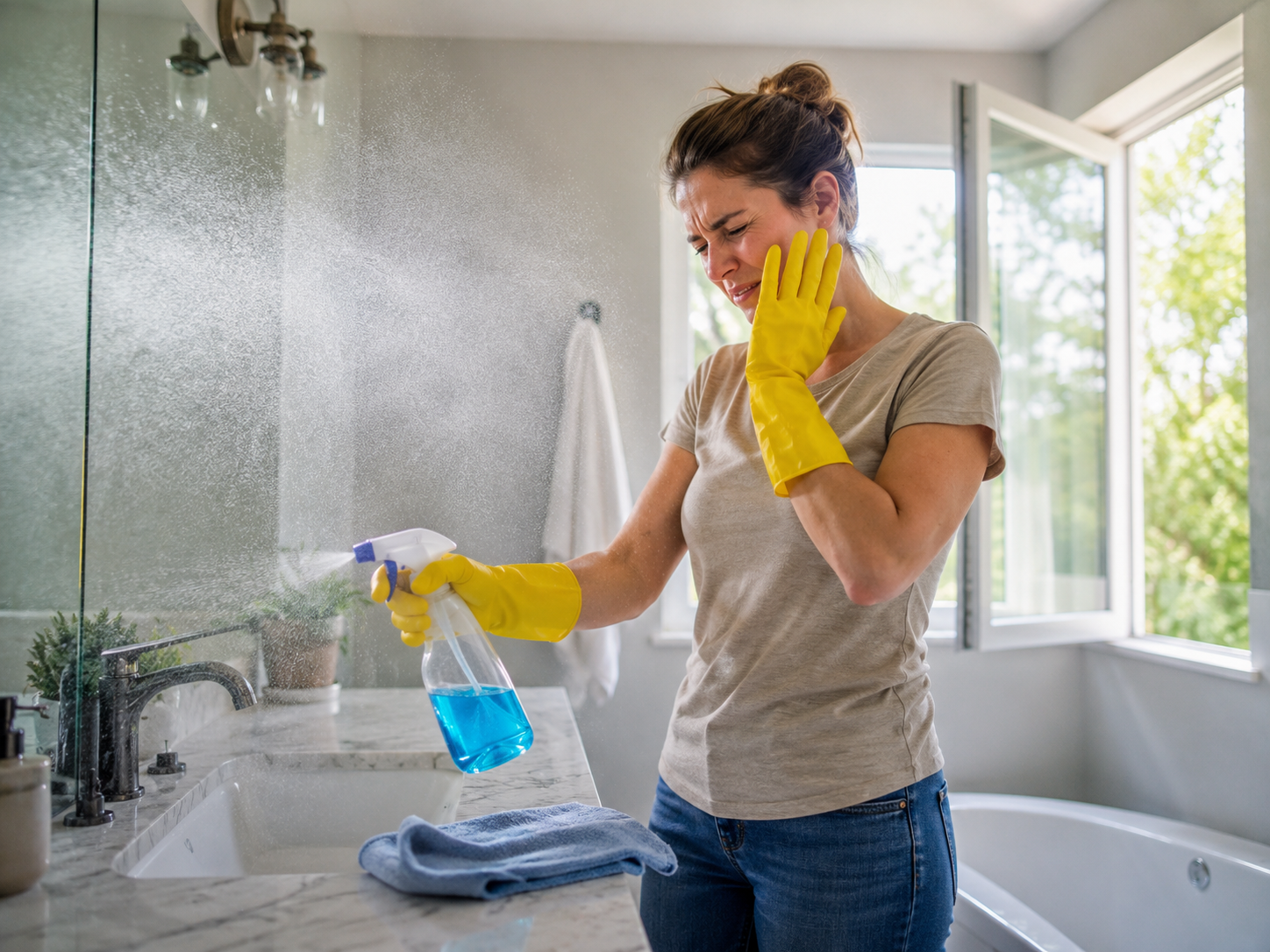
Can Spraying Too Much Cleaner Irritate Your Breathing? A Practical Home Safety Guide
Minjin Park
·
Spray cleaners are convenient, but using too much in a small space can irritate your nose, throat, and lungs. Learn safer habits for cleaning sprays, ventilation, and everyday household use.
The Cleaning Habit That Feels Harmless Until the Air Feels Heavy
Spray cleaners are everywhere in the home. We use them on kitchen counters, bathroom sinks, shower walls, mirrors, stovetops, trash cans, doorknobs, highchairs, pet areas, and even inside cars.
They are convenient for a reason. A few sprays, a quick wipe, and the surface looks cleaner.
But if you have ever cleaned a bathroom and suddenly noticed a sharp smell in your throat, a tickle that made you cough, or a heavy “chemical” feeling in the air, you may have wondered: Can spraying too much cleaner put stress on your breathing?
The simple answer is yes, it can.
That does not mean every spray cleaner is dangerous or that you should stop cleaning your home. It means spray products can put tiny droplets and chemical vapors into the air, especially when used heavily, used in a small room, sprayed near your face, or mixed with poor ventilation.
The American Lung Association notes that cleaning supplies and household products can release VOCs and other chemicals that may contribute to respiratory problems, allergic reactions, and headaches. It also points out that some cleaning products are linked with asthma and other respiratory issues, especially for people with existing lung conditions or frequent exposure.
For everyday home cleaning, the goal is not fear. The goal is better habits: spray less, ventilate more, avoid breathing in mist, and use the right product in the right amount.
Why Spray Cleaners Can Affect the Air You Breathe
Sprays create tiny droplets
When you pull the trigger on a spray bottle, the liquid does not land only on the counter. Some of it becomes a fine mist. Those droplets can hang in the air for a short time, drift toward your face, or spread around a small room.
That mist may contain fragrance, disinfectant ingredients, degreasers, solvents, acids, bleach-based ingredients, ammonia-based ingredients, or other cleaning chemicals depending on the product.
Even when a product is sold for household use, it is still meant to be used according to the label. “Safe when used as directed” does not mean “spray as much as you want in a closed room.”
Some products also release vapors
Some cleaning products contain volatile organic compounds, often called VOCs. These are chemicals that can evaporate into the air at room temperature. The EPA advises increasing ventilation when using products that emit VOCs and following label precautions.
This is one reason a room can still smell strongly after you stop spraying. You may not only be smelling wet droplets on the surface. You may also be smelling chemicals evaporating into the indoor air.
Small rooms make exposure stronger
Bathrooms, laundry rooms, closets, and car interiors can trap cleaner mist and fumes more easily than open spaces.
A cleaner that feels mild in a large kitchen may feel intense in a small bathroom with the door closed. If there is no window, no fan, or poor airflow, the air can feel irritating quickly.
The EPA explains that inadequate ventilation can increase indoor pollutant levels because there is not enough outdoor air to dilute emissions or carry pollutants out of the home.
Common Signs You May Be Overdoing It
Spray-cleaner irritation can be subtle at first. You might not connect it to cleaning right away.
Watch for signs like:
A scratchy or burning throat Coughing while cleaning A tight or heavy feeling in the chest Watery or burning eyes Runny nose Headache Dizziness or nausea A strong chemical smell that lingers Feeling like you need to step outside for fresh air
These signs do not always mean something serious is happening, but they are useful signals. Your body is telling you the air is not comfortable.
People with asthma, allergies, COPD, chronic bronchitis, fragrance sensitivity, or other respiratory conditions may notice symptoms faster. Children, older adults, and pets may also be more sensitive to strong indoor fumes.
This article is general household safety information, not medical advice. If symptoms are severe, unusual, or do not improve after getting fresh air, it is wise to seek appropriate medical or poison-control guidance.
Why “More Spray” Does Not Always Mean “More Clean”
A very common cleaning mistake is thinking that a surface needs to be wet with product to be clean.
Sometimes disinfectants do require a surface to stay visibly wet for a certain contact time. But that does not mean you should keep spraying until the whole room smells like chemicals. It means you should follow the label for the correct amount, surface type, and contact time.
For many everyday cleaning jobs, a light application is enough. Overspraying can waste product, leave sticky residue, irritate your airways, and make surfaces harder to rinse.
With spray cleaners, precision matters more than volume.
Everyday Situations Where People Spray Too Much
Cleaning the bathroom mirror and sink
A few sprays on a mirror can turn into a cloud if the bathroom is small. If you spray upward or at face level, mist can drift back toward your nose and mouth.
A better habit: spray the cloth first, then wipe the mirror or faucet. This puts more product on the cleaning tool and less into the air.
Cleaning shower walls
Showers often need products for soap scum, mildew stains, or hard water buildup. These cleaners can smell strong, and the shower area can trap fumes.
If you spray all four walls heavily and close the bathroom door, the air can become uncomfortable quickly.
Work in sections. Keep ventilation going. Avoid leaning into the shower right after spraying.
Cleaning kitchen counters after cooking
It is tempting to spray the whole counter generously after handling raw meat, grease, or sticky spills.
But a heavy mist can land on nearby dishes, fruit bowls, cutting boards, baby bottles, pet bowls, or food packaging.
Spray closer to the surface, use only what the label recommends, and wipe thoroughly. For many spills, soap and water may be enough before any disinfectant is used.
Cleaning the inside of a microwave
Spraying cleaner inside a microwave can trap scent and residue in a small space. It may also be hard to rinse fully.
A safer everyday habit is to loosen food with steam from a microwave-safe bowl of water, then wipe with a damp cloth. If using a cleaner, check that it is appropriate for food-contact areas and rinse as directed.
Cleaning a car interior
Cars are small enclosed spaces. Spraying glass cleaner, upholstery cleaner, air freshener, or disinfectant heavily inside a parked car can make the air feel overwhelming.
Open doors or windows while cleaning. Spray onto a cloth when possible. Let the car air out before driving.
Spray Cleaner Mist vs. Scent: They Are Not the Same Thing
Many people use scent as a signal for cleanliness. Lemon, pine, lavender, bleach, “fresh linen,” or eucalyptus smells can make a room feel cleaner.
But a strong smell is not proof that a surface is cleaner. It is proof that fragrance or cleaning chemicals are in the air.
The American Lung Association has warned that traditional cleaning products can irritate the nose, throat, eyes, and lungs, particularly for people with asthma, COPD, or chronic lung conditions.
This does not mean fragrance is always bad for everyone. It means scent should not be the goal. Clean surfaces, good airflow, and lower exposure are better goals than making a room smell strongly “clean.”
Products That Deserve Extra Caution
Some spray cleaners are more likely to bother breathing than others, depending on the person, room, and amount used.
Be especially careful with:
Bleach sprays Bathroom mildew removers Ammonia-based glass cleaners Heavy-duty degreasers Oven and grill cleaners Lime and rust removers Disinfectant sprays Fragranced air freshening sprays Spray products used in small rooms Any cleaner with a strong warning label
Always read the label. Look for directions about ventilation, gloves, rinsing, surface compatibility, and whether the product should be sprayed directly or applied to a cloth.
The Mixing Problem: Spraying One Product After Another
Overspraying is one issue. Mixing cleaners is another.
A common mistake is spraying one cleaner, deciding it did not work well enough, and then spraying another cleaner on top of it.
That can be risky, especially with bleach, ammonia, acidic bathroom cleaners, vinegar, rust removers, drain products, and disinfectants.
Do not layer products. Do not “boost” one cleaner with another. Rinse and wipe the surface before switching products, and follow label directions.
If a room smells suddenly sharp, irritating, or unusual after using two products, stop cleaning, leave the area, ventilate if you can do so safely, and keep others away until the air clears.
How to Use Spray Cleaners More Safely
Spray the cloth, not the air
This is one of the easiest habits to change.
Instead of spraying directly onto a surface, spray the cloth or paper towel first. Then wipe the surface.
This works well for mirrors, faucets, counters, handles, small appliances, tabletops, and many general cleaning jobs.
It reduces airborne mist and gives you better control.
Keep the nozzle close to the surface
When you do spray directly, hold the bottle closer to the surface instead of spraying from far away. A long-distance spray creates more mist in the air and less product where you need it.
Aim downward when possible, not toward your face.
Use fewer sprays
Start with less than you think you need. You can always add a little more.
Many surfaces do not need to be soaked. For disinfectants that require wet contact time, follow the label carefully rather than guessing.
Ventilate before, during, and after
Open a window if available. Turn on the bathroom fan before spraying. Keep the door open when appropriate. In larger rooms, a little airflow can make cleaning much more comfortable.
The CDC notes that controlling air pollutants at the source is the most effective way to maintain clean air, with ventilation as the second most effective approach.
In a home, that means using less airborne product in the first place, then helping the air move.
Take breaks in small spaces
If you are cleaning a bathroom, laundry room, or shower, do not trap yourself in a cloud of cleaner.
Spray a section, step out, let the product sit if the label requires it, then return to wipe or rinse.
Avoid spraying near your face
This matters for mirrors, shower walls, upper cabinets, and high surfaces.
When cleaning at eye level or above, apply product to a cloth instead of spraying upward. If you must spray, step back and keep your face away from the mist.
Rinse when the label says to rinse
Some cleaners are not meant to stay on food-contact surfaces, children’s items, pet areas, or certain materials.
Rinsing helps remove residue and reduce lingering smells. Follow the product instructions for counters, highchairs, toys, pet bowls, and food-prep areas.
What About Disinfectant Sprays?
Disinfectant sprays can be useful, but they are often overused.
Not every surface needs disinfecting every day. Many routine messes can be cleaned with soap, water, and a cloth. Disinfecting is more relevant for certain situations, such as after handling raw meat, when someone in the home is sick, or on frequently touched surfaces during illness.
Even then, the label matters. Disinfectants usually need a specific contact time to work properly. Spraying a quick cloud and wiping it off immediately may not disinfect the way people assume.
The CDC has warned that aerosolizing disinfectants can irritate the skin, eyes, or airways, and airborne chemicals can remain in the air longer in poorly ventilated areas.
For most household surfaces, controlled application is better than filling the air with mist.
Better Alternatives for Everyday Cleaning
Soap and water
For many routine spills, soap and water do the job well. This is especially true for crumbs, sticky spots, dust, fingerprints, and light kitchen mess.
Soap and water do not replace all disinfecting needs, but they are a good first step for ordinary cleaning.
Microfiber cloths
A damp microfiber cloth can remove a lot of dust and grime with little or no cleaner. This is useful for surfaces that do not need disinfecting.
Pump or pour products
Some cleaners come in forms that do not create as much mist as sprays. A small amount poured onto a cloth may be easier on the air than repeated trigger spraying.
Fragrance-free or lower-scent products
For people who are sensitive to strong smells, fragrance-free or lower-scent options may be more comfortable.
EPA’s Safer Choice program helps consumers identify products that perform while using ingredients considered safer for human health and the environment.
Special Considerations for Kids, Pets, and Sensitive Households
Children and pets spend more time close to floors and low surfaces. They may touch, lick, crawl on, or breathe near freshly cleaned areas.
For households with asthma, allergies, or breathing sensitivities, it may help to reduce sprays overall and rely more on damp wiping, ventilation, and milder products when appropriate.
When to Stop Cleaning and Step Away
Pause cleaning if you notice:
Coughing Wheezing Chest tightness Burning eyes A strong chemical smell Lightheadedness Nausea A headache that comes on while cleaning A feeling that the air is hard to breathe
Move to fresh air. Ventilate the space if it is safe to do so. Do not keep spraying just to finish the chore.
If symptoms feel serious or do not improve, seek appropriate medical or poison-control advice.
A Simple Spray Cleaner Checklist
Before using a spray cleaner, ask:
Is this product right for the surface?
Have I read the label?
Can I open a window or turn on a fan?
Can I spray the cloth instead of the air?
Am I using only one cleaner?
Are kids and pets away from the area?
Do I need to rinse afterward?
Is the smell becoming too strong?
This quick check can make cleaning feel calmer and safer without turning it into a complicated routine.
Final Thoughts: Clean Surfaces Without Filling the Air
Spray cleaners are convenient, but using too much can make indoor air uncomfortable, especially in small rooms with poor ventilation. The mist can carry cleaning ingredients into the air, and some products also release vapors that may irritate the nose, throat, eyes, or lungs.
You do not need to give up spray cleaners completely. Just use them more thoughtfully.
Spray less. Spray onto a cloth when you can. Keep the nozzle close to the surface. Open a window or use a fan. Avoid mixing products. Take breaks if the smell becomes strong. And remember that a room does not have to smell heavily like cleaner to actually be clean.
The safest cleaning habit is not the most dramatic one. It is the one that leaves both your surfaces and your air feeling comfortable.
Hi, I’m the creator and editor behind ZestyHabit. I research everyday safety, first aid, and practical wellness topics using official guidance and reliable public sources, then turn that information into clear, realistic steps for daily life.
My goal is to help readers make safer, better-informed choices at home and beyond.