
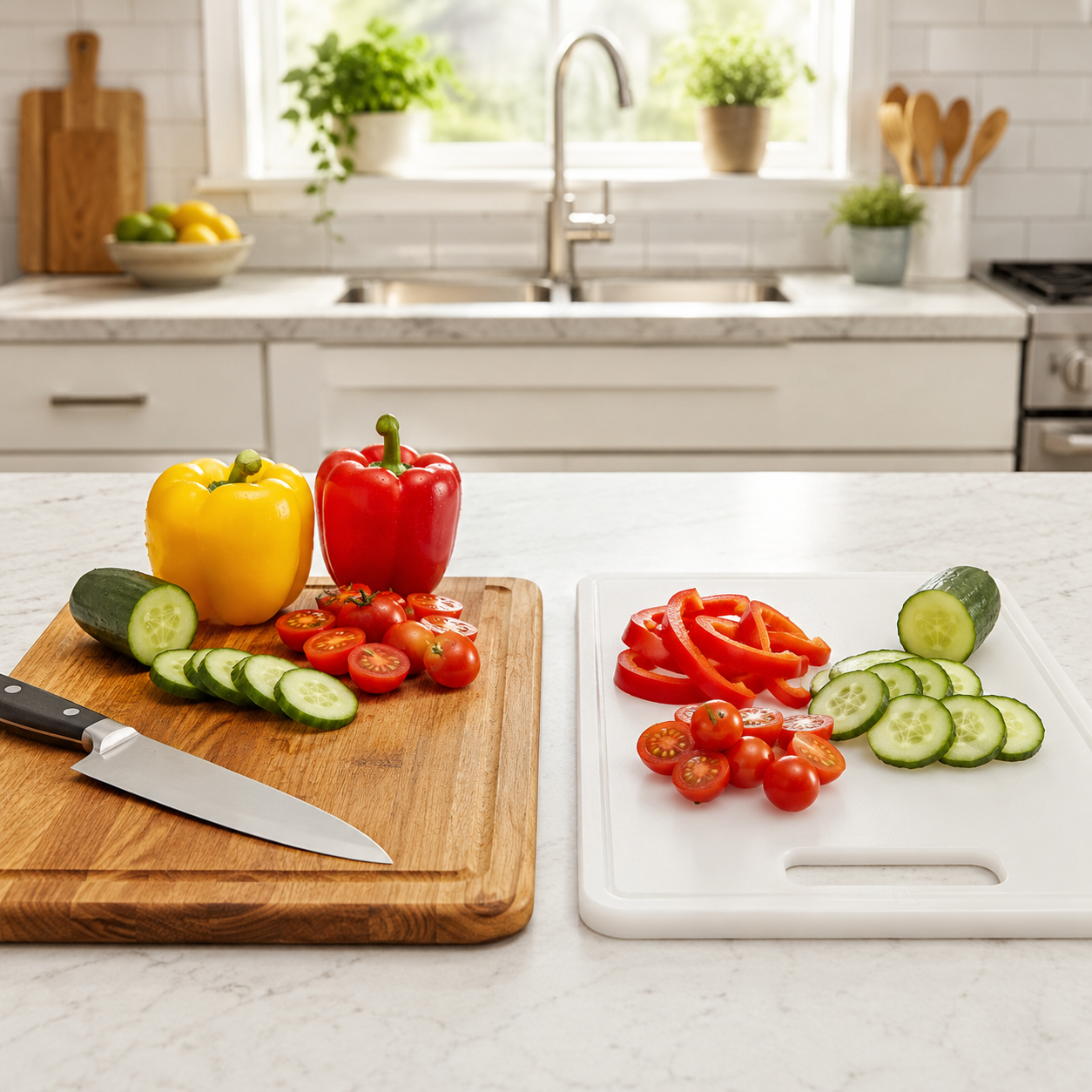

Wondering whether wood or plastic cutting boards are safer? Learn the practical pros, risks, cleaning tips, warning signs, and everyday habits that help prevent cross-contamination at home.
The Cutting Board Question Most Home Cooks Ask Eventually
Almost every kitchen has at least one cutting board. Some people love a heavy wooden board that looks beautiful on the counter. Others prefer lightweight plastic boards that can go straight into the dishwasher.
But when it comes to kitchen safety, many home cooks wonder the same thing: is a wooden cutting board safer, or is a plastic cutting board safer?
The honest answer is a little more practical than “wood is best” or “plastic is best.”
Both wood and plastic cutting boards can be safe when they are cleaned, dried, and replaced properly. Both can also become risky when they are scratched, cracked, damp, or used for too many different foods without proper cleaning.
The bigger issue is not just the material. It is how you use it.
A clean, well-maintained wooden board may be safer than an old plastic board full of deep knife grooves. A dishwasher-safe plastic board may be a better choice for raw chicken than a wooden board that sits wet in the sink overnight.
So instead of choosing a winner based only on material, it helps to understand how each type behaves in a real kitchen.
Why Cutting Board Safety Matters
Cutting boards touch food before it reaches your plate. That means they can either support clean cooking habits or quietly spread germs from one food to another.
The main concern is cross-contamination. This happens when bacteria or food residue from one item gets transferred to another.
A common example is cutting raw chicken on a board, rinsing it quickly, and then slicing lettuce on the same surface. The lettuce will not be cooked, so anything transferred to it may remain there.
This does not mean you need to be afraid of your cutting board. It simply means a few small habits matter.
Most kitchen safety problems come from ordinary routines: rushing through dinner prep, using one board for everything, forgetting to replace a damaged board, or leaving a wooden board wet in the sink.
Wooden Cutting Boards: The Good and the Bad
Wooden cutting boards are popular for a reason. They are sturdy, attractive, gentle on knives, and long-lasting when cared for well. Many people also like that wood feels more stable while chopping.
But wood does need more attention than plastic.
Why People Like Wooden Boards
A good wooden board is comfortable to use. It does not slide around as easily as a thin plastic board, especially if it is heavy. It also tends to be easier on knife edges, which can make chopping feel smoother.
Wooden boards are also durable when properly maintained. A high-quality wood board can last for years if it is washed correctly, dried fully, and oiled when needed.
For everyday foods like bread, fruit, herbs, onions, garlic, and cooked foods, wood can be a great choice.
The Main Safety Concern With Wood
Wood is porous, which means it can absorb moisture. If a wooden board is left wet, soaked in the sink, or stored before it dries, it can crack, warp, or develop unpleasant odors.
Cracks are a problem because food particles and moisture can settle inside them. Once that happens, the board becomes harder to clean.
Wooden boards should not be treated like a dish towel or a plate. They need air, drying time, and a little care.
Common Mistakes With Wooden Boards
One common mistake is soaking a wooden board in the sink. This can cause the board to swell, split, or warp.
Another mistake is putting a wooden board in the dishwasher. The heat and long exposure to water can damage the wood.
Some people also store wooden boards flat on a wet counter. Even if the top looks dry, the bottom may stay damp, which can lead to musty smells or warping.
The safest habit is simple: wash it, rinse it, dry it with a clean towel, and stand it upright so air can reach both sides.
Plastic Cutting Boards: The Good and the Bad
Plastic cutting boards are popular because they are affordable, lightweight, and easy to clean. Many are dishwasher-safe, which makes them convenient for busy families.
Plastic is also nonporous, so it does not absorb moisture the same way wood does. That can be useful, especially when handling raw meat, poultry, or seafood.
But plastic has one major weakness: knife grooves.
Why People Like Plastic Boards
Plastic boards are easy to move around and often come in different colors. This makes it easier to use one board for raw meat and another for fruits, vegetables, or bread.
Many plastic boards can be cleaned in the dishwasher, which is helpful after preparing raw chicken, fish, or meat.
They are also inexpensive enough to replace regularly. That matters because cutting boards are not meant to last forever.
The Main Safety Concern With Plastic
Plastic boards can develop deep scratches over time. At first, the marks may seem harmless. But when grooves get deep, they can trap food residue and bacteria.
A heavily scratched plastic board can become harder to clean, even if it goes through the dishwasher.
This is one reason an old plastic board may be less safe than a well-maintained wooden board.
Common Mistakes With Plastic Boards
The biggest mistake is keeping a plastic cutting board long after it is worn out. Many people wait until it cracks or bends before replacing it, but deep grooves are already a sign that it may be time to let it go.
Another mistake is assuming the dishwasher fixes everything. Dishwashers are useful, but they cannot always remove debris from deep cuts.
Plastic boards should be inspected regularly. If the surface looks fuzzy, deeply scored, stained, or rough, it is probably time for a replacement.
So, Which One Is Actually Safer?
For most home kitchens, the safest answer is not wood or plastic. It is using the right board for the right job and keeping each board in good condition.
A wooden board can be safe for many everyday tasks if it is washed and dried properly.
A plastic board can be safe and practical, especially for raw meat, poultry, and seafood, as long as it is not deeply scratched.
The safest setup for many families is to use more than one cutting board.
A Practical Home Kitchen Setup
Use one cutting board for raw meat, poultry, and seafood.
Use another cutting board for ready-to-eat foods like fruit, vegetables, bread, cheese, and cooked foods.
This does not have to be expensive or complicated. A simple color system works well. For example, a red plastic board for raw meat and a wooden board for produce and bread.
The goal is to avoid using the same surface for raw animal products and foods that will not be cooked.
When Wood May Be the Better Choice
Wood may be a better everyday choice for foods that do not create a lot of messy juices.
It works well for bread, apples, carrots, onions, herbs, sandwiches, cooked meats, and general prep.
A wooden board can also be a good choice if you enjoy cooking and are willing to care for it properly.
Best Uses for Wooden Boards
Wood is great for:
Bread and baked goods.
Fruits and vegetables.
Herbs and aromatics.
Cheese and cooked foods.
Serving snacks or charcuterie-style foods.
It is also nice for tasks where stability matters, such as chopping firm vegetables.
When to Be Careful With Wood
Be more careful when using wood for raw meat, poultry, or seafood. It can be done safely, but the board must be washed well, sanitized when appropriate, and dried completely.
If you are someone who tends to leave dishes soaking or does not want extra maintenance, plastic may be easier for raw animal products.
A wooden board that is cracked, smells sour, or stays damp is not a good choice for any food.
When Plastic May Be the Better Choice
Plastic may be better when convenience and sanitizing are priorities.
For raw chicken, fish, beef, pork, or seafood, many home cooks prefer plastic because it can often go in the dishwasher and is easy to replace.
Plastic is also useful in busy households where several people cook and not everyone follows careful wooden-board maintenance.
Best Uses for Plastic Boards
Plastic is practical for:
Raw chicken.
Raw meat.
Fish and seafood.
Messy prep work.
Quick weekday meals.
Foods with strong odors, like garlic-heavy marinades.
A plastic board can be especially helpful when you want a clear “raw meat only” board.
When to Be Careful With Plastic
Plastic becomes less ideal when the surface is badly scratched. If the board has deep cuts that you can feel with your fingers, it may hold residue even after washing.
Thin plastic boards can also slide around on the counter, which can create a cutting hazard. If your board moves while you chop, place a damp towel underneath it or use a board with non-slip edges.
Warning Signs Your Cutting Board Needs Replacing
No cutting board lasts forever. Whether it is wood or plastic, condition matters.
Replace a Wooden Board If:
It has deep cracks.
It smells bad even after washing.
It has dark spots that do not come off.
It is badly warped.
It feels sticky or rough after cleaning.
It has areas that stay damp.
Small knife marks are normal. Deep cracks and lingering odors are not.
Replace a Plastic Board If:
It has deep grooves.
The surface looks fuzzy or shredded.
It is stained and smells unpleasant.
It is cracked or bent.
It no longer sits flat.
Food gets stuck in the cuts.
Plastic boards are usually inexpensive, so replacing them regularly is one of the easiest safety upgrades you can make.
How to Clean Cutting Boards Properly
Cleaning does not have to be complicated, but it should be consistent.
Cleaning a Wooden Cutting Board
After use, scrape off food pieces.
Wash the board with hot, soapy water.
Rinse it well.
Dry it right away with a clean towel.
Stand it upright to finish air-drying.
Do not soak it in the sink. Do not put it in the dishwasher. Do not store it while it is still wet.
For maintenance, many wooden boards benefit from food-grade mineral oil. This helps prevent drying and cracking. Follow the board maker’s instructions if you have them.
Cleaning a Plastic Cutting Board
Scrape off food pieces.
Wash with hot, soapy water.
Rinse well.
Place it in the dishwasher if the label says it is dishwasher-safe.
Let it dry completely before storing.
If the board is used for raw meat, poultry, or seafood, clean it carefully before using it again.
Should You Sanitize Cutting Boards?
Sometimes washing is enough for simple tasks like slicing bread. But after cutting raw meat, poultry, seafood, or very messy foods, sanitizing can be a good extra step.
A common home method is using a diluted unscented bleach solution, following food safety guidance and the product label. Let the solution contact the surface as directed, then rinse and dry as appropriate.
Never mix bleach with other cleaning products. Use it carefully, and keep cleaning supplies away from children and pets.
If you do not want to sanitize a board frequently, using a dishwasher-safe plastic board for raw meat can make your routine easier.
Simple Habits That Make Any Cutting Board Safer
Use Separate Boards
This is one of the most practical habits.
Keep raw meat, poultry, and seafood on one board. Keep fruits, vegetables, bread, and cooked foods on another.
This one change can reduce a lot of cross-contamination risk.
Wash Between Foods
If you only have one board, wash it thoroughly between different foods. Do not cut raw chicken and then move straight to tomatoes or lettuce.
Clean the knife, too. The knife can transfer residue just like the board can.
Dry Boards Completely
Moisture is one of the biggest enemies of cutting board safety. A board that stays damp can smell bad and wear out faster.
Dry boards before storing them, especially wooden ones.
Store Boards Upright
Stacking damp boards flat can trap moisture. Standing them upright helps air circulate and keeps them fresher.
Replace Boards Before They Look Terrible
Do not wait until a board looks awful. Deep grooves, cracks, warping, and odors are enough reason to replace it.
A fresh cutting board is a small kitchen investment that can make food prep cleaner and easier.
What About Bamboo, Glass, and Stone Boards?
Bamboo boards are often grouped with wood, but they are usually harder. They can be durable, but they may be tougher on knives. Like wood, they should be washed by hand and dried well.
Glass and stone boards are easy to wipe clean, but they can dull knives quickly and may be slippery. For everyday chopping, many home cooks find them less comfortable and less practical.
For most kitchens, wood and plastic remain the most useful options.
The Best Choice for a Real-Life Kitchen
If you want the simplest answer, here it is:
Use a plastic board for raw meat, poultry, and seafood if you want easy cleaning and dishwasher convenience.
Use a wooden board for bread, produce, cooked foods, and general prep if you are willing to wash and dry it properly.
Replace either type when it becomes damaged.
That combination works well for many U.S. households because it balances safety, convenience, and everyday cooking habits.
You do not need a fancy board collection. Two boards can be enough.
A Calm Final Takeaway
Wooden and plastic cutting boards can both be safe. They can both also become unsafe when they are ignored, damaged, or used carelessly.
The safer board is the one that is clean, dry, in good condition, and used for the right foods.
If your wooden board is cracked or smells musty, replace it. If your plastic board is full of deep knife grooves, replace it. If you are using one board for raw chicken and salad vegetables, create a simple two-board system.
Kitchen safety does not have to feel stressful. A few small routines can make a big difference: separate raw and ready-to-eat foods, wash boards well, dry them fully, and know when it is time to get a new one.
That is the real answer to the wood versus plastic debate. The best cutting board is not just about material. It is about how you care for it every day.

Hi, I’m the creator and editor behind ZestyHabit. I research everyday safety, first aid, and practical wellness topics using official guidance and reliable public sources, then turn that information into clear, realistic steps for daily life.
My goal is to help readers make safer, better-informed choices at home and beyond.


[…] Open the package and pour away the packing liquid. Place the tofu on a clean plate or cutting board. […]
[…] Crumbs falling from a nearby toaster or cutting board […]