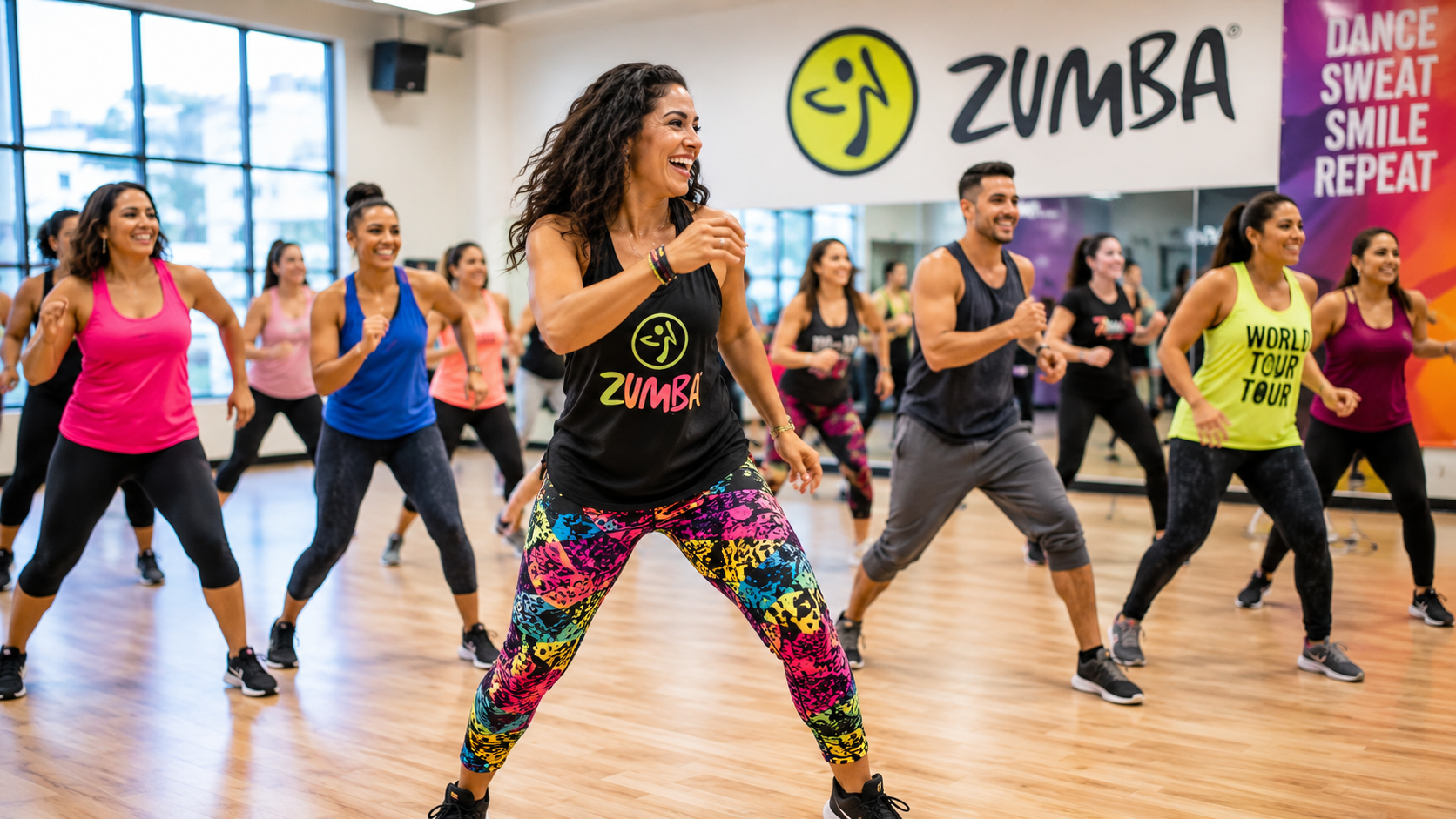
Zumba Precautions: How to Avoid Twisting Injuries During Fast Moves
Minjin Park
·
Zumba is fun for a reason. The music is upbeat, the moves are energetic, and the class can feel more like a dance party than a workout. For many people, that makes exercise feel less boring and much easier to stick with.
But Zumba can also move quickly. One minute you are stepping side to side, and the next you are turning, pivoting, jumping, shaking your hips, changing direction, and trying to follow choreography you may have just learned. That fast pace is part of the excitement, but it can also create risk if your knees, ankles, hips, and balance are not ready for sudden movements.
Twisting injuries often happen when the upper body turns one way while the foot stays planted, or when the knees collapse inward during quick direction changes. Ankles can roll during side steps. Knees can feel strained during pivots. The lower back can tighten when the hips twist without control.
The good news is that Zumba does not need to be risky. You can enjoy the music, sweat, and energy while still protecting your joints. The key is to move with awareness, choose the right shoes, pace yourself, and modify steps when needed.
Here are the main Zumba precautions to keep in mind, especially if you want to avoid twisting injuries during fast moves.
Zumba blends dance, cardio, and fitness movements. Unlike walking on a treadmill or cycling in one steady pattern, Zumba often asks your body to move in many directions.
You may step forward, back, sideways, diagonally, and then turn quickly. You may shift your hips while your feet are still moving. You may follow arm movements while trying to keep up with footwork. This combination can be great for coordination and cardio, but it also requires control.
Twisting injuries often happen when movement becomes rushed. Your foot may stick to the floor while your knee rotates. Your ankle may land awkwardly after a quick step. Your hips may turn faster than your feet. Your core may not stabilize your torso during a fast change.
A safe Zumba session should feel energetic, not frantic. You should feel your heart rate rise and your muscles work, but you should not feel sharp knee pain, ankle instability, or pulling through the back.
Warm Up Before the Fast Moves
A proper warm-up matters before any workout, but it is especially important before dance-based exercise. Zumba may include sudden direction changes, hip rotations, knee lifts, squats, lunges, and quick footwork. Cold muscles and stiff joints do not handle those movements as well.
Before class gets intense, give your body time to adjust. Many Zumba classes include a warm-up song, but you can also arrive a few minutes early and move gently on your own.
The goal is not to tire yourself out. The goal is to make your body feel ready before the choreography becomes faster.
Choose Shoes That Let You Move
Shoes can make a huge difference in Zumba. Many people wear running shoes because they are comfortable and cushioned. But running shoes are designed mainly for forward movement. Some have thick tread or strong grip that can catch on the floor during dance turns.
That extra grip may sound helpful, but during Zumba, it can be a problem. If your shoe sticks while your body turns, your knee or ankle may take the twist.
Look for shoes that provide support but still allow some movement. Dance fitness shoes, cross-training shoes, or lightweight studio shoes may work better than heavy running shoes. The right shoe should feel stable for side steps but not so sticky that pivoting feels difficult.
Avoid worn-out shoes with uneven soles, slippery shoes with no support, or shoes that feel too loose around the foot. Your foot should feel secure, but not trapped.
If you do Zumba often, it may be worth having a pair of shoes specifically for dance fitness.
Be Careful With the Floor Surface
The floor matters almost as much as the shoes.
A very sticky floor can make pivoting difficult. A very slippery floor can increase the risk of sliding or rolling an ankle. Carpet can create friction and make turning awkward. Concrete can feel harsh on the knees and ankles. Uneven flooring can make fast footwork more dangerous.
Ideally, Zumba is done on a smooth, stable floor with enough grip to prevent slipping but enough give to allow movement. Fitness studios often have better surfaces than random home spaces.
If you are doing Zumba at home, clear the area first. Remove rugs, cords, clutter, and anything you might step on. Test your shoes on the floor before starting. Try a few side steps and gentle turns. If your feet stick or slide too much, adjust before the workout begins.
A good workout space should help you move, not surprise you.
Start With Smaller Steps
When the music is exciting, it is natural to want big movements. Bigger steps, bigger hip swings, deeper squats, sharper turns. But bigger is not always safer, especially when you are learning choreography.
Start with smaller steps until you understand the pattern. Once your body knows where it is going, you can add more range and energy.
Small steps reduce the chance of overreaching, losing balance, or twisting the knee. They also make it easier to stay on beat without rushing.
This is especially helpful when a routine includes quick direction changes. Instead of taking a huge side step and scrambling to return, take a smaller step that you can control.
You can always make the movement bigger later. Control comes first.
Keep Your Knees Aligned With Your Toes
Knee alignment is one of the most important precautions in Zumba.
During squats, side steps, lunges, jumps, and turns, your knees should generally move in the same direction as your toes. They should not collapse inward, especially when you are tired or moving fast.
When the knees cave in during a quick step or landing, the joint may take more stress. This can feel uncomfortable around the kneecap, inner knee, or outer knee.
Pay attention during moves that include bending and turning at the same time. If your foot points one way but your knee twists another way, slow down and reset.
A helpful cue is: feet and knees travel together.
This does not mean your form has to be perfect every second. But if you repeatedly feel your knees twisting, modify the move.
Pivot With Your Feet, Not Just Your Knees
Many Zumba routines include turns or rotational steps. These can be fun, but they are also where twisting injuries can happen.
The safest way to turn is to let your feet move with your body. Avoid planting your foot firmly and twisting your knee over it. If your upper body turns, your foot should pivot or step so the knee does not take all the rotation.
For example, during a fast turn, think about taking small steps around rather than forcing one sharp twist. During hip rotations, keep the knees soft and allow the feet to adjust slightly.
If a turn feels too fast, make it a step-touch instead. You can keep moving without doing the full rotation.
No one needs to know you modified. Your knees will know, and they will appreciate it.
Protect Your Ankles During Side Steps
Side-to-side movement is common in Zumba. It may look simple, but quick lateral steps can challenge ankle stability.
An ankle roll may happen if you land on the outside edge of the foot, step too wide, or move faster than your balance allows. This is more likely when you are tired or when the floor surface is uneven.
Try to land with your whole foot, not just the edge. Keep your knees soft. Avoid snapping your steps too aggressively. If a move includes a quick side shuffle, stay light and controlled rather than stomping.
If you have a history of ankle sprains, be extra careful with lateral moves and jumps. You may want to reduce impact, wear supportive shoes, or choose lower-intensity variations.
Do Not Lock Your Knees
Locked knees and fast dance moves do not mix well.
Keeping the knees slightly soft helps absorb impact and allows your body to respond to changes in direction. If your knees are stiff and straight, your joints may absorb more force when you step, turn, or land.
During Zumba, think of your legs as springy, not rigid. You should feel ready to move in any direction.
This does not mean you need to squat the entire class. Just avoid standing stiffly and snapping into each step.
Pace Yourself Instead of Chasing Every Move
Zumba can be surprisingly intense. Even if the class feels fun, your body is still working hard. When fatigue sets in, coordination often drops. That is when twisting mistakes become more likely.
You may start stepping late, turning too quickly, landing awkwardly, or losing control of your knees and ankles. Your brain may still want to follow the instructor, but your body may need a break.
It is okay to lower the intensity. March in place. Step side to side. Skip the jump. Remove the turn. Use smaller arm movements. Take a sip of water.
You do not have to perform every move at full energy to get a good workout.
A steady, safe class is better than going all-out for ten minutes and leaving with knee pain.
Modify Jumps and High-Impact Moves
Some Zumba routines include jumping, hopping, bouncing, or fast footwork. These moves can raise the intensity, but they also increase impact on the ankles, knees, hips, and lower back.
If you are new to Zumba, returning after a break, or dealing with joint sensitivity, use low-impact versions. Instead of jumping, step. Instead of hopping side to side, shift your weight. Instead of bouncing deeply, keep the movement smaller.
Low-impact does not mean low effort. You can still sweat, move, and enjoy the music without pounding your joints.
If an instructor jumps, you can step. If the class turns, you can face forward. If others go deep, you can stay higher. Your version is still valid.
Keep Your Core Engaged During Fast Changes
Your core helps control your torso when your legs are moving quickly. Without core support, your upper body may twist or sway more than your lower body can handle. This can place extra stress on the lower back, hips, and knees.
You do not need to brace like you are lifting a heavy weight. Just keep your midsection gently active. Think of your ribs and hips staying connected as you move.
During fast turns or direction changes, avoid letting your torso whip around first while your feet lag behind. Move as one connected body.
A stable core makes fast choreography feel smoother and less chaotic.
Watch Your Hip Movement
Zumba often includes hip circles, salsa steps, merengue movement, reggaeton-style rhythms, and other dance-inspired hip actions. These movements can be fun and expressive, but they should still feel controlled.
Avoid forcing your hips beyond your comfortable range. If you swing the hips aggressively while the feet stay planted, the knees and lower back may twist more than they should.
Let the feet and knees participate naturally. Keep the knees soft. Make the movement smaller if your back feels tight or your knees feel pulled.
Hip movement should feel rhythmic, not painful.
Give Yourself Time to Learn the Choreography
A lot of Zumba mistakes happen simply because the routine is unfamiliar. You are trying to watch the instructor, hear the beat, copy the arms, move your feet, turn at the right time, and avoid bumping into anyone.
That is a lot.
In the first few classes, focus more on basic movement than perfect choreography. Learn the direction first. Add arms later. Make turns smaller. Stay near the back or side of the room if that helps you feel less pressured.
Once your body learns the patterns, you can move with more confidence and less risk.
Missing a step is not a problem. Twisting your knee trying to catch up is.
Stay Aware of Your Space
Zumba classes can get crowded. Fast side steps, turns, and arm movements require room. If you are too close to another person, you may adjust suddenly to avoid them, which can lead to awkward steps or twisting.
Choose a spot where you have enough space to move safely. If the class is crowded, reduce the size of your steps. Avoid traveling too far forward, back, or sideways unless you know you have room.
At home, make sure the space is clear. Move furniture if needed. Watch out for pets, children, water bottles, and loose mats.
Good spacing helps you move freely instead of making sudden corrections.
Hydrate and Rest When Needed
Zumba can feel less like exercise because the music keeps you going, but your body still loses fluid and energy. Dehydration and fatigue can affect balance, coordination, and reaction time.
Drink water before class and have some available during the workout. Take short breaks if you feel dizzy, overheated, or unusually tired.
It is better to pause for a few seconds than to keep moving when your coordination is slipping.
Your safety matters more than staying in motion for every beat.
Know the Difference Between Effort and Pain
Zumba should feel energetic. Your breathing may get faster. Your legs may burn. Your calves may work. Your hips may feel active. That kind of effort is normal.
Pain is different.
Sharp knee pain, ankle rolling, hip pinching, lower back pain, swelling, numbness, or pain that gets worse as you move should not be ignored. Stop, step out, and reassess.
If pain continues after class or returns every time you dance, consider speaking with a healthcare professional, physical therapist, or qualified fitness instructor.
Do not try to “dance through” joint pain. That is usually how small issues become bigger ones.
Cool Down After Class
After a high-energy Zumba session, it can be tempting to stop suddenly, grab your things, and leave. But a cool-down helps your body transition back to rest.
Walk in place, step side to side, and let your breathing slow. Then add gentle stretches for the calves, quads, hamstrings, hips, glutes, and lower back.
Keep the stretches comfortable. Do not force deep positions when your body is tired.
A good cool-down can also help you notice how your body feels. If one knee, ankle, or hip feels irritated, you can adjust your next class before it becomes a pattern.
Common Zumba Mistakes That Increase Twisting Risk
Here are some common habits that can increase the chance of knee or ankle strain:
Mistake
Why It Can Be a Problem
Wearing shoes with too much grip
Feet may stick during turns
Taking steps that are too large
Increases loss of balance
Twisting on a planted foot
Stresses the knee and ankle
Letting knees cave inward
Reduces joint stability
Moving too fast while tired
Lowers coordination
Skipping the warm-up
Leaves joints less prepared
Jumping before ready
Adds impact and landing stress
Ignoring pain
Can make small injuries worse
Most of these are easy to fix once you become aware of them. Zumba should feel lively, not reckless.
A Safer Zumba Checklist
Before and during class, use this simple checklist:
Safety Check
What to Do
Shoes
Supportive, not too sticky
Floor
Stable, clear, not slippery
Warm-up
Start gently before fast moves
Knees
Track with toes
Ankles
Land with control
Turns
Pivot or step instead of twisting
Steps
Keep them smaller when learning
Pace
Modify when tired
Pain
Stop if something feels sharp or unstable
This checklist can help you stay active while reducing unnecessary strain.
Final Thoughts
Zumba is a joyful, energetic way to exercise, but the fast moves deserve respect. Quick turns, side steps, jumps, and direction changes can challenge your knees, ankles, hips, and balance, especially when you are tired or still learning the choreography.
To avoid twisting injuries, start with a proper warm-up, wear shoes that let you move, keep your knees aligned with your toes, and pivot with your feet instead of twisting through your knees. Use smaller steps, modify jumps, and slow down when your form starts to fade.
You do not need to follow every move perfectly to enjoy Zumba. The best class is one where you move, sweat, smile, and leave your body feeling good enough to come back again.
Hi, I’m the creator and editor behind ZestyHabit. I research everyday safety, first aid, and practical wellness topics using official guidance and reliable public sources, then turn that information into clear, realistic steps for daily life.
My goal is to help readers make safer, better-informed choices at home and beyond.