How to Prevent Slips on Bathroom Floors Before They Happen
Minjin Park
·
Wet bathroom floors are one of the most common places for slips at home. Learn simple, practical ways to reduce bathroom fall risks with better mats, habits, lighting, and floor care.
The bathroom is one of the smallest rooms in most homes, but it can become one of the easiest places to slip. Water splashes from the shower. Steam settles on tile. Soap residue builds up. Towels end up on the floor. Someone steps out of the tub too quickly, and in one second, a normal morning routine turns into a painful fall.
Most bathroom slips are not caused by one dramatic mistake. They usually happen because several small things come together: a wet floor, bare feet, poor lighting, a loose rug, rushing, or reaching for something just out of arm’s length.
That is why bathroom slip prevention is so important. It is not only for older adults or people with mobility issues. Kids slip in bathrooms. Busy parents slip. Teens rushing before school slip. Houseguests slip because they do not know where things are. Anyone can lose their footing on a slick surface.
The good news is that preventing bathroom slips does not require a major renovation. A few small changes can make the room safer and more comfortable for everyone who uses it.
Why Bathroom Floors Get Slippery So Easily
Water Is Only Part of the Problem
When people think of bathroom slips, they usually blame water. That makes sense, but water is not the only issue. Soap, shampoo, conditioner, shaving cream, body wash, lotion, and cleaning products can all leave slippery residue behind.
Even a floor that looks dry may still have a thin film on it. Tile, marble, vinyl, and polished surfaces can become slick when that film mixes with moisture.
Smooth Flooring Can Be Risky
Many bathroom floors are made with materials that are easy to clean, but not always easy to grip when wet. Glossy tile may look beautiful, but it can become slippery after a shower. Large smooth tiles may also offer less traction than smaller textured tiles with more grout lines.
This does not mean you need to replace your floor immediately. It simply means you should pay attention to how the floor feels when wet and add traction where needed.
Steam and Humidity Add Moisture Everywhere
After a hot shower, moisture does not stay neatly inside the tub or shower. Steam can settle on floors, walls, mirrors, counters, and fixtures. If the bathroom has poor ventilation, the floor may stay damp longer than expected.
A room that feels warm and cozy after a shower may also be a room where surfaces are slightly slick.
Common Bathroom Slip Hazards
Loose Bath Mats and Rugs
A bath mat is supposed to help, but the wrong mat can make slipping more likely. Thin rugs without non-slip backing can slide across tile. Old mats may curl at the corners. Mats placed on already-wet floors may shift under your feet.
A safe bath mat should stay in place when stepped on. If it moves easily, bunches up, or slides when you push it with your foot, it may need to be replaced.
Water Outside the Shower or Tub
Small puddles near the shower, bathtub, or sink are easy to ignore. But they are one of the most common reasons people slip.
This often happens when someone steps out without drying first, when a shower curtain is not fully closed, or when kids splash during bath time. It can also happen around sinks when people wash their face, brush teeth, or rinse hair.
Soap and Conditioner Residue
Conditioner is especially slippery. If it drips onto the floor or tub surface, it can leave a slick spot that is hard to see.
Soap residue can also build up over time. If your bathroom floor feels slightly greasy or smooth even after it dries, product buildup may be part of the problem.
Poor Lighting
Bathrooms are often used when people are sleepy: early in the morning, late at night, or during the middle of the night. Dim lighting makes it harder to see water on the floor, curled rug edges, or items that have been dropped.
Good lighting is a simple safety tool. You do not need harsh lighting, but you do need enough light to see where you are stepping.
Clutter on the Floor
Laundry, towels, bath toys, shampoo bottles, slippers, and small trash cans can become tripping hazards. Bathrooms do not have much walking space, so even one item on the floor can matter.
A clear floor is easier to clean, easier to dry, and easier to walk across safely.
How to Choose a Safer Bath Mat
Look for Non-Slip Backing
A good bathroom mat should have a non-slip backing designed for wet areas. It should grip the floor without sliding when someone steps on it.
Before using a new mat, test it. Place it on the bathroom floor and press it forward with your foot. If it moves easily, it may not be safe enough for that spot.
Choose the Right Size
A mat that is too small may not catch water where people actually step. A mat that is too large may bunch up, overlap with doors, or create curled edges.
For a shower or tub, the mat should cover the stepping area where feet land when getting out. For a sink, it should fit neatly without blocking cabinet doors or creating a raised edge.
Wash and Dry Mats Regularly
Bath mats collect moisture, dust, hair, soap residue, and bacteria over time. A dirty or damp mat can lose grip and create odors.
Wash mats according to the care label, and let them dry fully. If the backing starts peeling, cracking, or losing grip, replace the mat.
Avoid Decorative Rugs That Slide
Some bathroom rugs look nice but are not made for wet floors. If a rug is decorative and does not have grip, it may be better used somewhere else.
Bathroom safety starts with function. Style is nice, but the mat must stay put.
Add Traction Inside the Tub or Shower
Use Non-Slip Strips or Mats
Slips often happen before a person even steps onto the bathroom floor. The tub or shower surface can become slick from soap and water.
Non-slip strips, textured decals, or a shower mat can help provide more grip. Choose products made specifically for wet bathroom surfaces and install them according to the instructions.
Keep Shower Mats Clean
A shower mat can help, but only if it is cleaned regularly. Soap scum can build up underneath. Suction cups can lose their grip. Mold or mildew can form if the mat never dries.
Lift and rinse the mat often. Let it dry between uses when possible. Replace it if it no longer sticks securely.
Be Careful With Oils and Scrubs
Bath oils, body oils, and exfoliating scrubs can make surfaces very slippery. If someone in your household uses these products, rinse the tub or shower floor well afterward.
It helps to make this a shared rule: if you use something oily or slippery, rinse the floor before leaving.
Improve Bathroom Habits That Prevent Slips
Dry Before Stepping Out
One simple habit can make a big difference: dry off while still standing safely in the tub or shower area before stepping onto the floor.
This reduces the amount of water that drips onto tile. Keep a towel within easy reach so nobody has to step out while dripping wet.
Step Slowly and Use Support
Rushing is a big part of many bathroom slips. After a shower, feet are wet, surfaces are smooth, and the body may feel relaxed from warm water.
Step out slowly. Place one foot firmly before shifting weight. Use a stable support if available.
Avoid using towel bars, shower curtains, or sink edges as support. They may not be designed to hold body weight.
Wipe Up Water Right Away
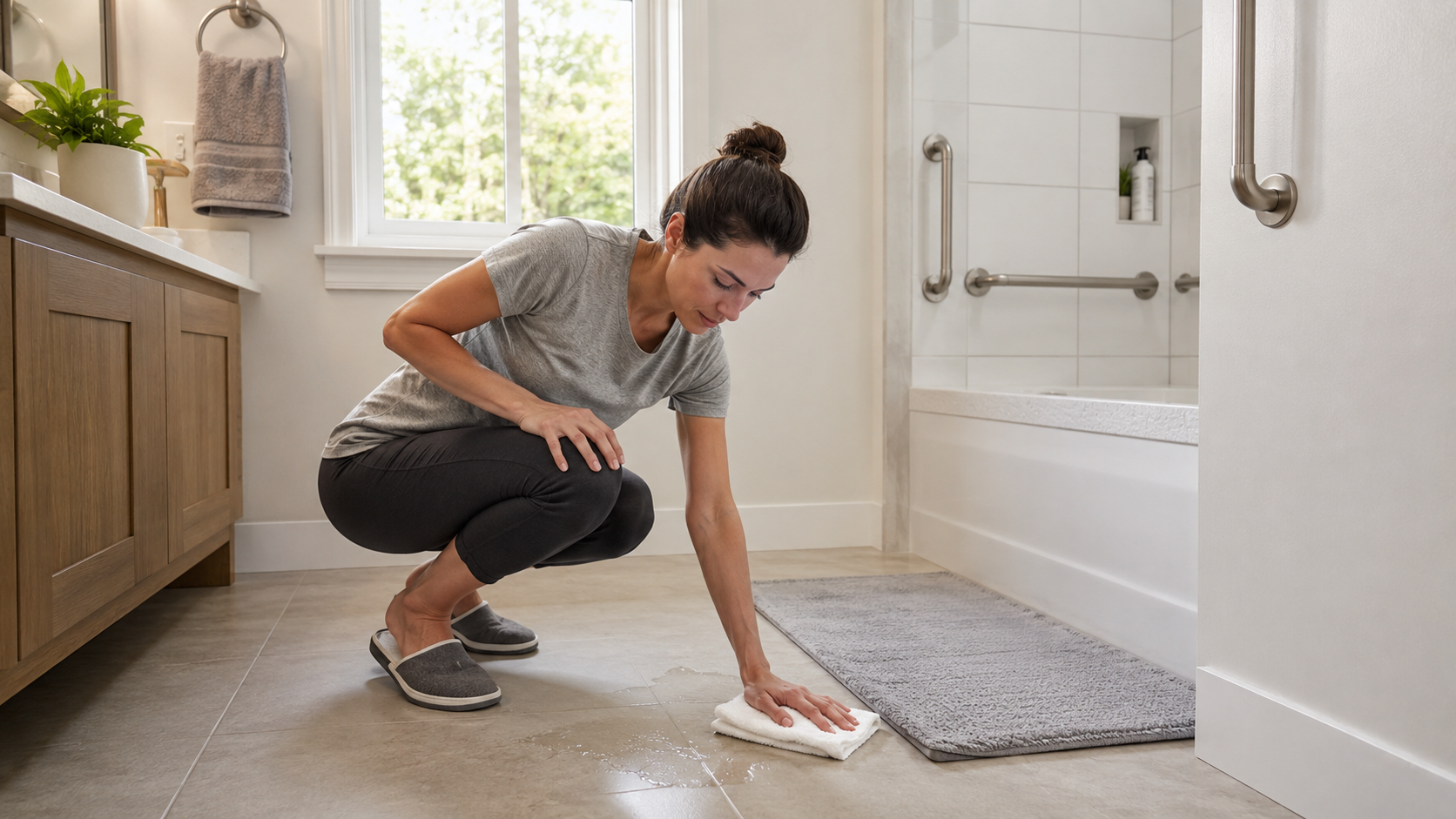
A small puddle may not seem important, but the next person may not see it. Keep a towel or small floor cloth nearby for quick wipe-ups.
This is especially useful in shared bathrooms, kids’ bathrooms, and guest bathrooms.
Keep Products Within Reach
Reaching too far in the shower or while standing on a wet floor can throw off balance. Keep shampoo, soap, razors, and towels within easy reach.
A shower caddy, shelf, or wall-mounted dispenser can reduce bending, twisting, and reaching.
Make the Bathroom Safer for Children
Expect Splashing
Children rarely keep bathwater neatly inside the tub. Splashing is part of bath time, but it also means the floor may become slippery.
Place a non-slip mat outside the tub, keep towels nearby, and wipe water as soon as bath time is over.
Teach Slow Steps
Kids often run into and out of bathrooms, especially after baths or swimming. Teach a simple rule: “Walking feet in the bathroom.”
This is easy for young children to understand and repeat.
Pick Up Bath Toys
Bath toys left on the floor can become tripping hazards. Use a mesh bag, bin, or wall organizer so toys have a regular place to go after bath time.
The cleanup does not need to be perfect. The goal is to keep the walking path clear.
Make the Bathroom Safer for Older Adults and Guests
Add Grab Bars Where Needed
Grab bars can make a bathroom safer and easier to use. They are especially helpful near the shower, tub, and toilet.
It is important that grab bars are installed properly into the wall structure. A towel bar is not a grab bar and should not be used as one.
Consider a Shower Chair
For people who feel unsteady, get tired easily, or have trouble standing for long showers, a shower chair can reduce the risk of slipping. It can also make bathing more comfortable.
Choose a chair designed for bathroom use, with non-slip feet and the right size for the shower or tub area.
Keep Guest Bathrooms Simple
Guests do not know your bathroom layout as well as you do. They may not know which rug slides, where the light switch is, or that the floor gets slick after a shower.
Before guests arrive, check the mat, clear clutter, and leave fresh towels within reach. A small nightlight can also help overnight visitors.
Improve Lighting and Visibility
Use a Nightlight
Many bathroom slips happen at night when people are half-awake. A simple nightlight can help people see the floor without turning on a bright overhead light.
This is especially useful for children, older adults, guests, and anyone who gets up during the night.
Replace Dim Bulbs
If the bathroom feels shadowy, replace dim bulbs with brighter ones appropriate for the fixture. Good lighting helps reveal puddles, loose mats, and objects on the floor.
Keep the Path Clear
Lighting helps, but only if the walking path is clear. Avoid storing laundry baskets, step stools, or extra supplies where people walk.
Ventilation Helps Keep Floors Drier
Use the Exhaust Fan
A bathroom exhaust fan helps remove moisture after showers. Run it during and after bathing to reduce humidity and help surfaces dry faster.
If your bathroom does not have a fan, opening a window when weather allows may help.
Leave the Door Open After Showers
When privacy is no longer needed, leaving the bathroom door open can help air circulate. This helps towels, mats, and floors dry more quickly.
Fix Leaks Promptly
A small leak near the toilet, sink, tub, or shower can keep the floor damp. Check for water around fixtures and under cabinets.
If you notice recurring moisture, do not ignore it. A constantly damp bathroom floor is both a slip hazard and a home maintenance issue.
Clean the Floor the Right Way
Remove Soap Film
Regular cleaning helps prevent slippery buildup. Use a bathroom-safe cleaner that works on your floor type. Rinse if the product requires it, and dry the floor afterward.
If the floor feels slick after cleaning, the cleaner may be leaving residue or the floor may not be fully rinsed.
Avoid Overusing Polish or Shine Products
Some floor products make surfaces look glossy but may reduce traction. Be careful with waxes, polishes, or shine-enhancing cleaners in bathrooms.
A bathroom floor should be clean, but it should not feel slippery.
Clean Around the Edges
Soap residue and dust often collect around the edges of mats, near the tub, and around the toilet. These areas can become slick when wet.
Move mats and small items when cleaning so you are not only cleaning the visible center of the floor.
Warning Signs Your Bathroom Needs Safety Improvements
The Mat Moves When You Step on It
If your bath mat slides, bunches, or curls, replace it or add a safer backing. Do not wait until someone slips.
The Floor Stays Wet for a Long Time
If the floor remains damp long after showers, improve ventilation, check for leaks, and use more absorbent mats.
People Hold Onto Towel Bars for Balance
If someone regularly grabs the towel bar while stepping out of the shower, that is a sign that better support may be needed.
You Notice Frequent Near-Slips
A near-slip is useful information. If someone says, “I almost fell,” treat it as a warning. Look at what caused it and fix the issue before it happens again.
A Practical Example: The Morning Shower Routine
Imagine a busy weekday morning. Someone takes a hot shower, steps onto a thin rug, and reaches across the sink for a towel. The rug slides slightly. They catch themselves on the counter and move on with their day.
It may not seem like a big deal, but the warning signs are clear. The towel is too far away. The rug does not grip. The floor is wet. The person is rushing.
A few small changes would make the routine safer: place the towel within reach, replace the rug with a non-slip mat, wipe up water after showering, and slow down when stepping out.
Bathroom safety often works this way. Small adjustments solve the problem before a serious fall happens.
Simple Bathroom Slip Prevention Checklist
A safer bathroom does not need to be complicated. Start with the basics.
Use non-slip mats inside and outside the shower or tub. Keep towels within reach. Wipe up puddles right away. Clean soap residue regularly. Improve lighting. Keep the floor clear. Use the exhaust fan. Replace mats that slide. Add grab bars if someone needs extra support.
These steps are simple, but together they make the bathroom feel much safer.
Conclusion: A Safer Bathroom Starts With Small Habits
Bathroom slips can happen quickly, but many of the risks are easy to reduce. Wet floors, loose mats, soap residue, poor lighting, clutter, and rushing are common problems that can be fixed with practical everyday habits.
You do not need a perfect bathroom. You need a bathroom that gives people enough traction, visibility, and support to move safely.
Start with one change today. Replace a slippery rug. Add a nightlight. Move towels closer. Clean soap film from the floor. Teach kids to walk instead of run. Check whether the bath mat stays in place.
Small changes add up. A bathroom that is dry, clear, well-lit, and easy to move through is safer for everyone in the home.
Hi, I’m the creator and editor behind ZestyHabit. I research everyday safety, first aid, and practical wellness topics using official guidance and reliable public sources, then turn that information into clear, realistic steps for daily life.
My goal is to help readers make safer, better-informed choices at home and beyond.