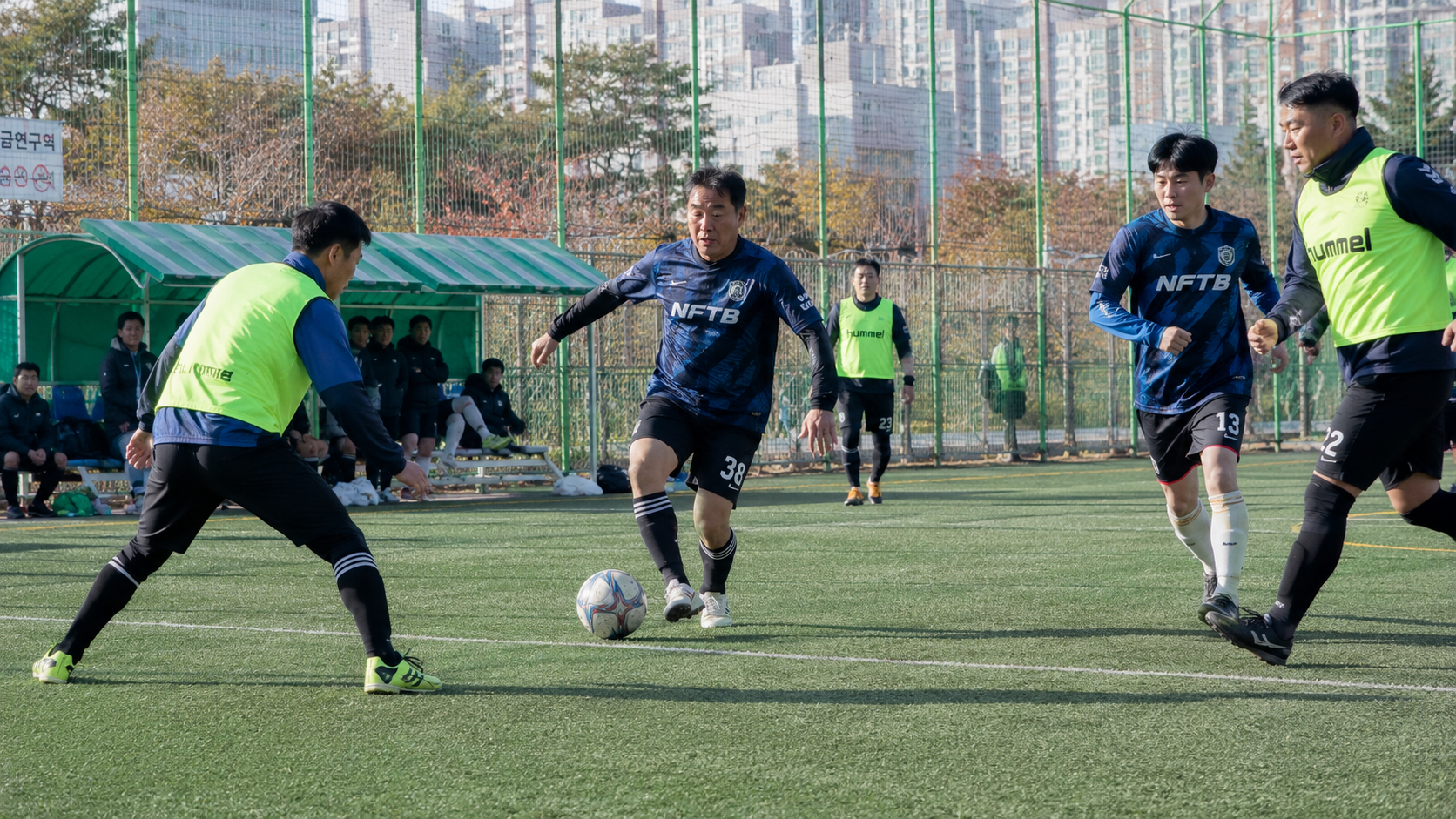
Soccer Precautions: How to Reduce Ankle and Knee Strain
Minjin Park
·
Soccer looks effortless when it is played well. A quick cut, a smooth pass, a sudden sprint, a controlled stop, a sharp turn, and then a shot toward goal. But behind all of that movement, the ankles and knees are working constantly.
That is why ankle sprains, knee soreness, and general lower-body strain are so common in soccer. The sport asks your body to accelerate, decelerate, twist, jump, land, and change direction over and over again. Even casual games can put a lot of stress on the joints, especially if you play on uneven grass, wear the wrong cleats, skip warm-ups, or push through fatigue.
The good news is that many ankle and knee problems are not random. They often build up from small habits: poor cutting mechanics, weak hips, stiff ankles, worn-out shoes, bad landing patterns, or simply doing too much too soon. You do not need to train like a professional athlete to protect your joints. A few practical precautions can make soccer feel safer, smoother, and more comfortable.
Here is how to reduce ankle and knee strain before, during, and after playing soccer.
The ankle has to stabilize your foot as it contacts the ground. The knee has to control bending, rotation, and shock absorption. The hips, glutes, calves, hamstrings, and core all help support that system.
When one area is weak, stiff, tired, or poorly aligned, the ankles and knees often take the extra stress.
That is why soccer injuries are not only about “bad luck.” Sometimes one awkward step causes a sprain, but the risk is usually higher when your body is not prepared for the movement.
Start With a Real Warm-Up, Not Just Light Jogging
A lot of players warm up by jogging for a few minutes and taking a few shots. That is better than nothing, but it is not enough for soccer.
Soccer requires explosive movement, quick direction changes, and joint stability. Your warm-up should prepare your muscles, tendons, ankles, knees, and nervous system for that.
A good soccer warm-up should include three parts: raising body temperature, mobilizing the joints, and practicing soccer-like movement at a lower intensity.
Start with 5 minutes of light movement. This can be an easy jog, side shuffles, backward jogging, or light dribbling. The goal is not to get tired. The goal is to wake the body up.
Then move into dynamic mobility. Try leg swings, walking lunges, hip circles, ankle circles, high knees, butt kicks, and calf raises. These movements help prepare the hips, knees, and ankles for the demands of the game.
Finally, add controlled soccer movements. Do short accelerations, gentle cuts, small hops, and controlled changes of direction. Do not go from standing still to full-speed sprinting. Build gradually.
A warm-up should make you feel ready, not exhausted. If your ankles feel stiff or your knees feel “cold” when you start playing, that is usually a sign you need a better warm-up routine.
Choose the Right Cleats for the Surface
Cleats matter more than many casual players realize. The wrong type of cleat can increase strain on the ankle and knee because it changes how your foot grips the ground.
If your cleats grip too aggressively, your foot may stay stuck while your body turns. That can place extra rotational stress on the knee. If your cleats do not grip enough, you may slip, overcorrect, or land awkwardly, increasing ankle strain.
For firm natural grass, firm-ground cleats are usually appropriate. For artificial turf, turf shoes or artificial-ground cleats are usually safer than long firm-ground studs. For soft, muddy grass, soft-ground cleats may help with traction, but they are not ideal for harder surfaces.
Wearing the same cleats everywhere is not always a good idea. A shoe that feels fine on grass may feel too sticky or unstable on turf.
Also pay attention to fit. Cleats should feel snug but not painful. If your foot slides inside the shoe, your ankle has to work harder to stabilize every cut and stop. If the shoe is too tight, your foot mechanics can become restricted.
Worn-out cleats can also be a problem. If the studs are uneven, the sole is separating, or the upper no longer holds your foot securely, your balance and joint control may suffer.
A simple rule: your cleats should help you move confidently without making your foot feel trapped, unstable, or squeezed.
Be Careful With Cutting and Pivoting
A lot of soccer strain happens during cutting. This is when you quickly change direction, often while trying to avoid a defender or chase the ball.
Poor cutting mechanics can overload the ankle and knee. One common issue is planting the foot too far away from the body. When your foot lands wide and your knee collapses inward, the joint absorbs force in a vulnerable position.
Another issue is cutting with a stiff leg. If the knee does not bend enough, the body cannot absorb force well. The ankle, knee, and hip need to work together like a shock absorber.
When changing direction, try to keep your foot closer to your body. Bend your knee and hip slightly. Keep your chest controlled rather than leaning wildly to one side. Let your whole body turn, not just your knee.
The knee should generally track in the same direction as the toes. It does not have to be perfect, but repeated inward collapse during cuts can increase strain.
Practice cutting at slower speeds first. Many players only practice cutting during actual games, when the movement is fast and unpredictable. Controlled drills can help your body learn safer patterns.
A simple drill is to jog forward, plant softly, and cut at a 45-degree angle. Focus on a quiet landing, bent knee, and controlled body position. Then gradually increase speed.
Build Ankle Strength and Stability
Ankles are not just hinges. They need strength, mobility, balance, and quick reaction ability.
In soccer, the ankle constantly adjusts to the ground. It stabilizes when you land, push off, sprint, and kick. If your ankles are weak or unstable, you may be more likely to roll them, especially during sudden direction changes or contact with another player.
Calf raises are a simple place to start. Do them slowly, lifting through the big toe side of the foot instead of letting the ankle roll outward. Single-leg calf raises are even better once you can do them with control.
Balance work is also helpful. Stand on one leg for 30 to 60 seconds. When that becomes easy, try turning your head, closing your eyes briefly, or standing on a slightly softer surface. You can also practice catching and passing a ball while standing on one leg.
Another useful exercise is controlled ankle movement with a resistance band. Moving the foot inward, outward, upward, and downward against light resistance can strengthen the smaller muscles around the ankle.
Do not wait until after an ankle sprain to train ankle stability. If you play soccer regularly, ankle strengthening should be part of your routine.
Strengthen the Hips to Protect the Knees
Knee strain is not always caused by the knee itself. Often, the hips play a major role.
The glutes and hip muscles help control the thigh. When they are weak or tired, the knee may cave inward during running, cutting, landing, or squatting movements. This can increase stress around the knee joint.
Soccer players need strong hips because the sport involves so much side-to-side movement. Forward running alone is not enough.
Helpful exercises include side-lying leg raises, banded lateral walks, step-downs, single-leg bridges, split squats, and single-leg Romanian deadlifts. These exercises teach the hip to stabilize the leg during single-leg movement.
Single-leg control is especially important because soccer is full of one-leg positions. You kick with one leg while the other leg supports you. You land on one leg. You cut from one leg. You push off from one leg.
If your knee wobbles inward every time you do a single-leg squat or step-down, that is useful feedback. It does not mean something is “wrong” with you, but it does mean your body could benefit from more control work.
Do Not Ignore the Hamstrings and Calves
The knees and ankles depend heavily on the muscles above and below them.
The hamstrings help support the knee, especially during sprinting and deceleration. If your hamstrings are weak compared with your quadriceps, your knees may take more stress during sudden stops or high-speed running.
The calves help support the ankle and absorb force. Soccer players often think of calves only as sprinting muscles, but they are also important for landing, balance, and repeated push-offs.
For hamstrings, exercises like bridges, hamstring walkouts, Romanian deadlifts, and stability ball curls can help. More advanced players may use Nordic hamstring curls, but those should be introduced carefully because they can be intense.
For calves, use both straight-knee and bent-knee calf raises. Straight-knee raises target the larger calf muscle more, while bent-knee raises involve the deeper soleus muscle, which is important for running and repeated movement.
Strong calves and hamstrings do not guarantee injury prevention, but they give your ankles and knees better support.
Learn to Land Softly
Soccer includes more jumping and landing than people realize. Headers, tackles, sudden hops, blocked shots, and awkward rebounds can all lead to hard landings.
A stiff, loud landing can increase strain on the ankles and knees. A softer landing spreads force through the muscles instead of dumping it into the joints.
When landing, aim to bend the ankles, knees, and hips together. Try not to land with locked knees. Keep the knees generally aligned with the toes. Use the hips to absorb some of the force.
A useful cue is: “land quietly.” If your landing is loud and heavy, you may not be absorbing force well.
You can practice this with small jumps. Start with two-leg jumps, then progress to small single-leg landings. The goal is not height. The goal is control.
For soccer, single-leg landing control matters a lot. If you jump for a ball and land on one foot while off balance, your ankle and knee need to stabilize quickly.
Watch Out for Fatigue
Many injuries happen late in games or practices, not because players suddenly forgot how to move, but because fatigue changes movement quality.
When you are tired, your cuts may get sloppy. Your knees may collapse inward more. Your ankle reactions may slow down. You may land harder, overstride, or lose balance more easily.
This is especially common in casual soccer, where people may play hard after a long workday, with little warm-up and no structured conditioning.
Pushing through normal tiredness is part of sport. Pushing through poor control is different. If your movement quality drops badly, it may be smarter to reduce intensity, take a short rest, or sub out.
You do not need to prove toughness by playing until your joints feel unsafe.
Increase Playing Time Gradually
A common mistake is going from little activity to intense soccer too quickly.
Maybe you join a weekend league after months away. Maybe you start playing twice a week because you feel motivated. Maybe you return after an ankle sprain and immediately try to play full speed.
Your joints and tissues need time to adapt. Even if your heart and lungs feel fine, your tendons, ligaments, calves, knees, and ankles may not be ready for sudden increases in load.
Try to build gradually. If you have not played in a while, start with shorter sessions or lower intensity. Add time and intensity over several weeks.
This is especially important if you are returning from an injury. Pain-free walking is not the same as being ready for sprinting, cutting, and contact. Soccer requires much more from the ankle and knee than everyday movement.
A cautious return usually includes jogging, sprinting, cutting, ball drills, controlled practice, and then full game play. Skipping steps can make re-injury more likely.
Pay Attention to the Playing Surface
The field itself can affect your ankles and knees.
Uneven grass can cause awkward foot placement. Wet grass can increase slipping. Very hard ground can increase impact. Artificial turf can feel sticky under certain cleats, which may increase twisting stress. Loose or damaged turf can also create tripping risks.
Before playing, take a quick look at the surface. Notice holes, slippery patches, uneven areas, or loose turf. During warm-up, pay attention to how your cleats interact with the ground.
You may need to adjust your intensity depending on the surface. On a slippery field, aggressive cutting may be riskier. On very hard ground, your joints may feel more impact. On sticky turf, pivoting with a planted foot may feel more stressful.
This does not mean you need to avoid every imperfect field. It means you should play with awareness.
Use Braces or Taping When Appropriate
An ankle brace or athletic tape may help some players, especially those with a history of ankle sprains. It can provide extra support and remind you to control risky movements.
However, braces and tape should not replace strength, balance, and proper movement. They are tools, not magic protection.
If you repeatedly roll the same ankle, it is worth taking that seriously. Recurrent ankle sprains can happen when stability and proprioception are not fully restored after the first injury. In that case, ankle rehab exercises may be just as important as external support.
For knees, some players use sleeves for warmth or light compression. A sleeve may feel comfortable, but it does not automatically fix knee mechanics. If you have ongoing knee pain, swelling, locking, or instability, it is better to get proper evaluation rather than simply covering it with a sleeve.
Do Not Play Through Sharp Pain
Soccer players often normalize pain. A little soreness after a game can be normal, especially if you played hard. But sharp pain, swelling, instability, or pain that changes your movement should not be ignored.
Stop or reduce activity if you feel:
A sudden pop
Sharp ankle or knee pain
Rapid swelling
The knee giving way
The ankle repeatedly rolling
Pain that makes you limp
Locking or catching in the knee
Pain that gets worse as you continue
Inability to bear weight comfortably
Trying to “run it off” can sometimes make a minor issue worse. This is especially true with sprains, ligament injuries, and knee problems involving instability.
For mild soreness, rest, gentle movement, and monitoring may be enough. But if pain is significant, persistent, or linked with swelling or instability, it is wise to seek medical or sports-professional advice.
Cool Down and Recover After Playing
Recovery is part of injury prevention. If you finish a game and immediately sit in the car for a long ride home, your legs may feel tighter later.
A simple cool-down can help your body transition out of intense movement. Walk for a few minutes. Do gentle calf, quad, hamstring, and hip flexor stretches. Keep it comfortable, not aggressive.
Hydration and food matter too. If you play hard and do not refuel, your recovery may suffer. You do not need a complicated plan, but getting enough fluids, protein, and carbohydrates after intense activity can help your muscles repair and prepare for the next session.
Sleep is another underrated factor. Poor sleep can affect coordination, reaction time, and recovery. If you play soccer while sleep-deprived, your movement may be less sharp.
A Simple Soccer Joint-Protection Routine
You do not need a long gym program to start protecting your ankles and knees. A simple routine done two or three times per week can help.
Try this:
H3: Before Playing
Do 10 to 15 minutes of dynamic warm-up:
Light jog or dribbling
Leg swings
Walking lunges
High knees
Side shuffles
Calf raises
Short accelerations
Controlled cuts
H3: On Non-Game Days
Do 15 to 25 minutes of strength and stability work:
Single-leg balance
Calf raises
Side steps with a resistance band
Glute bridges
Step-downs
Split squats
Hamstring bridges
Small controlled jumps and landings
H3: After Playing
Do 5 to 10 minutes of recovery:
Easy walking
Gentle stretching
Hydration
Light mobility if stiff
Rest if joints feel irritated
The key is consistency. One warm-up will not change everything. But repeating these habits over time can make your body more prepared for the demands of soccer.
Final Thoughts
Soccer will always involve some risk. It is a fast, physical, unpredictable sport. You cannot control every tackle, every bounce, or every awkward step.
But you can control many of the things that influence ankle and knee strain.
Warm up properly. Wear cleats that match the surface. Practice safer cutting and landing mechanics. Strengthen your ankles, hips, calves, and hamstrings. Pay attention to fatigue. Increase your playing time gradually. Do not ignore pain that feels sharp, unstable, or unusual.
The goal is not to play cautiously or fear every movement. The goal is to give your body enough preparation and support so you can move with more confidence.
When your ankles and knees are strong, mobile, and better controlled, soccer feels different. Cutting feels smoother. Landing feels softer. Sprinting feels more stable. And you are less likely to finish every game wondering why your joints feel beaten up.
A little preparation before you play can make a big difference after you play.
Hi, I’m the creator and editor behind ZestyHabit. I research everyday safety, first aid, and practical wellness topics using official guidance and reliable public sources, then turn that information into clear, realistic steps for daily life.
My goal is to help readers make safer, better-informed choices at home and beyond.