
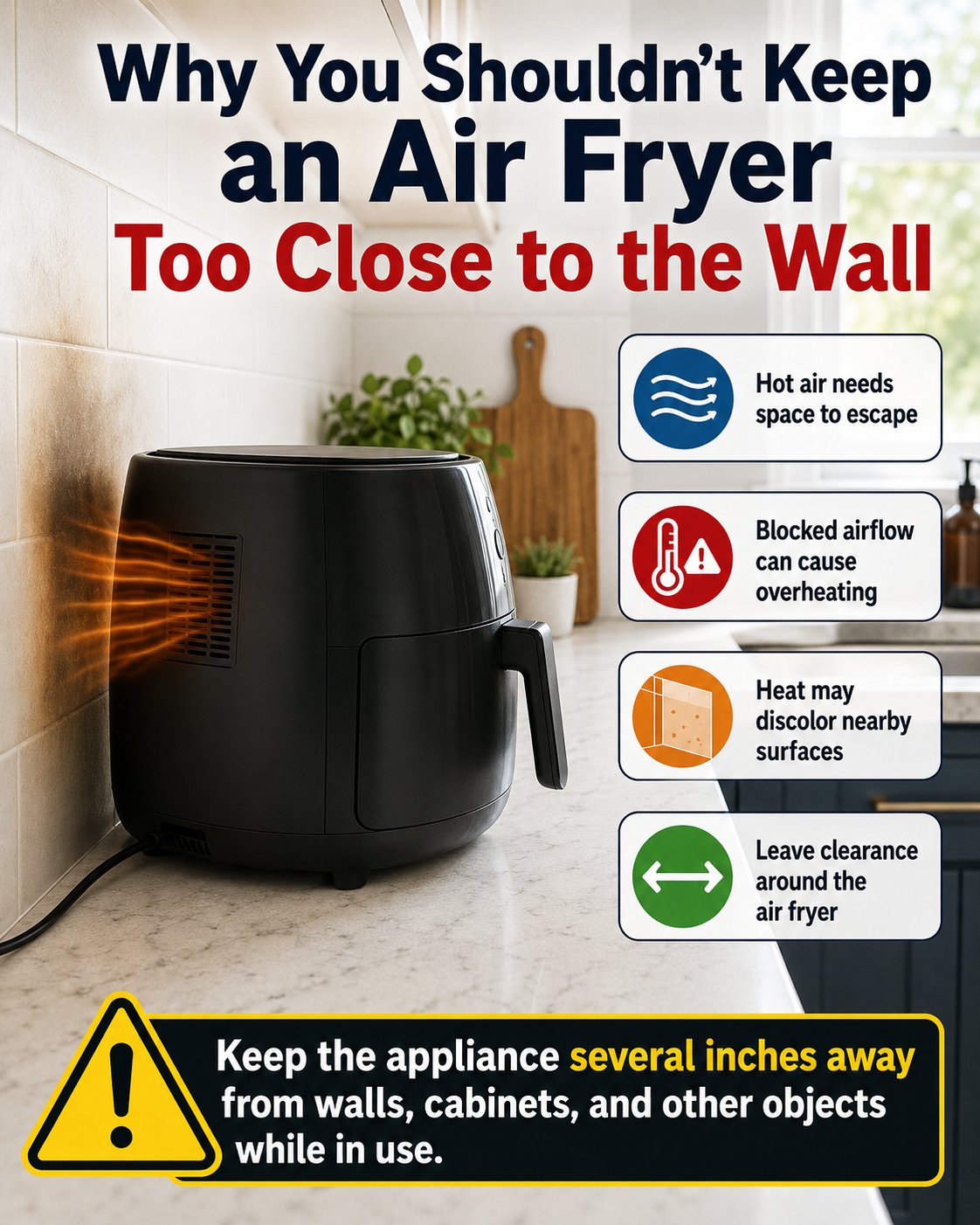

Air fryers need space to release heat and steam. Learn why placing one too close to the wall can cause problems and how to use it safely.
The Countertop Mistake Many People Make
Air fryers are one of those kitchen appliances that quickly become part of daily life. They are convenient, fast, and easy to use. You can reheat leftovers, crisp frozen fries, cook chicken, roast vegetables, and make a quick lunch without turning on the oven.
Because they are so useful, many people leave them on the counter all the time.
And that is where a common mistake happens: pushing the air fryer right up against the wall.
It makes sense at first. Kitchen counters are limited. Most of us want appliances out of the way. If the air fryer sits close to the backsplash or tucked neatly in a corner, the counter looks cleaner and more organized.
But air fryers are not like a toaster sitting cold on the counter. When they run, they move very hot air, release steam, and need room for airflow. If the appliance is too close to the wall, cabinets, curtains, paper towels, or other items, heat can build up in places it should not.
This does not mean air fryers are unsafe when used correctly. They are popular for a reason. But like any heat-producing appliance, placement matters.
How an Air Fryer Actually Works
An air fryer cooks food by circulating hot air around it. Inside the appliance, a heating element warms the air while a fan moves that hot air quickly through the cooking chamber.
That moving hot air is what makes food crisp on the outside. It is also why the outside and back of the appliance can become warm during use.
Most air fryers also release heat, steam, and cooking odors through vents. These vents may be on the back, side, top, or bottom depending on the model. If the vent area is blocked, the appliance cannot release heat properly.
That is the main reason wall clearance matters.
An air fryer needs space around it so heat can escape and fresh air can move through. When it is shoved against the wall, the hot exhaust may blow directly onto the backsplash, outlet, cord, paint, cabinet, or nearby objects.
Why Placing an Air Fryer Close to the Wall Can Be a Problem
Heat Can Build Up Behind the Appliance
Air fryers can produce a surprising amount of heat. Even if the front of the appliance feels fine, the back or side vent may be releasing very hot air.
If that hot air hits a wall with only an inch or two of space, the heat has nowhere to spread out. It can collect behind the appliance and warm the wall, outlet, cord, or nearby cabinet surface.
One cooking session may not seem like a big deal. But if you use your air fryer often, repeated heat exposure can affect surfaces over time.
Paint may discolor. Plastic items nearby may soften. Adhesive hooks or backsplash stickers may loosen. A power cord resting behind the appliance may become warmer than it should.
The issue is not usually one dramatic moment. It is often repeated heat in a tight space.
Steam and Moisture Can Damage the Wall
Air fryers do not only release dry heat. Many foods release moisture as they cook. Frozen foods, vegetables, marinated meats, and leftovers can create steam.
If the air fryer vent points toward the wall, that steam may hit the same area again and again.
Over time, this can leave marks, soften paint, affect wallpaper, or contribute to moisture buildup behind appliances. In kitchens with poor ventilation, the problem can be more noticeable.
You may see a dull patch on the wall, a greasy film near the backsplash, or small areas where paint starts to look different.
It is not always dangerous, but it is a sign the appliance needs more room.
Grease Particles Can Collect on Nearby Surfaces
Air fryers use less oil than deep fryers, but they do not eliminate grease completely. Foods like bacon, chicken wings, sausages, frozen snacks, and cheese-filled items can release grease into the cooking chamber.
Some of that grease may end up as a fine residue around the vent area. If the air fryer is close to the wall, the wall can become a collection point for warm grease, dust, and food particles.
That sticky layer can attract more dust and become harder to clean over time.
A greasy wall behind a heat-producing appliance is not ideal. It can also make the kitchen smell stale, especially if the residue builds up and gets reheated repeatedly.
The Appliance May Overheat
Air fryers are designed to manage heat, but they still need airflow. If vents are blocked or the appliance is placed in a tight corner, it may have a harder time cooling itself.
Overheating can affect performance. Food may cook unevenly. The appliance may shut off unexpectedly. The outer shell may feel unusually hot. In some cases, the appliance may wear out faster.
Many air fryer manuals recommend leaving several inches of space around the appliance. The exact amount depends on the model, but the idea is the same: do not block the vents.
If your air fryer seems hotter than usual or smells odd during use, placement is one of the first things to check.
Common Places People Put Air Fryers That Can Cause Trouble
Pushed Against the Backsplash
This is probably the most common setup. The air fryer sits on the counter, pushed all the way back so there is more prep space in front.
It looks tidy, but it may not be the best position during cooking.
A better habit is to store it pushed back if you want, but pull it forward before turning it on. That gives the vent space to release heat safely.
Under Low Cabinets
Many people place air fryers under upper cabinets because that is where counter appliances naturally fit. But during cooking, heat and steam can rise and collect under the cabinet.
If the air fryer is tall, or if its vent points upward or backward, the underside of the cabinet may become warm or damp.
Repeated exposure can affect wood, laminate, paint, or adhesive finishes. It may also leave greasy residue underneath the cabinet.
If possible, use the air fryer in an open area rather than directly under low cabinets.
In a Corner
Corners seem convenient because they keep appliances out of the way. The problem is that corners trap heat.
If the air fryer is close to two walls, hot air may bounce back toward the appliance instead of dispersing. This can make the area warmer and harder to clean.
A corner can work for storage, but it is usually better to pull the air fryer out into a more open spot while cooking.
Beside Paper Towels or Curtains
Paper towels, napkins, mail, recipe cards, dish towels, and curtains do not belong near a running air fryer.
Hot air from the vent can blow directly onto lightweight items. Even if nothing catches fire, heat can dry out materials, discolor them, or make them shift toward the appliance.
Air fryers should have a clear zone around them while running.
Near an Outlet With a Crowded Plug Area
If the air fryer is pushed against the wall, the cord may bend sharply or sit close to the hot exhaust vent. The outlet may also be in the same heat path.
That is not a setup you want to ignore.
The cord should not be pinched, stretched, crushed, or exposed to hot air. The plug should fit securely in the outlet. If the outlet feels warm, loose, or discolored, stop using that outlet and have it checked.
Warning Signs Your Air Fryer Is Too Close to the Wall
You do not need special equipment to notice placement problems. Most warning signs are simple.
The Wall Feels Warm After Cooking
A little warmth in the kitchen is normal when cooking. But if the wall or backsplash directly behind the air fryer feels noticeably hot, the appliance is probably too close.
Move it forward and give it more space next time.
You See Greasy or Yellowish Marks
A greasy film, yellowing, or dark patch behind the appliance can mean hot air, steam, and cooking residue are hitting the wall regularly.
Clean the area and adjust the appliance position.
The Appliance Smells Like Hot Plastic
New appliances may have a temporary smell during early uses, but a persistent hot-plastic smell should not be ignored.
Check whether the air fryer is too close to the wall, whether anything is touching the outside, and whether the vents are blocked. Also inspect the cord and plug.
The Air Fryer Shuts Off or Feels Unusually Hot
Some air fryers have safety features that shut the appliance off if it overheats. If yours turns off unexpectedly or the outside feels much hotter than usual, poor airflow may be part of the problem.
Let it cool, check the vents, and review the manual for placement instructions.
The Cord Is Warm or Bent Behind the Appliance
A cord should not be pressed against the hot back of an air fryer. If the cord is warm, sharply bent, or trapped between the appliance and the wall, move it.
Cord damage can happen gradually, especially when heat and pressure are involved.
How Much Space Should You Leave Around an Air Fryer?
The best answer is to follow your specific air fryer’s manual. Different models have different vent locations and clearance recommendations.
As a practical everyday habit, many people aim to leave several inches of open space around the sides and back while the appliance is running. More space is better if the vent blows directly backward or upward.
Do not use the air fryer inside a cabinet, pantry shelf, appliance garage, or enclosed space unless the manufacturer clearly says it is designed for that.
A simple rule is this: if hot air is blowing directly onto something close by, move the air fryer.
A Safer Air Fryer Setup
Use a Stable, Heat-Resistant Surface
Place the air fryer on a flat, stable counter. Avoid soft surfaces, uneven surfaces, plastic tablecloths, stovetops that may still be hot, or anything that blocks bottom vents.
Some people use a heat-resistant mat, but make sure it does not block airflow under the appliance.
Pull It Forward Before Cooking
This is one of the easiest habits to build.
You can store the air fryer near the wall if needed. But before cooking, pull it forward so the back vent has open space.
Make sure it is not hanging over the counter edge, especially if children or pets are nearby.
Keep the Vent Area Clear
Look at your air fryer and find the vents. Once you know where hot air exits, keep that area open.
Do not place cutting boards, spice jars, paper towels, plastic containers, or towels directly behind or beside the vent.
Keep the Cord Away From Heat
Route the cord so it does not touch the hot appliance body or sit directly in the exhaust path. Avoid using the air fryer if the cord is frayed, cracked, melted, or damaged.
Do not pull the plug out by yanking the cord. Hold the plug itself.
Unplug After Use
Air fryers should generally be unplugged after cooking. This prevents accidental starts, reduces standby power use, and keeps the appliance from staying connected unnecessarily.
Let it cool before moving, cleaning, or storing it.
Common Air Fryer Placement Mistakes
Using It Under a Cabinet Every Day
Even if nothing obvious happens, using an air fryer under a low cabinet can expose the cabinet to repeated heat and steam. Pull it into an open area when cooking.
Blocking the Back Vent With a Wall
If the hot air has nowhere to go, the appliance may run hotter and the wall may absorb heat. Give the back vent room.
Leaving Clutter Around It
Air fryers are often used during busy meals, when wrappers, plates, seasonings, towels, and food bags are scattered around. Clear the area before turning it on.
Putting It on the Stove
Some people place an air fryer on the stovetop because it is a flat surface with ventilation above. This can be risky if a burner is accidentally turned on or if the stove surface is still hot.
A regular counter is usually a better option.
Ignoring the Manual
The manual may not be exciting reading, but it usually tells you where the vents are, how much space to leave, and what surfaces to avoid.
A quick look can prevent a lot of guessing.
Cleaning Matters Too
Placement is not the only issue. A dirty air fryer can also create more heat, smoke, odor, and residue.
Grease and crumbs can build up in the basket, tray, and inside surfaces. If they are reheated repeatedly, they may smoke or smell.
Clean the basket and tray after use, especially after greasy foods. Wipe the outside and the area around the vent when the appliance is unplugged and cool. Check for crumbs underneath.
Also clean the wall or counter area behind the air fryer if you notice residue. A clean setup helps you spot problems earlier.
What About Small Kitchens?
Small kitchens make air fryer safety harder, but not impossible.
If counter space is limited, try creating a “cooking position.” Store the air fryer wherever it fits, then move it to a clear, open area when using it.
You may only need to pull it forward during cooking and push it back after it cools.
If there is no safe counter spot, consider using a sturdy kitchen cart with enough clearance around the appliance. Just make sure the cart is stable and the cord can reach the outlet without stretching or crossing a walkway.
Avoid using the appliance in cramped shelves, inside cabinets, or directly against flammable materials.
A Simple Pre-Cook Air Fryer Check
Before turning on your air fryer, take ten seconds to check the setup.
Is it pulled away from the wall?
Are the vents clear?
Is the cord away from heat?
Is there paper, fabric, plastic, or clutter nearby?
Is the surface stable and dry?
Is the basket properly inserted?
This quick habit can make air fryer use feel more controlled and less messy.
When to Stop Using the Air Fryer
Stop using the appliance and look into the issue if you notice:
A burning smell that does not seem like food
Smoke from the appliance when it is clean
A melted or damaged cord
A plug that feels hot
Cracking, buzzing, or sparking
Repeated shutoffs
A damaged basket or loose parts
An air fryer that behaves strangely should not be ignored. Sometimes the safest choice is to contact the manufacturer, review the manual, or replace the appliance.
The Calm Takeaway
An air fryer should not be placed too close to the wall because it needs space to release heat, steam, and airflow. When it is pushed against a backsplash, tucked under a cabinet, or trapped in a corner, heat can build up and affect the appliance, wall, cord, outlet, or nearby items.
The solution is simple. Pull the air fryer away from the wall before cooking. Keep the vents clear. Avoid using it under low cabinets or near paper towels, curtains, plastic bags, and clutter. Keep the cord away from hot exhaust. Clean grease and crumbs regularly. Unplug it after use and let it cool before storing.
You do not need a huge kitchen or a complicated routine. You just need a little breathing room around the appliance. That small habit helps your air fryer work better, keeps your counter area cleaner, and makes everyday cooking feel safer and easier.

Hi, I’m the creator and editor behind ZestyHabit. I research everyday safety, first aid, and practical wellness topics using official guidance and reliable public sources, then turn that information into clear, realistic steps for daily life.
My goal is to help readers make safer, better-informed choices at home and beyond.


[…] and dinner is on its way. Because cleanup can be annoying, many people use parchment paper or air fryer liners to catch crumbs, grease, and sticky […]