Can a Water Bottle Left in Your Car Start a Fire? What Drivers Should Know
Minjin Park
·
Can a plastic water bottle left in your car really cause a fire? Learn how sunlight, clear plastic, and everyday clutter can create a small but real safety risk—and how to prevent it.
Can a Water Bottle in Your Car Really Become a Fire Risk?
Most of us have done it at some point. You buy a bottle of water, take a few sips, toss it into the cup holder, and forget about it. Maybe it rolls under the passenger seat. Maybe it sits on the dashboard while you run into a store. By the time you remember it, the bottle is warm, crinkled, and not very appealing to drink.
But there is another question many drivers have heard before: Can a water bottle left in a car actually start a fire?
The answer is: yes, it is possible, but it is not something that happens every day.
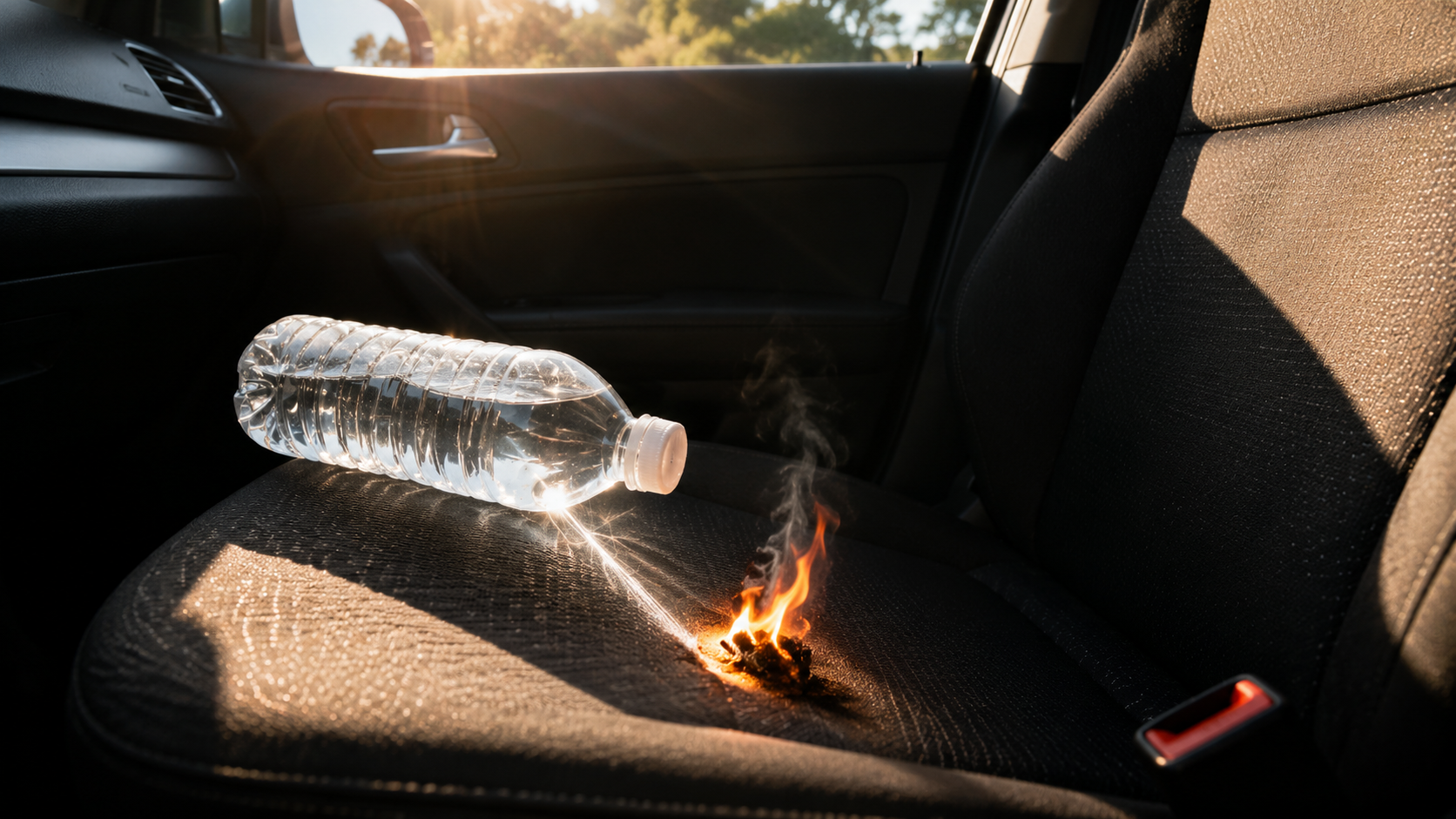
A clear plastic water bottle filled with liquid can sometimes act like a lens. When direct sunlight passes through the curved bottle, the light may become concentrated onto one small spot, especially on dark fabric, paper, cardboard, or other flammable material. If conditions line up just right, that concentrated heat can scorch the surface and, in rare cases, create a fire risk.
That does not mean every water bottle in every car is a disaster waiting to happen. But it does mean this is one of those simple, everyday safety habits worth knowing about. The prevention is easy: do not leave clear bottles where direct sunlight can hit them, especially on seats, dashboards, or near paper and fabric.
Let’s look at why this can happen, when it is most likely to matter, and what you can do to keep your car safer without overthinking it.
Why a Water Bottle Can Focus Sunlight
The basic idea is similar to using a magnifying glass in the sun. A magnifying glass can focus sunlight into one small, intense point. If that point lands on dry leaves, paper, or another flammable surface for long enough, it can produce heat.
A clear water bottle can sometimes create a similar effect.
The Bottle Acts Like a Lens
A plastic water bottle is not flat. It is curved. When sunlight passes through the clear plastic and the water inside, the curved shape can bend and focus the light. The water inside helps the bottle behave more like a lens.
That focused beam may land on a car seat, floor mat, receipt, napkin, fast-food bag, or piece of cardboard. If the light is concentrated enough, the material can heat up.
This is most concerning when the bottle is:
Clear or mostly transparent
Filled or partly filled with liquid
Sitting in direct sunlight
Positioned at an angle that focuses light onto one small area
Near flammable material like paper, upholstery, or cloth
Again, this requires the right combination of factors. A bottle tucked away in a shaded door pocket is not the same as a clear bottle lying on a dark seat under direct midday sun.
Dark Surfaces Can Absorb More Heat
Dark materials tend to absorb more light and heat than lighter materials. Many car interiors have black or dark gray seats, floor mats, carpeting, and trim. If focused sunlight lands on a dark fabric surface, that spot may heat faster than it would on a light-colored surface.
This is why a bottle lying on a black cloth seat or dark floor mat can be more concerning than one sitting in a shaded cup holder.
Cars Already Get Hot Inside
Even before adding focused sunlight, a parked car can become very hot inside on a sunny day. The air temperature may feel mild outside, but the inside of a closed vehicle can heat up quickly, especially in direct sun.
That heat alone does not usually make a water bottle ignite anything. But it can create a warmer starting point. If focused sunlight is repeatedly hitting the same spot, the surface may get hotter than expected.
This is one reason the issue matters most during sunny weather, warm seasons, and long parking periods.
When Is the Risk Highest?
A water bottle fire risk is not random. It usually depends on a few conditions coming together. Understanding those conditions helps you avoid the problem without becoming anxious every time you see a bottle in a car.
Direct Sunlight Through the Window
The bottle needs strong sunlight to create the focusing effect. A cloudy day, shaded parking garage, or bottle hidden under a seat is much less concerning.
The risk increases when the car is parked in an open lot, driveway, roadside space, or anywhere sunlight shines directly through the windows.
Bottle on the Dashboard or Seat
A bottle on the dashboard, front passenger seat, rear seat, or center console may receive direct sun for a long time. These spots also often have fabric, paper, or other materials nearby.
The dashboard can be especially bright and hot because it is directly below the windshield. However, many dashboards are made of materials that are less likely to ignite than loose paper or fabric. The bigger concern is when focused light lands on receipts, napkins, paper bags, blankets, or upholstery.
Partly Filled Bottles
A full bottle and a partly filled bottle can both bend light, but the shape of the water inside may change how the sunlight focuses. A partly filled bottle lying sideways may create unusual angles where sunlight concentrates strongly.
You do not need to analyze the water level. The simple habit is easier: avoid leaving clear bottles in sunny spots at all.
Cluttered Car Interiors
Car clutter can make the risk worse. A water bottle alone is one thing. A water bottle lying next to paper receipts, dry napkins, cardboard packaging, tissues, a cloth tote bag, or loose mail is another.
Many small car fires begin with ordinary items being too close to heat sources. In this case, the possible heat source is not a flame or wire—it is focused sunlight.
Practical Examples From Everyday Driving
This kind of risk sounds strange until you picture normal daily situations.
The Errand Run
You stop for groceries and leave a half-full water bottle on the passenger seat. The car is parked facing the sun. A grocery receipt or napkin is sitting next to the bottle. While you are inside the store, sunlight comes through the windshield and passes through the bottle onto the paper or seat fabric.
Most of the time, nothing dramatic happens. But if the light focuses tightly enough, that small area may heat, discolor, or scorch.
The Work Parking Lot
You leave your car in an outdoor lot all day. A water bottle is lying sideways on the rear seat. The sun moves throughout the day, and for a certain period, light hits the bottle at just the right angle. The focused light lands on a dark cloth seat.
By the end of the day, you might notice a small burn mark or melted-looking spot. In rare cases, that kind of heating could become more serious if flammable material is involved.
The Family Car
Kids leave water bottles, snack wrappers, tissues, school papers, and sports towels in the back seat. A clear bottle rolls into a sunny position near a paper bag or blanket. Nobody thinks much of it because it is “just water.”
This is where a small habit helps: cleaning out the car regularly and keeping bottles out of direct sun.
The Road Trip
During a long trip, passengers often keep multiple water bottles in cup holders, seat pockets, bags, and on the floor. When the car is moving, the risk is lower because angles and airflow change constantly. But once parked for lunch, hiking, sightseeing, or hotel check-in, bottles may sit in direct sun for a long time.
A quick check before leaving the car can prevent problems.
Common Mistakes People Make
The water bottle fire risk is easy to dismiss because it sounds unusual. And yes, it is not the most common car safety issue. But small, preventable risks are still worth addressing.
Mistake 1: Thinking Water Means “Safe”
Water itself is not flammable. That is why the idea feels confusing. The concern is not that the water catches fire. The concern is that the bottle and water together can focus sunlight onto something else.
The water is part of the lens effect, not the fuel.
Mistake 2: Leaving Bottles on the Seat
A bottle on the seat is more likely to sit in sunlight and focus light onto fabric. It can also roll around and end up at odd angles.
A cup holder is usually better, but even then, shade is safer. The best option is to take the bottle with you or store it out of direct light.
Mistake 3: Letting Receipts and Napkins Pile Up
Loose paper, tissues, napkins, cardboard food packaging, and shopping bags can all add unnecessary risk. They also make the car messier, block visibility if they blow around, and create general clutter.
Keeping the car interior clean reduces more than one safety issue at the same time.
Mistake 4: Assuming It Only Matters in Summer
Hot summer days are the most obvious concern, but strong sunlight can happen in spring, fall, and even winter. A cold day with bright sun can still create focused light through a clear bottle.
Temperature matters, but sunlight angle and intensity matter too.
Mistake 5: Ignoring Bottles in the Back Seat
Many people check the dashboard and front seat but forget the rear seat. Rear windows can still let in strong sunlight. Bottles left by kids, passengers, or pets can roll into sunny areas.
A quick back-seat check is a good habit, especially before leaving the car parked for hours.
Warning Signs to Watch For
You may not always see a problem forming, especially if you are away from the car. But there are a few signs that tell you sunlight may already be creating heat damage.
Small Burn Marks or Discoloration
If you notice a small brown, gray, or melted-looking spot on a seat, floor mat, or paper item near where a bottle was sitting, take it seriously. It may mean light was focusing on that spot.
Even if there was no flame, scorching is a sign that the conditions were not ideal.
Melted or Warped Plastic Items
Car interiors can get hot enough to warp some plastics. If you see melted plastic, curled receipts, or heat-damaged packaging near a bottle, it is a good reminder to store items better.
Strong Heat in One Small Area
If a seat or surface feels unusually hot in one concentrated spot near a clear bottle, move the bottle and clear the area. You do not need to panic. Just remove the focusing source and any flammable material.
Strong Sunlight Passing Through the Bottle
Sometimes you can actually see a bright, focused patch of light coming through the bottle. If the spot is sharp, intense, and sitting on fabric or paper, move the bottle right away.
This is the same visual clue you would see with a magnifying glass.
Simple Ways to Prevent the Risk
The good news is that prevention is extremely simple. You do not need special equipment, and you do not need to stop carrying water in the car.
Keep Bottles Out of Direct Sunlight
The easiest habit is to keep clear bottles away from sunny spots. Put them in a bag, shaded door pocket, covered console, or trunk. Better yet, take them with you when you leave the car.
Avoid leaving bottles on:
The dashboard
Front or rear seats
The rear window shelf
Dark floor mats in direct sun
Loose paper or cloth items
Use an Opaque Reusable Bottle
A stainless steel bottle or opaque reusable bottle is less likely to focus light the way a clear plastic bottle can. It also keeps water cooler longer and reduces plastic waste.
If you keep water in the car often, an insulated bottle is a practical upgrade.
Clear Out Paper and Fabric Clutter
Remove receipts, napkins, tissues, paper bags, cardboard boxes, dry leaves, and other clutter from your car. These items can become fuel if they are exposed to enough heat.
This does not have to be a big cleaning project. Even a 30-second check when you get gas or park at home can help.
Store Emergency Water Properly
Many people keep bottled water in the car for emergencies, especially during road trips, commuting, or hot weather. That is understandable. Water can be useful if you are stuck somewhere, need to rinse your hands, or want a backup drink.
But store it thoughtfully.
Keep emergency water in a shaded container, cooler, trunk organizer, or opaque storage bin. Avoid loose clear bottles rolling around in sunny areas.
Also remember that bottled water left in a hot car for a long time may taste unpleasant, and the bottle may degrade over time. Rotate stored water regularly, especially during hot months.
Check the Car Before Leaving It Parked
Before walking away from your car, do a quick scan:
Are any clear bottles sitting in direct sun?
Are there receipts, napkins, or paper bags nearby?
Is anything lying on the dashboard?
Did a bottle roll onto the seat or floor?
Is the car parked where the sun will hit it for hours?
This takes only a few seconds. Like locking the doors or checking that windows are closed, it can become automatic.
What About Other Clear Objects in the Car?
Water bottles are not the only items that can focus sunlight. Other clear or reflective objects may create similar issues in the right conditions.
Glasses and Magnifiers
Reading glasses, magnifying glasses, and some lenses can focus sunlight strongly. Leaving them on a dashboard or near paper is not a great idea.
Sunglasses are usually less of a concern because many lenses are tinted, but it is still better to keep eyewear in a case or compartment.
Clear Plastic Containers
Clear containers, especially those with curved sides or liquid inside, may also bend light. This includes some drink cups, jars, or cosmetic containers.
Decorative Crystals or Glass Items
Hanging crystals, glass ornaments, or decorative prisms can scatter or focus sunlight. Some people enjoy them for sparkle, but they should be used carefully in cars and homes where sunlight can hit flammable surfaces.
The general rule is simple: avoid leaving clear, lens-like objects in direct sunlight near paper, cloth, or other flammable materials.
Should You Be Worried About Every Bottle?
No. This is a real but uncommon risk. It requires sunlight, angle, bottle shape, surface material, and time to line up in a specific way.
The goal is not to make people afraid of water bottles. The goal is to build a sensible habit: do not leave clear bottles in direct sun inside a parked car.
Everyday safety is often about small adjustments, not big dramatic changes. Wearing a seat belt, keeping tires properly inflated, not blocking vents, and removing clutter from the car are all simple habits. Storing water bottles safely fits into the same category.
Is It Safe to Drink Water Left in a Hot Car?
This article is mainly about fire risk, but many people also wonder whether it is safe to drink bottled water that has been left in a hot vehicle.
From a practical standpoint, water left in a hot car can taste stale or plasticky. The bottle may soften, deform, or become unpleasant to use. For everyday comfort and quality, it is better not to drink from bottles that have been sitting in extreme heat for a long time.
For emergency storage, rotate bottled water regularly and keep it shaded. If a bottle looks damaged, smells strange, leaks, or has been exposed to heat for a long period, replacing it is the safer and more pleasant choice.
A Simple Car Safety Routine
If you want an easy routine, try this:
Before You Leave the Car
Look for clear bottles, loose paper, and items on the dashboard. Move bottles out of sunlight or take them with you.
Once a Week
Clear out receipts, napkins, snack wrappers, paper bags, and empty bottles. This keeps the car cleaner and reduces fire-friendly clutter.
Before Long Parking
If you are leaving your car outside for several hours, especially in sunny weather, make sure no clear bottles are sitting on seats, the dashboard, or near paper.
For Emergency Supplies
Store water in the trunk, a shaded organizer, or an opaque container. Rotate it regularly so it stays fresh and the bottles remain in good condition.
Final Thoughts: A Small Habit That Makes Sense
So, can a water bottle left in your car start a fire? Under the right conditions, yes, it can create a fire risk by focusing sunlight onto flammable material. It is not common, and it is not something to panic about, but it is easy enough to prevent.
The safest habit is simple: keep clear plastic bottles out of direct sunlight, especially on seats, dashboards, and near paper or fabric. Use an opaque reusable bottle when possible, clean out car clutter, and do a quick check before leaving your vehicle parked in the sun.
Most everyday safety habits are not complicated. They are small choices that reduce avoidable risks. Moving a water bottle into the shade may take two seconds, but it is one of those simple steps that helps keep your car a little safer and more organized.
Hi, I’m the creator and editor behind ZestyHabit. I research everyday safety, first aid, and practical wellness topics using official guidance and reliable public sources, then turn that information into clear, realistic steps for daily life.
My goal is to help readers make safer, better-informed choices at home and beyond.
[…] good news is that most water bottle gaskets are easy to maintain once you know they are removable. Regular disassembly, scrubbing, sanitizing when needed, and complete air-drying […]
Loading...
Discover more from
Subscribe now to keep reading and get access to the full archive.



[…] good news is that most water bottle gaskets are easy to maintain once you know they are removable. Regular disassembly, scrubbing, sanitizing when needed, and complete air-drying […]