Why Leaving a Lighter Inside Your Car Can Be Dangerous
Minjin Park
·
Leaving a lighter inside a hot car can create pressure, leakage, or even a small explosion risk. Learn why it happens, where not to store lighters, and simple car safety habits to follow.
Most of us have left small everyday items inside the car without thinking twice. Sunglasses, receipts, lip balm, hand sanitizer, pens, water bottles, and maybe a disposable lighter in the cup holder or center console.
At first glance, a lighter seems harmless. It is small, cheap, and easy to forget. But on a hot day, the inside of a parked car can become much hotter than the outdoor temperature. When a lighter sits in that kind of heat, pressure can build inside it. In some cases, the lighter may crack, leak fuel, burst, or create a sudden pop that can scatter pieces around the car.
This does not mean every lighter left in a car will explode. Most people may never experience it. But it is still a risk worth understanding because the habit is so easy to avoid.
Whether you smoke, keep a lighter for camping, use one for birthday candles, or carry one as part of an emergency kit, it is important to know where and how to store it. A small change in storage habits can reduce the chance of heat-related problems and keep your car safer.
Why Cars Get So Hot Inside
A parked car can heat up quickly because of the greenhouse-like effect inside the cabin. Sunlight passes through the windows and warms the dashboard, seats, steering wheel, and other surfaces. Those surfaces then radiate heat, but the trapped air inside the car does not escape easily.
That is why the inside of a car can feel painfully hot even when the weather outside seems only mildly warm.
On a summer day, the dashboard and center console can become especially hot because they receive direct sunlight through the windshield. Items placed on the dash, front seat, or cup holder may heat faster than items stored in a shaded part of the vehicle.
This matters because many lighters are pressurized containers filled with flammable fuel. Heat increases pressure inside the lighter. If the lighter is poorly made, damaged, overfilled, old, or placed in direct sunlight, that pressure can become a problem.
What Is Inside a Typical Lighter?
Most disposable pocket lighters contain liquefied butane gas. Butane is stored under pressure inside the plastic body of the lighter. When you press the ignition lever, a small amount of fuel is released and ignited.
Refillable lighters may also use butane, lighter fluid, or another fuel depending on the style. Some torch lighters, often used for cigars or outdoor tasks, can contain more pressurized fuel than a basic disposable lighter.
The important point is simple: a lighter is not just a small plastic object. It is a small fuel container with an ignition mechanism.
Under normal use, that design is usually safe. But heat, pressure, direct sunlight, and physical damage can increase the risk of failure.
Why a Lighter Can Burst or Explode in a Car
Heat Increases Internal Pressure
When a lighter gets hot, the fuel inside expands. Since the fuel is trapped inside a sealed container, pressure can build.
Disposable lighters are not designed to sit for long periods in extreme heat. If the pressure becomes too high, the lighter body may crack or rupture. Sometimes people describe this as an “explosion,” though in many cases it is more like a sudden bursting or popping of the plastic container.
Even a small burst can be unpleasant. It may spray fuel, scatter plastic fragments, leave a strong odor, or create a mess inside the vehicle.
Direct Sunlight Makes the Risk Worse
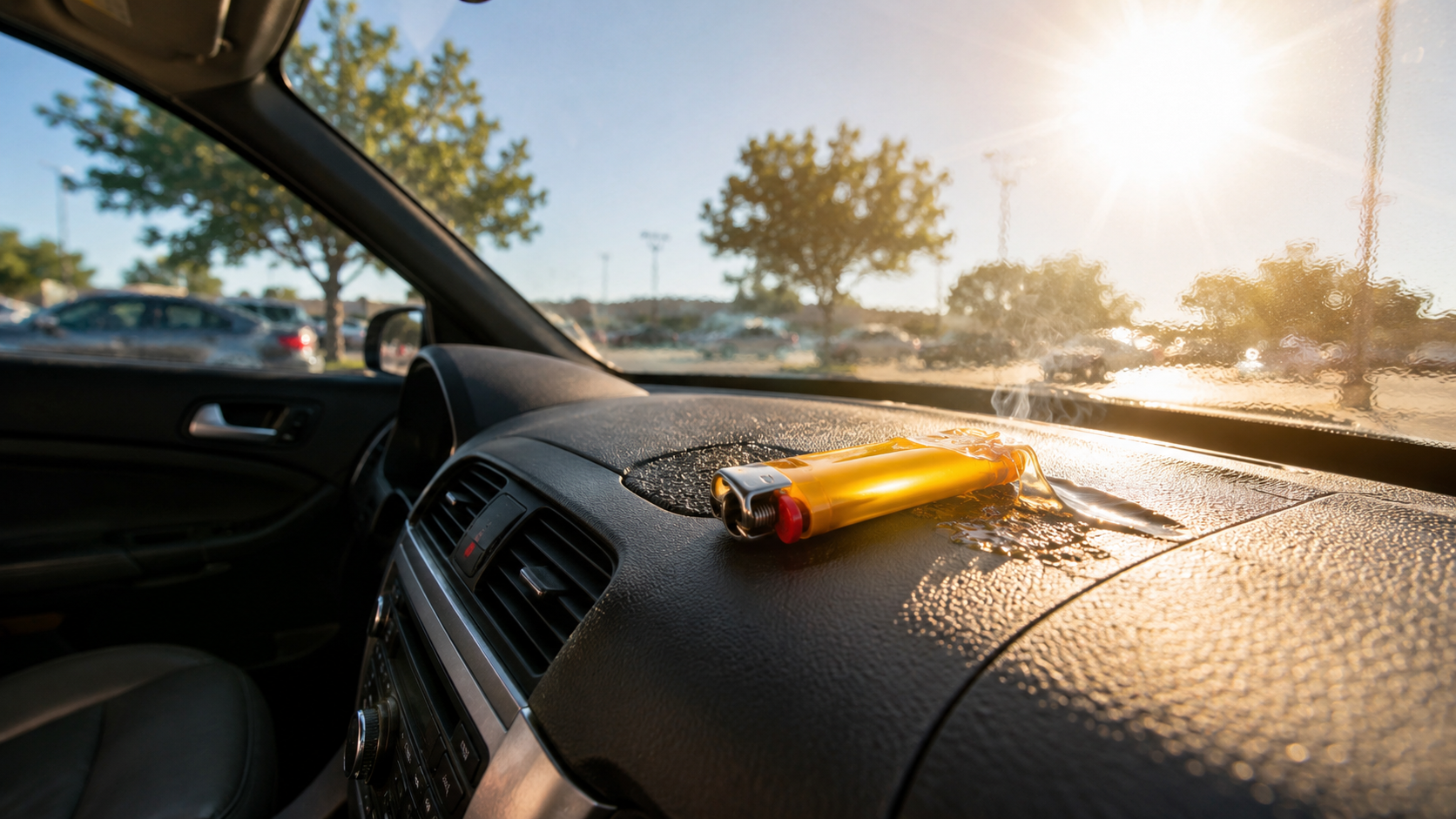
A lighter left on the dashboard is at higher risk than one stored in a cooler, shaded area. The dashboard can become one of the hottest places in the car.
Direct sunlight can heat the lighter faster and more intensely. A transparent or colored lighter may also absorb heat differently depending on its material and location.
The same applies to lighters left on the front passenger seat, near the windshield, in a door pocket exposed to sun, or in a cup holder where sunlight hits directly.
Cheap or Damaged Lighters May Fail More Easily
Not every lighter is built with the same quality. Cheap disposable lighters may have thinner plastic or weaker seals. If a lighter has already been dropped, cracked, bent, or exposed to repeated temperature changes, it may be more likely to leak or break under pressure.
A lighter does not need to look badly damaged to be unsafe. Small cracks, loose parts, or a sticky ignition button can be warning signs that it should be thrown away properly.
A Lighter Can Leak Fuel
Sometimes the danger is not a dramatic burst. A lighter may slowly leak fuel, especially if the valve is damaged or pressed accidentally by other items.
For example, if a lighter is tossed into a glove compartment with tools, keys, coins, or other hard objects, something may press against the ignition lever or damage the casing. If fuel leaks into a closed car, you may notice a strong chemical smell when you open the door.
Fuel vapor in an enclosed space is not something to ignore. If you smell lighter fluid or gas inside your car, ventilate the area and remove the source safely when conditions allow.
Why This Matters in Everyday Life
This is one of those safety topics that sounds unlikely until you think about how people actually use their cars.
Many people keep a lighter in the car “just in case.” It may stay there for weeks or months. During that time, the car may sit in direct sun at work, in a parking lot, at the beach, outside a store, or in a driveway.
The lighter may roll under the seat, get wedged near the seat rail, sit in the cup holder, or end up under papers. Because it is small, it is easy to forget.
The problem is that cars are not stable storage spaces. The interior temperature changes constantly. A car can be cold overnight and extremely hot by afternoon. It can also shake, bump, and move items around while driving.
For something that contains pressurized fuel, that is not an ideal environment.
Common Places People Leave Lighters in Cars
On the Dashboard
This is one of the worst places to leave a lighter. The dashboard gets direct sunlight through the windshield and can become extremely hot.
Even if you only plan to leave the car for a few minutes, the dashboard is not a safe storage spot for heat-sensitive items.
In the Cup Holder
Cup holders seem convenient, but they are often exposed to sunlight. A lighter in a cup holder can also be pushed, crushed, or pressed by drinks, keys, coins, or other objects.
If the lighter falls sideways or gets trapped under something, the fuel release button could be pressed accidentally.
In the Glove Compartment
The glove compartment is shaded, so it may seem safer than the dashboard. But it can still get hot inside a parked car. It may also contain other items that can damage or press the lighter.
A glove compartment is not the best place for long-term lighter storage, especially in warm months.
In the Door Pocket
Door pockets are easy to forget. A lighter can sit there for months, sliding around every time the door opens and closes. Depending on the angle of the sun, door pockets can also heat up.
Under the Seat
A lighter under the seat may be exposed to heat and physical pressure. It can get crushed by seat movement, caught in rails, or damaged by other items. Since you may not notice it, the risk can go unmanaged.
Common Mistakes That Increase the Risk
Keeping Multiple Lighters in the Car
Some people keep several lighters in different places: one in the console, one in the glove box, one in a bag, and one in the door pocket. More lighters mean more chances that one gets overheated, damaged, or forgotten.
If you need a lighter for a specific purpose, keep only what you need and remove it when you are done.
Leaving Lighters in Hot Weather “Just for a Few Minutes”
Many car safety problems happen because people underestimate how fast heat builds up. A quick stop can turn into a longer errand. You might run into a store, meet someone, or get delayed.
Instead of thinking, “It will only be a few minutes,” make it a habit not to leave lighters in the car at all.
Storing Lighters With Other Flammable Items
A lighter stored near paper, tissues, aerosol cans, matches, sanitizer, or other flammable products is not ideal. If the lighter leaks or bursts, nearby materials can make the situation worse.
It is better to keep heat-sensitive or flammable items out of the vehicle whenever possible.
Ignoring a Damaged Lighter
If a lighter looks cracked, swollen, leaking, sticky, or unusually faded from sun exposure, do not keep using it. A damaged lighter is not worth the risk.
Dispose of it according to local waste guidelines and replace it if needed.
Using the Car as Long-Term Storage
Cars are often used like mobile storage closets, but they are poor places to keep pressurized or flammable items. Heat, cold, sunlight, vibration, and clutter all add stress.
A lighter may seem small, but it belongs in the same category as other items that should not sit in a hot car for long periods.
Warning Signs a Lighter May Be Unsafe
You do not need to inspect every lighter like a mechanic, but there are a few signs worth noticing.
Watch for:
A strong butane or lighter fluid smell
Visible cracks in the plastic
A swollen or warped lighter body
Fuel leaking or wetness around the lighter
A loose or stuck ignition button
Rust or damage on metal parts
A lighter that has been left in direct sun for a long time
A lighter that feels unusually hot to the touch
If you notice any of these signs, avoid using the lighter. Let it cool if it is hot, keep it away from flames or sparks, and dispose of it safely.
What to Do If You Find a Hot Lighter in Your Car
If you get into your car and notice a lighter sitting in the sun, do not immediately flick it to “test” whether it works. That is the opposite of what you want to do.
First, move it out of direct sunlight if it is safe to handle. If it feels extremely hot, avoid holding it tightly in your hand. Let it cool in a shaded, well-ventilated area away from flames, sparks, and heat sources.
If you smell fuel, open the doors or windows to ventilate the car. Do not smoke, light matches, or use open flames near the area. Once the smell clears and the lighter is cool, remove it from the vehicle.
If the lighter appears cracked, leaking, or damaged, do not keep it. Follow local guidance for safe disposal of pressurized or flammable household items.
Safer Ways to Store a Lighter
Keep It With You Instead of in the Car
The simplest option is to carry the lighter with you if you need it. Do not leave it behind in a parked vehicle, especially during warm weather.
Store It at Home in a Cool, Dry Place
At home, keep lighters away from direct sunlight, heaters, stoves, and children’s reach. A cool drawer or cabinet is generally better than a car.
Use a Proper Camping or Emergency Kit
If you keep a lighter for camping or emergency preparedness, store it in a proper kit that is not left in a hot vehicle all the time. For car emergency kits, consider safer alternatives such as waterproof matches in an appropriate container or other tools designed for vehicle storage, while still checking the manufacturer’s temperature guidance.
Remove Lighters After Outdoor Activities
If you bring a lighter for a barbecue, camping trip, fishing trip, or picnic, take it out of the car when you get home. This is a simple habit that prevents it from becoming forgotten clutter.
What About Refillable Lighters?
Refillable lighters can be useful, but they also require care. Some refillable butane lighters are pressurized, and fuel containers used for refilling should never be left in a hot car.
A refillable lighter may be made of metal and feel sturdier than a disposable plastic lighter, but that does not mean it is safe to expose it to high heat. Internal pressure can still increase.
Torch lighters, in particular, can produce a stronger flame and may contain more fuel. They should be stored carefully and kept away from heat, direct sunlight, and children.
Always follow the manufacturer’s instructions for filling, storing, and transporting refillable lighters.
What About Electric Lighters?
Electric arc lighters or USB rechargeable lighters do not contain butane fuel, but they still should not be left in a hot car. They usually contain a rechargeable battery, and batteries can also be sensitive to heat.
High temperatures can damage batteries, reduce battery life, or create other safety concerns. So while an electric lighter avoids the butane pressure issue, it is still not something you should leave baking on the dashboard.
The broader rule is this: do not store heat-sensitive devices or fuel-based items in a hot parked car.
Other Items You Should Not Leave in a Hot Car
Once you understand the lighter issue, it becomes easier to think about other common car items.
Be careful with:
Aerosol cans
Hand sanitizer
Power banks
Batteries
Certain cosmetics
Pressurized spray products
Matches
Fuel containers
Some medications
Disposable vapes or electronic smoking devices
Plastic water bottles in direct sunlight
Not all of these items carry the same risk, but many can leak, burst, degrade, or become unsafe when exposed to high heat.
Simple Car Safety Habits That Help
Do a Quick “Heat Check” Before Leaving the Car
Before you lock the doors, glance around for heat-sensitive items. Check the cup holders, dashboard, front seat, and center console.
This takes less than ten seconds but can prevent problems.
Keep the Car Less Cluttered
Clutter makes it easier to lose track of small objects like lighters. A cleaner car helps you notice things that should not be left behind.
Try keeping one small trash bag and one small organizer in the car. Empty them regularly.
Use a Small Carry Pouch
If you often carry small items like a lighter, lip balm, keys, or sanitizer, keep them in a pouch that goes with you when you leave the car. This reduces the chance of leaving loose items behind.
Avoid the Dashboard as Storage
The dashboard is not a storage shelf. It gets too hot and exposes items to direct sunlight. Avoid placing lighters, electronics, sunglasses, cosmetics, or pressurized items there.
Teach Family Members the Habit
If multiple people use the same car, make sure everyone knows not to leave lighters inside. This is especially useful for families with teens, smokers, campers, or anyone who uses lighters for hobbies or outdoor activities.
A Practical Example
Imagine you keep a disposable lighter in the center console for occasional use. In spring, it seems fine. Then summer arrives, and the car sits in an open parking lot every afternoon.
One day, the lighter gets pushed out of the console and lands near the passenger seat where sunlight hits it through the window. It sits there for hours. The plastic body heats up, pressure increases, and the lighter cracks or pops. Now the car smells like fuel, there may be plastic pieces on the floor, and you have to clean it up carefully.
This kind of situation is easy to prevent. The lighter did not need to be in the car in the first place.
If You Need Fire-Starting Tools for Emergencies
Some people keep a lighter in the car as part of an emergency kit. The intention makes sense. Fire-starting tools can be useful in certain outdoor or roadside situations.
But storage matters.
A disposable lighter loose in the glove box is not the best long-term emergency solution. If you choose to keep fire-starting supplies in a vehicle, look for options designed for storage, keep them protected from heat, and check them regularly. Avoid storing fuel canisters or cheap lighters in direct sunlight or hot compartments.
Emergency kits should be practical, but they should also be maintained. A forgotten lighter rolling around the car is not really preparedness. It is clutter with a potential risk.
What Parents Should Keep in Mind
Families often have extra items in the car: snacks, toys, sports gear, school bags, wipes, and random small objects. A lighter can easily disappear into that clutter.
If there are children in the household, lighters should be stored with extra care. They should not be left where children can find them, play with them, or accidentally press the ignition.
Even if a lighter never overheats, access by children is a separate safety concern. Keep lighters out of reach and out of vehicles when not needed.
Quick Checklist: Before You Leave Your Car
Before walking away from your car on a warm day, check:
Is there a lighter on the dashboard, seat, or cup holder?
Is there a lighter in direct sunlight?
Is a lighter mixed with keys, coins, papers, or other items?
Is there any fuel-like smell inside the car?
Are there aerosol cans, power banks, or other heat-sensitive items inside?
Did you bring a lighter for camping, grilling, or smoking and forget to take it out?
This simple checklist can become second nature.
Conclusion
A lighter can burst or leak inside a car because heat increases pressure inside the fuel container. Direct sunlight, high cabin temperatures, damaged plastic, and loose storage all make the risk worse.
This is not something to panic about, but it is something to take seriously. A lighter is small, but it contains fuel and is not meant to sit in a hot vehicle for long periods.
The safest habit is simple: do not leave lighters in your car, especially on the dashboard, in the cup holder, or anywhere exposed to sunlight. Keep them with you, store them at home in a cool place, and remove them after outdoor activities.
Small safety habits often work best when they are easy. Taking a lighter out of the car is one of those small steps that can help prevent an avoidable problem.
Hi, I’m the creator and editor behind ZestyHabit. I research everyday safety, first aid, and practical wellness topics using official guidance and reliable public sources, then turn that information into clear, realistic steps for daily life.
My goal is to help readers make safer, better-informed choices at home and beyond.