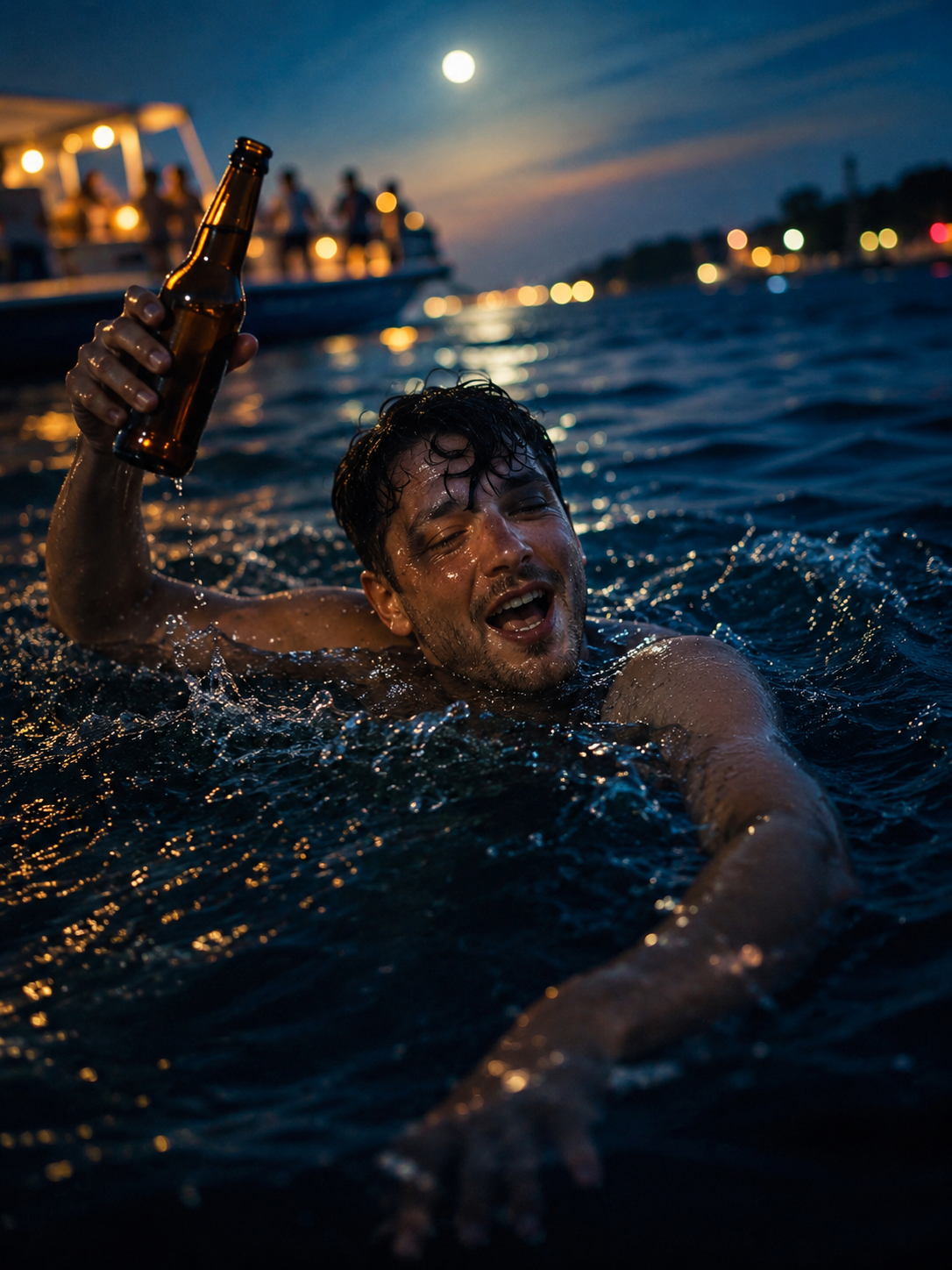
Why Swimming After Drinking Alcohol Is More Dangerous Than It Looks
Minjin Park
·
Alcohol can impair judgment, balance, coordination, and body awareness around water. Learn why swimming after drinking is risky and how to plan safer pool, beach, lake, and boating days.
A cold drink beside the pool or at the beach can feel like a normal part of a summer afternoon. At a cookout, lake weekend, or resort, alcohol and water activities are often happening in the same place.
That combination can make the risk easy to underestimate.
A person may not feel “drunk.” They may have been swimming since childhood, know the lake well, or plan to stay only in the shallow end. Even so, alcohol can affect judgment, balance, coordination, reaction time, and willingness to take risks before the person realizes how much their abilities have changed.
The Centers for Disease Control and Prevention recommends avoiding alcohol before and during swimming, boating, and other water activities. Among adolescents and adults, alcohol is involved in up to 70% of deaths associated with water recreation and about one in five reported boating deaths.
This does not mean every drink near water will lead to an accident. It means that entering the water after drinking removes safety margins that matter when conditions change quickly.
You constantly adjust your breathing, direction, body position, and effort. You judge distance, notice fatigue, respond to waves, and decide when it is time to return to shore. Alcohol can weaken several of these abilities at once.
Water also gives little room for a delayed reaction. A missed step on land may cause embarrassment. A missed breath, poorly timed turn, or moment of disorientation in deep water can create immediate trouble.
Judgment Becomes Less Reliable
Alcohol can make a risky choice feel reasonable.
Someone who would normally stay close to shore may decide to swim toward a buoy. A person at a pool party may dive without checking the depth. A boat passenger may stand on the edge, remove a life jacket, or jump into unfamiliar water.
The National Institute on Alcohol Abuse and Alcoholism warns that alcohol impairs judgment and increases risk-taking. Even experienced swimmers may go farther than they should and then struggle to return.
Confidence can increase while actual ability is decreasing. That mismatch is one reason the situation is so deceptive.
Balance and Coordination Are Reduced
Getting into and out of water often involves slippery ladders, uneven rocks, moving docks, boat decks, or pool steps.
Alcohol can make a person more likely to stumble, miss a handhold, or lose balance near the edge. Once in the water, reduced coordination can make strokes less efficient and treading water more tiring.
The CDC specifically identifies impaired balance and coordination as reasons alcohol increases drowning risk.
A person does not have to be visibly staggering for these changes to matter.
Open Water Adds Risks That Pools Do Not
A familiar swimming pool usually has clear edges and predictable depth. Lakes, rivers, and oceans may have currents, sudden drop-offs, cold areas, weeds, rocks, waves, and poor visibility.
More than half of fatal and nonfatal drownings among people age 15 and older occur in natural or open water, according to the CDC.
Alcohol does not create these hazards, but it can reduce a swimmer’s ability to recognize and manage them.
Distance Is Easy to Misjudge
A buoy, island, sandbar, or opposite shore may look closer than it really is.
After drinking, a swimmer may start out without realistically considering the return. Wind and current can make the route back harder than the route out, and even a strong swimmer can become exhausted.
Cold Water Can Be Underestimated
Warm air can make lake or ocean water feel less threatening than it is.
NIAAA warns that a swimmer who has been drinking may not notice how chilled they are becoming. The person may remain in the water because discomfort seems less important or because the group is still having fun.
Cold water can make breathing and movement more difficult even when someone entered confidently.
Currents Do Not Care About Experience
A swimmer may be comfortable in a pool but unfamiliar with river flow, surf, or rip currents.
Alcohol can make it harder to notice that the shoreline is shifting or that the swimmer is being carried away from the group. This is one reason the CDC advises never swimming alone in unfamiliar water and recommends properly fitted life jackets for many natural-water activities.
Diving After Drinking Is Especially Risky
Diving requires accurate judgment about depth, distance, obstacles, and body position.
A person who has been drinking may dive into shallow water, jump from a height they would normally avoid, or fail to notice another swimmer below. Natural water can hide rocks, branches, and changing depth.
The American Red Cross advises against using alcohol before or during swimming and diving and recommends entering unknown or shallow water cautiously, feet first.
“Everyone else jumped” is not a safety check. Neither is having used the same spot before, since water levels and underwater conditions can change.
Alcohol and Boating Create Risks for Passengers Too
People often associate boating under the influence only with the operator. Passengers are also affected.
Alcohol can make it harder to move safely on a rocking deck, follow instructions, board from a dock, or remain seated while the boat is moving. A passenger who falls overboard may be less able to orient themselves or assist with their own rescue.
The U.S. Coast Guard says alcohol is the leading known contributing factor in fatal boating accidents and warns that passengers who drink also face greater risk.
A properly fitted life jacket remains important whether someone plans to swim or not. Falls into the water are often unplanned.
Drinking Also Affects Water Supervision
One of the easiest dangers to overlook is alcohol use by the adult responsible for watching children or weaker swimmers.
Active supervision requires attention. The adult needs to notice quiet distress, unsafe play, an open gate, or a child moving toward deeper water.
Alcohol can make a supervisor slower to recognize a problem or less likely to take a warning seriously. Looking away to refill a drink or socialize adds another distraction.
The CDC and American Red Cross recommend not drinking while supervising swimmers.
At gatherings, choose a clearly identified sober “water watcher.” That person should not be drinking, scrolling on a phone, reading, or assuming another adult is watching.
Common Mistakes That Make the Risk Easier to Miss
Most water-related mistakes begin with ordinary assumptions, not reckless intentions.
“I Only Had One or Two Drinks”
People respond differently to alcohol depending on timing, food, medications, fatigue, and other factors.
The safer question is not whether you feel drunk. It is whether the activity requires unimpaired judgment and coordination. Swimming, diving, paddling, and supervising all do.
“I’m a Strong Swimmer”
Swimming experience is valuable, but it does not cancel alcohol’s effects.
Experience may even encourage someone to go farther, remain in the water longer, or attempt conditions they would tell a beginner to avoid. NIAAA specifically notes that experienced swimmers can become overconfident after drinking.
“I’ll Stay in the Shallow End”
Shallow areas are not automatically risk-free.
A person can slip, hit their head, fall face-first, or move unexpectedly into deeper water. Pool slopes may be difficult to judge, and natural shorelines can drop off suddenly.
“A Float Will Keep Me Safe”
Inflatable tubes, loungers, and pool toys are recreational items, not substitutes for approved life jackets.
A person can slide off, drift away, or become separated from an inflatable. Alcohol may make climbing back on or swimming after it more difficult.
“Coffee or a Shower Will Sober Me Up”
Coffee, food, or a cold shower may change how alert someone feels, but they do not instantly restore judgment and coordination.
The practical approach is to separate drinking and water activity instead of trying to reverse impairment quickly.
Warning Signs That Someone Should Stay Out of the Water
A person should not enter the water when they show any effect that could interfere with safe movement or decisions.
Becoming irritated when someone suggests staying dry
The absence of obvious signs does not guarantee that swimming is safe. Some impairment may be subtle.
A sudden plan to dive, swim across a lake, or take out a paddleboard after drinking is a reason to pause, not a challenge for friends to support.
A Safer Plan for Pool Parties, Beach Days, and Lake Trips
Avoiding alcohol before and during water activity is the clearest way to reduce risk. A little planning makes that easier without ruining the social part of the day.
Swim First and Drink Later
Finish swimming, diving, paddleboarding, tubing, or other water activities before alcohol is served.
Change into dry clothes and consider the water portion of the day finished once drinking begins. Do not plan to go back in for “one last swim.”
Designate Sober Roles
Choose a sober boat operator and a separate sober water watcher when children are present.
Make the roles clear instead of assuming the person drinking the least will handle them.
Wear a Proper Life Jacket
Use a U.S. Coast Guard-approved, properly fitted life jacket for boating and appropriate open-water activities.
Do not remove it because the water looks calm or the boat is close to shore. The CDC notes that life jackets can help protect adults and children during many activities in and around natural water.
Use the Buddy System
Swim with another capable person in a designated, supervised area.
A buddy should add protection, not provide permission for both people to drink and take risks together. The Red Cross advises never swimming alone.
What to Do When Someone Has Already Been Drinking
Do not turn the situation into an argument about whether the person is “really drunk.”
Keep the message simple: swimming, diving, operating a boat, and solo water activities are finished for the day. Offer a dry activity, food, a nonalcoholic drink, and somewhere to sit away from the water’s edge.
Keep boat keys, paddles, and water-sports equipment with sober participants. Children should remain under the supervision of a sober adult.
If someone in the water appears confused, weak, unusually quiet, or unable to make progress, alert a lifeguard or call emergency services rather than entering impulsively without rescue training. The Red Cross advises learning how to recognize and respond to aquatic emergencies before attempting a rescue.
Keep the Celebration and the Swimming Separate
Pools, beaches, rivers, and lakes are meant to be enjoyed. Alcohol does not need to be treated with panic, but it should be treated as incompatible with activities that depend on balance, coordination, judgment, and quick reactions.
The safest habit is straightforward: swim first, drink later, and do not return to the water once drinking begins.
Use a sober boat operator, assign a sober adult to supervise children, wear a properly fitted life jacket, and avoid diving into unfamiliar water. Do not rely on swimming experience, shallow water, inflatables, coffee, or friends who are also drinking.
Separating alcohol from water recreation may feel like a small change to the day’s schedule. It preserves the fun while protecting the skills everyone depends on when they step into the water.
Hi, I’m the creator and editor behind ZestyHabit. I research everyday safety, first aid, and practical wellness topics using official guidance and reliable public sources, then turn that information into clear, realistic steps for daily life.
My goal is to help readers make safer, better-informed choices at home and beyond.