Why You Should Always Check the Water Temperature Before Swimming in Lakes and Rivers
Minjin Park
·
Swimming in lakes and rivers can be refreshing, but water temperature matters more than many people realize. Learn why checking it first helps you stay safer, more comfortable, and better prepared.
A lake on a sunny summer afternoon can look warm and inviting. A river may sparkle under the sun and seem like the perfect place to cool off after a hike, picnic, or camping trip. But one thing many people forget to check before jumping in is the actual water temperature.
Air temperature and water temperature are not the same thing.
It can be 85°F outside, and the water can still be cold enough to surprise your body. This is especially true in mountain lakes, spring-fed rivers, shaded swimming holes, reservoirs, and places where water comes from snowmelt or deep underground sources.
Checking the water temperature before swimming is a simple habit, but it can make a big difference. It helps you avoid sudden shock, judge how long you should stay in the water, choose the right gear, and decide whether the conditions are right for children, older adults, or less confident swimmers.
This is not about being fearful of natural water. Lakes and rivers can be wonderful places to swim. It is about respecting the fact that natural water behaves differently from a backyard pool.
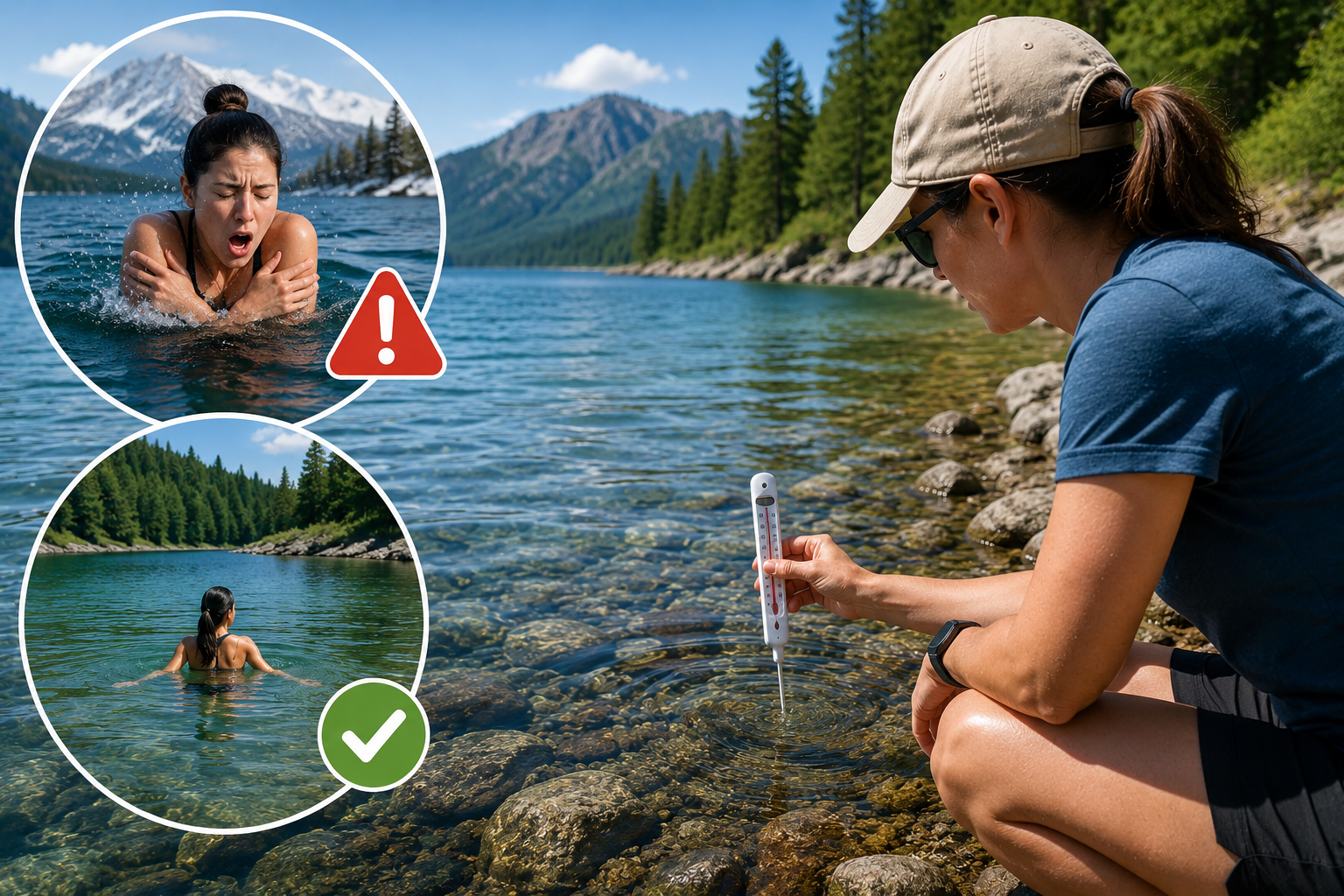
When you step into cold water slowly, you may notice your feet, ankles, or legs tingle. But when you jump in all at once, the sudden change can make your body react quickly. You may gasp, breathe faster, tense up, or feel briefly disoriented.
That reaction can be unsettling, especially if you are in deep water, far from shore, or not expecting it.
The “It’s Hot Outside, So the Water Must Be Fine” Mistake
This is one of the most common mistakes people make.
A sunny day warms your skin, the sand, the rocks, and the air around you. But lakes and rivers often warm much more slowly. Deep lakes can hold cold water below the surface, and rivers may be constantly refreshed by colder water upstream.
So even if you are sweating on the trail or sitting in the sun at a campsite, the water may still be much colder than it looks.
This matters because your body loses heat faster in water than in air. Even water that feels “just chilly” at first can become uncomfortable after several minutes.
Lakes and Rivers Are Not Like Swimming Pools
A pool is usually controlled. The depth is marked. The temperature is often predictable. The bottom is usually smooth. There may be lifeguards, ladders, and clear edges.
Natural water is different.
A lake may have warm shallow areas near the shore and much colder water farther out. A river may have calm-looking sections with strong currents underneath. A swimming hole may feel comfortable at the surface but colder near your legs because of spring water feeding into it.
Natural Water Changes From Place to Place
Even in the same lake, one spot can be warmer than another. A shallow beach area may feel pleasant, while a shaded cove or deeper drop-off can feel much colder.
In rivers, the temperature can change after rain, during snowmelt, or when water is released from a dam. The current also keeps water moving, which can make it feel colder on your skin than still water.
That is why checking the water temperature is not just a “springtime” safety habit. It is useful throughout the swimming season.
Cold Water Can Affect Breathing and Movement
When people think about swimming safety, they often think about distance, depth, or swimming ability. Those things matter, of course. But temperature affects how your body performs in the water.
Cold water can make your muscles feel stiff. Your arms and legs may not move as smoothly as they do in warm water. Your breathing may feel less controlled. If you are already nervous or tired, cold water can make the experience feel harder.
This is especially important for people who plan to swim out to a dock, cross a section of river, jump from rocks, or play in deeper water.
A Simple Example
Imagine a group of friends at a mountain lake in July. The sun is out, everyone is hot, and the water looks clear and beautiful. One person jumps in from a dock and immediately feels shocked by how cold it is. They gasp, panic for a second, and start swimming back quickly.
That moment may pass without a serious problem, but it is still a reminder: clear, beautiful water can be cold enough to catch you off guard.
A better approach would be to test the water first, enter gradually, and avoid jumping directly into deep water until you know how your body responds.
Children May Not Notice the Risk Early
Kids often focus on fun. If they see a lake or river, they may want to splash, swim, and jump in right away. They may not understand that cold water can tire them out faster or make it harder to swim back.
Children may also stay in the water longer than they should because they are excited or do not want to stop playing.
That is why adults should check the temperature and keep an eye on comfort signs. Shivering, blue lips, clumsy movements, unusual quietness, or saying “I’m fine” while clearly looking cold are all signs it may be time to take a break.
Make Water Checks Part of the Routine
Before kids swim in a lake or river, make it normal to pause and check the conditions.
You might say, “Let’s test the water first,” just like you would say, “Let’s put on sunscreen” or “Let’s check where the bathroom is.”
This makes water temperature feel like a normal part of outdoor fun, not a scary warning.
Cold Water Can Be More Common Than You Think
Many people assume cold water is only a concern in northern states or during early spring. But cold water can show up in many places.
You may find it in:
Mountain Lakes
Mountain lakes often stay cold because they are fed by snowmelt or sit at higher elevations. Even in summer, the water may be much colder than the air.
Spring-Fed Rivers
Some rivers and swimming holes are fed by underground springs. These can stay cool year-round, even when the weather is hot.
Deep Reservoirs
Reservoirs may have cold layers below the surface. If water mixes because of wind, currents, or dam releases, colder water may move into swimming areas.
Shaded Creeks and Forested Swimming Spots
Water that stays under tree cover may warm slowly. A creek in a wooded area can feel refreshing at first but become uncomfortable if you stay in too long.
Warm Water Has Its Own Concerns Too
Checking water temperature is not only about avoiding cold water. Very warm water can also affect comfort and safety.
Warm, still water may feel pleasant, but it can sometimes come with other issues, especially in late summer. Higher water temperatures can contribute to algae growth in some areas. Warm water may also make swimming feel less refreshing and increase fatigue if you are already overheated from hiking, paddling, or spending time in the sun.
This does not mean warm water is automatically unsafe. It simply means temperature is one piece of the bigger picture.
Before swimming, it is smart to check local signs, park alerts, water quality notices, and posted warnings. If the water looks unusual, smells odd, has heavy surface scum, or has warning signs nearby, choose another activity.
Common Mistakes People Make Before Swimming
Most water temperature problems happen because people make quick assumptions. The water looks calm, everyone else is swimming, or the day feels hot, so they jump in without thinking much about it.
Jumping in may seem fun, but it gives your body no time to adjust. It is better to step in slowly, splash some water on your arms and chest, and see how you feel before going deeper.
Swimming Too Far Too Soon
Even strong swimmers can feel different in cold natural water. Start close to shore. Swim a short distance first. Notice your breathing, energy, and comfort before going farther.
Assuming Kids Will Speak Up
Children may not say they are cold until they are very uncomfortable. Watch their behavior, not just their words.
Ignoring Weather and Recent Rain
Rain can change river conditions quickly. It can cool the water, increase current, reduce visibility, and bring debris into the area. Even if the swimming spot was fine last weekend, it may be different today.
Forgetting About the Return Swim
Swimming out is only half the activity. You still have to swim back. Cold water can make the return feel much harder if you have already used a lot of energy.
Warning Signs That the Water May Be Too Cold for Comfort
You do not need special training to notice when the water may not be a good fit for casual swimming. Pay attention to how your body feels and how others are acting.
Signs that the water may be too cold include:
Gasping or difficulty settling your breathing
Shivering soon after entering
Numb fingers or toes
Stiff arms or legs
Feeling unusually tired
Trouble speaking normally because of cold
A strong urge to rush back to shore
Children becoming quiet, clingy, or less coordinated
If you notice these signs, get out of the water, dry off, warm up gradually, and take a break.
Again, this is general safety awareness. For any serious symptoms or emergency situation, follow local emergency guidance and seek proper help.
How to Check Water Temperature Before Swimming
You do not need complicated equipment to build this habit. A few simple steps can help.
Use a Water Thermometer
A basic waterproof thermometer is inexpensive and easy to pack in a beach bag, camping bin, or kayak kit. Lower it into the water where people plan to swim, not just at the very edge.
Give it a little time to adjust before reading it.
This is especially helpful if you swim with children, visit cold-water areas, or go camping near lakes and rivers often.
Check Local Park or Beach Information
Many public swimming areas post water temperature, water quality updates, or general swimming conditions online or at the site. State parks, lake associations, recreation areas, and local authorities may share current information during the swimming season.
Look for posted signs near boat ramps, beaches, docks, and trailheads.
Test the Water Gradually
Even without a thermometer, your body can give you useful information.
Start by placing your feet in the water. Then splash water on your arms. Wade in slowly. Pay attention to whether your breathing stays relaxed and whether your body adjusts after a minute or two.
If you feel tense, shocked, or uncomfortable, do not force yourself to continue.
Ask Locals or Park Staff
If you are visiting a new area, local staff may know whether the lake or river is colder than it looks. They may also know about currents, drop-offs, recent rain, algae notices, or other conditions worth knowing.
A quick question can save you from guessing.
Practical Tips for Safer Lake and River Swimming
Checking water temperature is one habit. Pair it with a few other common-sense steps, and natural swimming becomes much more enjoyable.
Enter Slowly
Give your body time to adjust. Walk in from the shore when possible instead of jumping from a dock, rock, or boat.
Stay Close at First
Before swimming far out, stay near shore and see how the water feels. This is especially helpful in colder lakes, rivers, or unfamiliar areas.
Use the Buddy System
Swim with another person nearby. Natural water can change quickly, and having someone close makes the outing more relaxed and practical.
Wear a Life Jacket When Appropriate
For boating, paddling, weak swimmers, children, and areas with current, a properly fitted life jacket is a smart choice. It is not just for people who “can’t swim.” It is useful when conditions are unpredictable.
Take Breaks
Get out of the water regularly, especially if the water is cool. Dry off, warm up in the sun or shade depending on the weather, drink water, and check how everyone feels.
Watch the Weather
Wind, rain, clouds, and dropping temperatures can change the experience quickly. If the weather shifts, reassess the plan instead of assuming conditions are the same.
Avoid Alcohol Before Swimming
Alcohol can affect judgment, coordination, and awareness. Around lakes and rivers, clear decision-making matters.
Keep Children Within Arm’s Reach
For young children or inexperienced swimmers, close supervision is essential. Natural water often has uneven bottoms, sudden drop-offs, slippery rocks, and hidden obstacles.
What About Wetsuits and Swim Gear?
If you often swim in colder lakes or rivers, gear can help. A wetsuit, neoprene swim cap, or water shoes may make the experience more comfortable.
Water shoes are especially useful because lake and river bottoms can be rocky, muddy, slippery, or uneven. They do not solve the temperature issue, but they can help you enter and exit more carefully.
For casual family swimming, you may not need special gear. But if the water is consistently chilly, planning ahead can make the outing much more pleasant.
A Simple Pre-Swim Checklist
Before swimming in a lake or river, pause for one minute and ask:
How cold does the water feel?
Test it before fully entering.
Are there posted warnings?
Check signs, flags, notices, and local updates.
Is the water moving?
Rivers and dam-fed areas can have currents that are stronger than they look.
Can everyone swim back comfortably?
Think about energy, distance, cold, and fatigue.
Are children being watched closely?
Do not rely on groups or crowds. Choose a specific adult to supervise.
Is the weather changing?
Cloud cover, wind, and rain can make cold water feel colder.
This quick check does not take long, but it can prevent a lot of uncomfortable or risky situations.
Why This Habit Matters in Everyday Life
Most people do not swim in lakes and rivers every day. That is exactly why it is easy to underestimate them.
A family might visit a state park once or twice a summer. Friends might stop at a river during a road trip. Campers might discover a beautiful swimming hole near their site. In those moments, excitement can take over.
Checking water temperature brings a little awareness back into the picture.
It helps you decide whether to swim now, wait until later in the day, stay in the shallows, wear extra gear, or skip swimming and enjoy the water from shore instead.
That is the heart of practical safety: not avoiding life, but making better choices while enjoying it.
Final Thoughts: Test the Water Before You Dive Into the Fun
Swimming in lakes and rivers can be one of the best parts of summer. The fresh air, open space, and natural setting make it feel different from any pool. But natural water deserves a little extra respect.
Before you jump in, check the water temperature. Step in slowly. Watch how your body reacts. Keep children close. Pay attention to posted warnings and changing weather.
The goal is not to make swimming complicated. It is simply to build a small habit that helps everyone enjoy the water with more confidence.
A quick temperature check can turn a rushed, uncomfortable swim into a safer, calmer, and much more enjoyable day by the lake or river.
Hi, I’m the creator and editor behind ZestyHabit. I research everyday safety, first aid, and practical wellness topics using official guidance and reliable public sources, then turn that information into clear, realistic steps for daily life.
My goal is to help readers make safer, better-informed choices at home and beyond.



[…] why shaving with an old razor can feel rough even if you are using the same shaving cream, the same water temperature, and the same […]