
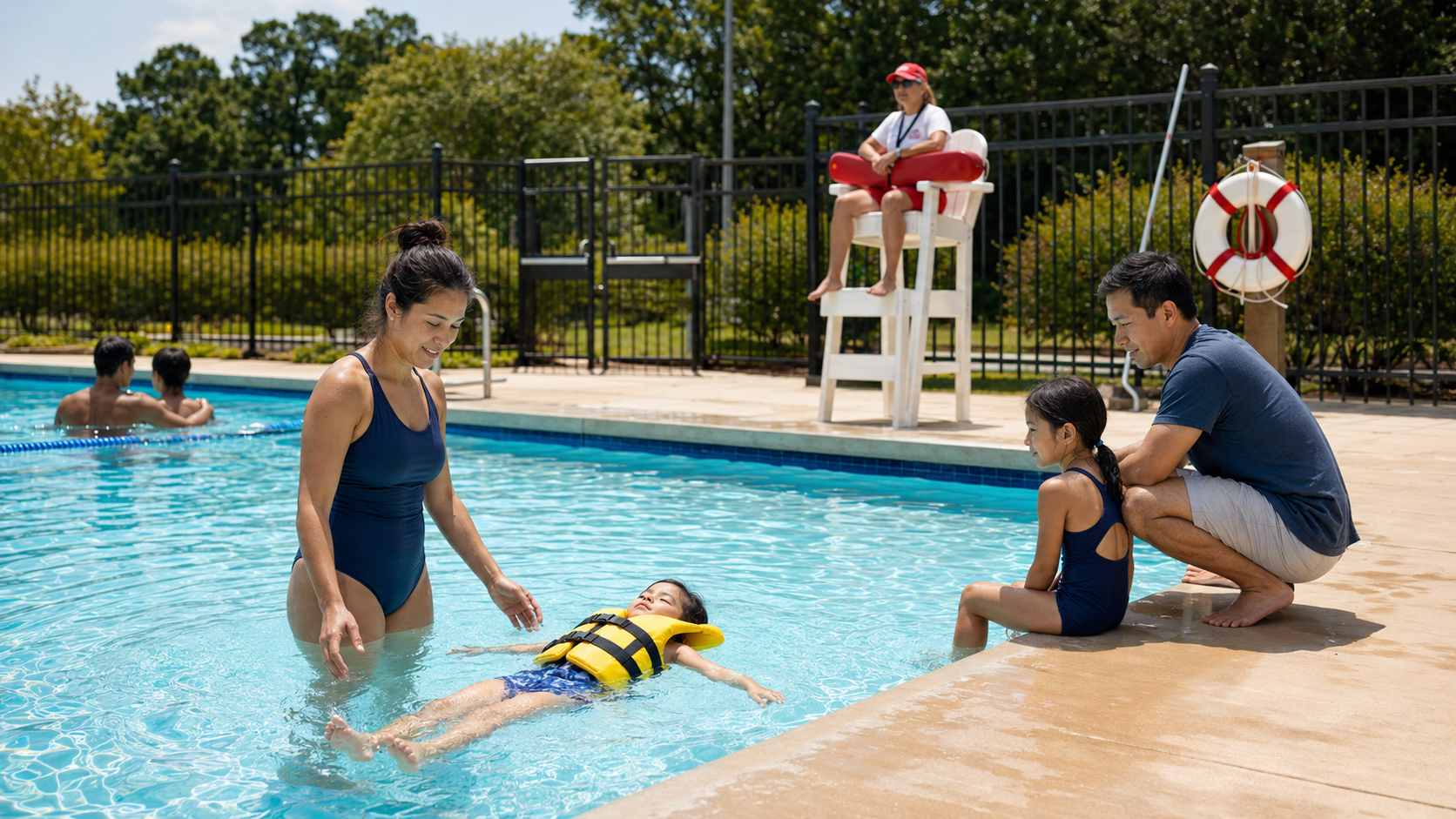

Learn essential water safety rules for pools, beaches, lakes, rivers, and boating. Discover how to prevent drowning and respond safely in an emergency.
Swimming, boating, and playing near the water are some of the best parts of summer. Unfortunately, a relaxing day can become an emergency within seconds. Drowning, diving injuries, dangerous currents, sudden weather changes, and poorly fitted life jackets are only a few of the risks that families may encounter.
Water-related accidents are not limited to people who cannot swim. Strong swimmers can become exhausted, injured, disoriented, or trapped by a current. Young children can also enter a pool unnoticed during a moment when no one expects them to be near the water.
According to the Centers for Disease Control and Prevention, the United States experiences approximately 4,000 fatal and 8,000 nonfatal unintentional drownings each year. Many of these tragedies can be prevented through active supervision, proper equipment, swimming education, and a realistic understanding of natural water conditions.
The following water safety rules can help adults, children, and families enjoy pools, beaches, rivers, lakes, and boats more safely.
Understand That Drowning Is Often Silent
Movies usually show a drowning person shouting, waving, and splashing dramatically. Real drowning may look very different. A person struggling to breathe may be physically unable to call for help. Their head may remain low in the water, their mouth may repeatedly sink below the surface, or they may appear to be climbing an invisible ladder.
Other warning signs can include:
- Hair covering the eyes or face
- A blank or unfocused expression
- Little or no forward movement
- An upright body with ineffective kicking
- Repeated attempts to roll onto the back
- A child becoming unusually quiet in the water
Never assume that silence means everyone is safe. Drowning can happen quickly, so supervisors must continually watch the people in their care rather than waiting to hear a cry for help.
Assign an Adult to Watch Children
When several adults are gathered around a pool, everyone may assume that somebody else is watching the children. This shared assumption creates a dangerous gap in supervision.
Designate one responsible adult as the “water watcher.” That person should keep young children within sight and, when appropriate, within arm’s reach. The water watcher should not use a phone, read, prepare food, drink alcohol, or become involved in a long conversation.
Supervision should continue even when a lifeguard is present. Lifeguards watch an entire swimming area and cannot replace the close attention of a parent or caregiver.
Rotate the water-watcher role at agreed intervals so the responsible adult remains alert. Clearly tell the next person when supervision is being transferred. Never walk away until the new watcher has acknowledged the responsibility.
The CDC’s drowning-prevention guidance emphasizes that children who have completed swimming lessons still need close and constant supervision. Swimming ability reduces risk, but it does not make a child drown-proof.
If a young child is suddenly missing, check nearby water first. Search pools, hot tubs, ponds, fountains, buckets, and other water sources before looking elsewhere.
Use Multiple Layers of Protection Around Pools
No single pool-safety measure is perfect. Families should use several protective layers so that one mistake does not immediately result in an emergency.
A home pool should be surrounded by a four-sided fence that separates it from the house and yard. The CDC recommends a fence at least four feet high with self-closing and self-latching gates. Keep furniture, boxes, and other climbable objects away from the fence.
Doors and windows leading to the pool area should be locked when the pool is not being used. Door alarms and pool alarms can provide additional warnings, but they do not replace a secure barrier or adult supervision.
Remove toys from the pool after swimming. A floating ball or colorful toy may attract a child back to the water. Empty small wading pools after each use and store them upside down.
Pool drains and suction fittings should have secure, compliant covers. Do not allow children to play near drains, sit on them, or swim with loose hair and dangling clothing that could become trapped.
Choose a Real Life Jacket
Inflatable arm bands, pool noodles, swim rings, and air mattresses are toys—not lifesaving devices. They may deflate, slip away, or tip a child into a face-down position.
Use a U.S. Coast Guard-approved life jacket that is designed for the wearer’s size and planned activity. Check the label for weight, chest measurement, and use restrictions. Fasten every buckle and strap, then confirm that the jacket fits snugly. If it rises above the wearer’s chin or ears when lifted at the shoulders, it may be too large or too loose.
The U.S. Coast Guard recommends wearing an approved life jacket whenever a boat is underway. There must also be an appropriate wearable personal flotation device for each person aboard.
Children, weak swimmers, and people using kayaks, paddleboards, or personal watercraft should wear their life jackets rather than simply keeping them nearby. An emergency rarely provides enough time to locate and correctly put on a stored jacket.
Inspect flotation devices for broken straps, torn fabric, damaged foam, mildew, or waterlogging. Follow the manufacturer’s maintenance instructions for inflatable models.
Check the Water Before Entering
Never jump or dive into unfamiliar water. A clear-looking lake or river may conceal rocks, tree branches, sudden drop-offs, or debris just below the surface. Murky water can also make it difficult to judge depth.
Enter feet first unless you are in an area specifically marked and maintained for diving. Follow posted depth requirements and never dive into an above-ground pool or the shallow end of a swimming pool.
At natural swimming areas, look for warning signs, restricted zones, dam structures, boat traffic, fishing lines, slippery rocks, and changes in water color or movement. Ask a lifeguard or local authority about current conditions.
Choose designated swimming areas whenever possible. Avoid swimming alone, after dark, or in remote locations where emergency help would be difficult to reach. Even experienced swimmers should use the buddy system.
Treat Rivers and Lakes Differently From Pools
Swimming in open water requires different skills from swimming in a pool. Water temperature, visibility, depth, waves, vegetation, and currents can change without warning.
River currents may be much stronger than they appear from shore. Water moving over rocks can trap a person’s foot, while low-head dams can create powerful circulating currents. Do not enter restricted areas near dams, spillways, or flood-control structures.
In lakes, swimmers may encounter cold pockets, sudden depth changes, weeds, submerged objects, and boat traffic. Stay inside designated swimming zones and make yourself visible to boat operators.
Do not try to stand in fast-moving water that is above your knees. If you fall, your feet can become trapped while the current pushes your upper body downstream. During periods of heavy rain, avoid rivers, streams, drainage channels, and narrow canyons because water levels can rise rapidly.
Know How to Respond to a Rip Current
Rip currents are narrow channels of water moving away from shore. They do not pull swimmers underneath the water, but they can carry a person away from the beach and cause exhaustion.
Check the beach forecast and speak with a lifeguard before entering the ocean. The National Weather Service warns that rip currents can form even on calm, sunny days. Swim near a lifeguard and obey beach flags and closure signs.
If you are caught in a rip current:
- Stay calm and conserve your energy.
- Do not fight the current by swimming directly toward shore.
- Float or tread water if you need to rest.
- Wave and call for help.
- If you can swim safely, move parallel to the shoreline until you escape the current.
- Once free, swim at an angle back toward the beach.
If you see someone caught in a current, alert a lifeguard and call 911. Throw the person a flotation device if one is available. Do not form a human chain or enter dangerous water unless you are trained and equipped for water rescue.
Watch the Weather and Water Temperature
Check the complete forecast before leaving home, not just the air temperature. Strong winds, high surf, thunderstorms, flash floods, and rapidly changing tides can make water recreation unsafe.
Leave the water as soon as you hear thunder. Move to a substantial enclosed building or a hard-topped vehicle rather than waiting beneath a beach umbrella, tree, or open shelter. Do not return simply because the rain has become lighter; follow local weather guidance about when it is safe to resume activities.
Cold water is another underestimated danger. Sudden immersion can trigger gasping, rapid breathing, panic, and loss of muscle control—even on a warm day. Wear a suitable life jacket and thermal protection when boating or participating in cold-water activities.
Avoid Alcohol Before and During Water Activities
Alcohol affects judgment, balance, coordination, reaction time, and the ability to recognize danger. It can also encourage risky diving, swimming beyond safe limits, or operating a boat irresponsibly.
Avoid alcohol while swimming, boating, supervising children, or participating in water sports. Prescription medications, cannabis, and other substances that cause drowsiness or impaired coordination may create similar risks.
Fatigue and dehydration also matter. Take breaks, drink water regularly, and leave the water before you become exhausted. Do not pressure anyone to swim farther, jump from a height, or participate in an activity that exceeds their ability.
Rescue Without Becoming Another Victim
A panicked person may grab a rescuer and pull both people underwater. Your first response should be to alert a lifeguard, call emergency services, and use a rescue method that allows you to remain on land.
Reach toward the person with a pole, paddle, rope, branch, or other long object. If the person is farther away, throw a life ring, rescue tube, cooler, or another floating object. Lie down or brace yourself before extending an object so you are not pulled into the water.
Entering the water should be left to trained rescuers whenever possible. Conditions that endangered the first swimmer—such as a current, cold water, submerged debris, or powerful waves—can endanger you too.
When calling 911 from a beach or lake, provide the name of the location, the nearest entrance, visible landmarks, and the person’s last known position.
Provide First Aid After a Drowning Incident
Once the person has been safely removed from the water, check whether they are responsive and breathing normally. Call 911 or direct another person to call, and ask someone to bring an automated external defibrillator if one is available.
If the person is not breathing normally, begin CPR. Updated American Heart Association drowning guidance emphasizes that CPR with rescue breaths and chest compressions is especially important after drowning because the emergency usually begins with a lack of oxygen. Trained rescuers may start with two rescue breaths followed by 30 chest compressions. If you are untrained, unwilling, or unable to provide breaths, perform chest compressions and follow the emergency dispatcher’s instructions until help arrives.
Use an AED as soon as it is available, following its spoken directions. Dry the person’s chest quickly before attaching the pads, and make sure no one is touching them during analysis or shock delivery.
Do not waste time trying to force water out of the lungs by pressing on the abdomen or hanging the person upside down. Do not assume they are safe simply because they begin coughing or regain consciousness.
Anyone who experiences breathing difficulty, persistent coughing, chest pain, confusion, unusual sleepiness, or bluish skin after submersion needs urgent medical evaluation. Call emergency services if symptoms are significant or worsening.
A Quick Water Safety Checklist
Before entering the water, confirm that:
- A sober, attentive adult is supervising children.
- Everyone knows where the shallow and deep areas are.
- Life jackets fit correctly and are being worn.
- Weather, currents, tides, and local warnings have been checked.
- A phone and rescue equipment are accessible.
- No one is swimming alone or under the influence.
- Children cannot return to the water unnoticed.
- At least one adult knows CPR.
- Everyone understands where to meet if the group becomes separated.
Water activities should create happy summer memories, not preventable emergencies. Active supervision, properly fitted life jackets, respect for natural conditions, and basic rescue knowledge make an enormous difference when something unexpected happens. Which water safety rule does your family consider most important, and have you ever encountered a dangerous situation at a pool, river, lake, or beach? Share your experience and safety tips in the comments below.

Hi, I’m the creator and editor behind ZestyHabit. I research everyday safety, first aid, and practical wellness topics using official guidance and reliable public sources, then turn that information into clear, realistic steps for daily life.
My goal is to help readers make safer, better-informed choices at home and beyond.


