
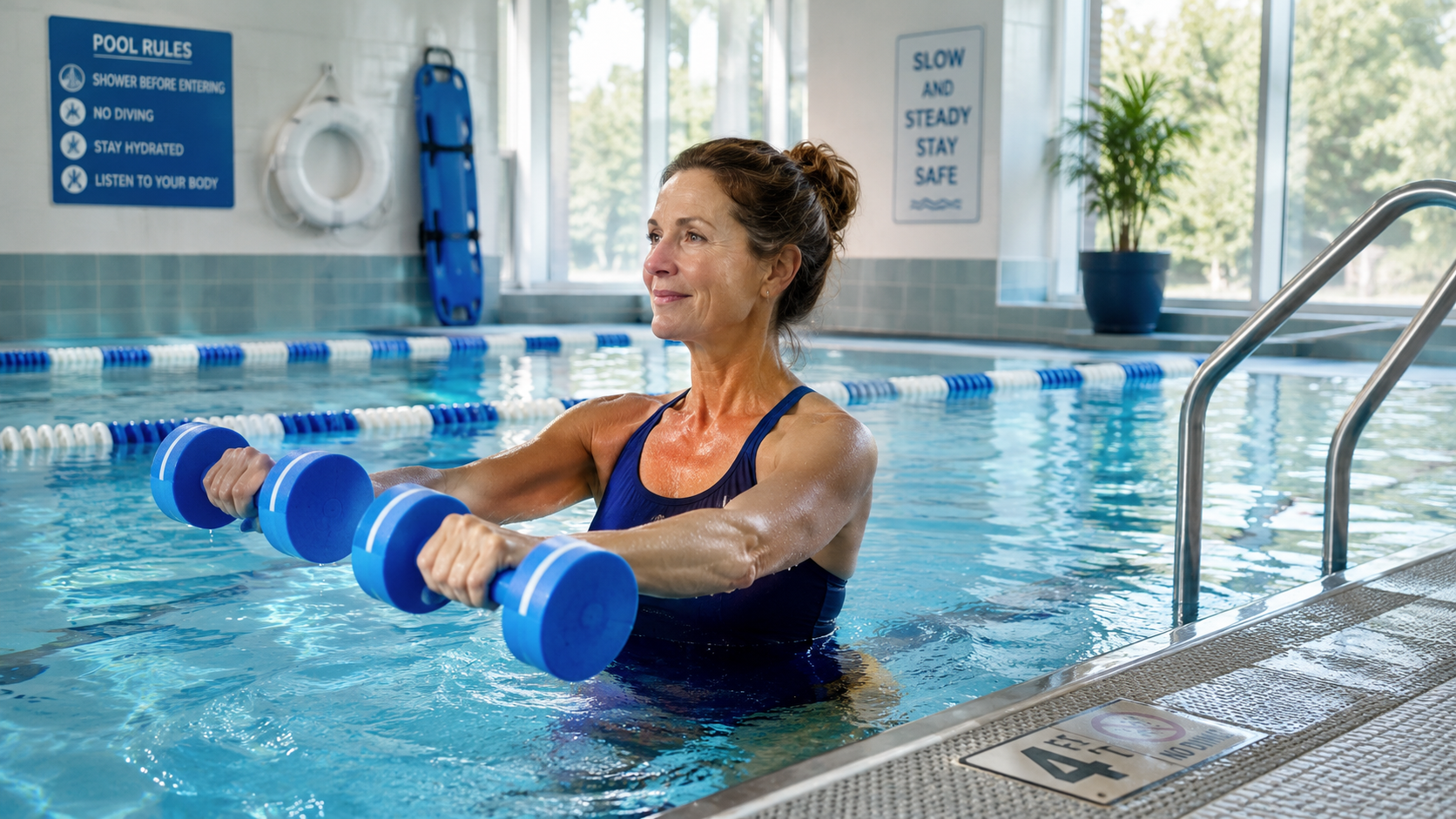

Water aerobics is one of those workouts that looks gentle from the outside but can still give your body a surprisingly effective session. The water supports your joints, adds natural resistance, and makes movement feel smoother than it often does on land. That is why many people choose water aerobics for fitness, balance, recovery, weight management, or simply a lower-impact way to stay active.
But “low impact” does not mean “no precautions needed.”
A pool workout still asks your body to move, balance, breathe, sweat, and coordinate. The water can make exercise feel easier while your muscles are actually working hard. It can also hide fatigue because you may not notice how much you are sweating or how tired your legs are until you step out of the pool.
For beginners, older adults, people returning to exercise, or anyone with sensitive knees, hips, shoulders, or balance concerns, a little preparation makes water aerobics much safer and more enjoyable.
Here is what to check before and during a water aerobics session so you can get the benefits of pool exercise without unnecessary strain.
Why Water Aerobics Feels Gentle but Still Works the Body
Water changes the way exercise feels. Because of buoyancy, your body feels lighter in the pool. This reduces some of the impact on your knees, hips, ankles, and lower back compared with jogging, jumping, or fast movement on land.
At the same time, water creates resistance in every direction. When you push your arms forward, pull them back, lift your knees, or kick your legs, the water pushes back. This means even simple movements can strengthen muscles and improve endurance.
That combination is what makes water aerobics so appealing. It can feel joint-friendly while still being challenging.
However, the same water resistance can become tiring if you move too aggressively or use poor form. Your shoulders may fatigue from repeated arm movements. Your calves may cramp from pushing off the pool floor. Your lower back may feel strained if you arch or twist too much. Your balance may feel different because the water shifts around you.
So the goal is not to treat water aerobics as effortless. The goal is to use the pool wisely.
Choose the Right Pool Depth
Pool depth matters more than many beginners realize.
For most water aerobics classes, chest-deep water is a comfortable starting point. At this depth, the water supports part of your body weight while still allowing your feet to touch the floor. You can move with less impact, but you still have enough control to balance and push off safely.
If the water is too shallow, your joints may receive more impact during bouncing or stepping movements. Shallow water may feel easier, but it can reduce the cushioning effect that makes water aerobics appealing.
If the water is too deep and your feet cannot touch the bottom, the workout becomes more like deep-water exercise. That can be excellent with the right flotation belt and instruction, but it requires more core control, coordination, and comfort in the water.
Beginners should avoid deep-water classes unless they are comfortable floating and have proper equipment. Even confident swimmers can feel awkward when trying to exercise vertically in deep water.
A simple rule: start where you can stand comfortably, breathe easily, and control your movements without panic.
Wear the Right Footwear
Pool floors can be slippery. Water aerobics often includes stepping, marching, side movements, kicks, and quick changes of direction. Bare feet may be fine for some people, but many beginners feel more stable with water shoes.
Water shoes can improve traction, protect your feet from rough pool surfaces, and help you feel more secure during movements. They are especially useful if you have balance concerns, sensitive feet, or a history of slipping.
Choose shoes designed for pool use. They should fit snugly, drain well, and have a non-slip sole. Avoid shoes that feel heavy, loose, or likely to come off during movement.
Good footwear will not replace careful movement, but it can reduce the chance of sliding or feeling unstable.
Warm Up Before Moving Hard
Even though you are in water, your body still needs a warm-up.
Some people enter the pool and immediately start big arm swings, fast kicks, or jumping motions. That can be too abrupt, especially if your muscles and joints are cold.
Start slowly. Walk through the water for a few minutes. Move your arms gently. Do easy shoulder rolls, ankle circles, knee lifts, and side steps. Let your breathing settle and your body adjust to the water temperature.
The warm-up should gradually increase your heart rate and loosen your joints. It should not feel exhausting.
If the pool is cool, warming up becomes even more important. Cold muscles may feel stiff, and sudden vigorous movement can feel uncomfortable. Give your body time to adapt before increasing intensity.
Protect Your Joints With Controlled Movement
Water aerobics is often recommended because it is easier on the joints than many land workouts. But joint-friendly exercise still depends on how you move.
Avoid locking your knees during marching, kicking, or jumping motions. Keep your knees soft and slightly bent. Let your hips, knees, and ankles work together.
When doing side steps or wide movements, do not force your legs farther than comfortable. The water may make large movements feel easier, but your joints still have limits.
For arm movements, avoid snapping your elbows or shoulders through the water. Move with control. Water resistance increases as you move faster, so aggressive arm swings can irritate the shoulders if you are not ready.
If you are using water dumbbells, foam noodles, or resistance gloves, start gently. These tools make exercises harder. They may look light, but the resistance can build quickly.
Good water aerobics movement should feel smooth, not jerky. You should feel your muscles working without sharp pain in your joints.
Pay Attention to Balance
Balance feels different in water. The pool supports you, but it also moves around you. Waves from other people, changes in direction, and floating equipment can challenge your stability.
Beginners should stay near the pool wall at first if they feel unsure. You do not need to hold the wall the whole time, but having it nearby can give you confidence.
When doing single-leg movements, kicks, or turns, move slowly until you understand how your body reacts. Keep your core gently engaged and your posture tall.
Avoid leaning too far backward or forward. In water, small balance changes can become exaggerated because your body floats and shifts.
If a movement makes you feel unstable, reduce the range of motion. For example, lift the knee lower, step smaller, or slow the pace. You can always increase intensity later.
Balance improves with practice, but beginners should not rush it.
Do Not Forget Hydration
One of the most common mistakes in water aerobics is forgetting to drink water.
Because you are in the pool, you may not notice sweating. The water keeps your skin cool, so you might assume you are not losing fluid. But your body can still sweat during pool exercise, especially in warm indoor pools or heated outdoor pools.
Bring a water bottle and keep it near the pool edge. Take small sips before class, during breaks, and afterward.
Signs you may need more fluids include dry mouth, headache, dizziness, unusual fatigue, muscle cramps, or feeling lightheaded after class.
Hydration is especially important if you are exercising in warm weather, taking a longer class, or doing a more intense session.
Be Careful With Pool Temperature
Pool temperature affects how your body feels during exercise.
A very warm pool can feel relaxing at first, but it may make you overheat faster during vigorous movement. You may feel tired, flushed, or lightheaded sooner than expected.
A cooler pool can feel refreshing, but it may make your muscles feel stiff at the start. If the water is cold, warm up gradually and avoid sudden intense movements.
For gentle water aerobics, many people prefer comfortably warm water. For more intense cardio-style classes, slightly cooler water may feel better. The best temperature depends on the workout, your body, and your comfort.
Pay attention to how you feel. If you feel chilled, shaky, overheated, dizzy, or unusually tired, step out and rest.
Know Your Limits With Intensity
Water aerobics can be modified for many fitness levels. That is one of its biggest strengths. But it also means you need to choose the version that fits your body.
Instructors may demonstrate higher-intensity moves such as jumping jacks, fast jogging, powerful kicks, or big arm pushes. You do not have to match every movement exactly.
You can make exercises easier by moving slower, reducing your range of motion, keeping one foot on the floor, or using less resistance. You can make them harder by increasing speed, using equipment, or lifting the knees higher.
Beginners should start at a level where they can breathe comfortably and maintain good form. You should be able to speak in short sentences, even if you are working.
Avoid competing with others in the class. Some people may have years of experience, stronger balance, or better conditioning. Your safe pace is the one that lets you finish feeling challenged but not wiped out.
Use Pool Equipment Carefully
Water aerobics classes often use foam dumbbells, noodles, kickboards, resistance gloves, or flotation belts. These tools can make exercise more fun and effective, but they also change the demands on your body.
Foam dumbbells create resistance because they want to float. Pushing them underwater can strongly challenge your shoulders, arms, chest, and core. If you force them down too aggressively, your shoulders or wrists may get irritated.
Noodles can help with support, balance, or resistance, but they can also shift suddenly if you lean on them too much. Use them as instructed rather than relying on them completely.
Resistance gloves increase drag through the water. That can be useful, but beginners with shoulder or wrist sensitivity should start slowly.
Flotation belts are helpful in deep-water classes, but they need to fit properly. If the belt rides up or feels unstable, adjust it before continuing.
Equipment should support the workout, not make you feel out of control.
Watch Your Shoulders and Neck
Water aerobics includes many repeated arm movements: pushing, pulling, sweeping, lifting, pressing, and circling. These can strengthen the upper body, but they can also fatigue the shoulders and neck.
Keep your shoulders relaxed instead of shrugging them toward your ears. Avoid forcing your arms behind your body or lifting them higher than comfortable.
If your neck feels tense, check whether you are holding your breath or clenching your jaw. Many people tense their upper body when trying to balance.
Move your arms through a comfortable range. You do not have to make giant movements to get a benefit. In water, even medium-sized movements can be effective.
If you feel sharp shoulder pain, pinching, tingling, or weakness, stop that movement and switch to a gentler option.
Protect Your Lower Back
Water can support the body, but poor posture can still strain the lower back.
During water jogging, kicks, or core exercises, avoid arching your back excessively. Keep your ribs stacked over your hips and your core gently active.
If you are doing leg lifts, do not lift so high that your lower back takes over. Smaller, controlled movements are better than large movements that cause arching or twisting.
When using a noodle or flotation belt, pay attention to your body position. If your legs float behind you and your lower back arches, adjust your posture or reduce the movement.
Back discomfort is often a sign that the exercise is too large, too fast, or not well controlled. Slow down and reset your position.
Enter and Exit the Pool Safely
Slips often happen around the pool, not just in the water.
Walk slowly on the pool deck. Use handrails when entering or exiting. Avoid rushing, especially if the floor is wet.
If you use pool steps, place your whole foot carefully and hold the rail. If using a ladder, climb slowly and keep three points of contact when possible.
After class, your legs may feel heavier than expected. Water supports your body while you exercise, so stepping out can make gravity feel suddenly intense. Pause before walking away.
This is especially important for beginners, older adults, or anyone who feels lightheaded after exercise.
Be Mindful of Chlorine and Skin Comfort
Pool exercise means repeated exposure to chlorinated water. For most people, this is manageable, but it can dry out the skin and hair.
Shower before entering the pool to help keep the water cleaner. After class, rinse off well and apply moisturizer if your skin feels dry. If your hair gets dry easily, wetting it with clean water before swimming and rinsing afterward can help reduce that straw-like feeling.
Goggles may be useful if your eyes get irritated. A swim cap can help keep hair more controlled and reduce tangling.
This may not sound like a safety issue, but comfort matters. If your skin, eyes, or hair feel irritated every time, you may become less consistent with exercise.
Listen for Warning Signs
Water aerobics should feel supportive, but it should not cause sharp pain, dizziness, chest discomfort, or unusual shortness of breath.
Stop exercising and rest if you notice:
- Dizziness or lightheadedness
- Chest pain or pressure
- Trouble breathing beyond normal exercise effort
- Sudden weakness
- Sharp joint pain
- Feeling overheated or chilled
- Muscle cramps that do not ease
- Confusion or unusual fatigue
- Pain that changes your movement
Mild muscle fatigue can be normal. Sharp or unusual symptoms deserve attention.
If you have a medical condition, are pregnant, are recovering from surgery, or have significant joint or heart concerns, it is wise to check with a healthcare professional before starting a new exercise program.
Modify Movements Without Feeling Embarrassed
One of the best things about water aerobics is that almost every move can be modified.
If the class is doing jumps, you can step instead. If the class is moving fast, you can slow down. If arm movements bother your shoulders, keep them smaller. If balance feels difficult, stay closer to the wall.
A good instructor will understand modifications. You are not failing the class by adjusting. You are making the workout fit your body.
Beginners often get hurt when they try to keep up with every move exactly, even when their body is clearly asking for a gentler version.
Your goal is consistency, not perfection.
Cool Down Before Getting Out
Do not go from intense water movement straight to the locker room. A short cool-down helps your heart rate settle and gives your body time to transition.
Walk slowly through the water. Do gentle arm movements. Stretch lightly if it feels good. Focus on breathing and letting your muscles relax.
After you get out, move carefully. Your legs may feel wobbly because the water was supporting you during class.
Drink water and eat a balanced meal or snack if you exercised hard. Recovery still matters, even though the workout happened in a pool.
A Simple Water Aerobics Safety Checklist
Before your next pool workout, check the basics:
- Choose a class or depth that matches your comfort level.
- Wear a properly fitted swimsuit and secure water shoes if needed.
- Bring water and drink before, during, and after class.
- Warm up gradually before moving hard.
- Keep movements smooth and controlled.
- Use equipment gently at first.
- Stay near the wall if balance feels uncertain.
- Avoid locking your knees or forcing large movements.
- Watch for dizziness, cramps, or sharp pain.
- Enter and exit the pool slowly.
- Rinse off and moisturize afterward if chlorine dries your skin.
This checklist only takes a moment, but it can make your workout feel safer and more comfortable.
Final Thoughts
Water aerobics is a smart, accessible way to move your body. It can support the joints, improve balance, build strength, and offer a refreshing change from land-based workouts. But like any form of exercise, it works best when you respect your body and the environment.
Start in the right pool depth. Wear a life-friendly, comfortable setup, including water shoes if you need better traction. Warm up gradually. Keep your movements controlled. Drink water, even if you do not feel sweaty. Pay attention to pool temperature, fatigue, and balance.
Most importantly, modify when needed. The pool gives you options. You can move smaller, slower, lighter, or closer to the wall and still get a worthwhile workout.
Safe water aerobics is not about doing every move perfectly. It is about moving with awareness, protecting your joints, and leaving the pool feeling better than when you stepped in.

Hi, I’m the creator and editor behind ZestyHabit. I research everyday safety, first aid, and practical wellness topics using official guidance and reliable public sources, then turn that information into clear, realistic steps for daily life.
My goal is to help readers make safer, better-informed choices at home and beyond.


