
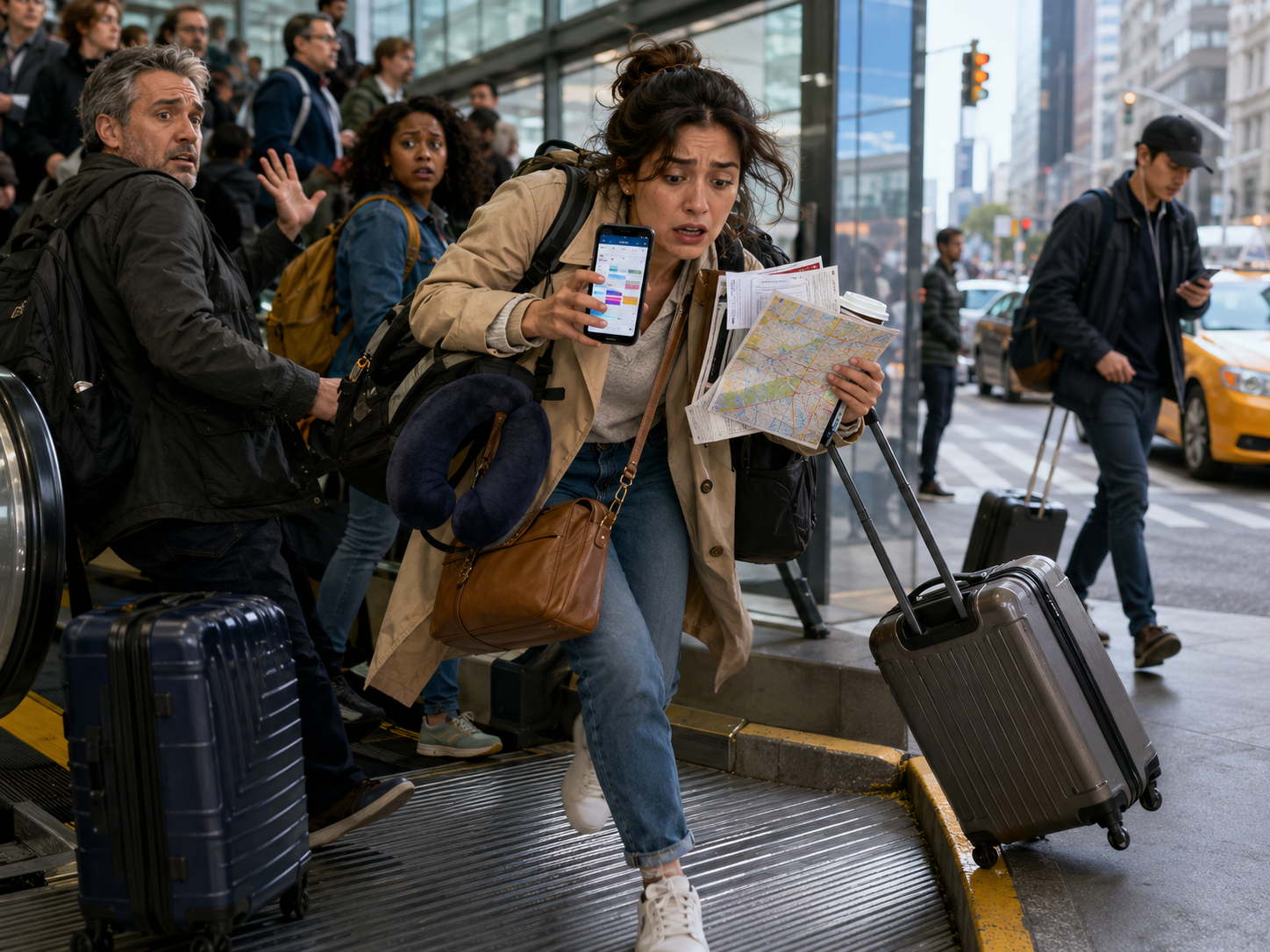
A packed travel schedule may seem efficient, but rushing from place to place can lead to fatigue, missed details, poor decisions, and preventable safety issues. Learn how to plan with more breathing room.

Why a Busy Travel Schedule Can Feel So Tempting
When you finally get time off, it is natural to want to make the most of it.
You have flights booked, hotel nights paid for, restaurants saved, museums pinned on the map, and maybe a few “must-see” spots everyone online says you cannot miss. If you are traveling with family or friends, each person may have their own list too.
Before long, the itinerary starts to look packed from morning to night.
At first, that can feel exciting. A full schedule makes the trip feel valuable. It feels like you are not wasting time or money. But there is a point where a travel plan becomes so tight that it stops helping you and starts creating stress.
A rushed itinerary can lead to fatigue, skipped meals, poor navigation, careless packing, late-night driving, arguments, lost items, and decisions made in a hurry. None of these things automatically ruin a trip, but together they can make travel less safe and much less enjoyable.
The goal is not to plan a boring trip. The goal is to leave enough breathing room so you can enjoy the trip without constantly racing the clock.
Tight Schedules Reduce Your Margin for Error
Travel Almost Always Takes Longer Than Expected
One of the biggest problems with a packed itinerary is that it assumes everything will go smoothly.
But real travel rarely works that way.
A rideshare may take longer to arrive. The hotel room may not be ready. A child may need a bathroom break. A restaurant may have a long wait. A museum line may wrap around the block. Road construction may slow traffic. A flight may be delayed. You may get turned around in an unfamiliar train station.
If your schedule has no buffer, one small delay can throw off the whole day.
That is when people start rushing. They run through airports, skip meals, cross streets without looking carefully, drive faster than they should, or make quick decisions without checking details.
A little extra time is not wasted time. It is your safety cushion.
Rushing Makes Small Mistakes More Likely
When people are hurried, they forget things.
They leave passports in hotel safes, phones in taxis, wallets at café tables, jackets in airport security bins, and medications in previous hotel rooms. They book the wrong platform, miss the correct exit, or enter the wrong address into a navigation app.
These mistakes are not signs of being careless. They are normal human mistakes that become more likely when the brain is overloaded.
A tight itinerary asks your brain to keep track of too much while also moving quickly through unfamiliar places. That combination is where preventable problems often begin.
Fatigue Builds Up Quietly
Travel Tiredness Is Different From Regular Tiredness

Travel fatigue is not just about being sleepy.
It can come from early flights, time zone changes, walking more than usual, carrying luggage, eating at odd times, sleeping poorly in hotels, dealing with crowds, and constantly making decisions in unfamiliar places.
Even a fun day can be tiring.
When the itinerary is packed, there may be no real recovery time. You wake up early, rush through breakfast, walk all day, commute to the next activity, eat late, sleep late, and repeat it again the next morning.
By day three, even cheerful travelers may become irritable, clumsy, forgetful, or less aware of their surroundings.
Fatigue Can Affect Driving
A packed trip often includes long drives, late-night returns, or early morning airport runs.
This matters because tired driving can reduce alertness and reaction time. A driver who is trying to “push through” to stay on schedule may miss road signs, drift lanes, follow too closely, or react slowly to sudden traffic changes.
Road trips are especially vulnerable to overplanning. It is easy to schedule a scenic stop, a hike, a dinner reservation, and a three-hour drive all in one day. On paper, it works. In real life, the driver may be exhausted by the time everyone gets back in the car.
If your plan includes driving, build the day around the driver’s energy, not just the map distance.
Packed Itineraries Can Lead to Skipped Meals and Dehydration
Hunger Makes Travel Stress Worse
When people are rushing from one stop to the next, meals often become an afterthought.
Breakfast becomes coffee only. Lunch becomes a snack bar in a bag. Dinner gets pushed late because there is “just one more thing” to see.
This can affect mood, patience, and decision-making. Hungry travelers are more likely to argue, feel dizzy, get headaches, or make rushed choices. Kids may melt down. Older adults may become more tired than expected. People with certain health needs may have a harder time staying comfortable.
A good itinerary does not just include attractions. It includes time to eat.
Hydration Is Easy to Forget
Travelers also tend to drink less water when they are busy.
They may avoid drinking because bathrooms are inconvenient, or they may forget because the day is moving quickly. In hot weather, high altitude, theme parks, long walks, or crowded outdoor events, this can catch up fast.
Dehydration can contribute to fatigue, headaches, lightheadedness, and poor concentration. Even mild discomfort can make a rushed day feel much harder.
A simple bottle of water and planned breaks can prevent a lot of travel misery.
Rushing Can Make Navigation Less Safe
You May Stop Paying Attention to Your Surroundings
When the schedule is tight, people often walk while staring at their phones.
They are checking directions, looking at transit times, messaging the group, reviewing tickets, or trying to find the next location. This is understandable, but it can make travelers less aware of traffic, uneven sidewalks, cyclists, scooters, stairs, curbs, and crowded areas.
In unfamiliar places, situational awareness matters. You may not know which streets are busy, where cars turn, how local crosswalks work, or which areas become crowded at certain times.
If you are already late, you are more likely to hurry across streets, rush down stairs, or follow the map without noticing what is happening around you.
Public Transportation Becomes More Stressful
A packed itinerary often depends on catching the exact train, bus, ferry, or shuttle.
When you are trying not to miss it, you may run through stations, squeeze into crowded cars, or separate from your group. You may also board the wrong train because you did not take time to confirm the direction.
This is especially hard with kids, older relatives, strollers, luggage, or anyone who walks more slowly.
Public transportation is much easier when you treat the schedule as flexible and give yourself time to make mistakes.
Tight Plans Can Create Family and Group Safety Issues
Groups Move Slower Than One Person
A solo traveler may be able to move quickly. A family or group usually cannot.
Someone needs the bathroom. Someone loses a hat. Someone wants a snack. Someone’s shoes hurt. Someone walks slower. Someone gets overstimulated in crowds. Someone wants to stop for a photo.
If the itinerary does not account for real human needs, the group may start to rush, separate, or argue.
This can create safety issues, especially in crowded tourist areas, airports, parking lots, festivals, theme parks, and transit stations. A rushed group is more likely to lose track of a child, leave a bag behind, or miss an important detail.
Kids Need More Buffer Than Adults
Children do not always understand why everyone is hurrying.
They may stop suddenly, wander toward something interesting, or get tired without warning. A tightly scheduled day can make adults impatient, which makes it harder to supervise calmly.
For family travel, fewer activities often means a better and safer trip. One main outing, one flexible backup, and plenty of food and rest can work better than five attractions in one day.
Overplanning Can Make You Ignore Warning Signs
You May Push Through When You Should Pause
A packed itinerary creates pressure.
If someone feels sick, tired, overheated, anxious, or overwhelmed, the group may still feel tempted to keep going because tickets are booked or reservations are prepaid.
This is where safety problems can develop.
A traveler may keep walking on a painful foot, drive while too tired, stay out late in an unfamiliar area, or ignore signs of heat stress because canceling feels disappointing.
Plans should serve people. People should not have to suffer to serve the plan.
You May Take Shortcuts You Would Normally Avoid
When you are running late, shortcuts become tempting.
You may choose a poorly lit route, rush through an unfamiliar neighborhood, accept a ride option you have not checked carefully, or walk along a road without good sidewalks because the map says it is faster.
Most shortcuts are not dangerous, but rushing can make you less thoughtful about them.
A little extra time lets you choose the safer route, not just the fastest one.
Common Mistakes Travelers Make With Packed Itineraries
Booking Activities Back-to-Back
A museum from 10 to noon, lunch at 12:15, a tour at 1:00, shopping at 3:00, dinner at 5:30, and a show at 7:00 may look possible on paper.
But it leaves no time for transportation delays, restroom breaks, walking between places, lines, weather, or simply enjoying the moment.
Back-to-back scheduling turns travel into a race.
Underestimating Walking Time
Maps may say a walk takes 12 minutes. That does not include hills, crowds, traffic lights, heat, rain, luggage, photos, or tired feet.
In large cities, airports, theme parks, and historic areas with uneven streets, walking time can be very different from what the map suggests.
Add extra time, especially if you are traveling with children, older adults, or a group.
Planning Early Mornings After Late Nights
This is one of the fastest ways to create travel fatigue.
A late dinner followed by an early tour may be fine once. Repeating that pattern for several days can make everyone exhausted.
If you plan a late night, make the next morning lighter.
Treating Travel Days Like Full Vacation Days
Arrival and departure days are often more tiring than people expect.
Flying, driving, checking in, finding transportation, handling luggage, and adjusting to a new place all take energy. Trying to pack major activities into those days can lead to frustration.
A better approach is to make travel days gentle. Plan one simple meal, a short walk, or an easy nearby activity.
Warning Signs Your Itinerary Is Too Tight
You Feel Anxious Before the Trip Starts
If looking at the schedule already makes you nervous, that is a clue.
A good itinerary should create excitement and structure, not pressure from the beginning.
There Is No Open Time
If every hour is assigned, the plan is probably too tight.
Even a great trip needs empty space.
One Delay Would Ruin the Day
If being 20 minutes late causes the rest of the day to fall apart, add more buffer.
Travel is full of 20-minute delays.
Meals Are Unclear
If you do not know when or where people will eat, the day may become stressful.
Food breaks should be part of the plan, not something you squeeze in only if time appears.
Everyone Is Snapping at Each Other
Irritability is often a sign of fatigue, hunger, heat, overstimulation, or too much pressure.
When the group mood changes, it may be time to slow down.
How to Build a Safer, More Comfortable Itinerary
Choose One Main Activity Per Day
One major activity per day gives the trip structure without overload.
That activity might be a museum, hike, beach day, guided tour, theme park, scenic drive, or special meal. After that, add optional smaller activities if energy and time allow.
This makes the trip feel planned but not trapped.
Add Buffer Between Activities
For every scheduled activity, add extra time before and after.
This buffer covers transportation, bathroom breaks, snacks, ticket lines, photos, and unexpected delays. It also gives everyone a chance to breathe.
A 30-minute buffer can change the whole mood of a day.
Plan Rest Like an Activity
Rest does not have to mean doing nothing.
It can be a slow breakfast, quiet hotel time, a park bench, a coffee break, a pool hour, or an early night. The important thing is to protect that time instead of treating it as optional.
Rest keeps people safer, kinder, and more able to enjoy the trip.
Keep a Flexible Backup List
Instead of scheduling every idea, make a backup list.
Include nearby cafés, indoor options for rainy days, quiet parks, simple restaurants, and easy evening walks. If the day goes smoothly, choose one. If everyone is tired, skip it.
This keeps the trip flexible without feeling unplanned.
Build in Transportation Reality
Look at how long it takes to get between places, then add extra time.
Consider traffic, parking, public transit waits, walking distance, luggage, and whether the route is easy to understand. A short distance on a map can still be tiring in real life.
Practical Examples
The Theme Park Day
A family plans to arrive at opening, ride every major attraction, skip lunch to save time, stay through fireworks, and drive two hours back to the hotel.
By evening, everyone is tired, hungry, and overstimulated. The driver still has a long ride ahead.
A safer plan might include a midday rest, a real meal, a flexible ride list, and either a closer hotel or an earlier departure.
The European City Day
A couple plans three museums, a famous lunch spot, shopping, sunset photos, and a late dinner.
The first museum line takes longer than expected. They rush across town, skip water, and start arguing over directions.
A better plan might be one museum, one neighborhood, one meal reservation, and optional stops nearby.
The Road Trip Day
Friends plan a scenic hike, roadside attractions, a brewery stop, and a five-hour drive.
The hike takes longer than expected, and now the longest drive happens after dark.
A safer plan would place the long drive earlier, reduce the number of stops, or add an overnight stay.
A Simple Rule: Plan for the Trip You Actually Want
Before finalizing your itinerary, ask one honest question:
Do I want this trip to feel full, or do I want it to feel rushed?
A trip can be rich and memorable without being packed. In fact, some of the best travel moments happen in the unplanned spaces: a slow breakfast, a quiet street, a beautiful view, a local market, or an unexpected conversation.
Safety and enjoyment often improve when you stop trying to squeeze value out of every minute.
Conclusion: A Little Breathing Room Makes Travel Safer
A tight travel itinerary can look impressive, but it often leaves little room for real life. Delays, fatigue, hunger, weather, traffic, crowds, and navigation mistakes are normal parts of travel.
When the schedule is too packed, people rush. They forget things, skip meals, drive tired, lose patience, miss warning signs, and take shortcuts they would normally avoid.
The safer approach is simple: plan fewer must-do activities, add buffer time, protect meals and rest, and leave space for changes.
You do not have to give up adventure or excitement. You just need enough room to move through the trip calmly.
A good itinerary should help you enjoy the journey, not chase it. When you travel with breathing room, you are more alert, more flexible, and more likely to come home with the kind of memories you actually wanted.

Hi, I’m the creator and editor behind ZestyHabit. I research everyday safety, first aid, and practical wellness topics using official guidance and reliable public sources, then turn that information into clear, realistic steps for daily life.
My goal is to help readers make safer, better-informed choices at home and beyond.


