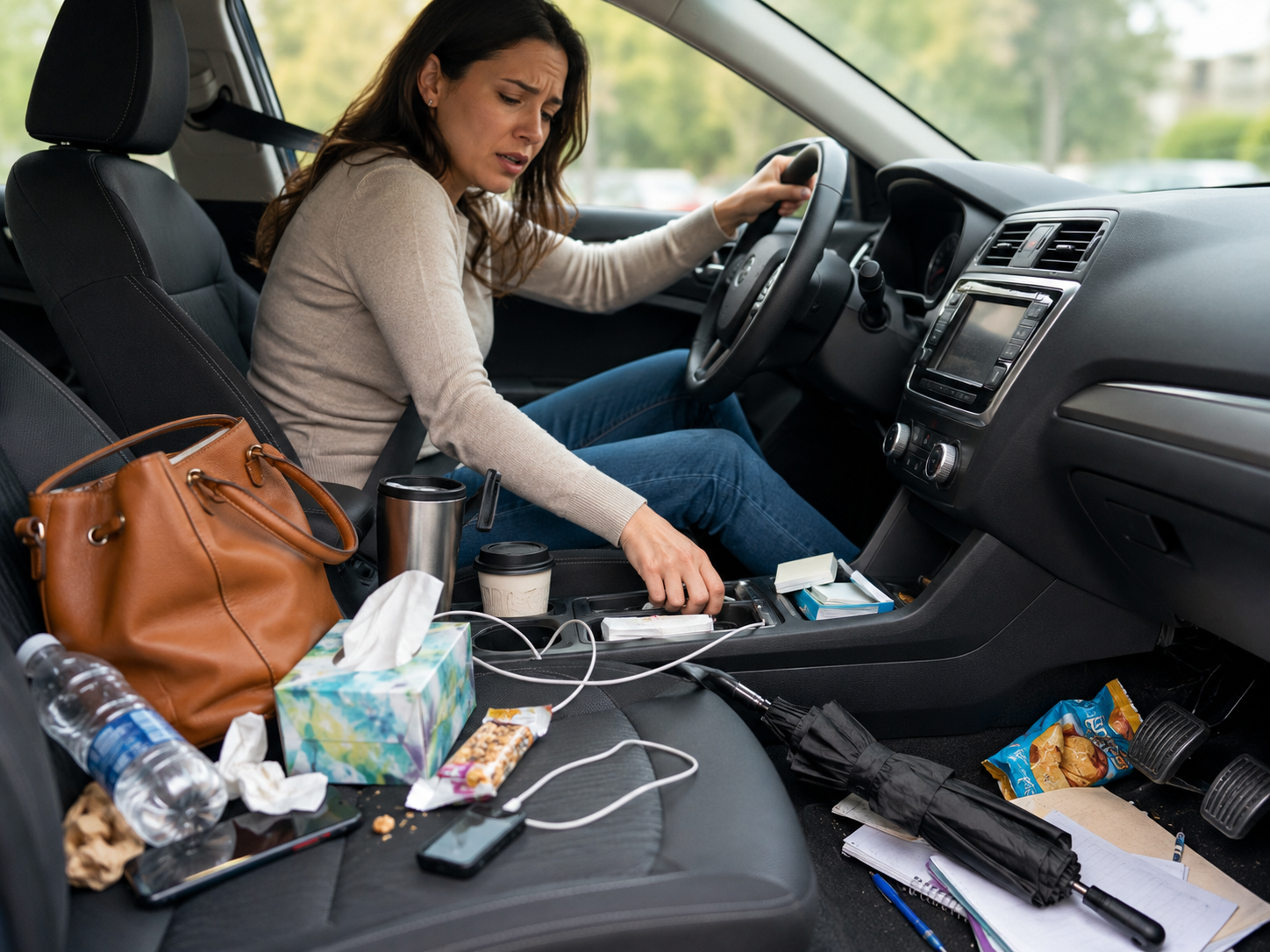
Why Keeping Too Many Items Around the Driver’s Seat Can Be Dangerous
Minjin Park
·
Keeping loose items near the driver’s seat may seem harmless, but clutter can interfere with pedals, distract the driver, and increase everyday driving risks. Learn simple ways to keep your car safer and more organized.
Why Driver’s Seat Clutter Matters More Than People Think
Most people do not think of their car as a cluttered space. A water bottle here, a charging cable there, a tote bag on the floor, a few receipts in the cup holder—it all feels normal.
After all, cars are part of daily life. We eat in them, commute in them, run errands in them, take kids to school in them, and sometimes use them almost like a second storage room.
But the area around the driver’s seat is different from the rest of the car. It is not just a place to keep convenient items. It is the space where your feet control the pedals, your hands control the steering wheel, and your eyes need to stay focused on the road.
When too many objects collect around the driver’s seat, small inconveniences can turn into real safety concerns. A rolling bottle can move under a pedal. A loose phone can slide during a turn. A bag strap can catch on the gear shift. A cluttered center console can tempt you to search for something while driving.
The danger is not always dramatic. In many cases, it is simply about a few seconds of distraction or a small delay in reacting. On the road, a few seconds matter.
The Driver’s Area Should Stay Clear and Predictable
A safe driving space should feel simple. You should know where everything is, and nothing should move unexpectedly.
When the area around the driver’s seat is crowded, the car becomes less predictable. Items can shift when you brake, accelerate, turn, or drive over a bump. Something that was harmless while parked can become a problem once the vehicle is moving.
A clean driver’s area helps you focus on driving instead of managing loose objects.
The Most Important Zone: Around Your Feet
The floor near the driver’s feet should be kept as clear as possible. This is where clutter can become especially risky because it may interfere with the accelerator, brake pedal, or floor mat.
Even a small item can cause trouble if it rolls or slides into the wrong place. A water bottle, lip balm tube, toy, food container, pen, or small flashlight may not seem dangerous by itself. But if it moves under the brake pedal, the driver may not be able to press the pedal normally.
This is one reason loose items should never be stored in the driver’s footwell.
How Loose Items Can Interfere With Pedals
Most drivers are used to reacting quickly. If traffic stops suddenly, the foot moves to the brake almost automatically.
But that quick reaction depends on a clear foot area. If something is in the way, the driver may lose a critical moment.
Rolling Objects Are Especially Problematic
Round items are the classic example. Water bottles, soda cans, sports drink bottles, travel-size containers, and even small balls can roll across the floor.
They may start on the passenger side, then roll toward the driver’s feet during a turn or stop. Once under the pedals, they can be hard to move while driving.
A driver may instinctively look down or try to kick the item away, which adds another layer of distraction.
The simplest prevention is to keep bottles and cans in cup holders, bags, or closed compartments—not on the floor.
Floor Mats Can Add to the Problem
Loose objects are not the only issue. Floor mats that slide, bunch up, or do not fit properly can also affect pedal movement.
When clutter is already present, the floor mat area becomes even less reliable. A bag, shoe, umbrella, or dropped item may push a mat out of place.
Floor mats should lie flat and stay secured. If they slide often, curl at the edges, or interfere with pedal movement, they should be addressed before driving.
Clutter Can Distract the Driver
Not every risk is physical. Some driver’s seat clutter is dangerous because it pulls your attention away from the road.
A messy console, overflowing cup holder, or pile of papers on the passenger seat can create small distractions throughout a drive.
You may glance down to find a parking ticket. You may reach for a charging cable. You may try to stop a bag from falling. You may look for your phone when it slides between the seat and console.
Each action may take only a moment, but driving requires constant attention.
“I’ll Just Grab It Quickly” Is a Common Mistake
Many drivers overestimate how safely they can reach for something while driving.
It feels harmless to grab a snack, move a receipt, pick up a dropped phone, or adjust a bag. But reaching often changes body position. One hand leaves the wheel. The eyes may glance down. The mind shifts away from traffic.
Even if nothing bad happens most of the time, the habit itself is not ideal.
A safer rule is simple: if something falls, slides, spills, or becomes difficult to reach, leave it alone until you are safely parked.
Items Can Become Projectiles During Sudden Stops
Another reason to limit clutter is that loose objects can move with force during sudden braking or a crash.
A heavy water bottle, laptop, metal travel mug, tool, or large bag can fly forward or sideways. Even lighter objects can startle the driver or passengers if they move suddenly.
This does not mean your car has to be completely empty. It means loose items should be stored thoughtfully.
Heavier items belong in the trunk, cargo area, or secured storage space. Smaller items should be placed in compartments, bags, or cup holders.
The Passenger Seat Is Not Always a Safe Storage Shelf
Many people use the passenger seat as a convenient place for purses, backpacks, groceries, takeout bags, mail, and work items.
That is understandable. It is easy to reach, and it keeps things off the floor.
But the passenger seat is still an unsecured area. During a quick stop, items can slide forward. A bag can spill. Papers can scatter. A phone can fall into the gap beside the seat.
If the item is heavy, fragile, messy, or likely to roll, it is better placed on the floor behind the front seats, in the trunk, or secured in a container.
Clutter Can Block Controls and Reduce Comfort
The area around the driver’s seat includes more than the pedals. It also includes seat controls, mirrors, windows, cup holders, gear selectors, parking brake controls, climate controls, and the center console.
When items pile up, they can make basic driving tasks harder.
A charging cable may wrap around the gear shift. A purse strap may catch on the seat adjustment lever. A food wrapper may block a cup holder. A jacket may cover the seat belt buckle.
These things may seem minor while parked, but they can become frustrating or distracting once you are moving.
Seat Belt Access Should Always Be Clear
The seat belt buckle should be easy to find and use without digging through bags, jackets, blankets, or other items.
If the buckle is blocked, some people may be tempted to delay buckling up or twist awkwardly to reach it. That is a sign the driver’s area needs to be cleared.
Before starting the car, make sure the seat belt clicks easily and nothing is pressing against it.
Common Items That Create Driver’s Seat Clutter
Driver’s seat clutter often builds slowly. You may not notice it until the car suddenly feels crowded.
The driver’s footwell should not be used for storage. If anything is on the floor near the pedals, remove it before driving.
Simple Ways to Keep the Driver’s Seat Area Safer
You do not need a perfect car interior. The goal is not to make your vehicle look like a showroom. The goal is to make the driver’s area calm, clear, and predictable.
Do a 30-Second Check Before Driving
Before starting the car, take a quick look around.
Check the floor near your feet. Make sure no bottles, bags, shoes, toys, or wrappers are there. Confirm the floor mat is flat. Look at the cup holders and center console. Make sure nothing is leaning, spilling, or likely to fall.
Instead of letting these items float around, give each one a place.
Use the glove box, center console, door pocket, visor clip, or a small organizer. The key is consistency. When every item has a home, you are less likely to search for it while driving.
Store Bags Where They Cannot Tip Easily
Purses, backpacks, and grocery bags should be placed where they are less likely to fall or spill.
For many cars, the rear floor area is better than the front passenger seat. The trunk or cargo area is better for heavier items.
If you use the passenger seat, place the bag securely and avoid leaving open containers or loose objects inside.
Manage Charging Cables
Charging cables can create clutter faster than people realize. Long cords can tangle, fall into the driver’s footwell, or wrap around controls.
Use a shorter cable if possible. Keep extra cords in a compartment. Avoid letting cables hang near the pedals or steering column.
A cable should never interfere with steering, shifting, braking, or exiting the vehicle.
What Parents and Caregivers Should Watch For
Family cars often become cluttered quickly. Kids bring snacks, toys, school papers, sports equipment, jackets, and water bottles. Caregivers may also carry medical supplies, mobility aids, groceries, or emergency items.
The goal is not to remove everything useful. It is to separate useful items from unsafe placement.
Kids’ Items Should Stay in the Back
Children may drop toys, crayons, snack cups, or small items that roll under the front seats. Over time, those objects can make their way toward the driver’s area.
A regular backseat cleanout helps. Before driving, check that nothing has rolled under the driver’s seat or near the pedals.
Emergency Supplies Should Be Secured
It is smart to keep basic emergency supplies in the car. But emergency items should not be loose around the driver’s seat.
Flashlights, tools, first aid kits, blankets, jumper cables, and roadside supplies should be stored in the trunk, cargo area, or a secured organizer.
A safety item becomes less helpful if it creates clutter or distraction.
A Weekly Car Reset Can Make Driving Easier
The easiest way to control clutter is to build a simple reset routine.
Once a week, remove trash, take out items that do not belong in the car, return work or school items to the house, and check under the seats. Look at the driver’s footwell, passenger side floor, center console, and cup holders.
This does not have to be a deep cleaning session. Five minutes can make a big difference.
A clean driver’s area also makes driving feel calmer. You are not starting every trip surrounded by visual noise and random objects.
Final Thoughts: Keep the Driver’s Space Clear and Calm
Keeping too many items around the driver’s seat may seem like a small habit, but it can affect safety in several everyday ways. Loose objects can interfere with pedals, distract the driver, block controls, or move suddenly during a stop.
The best prevention is simple: keep the floor near the pedals completely clear, secure loose items, avoid reaching while driving, and give everyday objects a consistent place.
Your car does not need to be spotless. It just needs to be safe to operate.
A few small habits—checking the footwell, storing bottles properly, managing cables, and clearing clutter weekly—can make each drive smoother, calmer, and safer.
Hi, I’m the creator and editor behind ZestyHabit. I research everyday safety, first aid, and practical wellness topics using official guidance and reliable public sources, then turn that information into clear, realistic steps for daily life.
My goal is to help readers make safer, better-informed choices at home and beyond.