
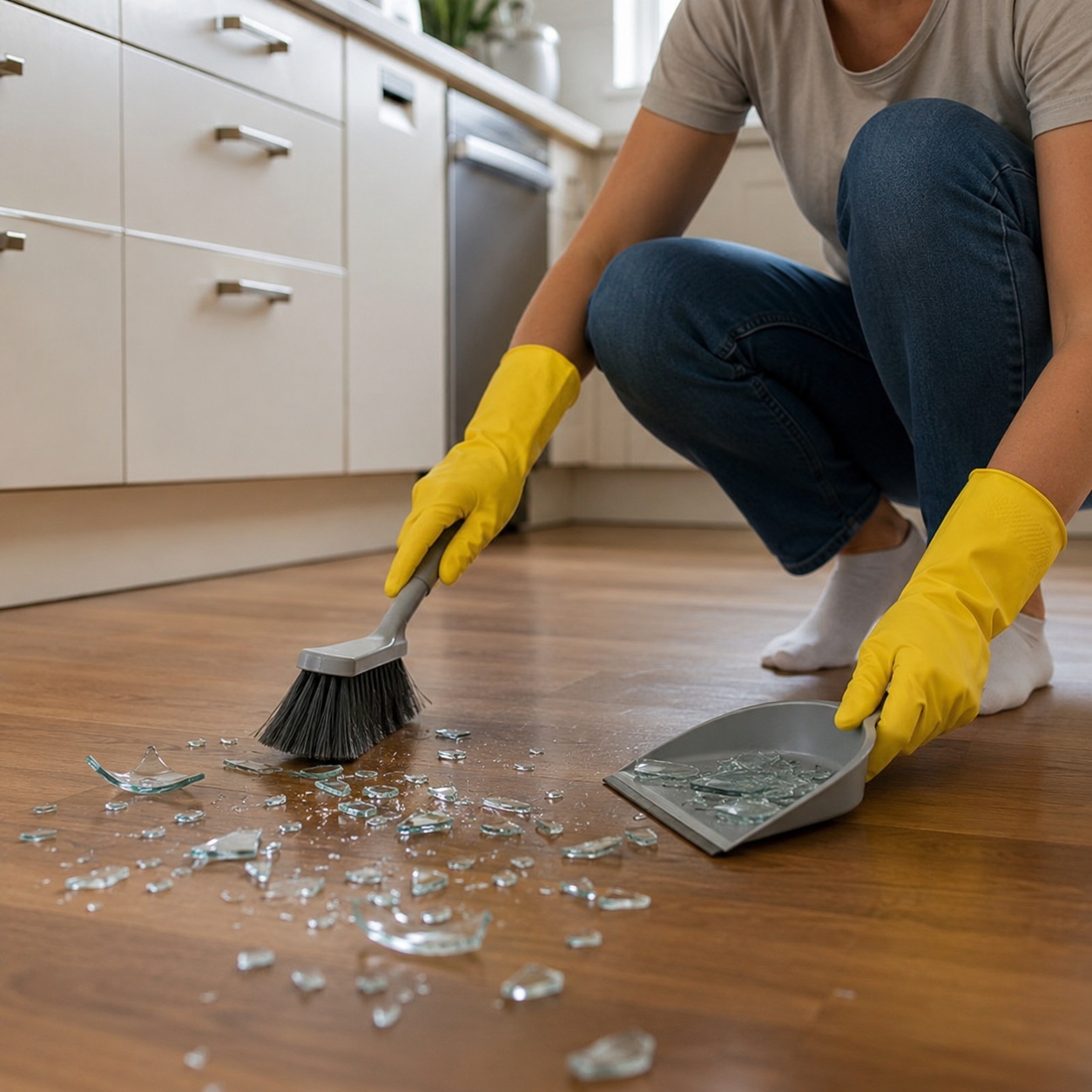

Learn how to clean up broken glass safely without cutting your hands. Follow simple household safety steps, avoid common mistakes, and protect your family from hidden shards.
Why Broken Glass Needs More Care Than We Think
Broken glass is one of those everyday accidents that can happen in seconds. A drinking glass slips from your hand. A picture frame falls off the wall. A jar cracks in the kitchen sink. A small ornament breaks while you are cleaning. Most of the time, our first reaction is simple: clean it up quickly and move on.
But broken glass is not something to rush.
The danger is not only the large pieces you can see right away. The real problem is often the tiny, sharp fragments that scatter farther than expected. They can hide under cabinets, inside rugs, near baseboards, or even in the folds of a towel. If you try to pick them up with your bare hands, wipe them with a thin paper towel, or walk through the area too soon, it is easy to end up with a cut.
Cleaning broken glass safely does not require special equipment. What matters most is slowing down, protecting your hands and feet, and using the right method for both large pieces and tiny shards. A few extra minutes can prevent a painful injury and make the area safer for everyone in the home.
First, Stop and Secure the Area
Before reaching for the glass, pause for a moment. This is the step many people skip, but it makes the rest of the cleanup much safer.
If anyone is nearby, especially children or pets, ask them to stay away from the area. Broken glass can scatter across a surprisingly wide space, and kids or pets may not notice the danger. A dog may step on a shard. A toddler may try to touch a shiny piece. Even adults can accidentally walk through the area without realizing how far the pieces traveled.
If the broken glass is in a busy place like the kitchen, hallway, or bathroom, block off the area as best as you can. You can place a chair nearby, close a door, or simply tell everyone in the house what happened.
Also, do not step closer unless you are wearing shoes. Bare feet, socks, or soft slippers are not enough protection. Glass can go through thin fabric easily.
Put on Proper Protection Before Cleaning
Wear Thick Gloves
The safest choice is a pair of thick work gloves, rubber cleaning gloves, or heavy-duty dishwashing gloves. Thin disposable gloves may help keep your hands clean, but they do not offer much protection against sharp glass.
If you do not have thick gloves, avoid picking up glass directly with your fingers. Use tools like cardboard, tongs, a dustpan, or folded newspaper instead.
Wear Closed-Toe Shoes
Shoes are just as important as gloves. A broken glass cleanup often involves moving around the area, reaching under furniture, or stepping near small pieces. Closed-toe shoes with firm soles are best.
Avoid bare feet, sandals, socks, or soft house slippers. Even a tiny shard can cause a painful cut if stepped on.
Turn on Good Lighting
Glass can be hard to see, especially on light-colored floors, tile, or near a window. Turn on overhead lights and use a flashlight if needed. Shine the light across the floor from a low angle. This can help small pieces reflect light and become easier to spot.
Pick Up the Large Pieces First
Start with the biggest pieces of glass before dealing with the tiny fragments.
Do not grab them with bare hands. Even large pieces can have sharp edges that are not obvious at first. If you are wearing thick gloves, carefully pick up the pieces one at a time. Hold them away from your body and place them directly into a safe container.
A cardboard box, paper bag, or rigid container is usually safer than a thin plastic trash bag. Sharp pieces can cut through plastic and injure someone later when the trash is being handled.
If you only have a plastic bag, wrap the glass first in several layers of newspaper, paper towels, or cardboard. Then place the bundle inside the bag.
Use Cardboard Instead of Your Hands
One of the simplest and safest ways to collect broken glass is with cardboard.
Take two pieces of stiff cardboard. Use one piece like a broom and the other like a dustpan. Gently push the glass onto the second piece. This method keeps your hands away from the sharp edges and works well for both medium-sized pieces and smaller fragments.
This is especially useful if you do not have gloves nearby. It is also helpful on hard floors where the glass can slide easily.
Avoid using your hands to “scoop” glass, even if the pieces look dull. Broken glass can have edges that are almost invisible but still sharp enough to cut skin.
Sweep Carefully, But Do Not Stop There
After removing the large pieces, sweep the area with a broom and dustpan. Move slowly and sweep in more than one direction. Glass can bounce and scatter when it breaks, so do not assume everything is in one small pile.
Widen your cleanup area. If a glass broke near the kitchen counter, check under the cabinet edge, around chair legs, near the stove, and a few feet beyond the obvious area. If it broke near a table, check under the table and chairs.
After sweeping, empty the dustpan carefully into your wrapped glass bundle or rigid container. Do not press the glass down with your hands.
Clean the Broom Afterward
A common mistake is using a broom to sweep glass and then putting the broom right back in the closet. Tiny shards can get trapped in the bristles. Later, they may fall out in another room.
After sweeping, tap the broom gently over the trash or outside over a safe area. You can also wipe the bristles with a damp paper towel while wearing gloves. Dispose of the paper towel carefully.
Use a Damp Paper Towel for Tiny Shards
Once the large and medium pieces are gone, small glass splinters may still remain. These tiny pieces are often the most difficult to see.
A damp paper towel can help pick up the fine fragments left behind on hard floors. Fold several layers of paper towel, dampen them slightly, and gently press them onto the floor. Do not wipe aggressively, because that can spread tiny shards around.
After using the paper towel, fold it inward so the glass is trapped inside. Then throw it away in the same wrapped container or bag.
If you are worried about glass cutting through, use several layers or place the used towel inside another piece of paper before throwing it away.
Try Bread or Tape for Small Pieces
There are a few household tricks that can help with tiny glass fragments, especially on hard flooring.
Soft Bread
A slice of soft bread can pick up small shards that sweeping misses. Press the bread gently onto the area, then discard it immediately. Do not use it near pets or children, and do not leave it sitting around.
This method is not a replacement for sweeping, but it can help with the last few invisible pieces.
Wide Tape
Packing tape or duct tape can also work. Wrap it around your gloved hand with the sticky side facing out, or press strips of tape onto the floor. Lift slowly and discard the tape carefully.
This works well near baseboards, corners, and small cracks where shards may collect.
Be Extra Careful on Rugs and Carpets
Broken glass on carpet is more difficult than broken glass on a hard floor. Shards can sink into the fibers and become hard to find.
Start by picking up the large pieces with gloves or cardboard. Then use a vacuum with caution. A vacuum can help remove small pieces from carpet, but you should check your vacuum type first.
If your vacuum has a hose attachment, use the hose rather than rolling the full vacuum over the glass. Rolling over sharp pieces may push them deeper into the carpet or damage the vacuum.
Go slowly and vacuum the area from several directions. Afterward, check the carpet again with a flashlight. If the glass broke in a high-traffic area, consider repeating the process.
For small rugs, it may be safest to take the rug outside after removing the large pieces and shake it carefully away from people, pets, and walkways. Wear gloves and shoes while doing this.
What Not to Do When Cleaning Broken Glass
Do Not Use Bare Hands
This is the biggest mistake. Even if you are trying to be careful, glass can shift suddenly or cut from an angle you did not expect. Always use gloves, cardboard, tongs, or another barrier.
Do Not Use a Thin Plastic Bag Alone
Glass can slice through a trash bag and injure the person taking out the trash. Wrap it first or place it in a rigid container.
Do Not Walk Around Barefoot After Cleanup
Even after you think the area is clean, there may be small pieces left behind. Keep shoes on until you have checked the area carefully.
Do Not Let Children Help
Children may want to be helpful, but broken glass cleanup is not a good chore for them. It is better to have them stay in another room until the area is fully cleaned.
Do Not Forget Nearby Surfaces
Glass does not only land on the floor. Check countertops, chair seats, shelves, rugs, pet bowls, shoes, and nearby bags. If a glass broke on a table, small pieces may also be on chairs or under placemats.
Warning Signs That Glass May Still Be There
Sometimes the floor looks clean, but something feels off. Here are signs that you may need to check again:
You hear a faint crunch when stepping nearby.
You see tiny sparkles when shining a flashlight across the floor.
A pet avoids the area or keeps sniffing one spot.
A rug feels rough or gritty under your hand.
You find small pieces farther away than expected.
If any of these happen, stop using the area and repeat the cleanup steps. It is better to check again than to assume everything is fine.
What to Do If Glass Breaks in the Kitchen
The kitchen is one of the most common places for glass to break. It is also one of the trickiest because food, dishes, and appliances may be nearby.
If glass breaks near food, be cautious. Tiny pieces can land in open bowls, uncovered plates, cutting boards, or even inside a sink. If there is exposed food nearby, it is usually safest to throw it away rather than trying to inspect it.
Check dish towels, sponges, and drying mats. Glass can hide in soft materials. If a glass breaks in or near the sink, remove dishes carefully and rinse the sink area after picking up the pieces.
Do not run your hands through a sink full of water if glass may be inside. Drain the water slowly if possible, then use gloves or tongs to remove pieces.
What to Do If Glass Breaks in the Bathroom
Bathroom glass can be especially risky because people are often barefoot. A broken jar, mirror, candle holder, or shower item can leave shards on tile, bath mats, or inside the tub.
Put on shoes before entering the area. If the glass is in the bathtub or shower, avoid stepping inside until you have removed the pieces.
Check bath mats carefully. If the mat is thick, shake it outside after removing visible pieces, or consider washing it separately after inspection. Also check around the toilet base, under cabinets, and near the door.
Good lighting matters in the bathroom because shiny tile can make glass harder to see.
How to Dispose of Broken Glass Safely
Safe disposal is part of safe cleanup. You are not only protecting yourself, but also anyone who handles the trash later.
Wrap the broken glass in newspaper, cardboard, or several layers of thick paper. Place it in a box, paper bag, or other sturdy container if available. Labeling it “broken glass” can also help prevent someone from grabbing it carelessly.
Do not overfill the container. Keep it manageable and easy to carry. If the broken item was large, such as a mirror or window pane, wrap sections separately instead of forcing everything into one bag.
Preventing Cuts Before Glass Breaks
You cannot prevent every accident, but small habits can reduce the chance of broken glass injuries.
Store glass items away from counter edges. Keep drinking glasses out of reach of young children. Avoid stacking glassware too high or placing heavy items on top of delicate dishes.
When washing glass by hand, avoid using too much force inside the cup. Thin glass can crack unexpectedly, especially if it already has a small chip.
Do not use chipped drinking glasses. A tiny chip can become a sharp edge or turn into a larger break later.
In homes with pets or children, consider using shatter-resistant options in busy areas, outdoor spaces, or playrooms. You do not need to replace every glass item in your home, but choosing safer materials in high-risk areas can make daily life easier.
A Simple Broken Glass Cleanup Checklist
When glass breaks, follow this simple order:
Keep people and pets away.
Put on closed-toe shoes and thick gloves.
Turn on bright lighting or use a flashlight.
Pick up large pieces with gloves, cardboard, or tongs.
Place glass in a sturdy container or wrap it well.
Sweep the area slowly and widely.
Use a damp paper towel, bread, or tape for tiny shards.
Check nearby surfaces, rugs, and corners.
Dispose of the glass safely.
Keep shoes on until you are sure the area is clean.
This process may take a little longer than a quick sweep, but it is much safer.
Final Thoughts
Cleaning up broken glass is a simple household task, but it deserves careful attention. The best way to protect your hands is to avoid direct contact, wear proper protection, and take time to look for the small pieces that are easy to miss.
Most cuts happen when people rush, use bare hands, or assume the visible pieces are the only danger. A safer approach is calm and practical: secure the area, wear shoes and gloves, collect the large pieces first, clean up the tiny shards, and dispose of everything in a way that will not hurt anyone later.
The next time a glass breaks, do not panic and do not hurry. Slow down, protect yourself, and clean the area step by step. A few careful habits can keep a small accident from becoming a painful one.

Hi, I’m the creator and editor behind ZestyHabit. I research everyday safety, first aid, and practical wellness topics using official guidance and reliable public sources, then turn that information into clear, realistic steps for daily life.
My goal is to help readers make safer, better-informed choices at home and beyond.


