Sharp Objects in Trash Bags: Hidden Injury Risks, First Aid, and Safe Disposal
Minjin Park
·
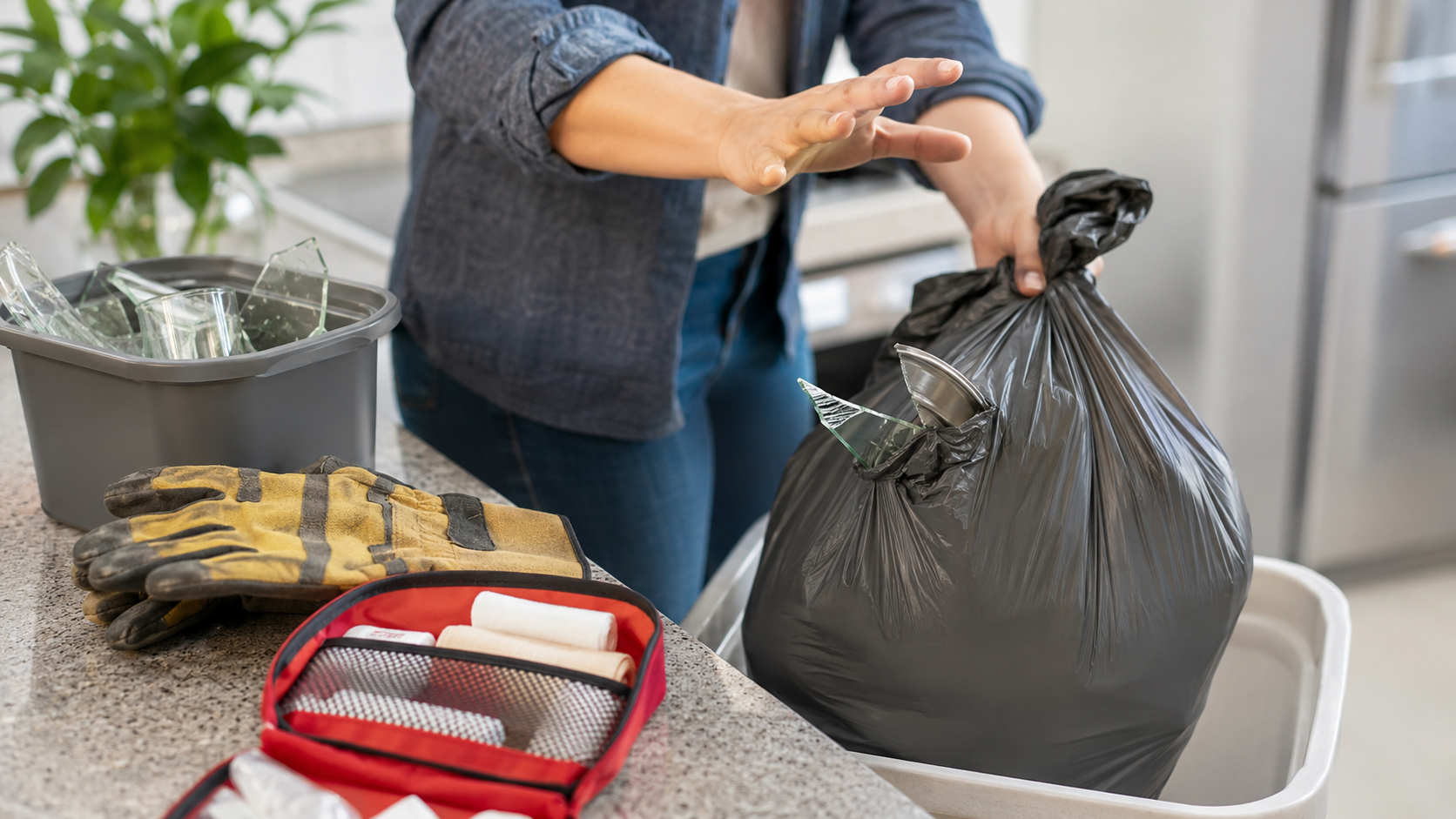
Taking out the trash is such an ordinary task that most people do it without thinking. They tie the bag, press it down to make more room, lift it against a leg, and carry it outside. The danger becomes obvious only when a piece of glass, metal lid, needle, or broken ceramic suddenly comes through the plastic.
Injuries from sharp objects in trash bags can range from small cuts to deep puncture wounds involving tendons, nerves, or blood vessels. Used medical sharps may also expose household members, cleaners, and waste workers to bloodborne infections. Even when an injury appears minor, contamination from food waste, soil, chemicals, or bodily fluids can increase the risk of infection.
Most of these accidents are preventable. The solution begins with recognizing which items should never be placed loosely in a garbage bag and learning how to handle an injured person safely.
The danger is not limited to obviously sharp knives or needles. Many ordinary household products develop dangerous edges when broken, opened, or discarded.
Common examples include:
Broken drinking glasses and mirrors
Chipped plates, cups, and ceramic tiles
Metal food-can lids
Disposable razors and razor blades
Kitchen knives and scissors
Wooden and metal skewers
Nails, screws, staples, and pieces of wire
Broken plastic with pointed edges
Damaged appliances and electronic parts
Broken light bulbs
Medical needles, syringes, and lancets
Insulin pens and pet-medication needles
Craft blades and utility-knife cartridges
A sharp object may remain hidden under food packaging, paper towels, or other soft waste. The person who throws it away may remember that it is there, but the next family member, housekeeper, or sanitation worker has no way to know.
How Trash-Bag Injuries Usually Happen
Plastic garbage bags are designed to contain ordinary waste, not resist blades and punctures. Sharp objects can shift as the bag is lifted or loaded into a bin.
Never use your hands to compress household trash. If the bag is full, close it and start a new one.
Stepping on a Bag
Using a foot or knee to flatten a garbage bag is particularly dangerous. A sharp object may penetrate the plastic, shoe, or clothing. OSHA specifically advises workers not to compress garbage bags with their bodies, including by stepping on them.
The same rule should be followed at home.
Carrying the Bag Against the Body
A heavy bag is easier to support when it rests against a leg or hip, but this places the body directly in the path of anything protruding through the plastic. Carry the closed bag slightly away from your body and avoid swinging it.
Reaching Into a Bin
Someone may reach into a trash can to retrieve keys, recycling, or another object. This is a blind search through material that may contain broken glass or used sharps.
Use long-handled tongs or another suitable tool when it is safe to do so. Never reach into an unknown trash container with bare hands.
Overfilling and Double-Bagging
Overfilled bags stretch, split, and become difficult to control. Adding a second bag may reduce leaking, but it does not make loose glass, blades, or needles safe. Sharp items need rigid containment before they go anywhere near a garbage bag.
Types of Injuries Caused by Trash-Bag Sharps
A visible cut is only one possible injury.
Lacerations
Glass, metal, and blades can create long or deep cuts. A serious laceration may damage muscles, tendons, nerves, or blood vessels. Numbness, weakness, loss of movement, or uncontrolled bleeding requires prompt medical attention.
Puncture Wounds
Needles, skewers, wires, and screws produce small openings that may not bleed much. However, the object can carry bacteria deep into the tissue. A wound that looks insignificant on the surface may therefore have a greater infection risk than expected.
Embedded Fragments
Tiny pieces of glass or metal may remain in a wound. Attempting to probe the cut with fingers or tweezers can push a fragment deeper and cause additional tissue damage.
Eye and Facial Injuries
A bag can split while being lifted or thrown, sending fragments toward the face. Broken fluorescent bulbs and chemical containers may introduce additional exposure concerns.
Bloodborne Pathogen Exposure
A discarded needle used by another person may expose someone to bloodborne pathogens, including hepatitis B, hepatitis C, and HIV. The actual risk depends on multiple factors and cannot be determined simply by looking at the needle.
OSHA notes that needlesticks and other sharps injuries can expose workers to infectious microorganisms carried in human blood. Any puncture from an unknown used needle deserves immediate medical evaluation.
First Aid for a Cut From a Trash Bag
Move away from the bag so that no one else is injured. If possible, put on disposable gloves before helping another person.
For a minor cut:
Wash your hands.
Apply firm, steady pressure with clean gauze or cloth.
When bleeding is controlled, rinse the wound with clean running water.
Wash gently with soap.
Cover it with a clean, nonstick bandage.
If blood soaks through the first dressing, place additional material on top rather than repeatedly removing the original layer.
Seek urgent medical care if:
Bleeding is heavy, spurting, or does not stop with pressure
The wound is deep or gaping
Fat, muscle, tendon, or bone is visible
There is numbness or loss of normal movement
The cut crosses a joint
Glass or another object may remain inside
The injury involves the hand, eye, face, or a major blood vessel
The person takes blood-thinning medication
The wound was caused by a used needle or contaminated object
Call 911 in the United States for life-threatening bleeding, loss of consciousness, breathing difficulty, or other signs of shock.
What to Do With an Embedded Object
Do not pull out a deeply embedded object. It may be limiting bleeding, and removal can damage nearby blood vessels, nerves, or tendons.
Place clean padding around the object to prevent movement without pressing it farther into the wound. Apply pressure around—not directly on—the object if bleeding must be controlled, and seek emergency medical care.
Do not probe a puncture wound. MedlinePlus recommends medical evaluation when an object is visible inside a wound or when part of the object that caused the injury appears to be missing.
What to Do After a Used-Needle Injury
A puncture from a used or unknown needle should be treated differently from an ordinary clean cut.
Immediately:
Wash the area with soap and running water.
Do not aggressively squeeze the wound.
Do not scrub it with a brush.
Do not pour bleach or another caustic chemical into it.
Cover it with a clean dressing.
Seek immediate medical care.
The CDC advises washing needlestick and sharp punctures with soap and water and obtaining prompt medical evaluation. In a workplace, report the injury to a supervisor immediately and follow the employer’s exposure-control procedure.
A clinician may review the depth of the puncture, visible contamination, hepatitis B vaccination history, and the possible need for testing or preventive treatment. HIV post-exposure prophylaxis, when indicated, should be started as soon as possible—ideally within 24 hours and no later than 72 hours, according to CDC guidance.
Do not take the loose needle to the clinic in your hand or an ordinary bag. Tell the medical provider what the object looked like and where the accident occurred. Follow local professional instructions if the needle must be secured or reported.
Remember Tetanus Protection
Tetanus is often associated with rusty nails, but rust itself does not cause the disease. The concern is contamination entering damaged tissue, particularly through puncture wounds.
A healthcare professional should review the injured person’s vaccination record and the type of wound. The CDC’s wound-management guidance explains that tetanus vaccination—and, in some cases, tetanus immune globulin—may be recommended depending on the wound and vaccination history.
Do not assume that applying antibiotic ointment replaces tetanus protection.
Watch for Infection After the Injury
Even a properly cleaned wound should be monitored over the following days. Contact a healthcare professional if you notice:
Increasing pain or tenderness
Spreading redness
Warmth or swelling
Pus or cloudy drainage
Red streaks extending from the wound
Fever or chills
Reduced movement
Numbness or tingling
A wound that reopens or fails to heal
A puncture wound may close at the surface while infection develops underneath. Worsening symptoms should not be ignored simply because the opening looks small.
How to Dispose of Broken Glass and Ceramics Safely
Never place loose broken glass or ceramic pieces directly into a plastic trash bag.
First, keep children and pets away. Wear suitable gloves and use a brush and dustpan or tongs to collect the pieces. OSHA requires potentially contaminated broken glass to be collected with mechanical tools rather than directly by hand—a sensible rule for household glass as well.
Place the fragments in a rigid, puncture-resistant container. Depending on local rules, this may be a sturdy box or other hard-sided container that can be securely closed and clearly labeled “BROKEN GLASS.” Tape the container so that pieces cannot fall out.
Disposal requirements differ among communities, so check your local waste provider’s instructions. Mirrors, drinking glasses, ceramics, and heat-resistant cookware often do not belong in curbside glass recycling because they have different compositions from bottles and jars.
Broken fluorescent bulbs may contain mercury and require special handling. Do not treat them like ordinary broken glass; follow EPA and local hazardous-waste guidance.
How to Dispose of Knives, Blades, and Metal Lids
A usable knife may be donated if an organization accepts it and the blade can be transported safely. For disposal, protect the cutting edge with a rigid blade cover or several secure layers of cardboard, tape the wrapping firmly, label it, and place it inside a hard-sided container according to local waste rules.
Use similar containment for:
Utility blades
Razors
Scissors
Metal skewers
Sharp can lids
Nails and screws
Do not depend on newspaper, paper towels, or a second plastic bag. These materials tear easily when pressure is applied.
Safe Disposal of Needles and Medical Sharps
Used medical sharps should never be placed loose in household trash or recycling.
The FDA recommends putting needles, syringes, lancets, and similar items into an FDA-cleared sharps container immediately after use. If one is unavailable, some local programs permit a heavy-duty plastic household container, such as a laundry-detergent bottle, with a tight, puncture-resistant lid.
A safe alternative container should be:
Made from heavy-duty plastic
Leak-resistant
Stable while standing upright
Closable with a secure, puncture-resistant lid
Clearly labeled as containing hazardous sharps
Do not use a thin water bottle, soda bottle, milk jug, glass jar, or plastic bag. Close the sharps container when it is approximately three-quarters full; do not overfill or reopen it.
Disposal rules vary by location. Possible options include pharmacies, hospitals, health departments, household hazardous-waste sites, supervised drop boxes, mail-back programs, and special pickup services. The FDA’s household sharps guidance recommends checking with local health or waste authorities before disposal.
Safer Trash-Handling Habits
A few consistent habits can protect family members and waste workers:
Never push trash down with your hands, feet, or body.
Do not reach blindly into a bag or bin.
Keep bags light enough to control.
Carry bags away from your legs and torso.
Stop immediately if something protrudes through the plastic.
Contain sharp objects before placing them with waste.
Keep garbage bins closed and inaccessible to children and pets.
Use tools, not fingers, to collect broken pieces.
Wear suitable work gloves, but remember that ordinary gloves do not stop needles.
Tell other household members when a bag contains specially packaged sharp waste.
Follow local recycling and hazardous-waste rules.
People who create the waste are in the best position to prevent an injury. The sanitation worker lifting the bag later cannot see what is inside.
A few extra minutes spent containing a broken glass, blade, or needle can prevent a painful injury and possible infection for someone else. Have you ever found a sharp object sticking through a trash bag, and how does your household package broken glass or blades before disposal? Share your method or safety tip in the comments—it may help another reader protect their family and local waste workers.
Hi, I’m the creator and editor behind ZestyHabit. I research everyday safety, first aid, and practical wellness topics using official guidance and reliable public sources, then turn that information into clear, realistic steps for daily life.
My goal is to help readers make safer, better-informed choices at home and beyond.