You pull a container from the fridge, open the lid, and there it is: one small fuzzy spot.
Maybe it is on a block of cheddar. Maybe it is on a strawberry. Maybe it is sitting on the corner of a loaf of bread that looked perfectly fine yesterday.
The first thought is usually practical, not dramatic: “Can I just cut that part off?”
Nobody likes wasting food. Groceries are expensive, leftovers take effort, and tossing a whole package because of one little spot can feel frustrating. But mold is one of those kitchen issues where the right answer depends on the food.
Sometimes cutting around mold is reasonable. Other times, the visible spot is only the part you can see, while the mold has already spread into the food in ways you cannot easily notice.
The goal is not to be afraid of every speck in the refrigerator. It is to know which foods are safer to trim, which foods should be thrown away, and how to prevent mold from taking over in the first place.
The Simple Answer: Sometimes, But Not Usually
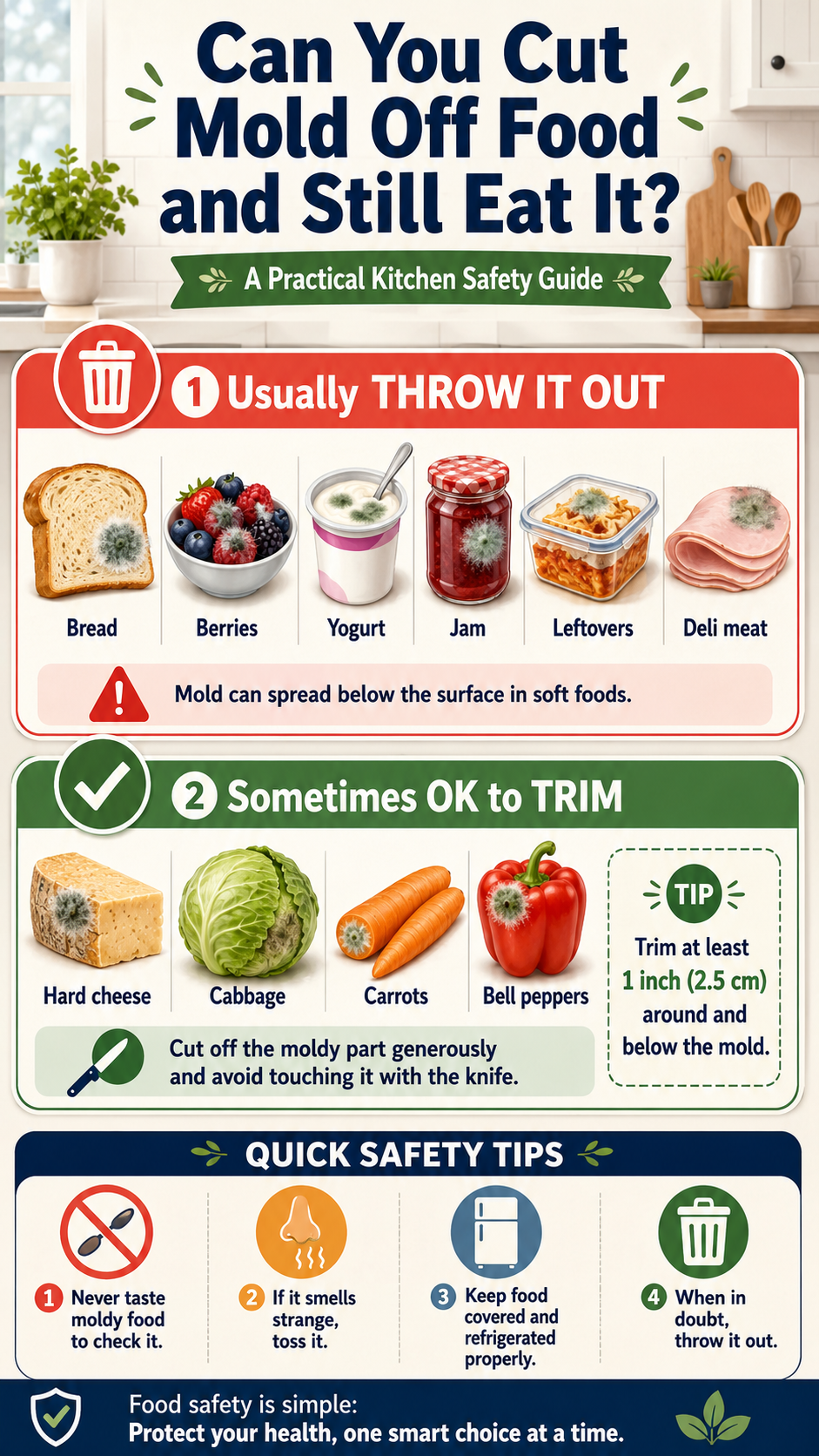
For most soft, moist, or porous foods, you should not just remove the moldy part and eat the rest.
That includes bread, soft fruit, cooked leftovers, yogurt, sour cream, jam, deli meat, cooked pasta, casseroles, and soft cheese.
These foods allow mold to spread more easily below the surface. Even if you see only one spot, there may be invisible growth deeper inside.
For firm, dense foods, cutting can sometimes be acceptable.
Examples include hard cheeses and firm fruits or vegetables such as carrots, cabbage, and bell peppers. In those cases, you can cut at least one inch around and below the moldy area, keeping the knife away from the mold itself.
That one-inch buffer matters. You are not just shaving off the visible fuzz. You are removing a safety margin around it.
So the everyday rule is this:
If the food is soft, wet, crumbly, cooked, or porous, toss it.
If the food is hard and dense, careful trimming may be okay.
Why Mold Is Not Always Just on the Surface
Mold is a type of fungus. What you see on food is often the visible growth on the surface, but mold can also have root-like threads that grow into the food.
On a hard carrot, those threads may not move very far. On bread, berries, cooked rice, or soft cheese, they can spread more easily.
That is why tearing the moldy corner off bread is not a great idea. Bread is full of air pockets. It is soft and porous. Mold can move through it even when only one slice looks spotted.
The same goes for a container of strawberries. If one berry is moldy and mushy, nearby berries may also be affected, especially if they are damp or touching each other.
It can feel wasteful, but the texture of the food matters more than the size of the visible mold spot.
Do Not Sniff Moldy Food Closely
This is a small but important habit.
When people are unsure about food, they often bring it close and smell it. With mold, that is not the best idea.
Mold can release spores, and sniffing moldy food closely may irritate your nose, throat, or lungs, especially if you are sensitive to mold or have allergies or respiratory issues.
You do not need to inspect mold like a detective. If you open a container and see clear mold, keep it away from your face. Decide whether it is a food that can be safely trimmed or one that should be discarded.
A quick normal kitchen smell check from a reasonable distance is different from taking a deep sniff right over a moldy item. Avoid the deep sniff.
Moldy Bread: Toss the Loaf
Bread is one of the most common foods people try to save.
It is also one of the easiest examples of why “just cut it off” does not always work.
Bread is porous, soft, and often stored in a closed bag where slices touch each other. If you see mold on one slice, it is safer to throw away the loaf or at least the connected package.
This is especially true for sandwich bread, rolls, tortillas, bagels, muffins, and homemade bread.
Homemade bread may mold faster than commercial bread because it often has fewer preservatives. Bakery bread can also mold quickly, especially if it is stored in a warm kitchen or sealed while still moist.
If you regularly lose bread to mold, try freezing half the loaf. Pull out slices as needed. Toasting frozen bread is easy, and it can save both money and frustration.
Moldy Fruit: Use Extra Caution
Soft fruits should usually be discarded when mold appears.
This includes berries, peaches, plums, grapes, tomatoes, cucumbers, and other high-moisture produce. Mold can spread quickly through soft fruit, and the texture makes it difficult to safely cut away only the affected part.
With berries, check the whole container. If one berry is moldy but the rest are firm, dry, and look normal, remove the bad berry and any berries touching it. Then wash the rest right before eating, not before storing.
If several berries are moldy, wet, leaking, or smell fermented, it is better to toss the container.
Firm produce is different.
A carrot with one small mold spot can usually be trimmed generously. The same is true for firm cabbage, bell peppers, or other dense vegetables. Cut at least one inch around and below the moldy area, and do not let the knife touch the mold and then cut into the clean part.
If the vegetable is slimy, soft, smells bad, or has mold in multiple areas, throw it away.
Moldy Cheese: It Depends on the Cheese
Cheese causes a lot of confusion because some cheeses are made with mold on purpose.
Blue cheese, Brie, Camembert, and some specialty cheeses contain safe molds used during production. But that does not mean every new mold growing on cheese is safe.
For hard cheese, such as cheddar, Parmesan, Swiss, or Colby, small surface mold can often be cut away. Cut at least one inch around and below the mold, keeping the knife out of the moldy spot. Then rewrap the cheese in fresh wrapping.
For soft cheese, such as cream cheese, ricotta, cottage cheese, goat cheese, shredded cheese, sliced cheese, or crumbled cheese, discard the whole package if mold appears.
Soft and shredded cheeses have more surface area and moisture. Mold can spread in ways you cannot easily see. With shredded cheese especially, the pieces touch each other throughout the bag, so removing one clump is not a reliable fix.
For mold-ripened cheeses, use common sense. If the cheese has mold that is not part of its normal appearance, especially if it smells off or looks different from when you bought it, it is safer to discard it.
Moldy Leftovers: Do Not Try to Save Them
Cooked leftovers should be thrown away if they grow mold.
That includes rice, pasta, casseroles, soups, stews, cooked vegetables, sauces, meat dishes, beans, and meal-prep containers.
Leftovers are moist and mixed. If mold appears on the surface, you cannot know how far the spoilage has spread. Scooping off the top layer does not make the rest safe.
This is one reason it helps to store leftovers in shallow, clear containers. You can see what you have, cool food more evenly, and avoid forgetting mystery containers in the back of the fridge.
Labeling leftovers with the date may feel a little fussy at first, but it becomes easy. A piece of masking tape and a marker can prevent a lot of guessing.
Jams, Jellies, and Sauces: Toss Them
Some people remember older advice about scraping mold off jam and continuing to use it.
For everyday home safety, it is better to discard moldy jams, jellies, fruit preserves, sauces, dips, salsa, and condiments that show mold.
These foods may seem sugary or acidic, but mold can still grow on them. The surface spot may not tell you the full story, and jars can become contaminated from crumbs, dirty utensils, or repeated dipping.
A common mistake is using the same knife for peanut butter, jelly, butter, and bread. Crumbs and moisture get into the jar, and mold is more likely to show up.
Use clean utensils, close lids tightly, and refrigerate items that require refrigeration after opening.
Nuts, Grains, and Dry Foods
Dry foods can mold too, especially if they are stored in humid conditions.
Nuts, grains, dried fruit, flour, cornmeal, rice, and spices should be kept dry and sealed. If you see mold, smell mustiness, or notice clumping from moisture, do not try to pick through and save the “good” parts.
This is especially important for nuts and grains because some molds can produce toxins under certain conditions.
You do not need to panic about normal pantry storage. Just keep dry foods dry, rotate older items forward, and avoid storing opened bags loosely in humid cabinets.
Airtight containers help, but they are not magic. If food is already damp or contaminated before it goes into the container, sealing it up will not fix the problem.
A Quick Keep-or-Toss Guide
Here is a simple way to think about it in everyday kitchen terms.
Usually toss moldy foods like:
Bread, rolls, muffins, tortillas, and baked goods
Soft fruits and vegetables
Cooked leftovers
Yogurt, sour cream, cream cheese, and soft cheeses
Shredded, sliced, or crumbled cheese
Jams, jellies, sauces, and dips
Deli meat, bacon, hot dogs, and cooked meat
Nuts, grains, or dry foods with visible mold or musty odor
Sometimes trim carefully:
Hard cheese
Firm fruits and vegetables with low moisture
For the foods you trim, remove at least one inch around and below the moldy area. Keep the knife from touching the mold. If the food is heavily moldy, slimy, or smells bad, toss it anyway.
Why “It Looks Fine Underneath” Is Not Enough
One of the most common kitchen mistakes is trusting only what the eye can see.
Mold is not always visible throughout the food. The clean-looking part may still have mold threads, spores, or changes you cannot detect.
This does not mean every bite of questionable food will make someone sick. It means you cannot reliably judge safety by appearance alone.
Food safety works best when you combine clues:
What kind of food is it?
Is it soft or hard?
How much mold is there?
Does it smell normal?
Was it stored correctly?
Is it being served to someone more vulnerable?
If the answers are uncertain, throwing it away is reasonable.
Be Extra Careful When Cooking for Others
When you are cooking only for yourself, you might be tempted to take more chances.
But if you are serving children, older adults, pregnant people, guests, or anyone with a weakened immune system, it is better to be more cautious.
Do not serve food that had visible mold unless it is one of the firm foods that can be safely trimmed, and even then, use good judgment.
For example, I might trim a small spot off a firm carrot for soup. But I would not serve questionable berries, moldy bread, or a scraped casserole to guests.
That is not being wasteful. That is being considerate.
How to Prevent Mold Without Overcomplicating Your Kitchen
The easiest mold problem is the one you prevent.
You do not need a perfect pantry or a restaurant-level system. A few practical habits help a lot.
Buy realistic amounts. A huge bag of produce is not a bargain if half of it molds before you eat it.
Keep the fridge clean. Wipe spills and crumbs. Moldy food can contaminate surfaces and nearby items.
Use clear containers. If you can see leftovers, you are more likely to eat them before they spoil.
Let hot food cool safely before sealing it. Trapped steam creates moisture, and moisture encourages spoilage.
Do not wash berries before storing unless you dry them very well. Extra moisture makes mold grow faster.
Freeze foods you cannot finish soon. Bread, tortillas, shredded cheese, cooked rice, and many leftovers freeze well.
Keep pantry foods dry. Humidity is not your friend when it comes to grains, nuts, and flour.
These habits are simple, but they make the kitchen feel calmer. You waste less, guess less, and find fewer surprises in the fridge.
Clean the Area Where Moldy Food Was Stored
When you find moldy food, do not just throw it away and move on.
Check what was touching it. Look at nearby fruit, bread, containers, shelves, drawers, or bags. Mold can spread by contact and through spores.
Wrap the moldy food or place it in a small bag before putting it in the trash. This helps keep children and pets from getting into it and keeps the mess contained.
Then wipe the area where it was stored. For the refrigerator, use warm soapy water for normal cleaning. Dry the area before putting food back.
If a produce drawer has leaked fruit juice or vegetable slime, take the drawer out and wash it. It is a small chore, but it can prevent the next batch of food from spoiling faster.
What If You Accidentally Ate Moldy Food?
If you realize you took a bite of moldy food, try not to panic.
A small accidental bite does not automatically mean something serious will happen. Stop eating the food, throw it away, and rinse your mouth if you want to.
Pay attention to how you feel. If you develop symptoms that concern you, or if the person who ate it is a child, older adult, pregnant, immunocompromised, or has a mold allergy, contact a healthcare professional or poison control for guidance.
Do not try to make yourself vomit unless a qualified professional tells you to. Just take the situation calmly and get advice if needed.
For pets, call your veterinarian if they ate moldy food, especially moldy bread, nuts, dairy, or leftovers. Pets can be more sensitive to certain spoiled foods, and it is better to ask than guess.
The Money-Saving Side of Mold Prevention
Food waste is frustrating because it feels like money going straight into the trash.
But saving food safely does not mean taking risky shortcuts. It means setting yourself up so food does not get moldy as often.
One of the best habits is planning around your real week, not your ideal week.
If you know you are tired after work, do not buy six types of delicate produce that need washing, trimming, and cooking. Buy a smaller amount of fresh food and keep a few freezer-friendly options.
If bread often molds in your house, freeze half right away.
If cheese gets moldy before you finish it, buy smaller blocks or wrap it better after opening.
If leftovers disappear into the back of the fridge, create one “eat first” area.
When you are standing in the kitchen deciding what to do, remember this:
Soft foods hide mold. Hard foods resist it better.
That simple idea answers most questions.
Moldy bread? Toss it.
Moldy berries? Toss the bad ones and inspect the rest carefully, but if the container is wet or several are moldy, toss it.
Moldy leftovers? Toss them.
Moldy hard cheese? Cut at least one inch around and below the spot, then rewrap.
Moldy carrot? Trim generously if the rest is firm and normal.
Moldy yogurt? Toss it.
The more moisture and softness a food has, the less reliable trimming becomes.
Final Thoughts
Moldy food does not need to turn into a stressful kitchen debate. In most cases, the safer choice is clear once you think about the type of food.
Soft, moist, cooked, or porous foods should usually be thrown away when mold appears. Hard cheese and firm produce can sometimes be saved with careful trimming, as long as the mold is limited and the food otherwise looks and smells normal.
The real win is prevention: buying what you can use, storing food well, keeping the fridge clean, and freezing extras before they become questionable.
That way, you are not standing over the trash can feeling annoyed about one fuzzy spot. You are simply running a kitchen that feels a little easier, a little cleaner, and a lot less uncertain.
Hi, I’m the creator and editor behind ZestyHabit. I research everyday safety, first aid, and practical wellness topics using official guidance and reliable public sources, then turn that information into clear, realistic steps for daily life.
My goal is to help readers make safer, better-informed choices at home and beyond.