
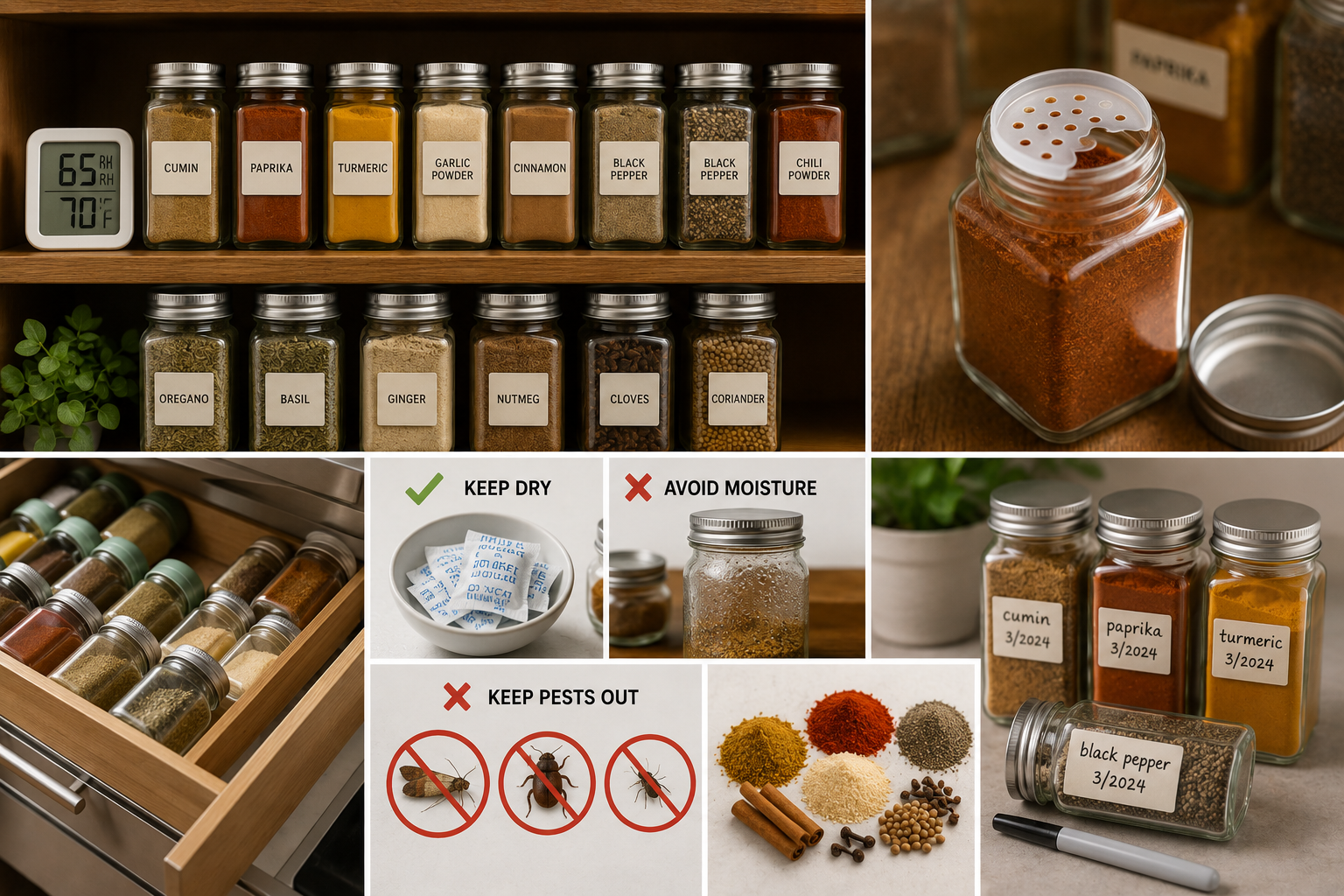

Learn how to store ground spices properly, prevent moisture and pantry pests, recognize rancidity, and keep spices flavorful for longer.
Suggested URL slug: /how-to-store-ground-spices-in-pantry/
A well-stocked spice cabinet can turn simple ingredients into memorable meals. Unfortunately, ground spices are often stored for years without much thought. A jar of paprika may sit above a steaming stove, cumin may remain in a half-open bag, and an old seasoning blend may slowly lose its aroma at the back of a warm cabinet.
Ground spices are dry and generally shelf-stable, but they are not indestructible. Heat, light, oxygen, humidity, and pantry insects can gradually—or sometimes quickly—ruin their quality. Some spices simply become dull and flavorless, while others may clump, grow mold, attract insects, or develop unpleasant rancid odors.
Proper pantry storage does not require expensive equipment. Airtight containers, a cool and dry location, clean measuring spoons, and a simple labeling system can make a significant difference.
This guide explains how to store ground spices safely, how long they maintain good quality, and how to recognize problems caused by moisture, pests, oxidation, and age.
How Long Do Ground Spices Last?
Ground spices generally maintain their best quality for about two to three years when stored correctly. Whole spices often last longer because their aromatic oils remain protected inside the intact seed, bark, pod, or root.
According to New Mexico State University’s food storage guidance, whole spices may retain their quality for three to four years, while ground spices typically maintain good quality for two to three years. These periods are estimates rather than exact expiration deadlines.
| Product | Approximate best-quality period |
|---|---|
| Ground spices | 2–3 years |
| Whole spices | 3–4 years |
| Dried leafy herbs | 1–2 years |
| Homemade spice blends | Often 6–12 months |
| Blends containing salt only as an additional ingredient | Follow the shortest-lived spice |
| Blends containing dried cheese, nuts, seeds, or other fatty ingredients | Follow the package instructions |
A spice does not automatically become unsafe the day after its best-by date. Commercially dried spices usually lose aroma, color, and flavor before they become unsafe. However, any spice showing mold, moisture damage, insect activity, or an abnormal odor should be discarded regardless of its printed date.
Why Ground Spices Lose Quality Faster
Grinding dramatically increases a spice’s exposed surface area. Once a peppercorn, cumin seed, cinnamon stick, or piece of dried ginger is ground, more of its aromatic compounds come into contact with oxygen, light, and moisture.
Those aromatic compounds are what give spices their characteristic fragrance and flavor. As they evaporate or oxidize, the spice becomes weaker. Ground black pepper may lose its sharp bite, cinnamon may smell dusty instead of sweet, and paprika may fade from a bright red to a dull brown.
Whole spices usually retain their flavor longer because their outer structure provides some protection. This is why freshly ground pepper, nutmeg, coriander, and cumin often smell more intense than products that were ground months earlier.
If you use a particular spice only occasionally, buying a small amount—or purchasing it whole and grinding it as needed—can provide better flavor and reduce waste.
The Main Threats to Ground Spices
1. Moisture and Humidity
Moisture is one of the most serious problems for any powdered pantry ingredient. Ground spices readily absorb water from humid air and cooking steam.
A small amount of moisture may cause harmless clumping, but continued exposure can create conditions that support mold and spoilage. Warning signs include:
- Hard or damp clumps
- Powder sticking to the container
- Condensation inside the jar
- Darkened wet patches
- A musty or basement-like odor
- Visible fuzzy growth
Never shake a spice jar directly over a steaming pot. Steam can enter through the shaker holes or open lid and condense inside the container. Instead, measure the spice away from the stove using a clean, dry spoon.
Do not try to save a visibly moldy spice by removing the affected section. Mold may extend beyond the area you can see, and some molds can produce substances that are not easily detected. Discard the entire container.
2. Heat
Heat accelerates the loss of volatile flavor compounds and can promote oxidation. A cabinet directly above the stove may be convenient, but it is often one of the warmest locations in the kitchen.
Other poor storage areas include:
- Next to the oven
- Above a dishwasher
- On top of the refrigerator
- Beside a toaster or coffee maker
- Near a heating vent
- On a sunny windowsill
A Utah State University food storage guide notes that keeping herbs or spices in a hot location can significantly shorten their quality life. A consistently cool pantry or interior cabinet is usually a better choice.
3. Light
Bright light can fade pigments and accelerate flavor deterioration. Paprika, turmeric, chili powder, saffron, and other vividly colored seasonings are particularly noticeable when they lose color.
Clear jars may look attractive on an open shelf, but opaque containers or a dark cabinet provide better protection. If you prefer clear containers, store them behind a solid cabinet door rather than in direct sunlight.
4. Oxygen and Rancidity
Many spices contain small amounts of natural oils. Once a spice is ground, these oils have greater exposure to oxygen and can gradually oxidize.
Oxidation may produce:
- A stale or flat aroma
- A bitter flavor
- A smell resembling old nuts, crayons, paint, cardboard, or cooking oil
- An oily residue with an unpleasant odor
- A lingering harsh aftertaste
Not every old spice becomes truly rancid. Many simply lose their volatile aroma and taste weak. Rancidity is more likely to be noticeable in oil-rich spices, seeds, and seasoning blends containing ingredients such as sesame, flax, nuts, dried citrus peel, or powdered cheese.
If a spice smells distinctly oily, bitter, or chemically unpleasant, replacing it is safer and more appetizing than trying to hide the flavor in a recipe.
5. Pantry Pests
Spices can become infested with pantry insects, including cigarette beetles, drugstore beetles, flour beetles, and Indianmeal moths.
The University of Minnesota Extension lists spices among the many dried foods vulnerable to infestation. Insects may enter opened products, but some species can also chew through paper, thin cardboard, cellophane, and lightweight plastic packaging.
Signs of an infestation include:
- Tiny brown or reddish beetles
- Small pale larvae
- Fine webbing inside the container
- Holes in paper or plastic packaging
- Shed insect skins
- Unusual dust collecting around the lid
- Moths flying near pantry shelves
- Caterpillar-like larvae crawling on walls or ceilings
Pantry insects generally contaminate more food than they consume. Once they appear in one product, inspect flour, rice, pasta, cereal, tea, nuts, dried fruit, pet food, and neighboring spices.
The Best Way to Store Ground Spices
Use Airtight Containers
Transfer spices from thin bags or loosely folded packets into tightly sealing containers. Glass jars, metal tins, and sturdy food-safe plastic containers all work when the lids close securely.
An airtight container helps limit:
- Moisture absorption
- Exposure to oxygen
- Flavor loss
- Cross-contamination
- Insect entry
- Absorption of surrounding odors
Before filling a reused jar, wash it thoroughly and allow it to dry completely. Even a small amount of trapped water can damage a dry spice.
Choose a Cool, Dark, and Dry Location
A closed cabinet or dedicated pantry away from appliances is ideal. Room temperature is generally suitable as long as the area remains dry and does not experience large temperature swings.
Do not store spices under the kitchen sink. Plumbing leaks, humidity, cleaning chemicals, and pests make this location unsuitable for food.
Keep the Original Information
If you transfer a spice into another container, record:
- The spice name
- The purchase or opening date
- The original best-by date
- Ingredients and allergen information
- Whether the spice is mild, hot, smoked, sweet, or another variety
A permanent marker, removable label, or small piece of masking tape works well. Without labels, similar-looking powders such as cayenne, paprika, chili powder, and ground red pepper can be difficult to identify.
Use Clean, Dry Utensils
Never scoop spices with a wet spoon or a utensil that has touched raw meat. Moisture can cause clumping and microbial growth, while contaminated utensils may introduce harmful bacteria.
Pour the required amount into a separate spoon or small bowl. This prevents cooking splashes from entering the main container.
Buy Quantities You Can Realistically Use
Large containers may look economical, but they are wasteful if most of the spice loses its flavor before it is used.
The University of Minnesota Extension recommends buying dried foods in quantities that can be used within a relatively short period to help reduce pantry-pest risks. For an infrequently used spice, the smallest available jar may offer better value than a bulk bag.
Maintain a first-in, first-out system: place newly purchased spices behind older ones and use the oldest acceptable container first.
Should Ground Spices Be Refrigerated?
Most commercial ground spices do not require refrigeration. A cool, dry pantry is usually more convenient and avoids condensation caused by frequent temperature changes.
Refrigeration can create a problem when a cold container is opened in a warm, humid kitchen. Moisture from the air may condense on the spice or inside the jar.
If you choose to refrigerate or freeze spices for longer storage:
- Use a completely airtight, moisture-resistant container.
- Store only a larger reserve supply in the refrigerator or freezer.
- Remove the amount you need while minimizing exposure.
- Allow the sealed container to reach room temperature before opening it.
- Return it promptly after use.
For frequently used spices, ordinary pantry storage is generally the better option.
How to Test Whether an Old Spice Is Still Good
A printed date is useful, but your senses can reveal more about the spice’s remaining quality.
Check the Aroma
Pour a small amount into your palm and gently rub it with a finger. Fresh ground spices should release a recognizable aroma quickly.
If the spice smells like almost nothing, it will probably add little flavor to a recipe. You could use more than usual, but replacement often produces a better result.
Examine the Color
Some fading is normal over time. However, dramatic discoloration, wet-looking patches, black spots, or fuzzy growth indicates a problem.
Color alone does not always determine safety. Turmeric or paprika may fade while remaining dry and usable, but their flavor will probably be weaker.
Inspect the Texture
Minor dry clumps can form from compression or natural oils and may break apart easily. Hard, damp, sticky, or unusually oily clumps suggest moisture damage or deterioration.
Look for Pests
Hold the container under bright light. Look closely for movement, webbing, larvae, beetles, shed skins, and holes near the lid or packaging seams.
Smell for Rancidity
Discard the product if it smells sour, musty, paint-like, waxy, or like old cooking oil. Do not taste a spice that appears moldy or contaminated.
What to Do If You Find Pantry Insects
When insects are present, simply killing the visible bugs is not enough. Eggs and larvae may be hidden in nearby packages.
Take these steps:
- Discard the infested spice in a sealed outdoor trash bag.
- Inspect every susceptible food in the same cabinet.
- Check unopened cardboard boxes and thin plastic packages.
- Vacuum shelves, corners, cracks, shelf-pin holes, and hinges.
- Empty the vacuum outdoors or discard its bag immediately.
- Wipe away spilled powder and food debris.
- Wash and completely dry reusable containers.
- Store unaffected foods in sealed glass, metal, or heavy plastic containers.
The University of Minnesota Extension advises discarding contaminated food and thoroughly cleaning the storage area. Spraying insecticide inside food cabinets is generally unnecessary and may contaminate food-contact surfaces. Insecticides also cannot reach insects protected inside packages.
If you are uncertain whether an older unopened product is infested, Extension guidance allows freezing it at 0°F (-18°C) for at least four days to kill insects and eggs. However, freezing does not remove insect bodies, webbing, waste, unpleasant odors, or other contamination from a product that is already visibly infested. For a small container of spices, disposal is usually the most practical choice.
Common Ground-Spice Storage Mistakes
Avoid these habits if you want spices to remain flavorful:
- Keeping jars above the stove
- Shaking containers over steaming food
- Leaving shaker lids partly open
- Scooping with damp spoons
- Buying oversized containers for rare recipes
- Mixing a new spice into an old container
- Ignoring powder trapped around lids and shelf corners
- Storing spices in direct sunlight
- Assuming a best-by date guarantees freshness
- Keeping unidentified spices because they “might still be useful”
Combining fresh spice with an old batch can transfer insects, moisture, stale flavors, or contamination to the new product. Empty and clean the container before refilling it.
Frequently Asked Questions
Can ground spices become unsafe?
Yes, although flavor loss is more common. Ground spices should be discarded if they contain mold, insects, moisture damage, foreign material, or an abnormal odor. Dry appearance alone does not guarantee that a contaminated product is safe.
Are clumped spices always spoiled?
No. Some dry clumps form under pressure and break apart easily. Clumping caused by humidity is more concerning, especially when the powder feels damp, sticky, discolored, or musty.
Can I put dry rice in a spice jar to absorb moisture?
Rice may absorb a limited amount of moisture, but it is not a substitute for a dry container and proper storage. Adding uncooked rice can also introduce dust or pantry pests. It is better to prevent steam and humidity from entering the jar.
Is it better to buy whole or ground spices?
Whole spices generally retain flavor longer. If you have a spice grinder and do not mind the extra preparation, buying peppercorns, cumin seeds, coriander seeds, cloves, and nutmeg whole can provide better long-term quality.
Should I throw away every spice after two years?
Not automatically. Two to three years is a quality guideline for ground spices, not a universal safety deadline. Check the aroma, color, texture, packaging, and storage history. Replace the product if its fragrance has faded or any sign of contamination is present.
Final Thoughts
Ground spices keep best when protected from moisture, insects, oxygen, heat, and light. Store them in clean airtight containers inside a cool, dark cabinet, keep jars away from cooking steam, and label them with purchase or opening dates. Check older spices for aroma and pest activity instead of relying only on printed dates, and discard anything moldy, damp, infested, or rancid. How do you organize your spice cabinet, and which spice always seems to lose its flavor before you finish the jar? Share your storage tips and pantry experiences in the comments.

Hi, I’m the creator and editor behind ZestyHabit. I research everyday safety, first aid, and practical wellness topics using official guidance and reliable public sources, then turn that information into clear, realistic steps for daily life.
My goal is to help readers make safer, better-informed choices at home and beyond.


