
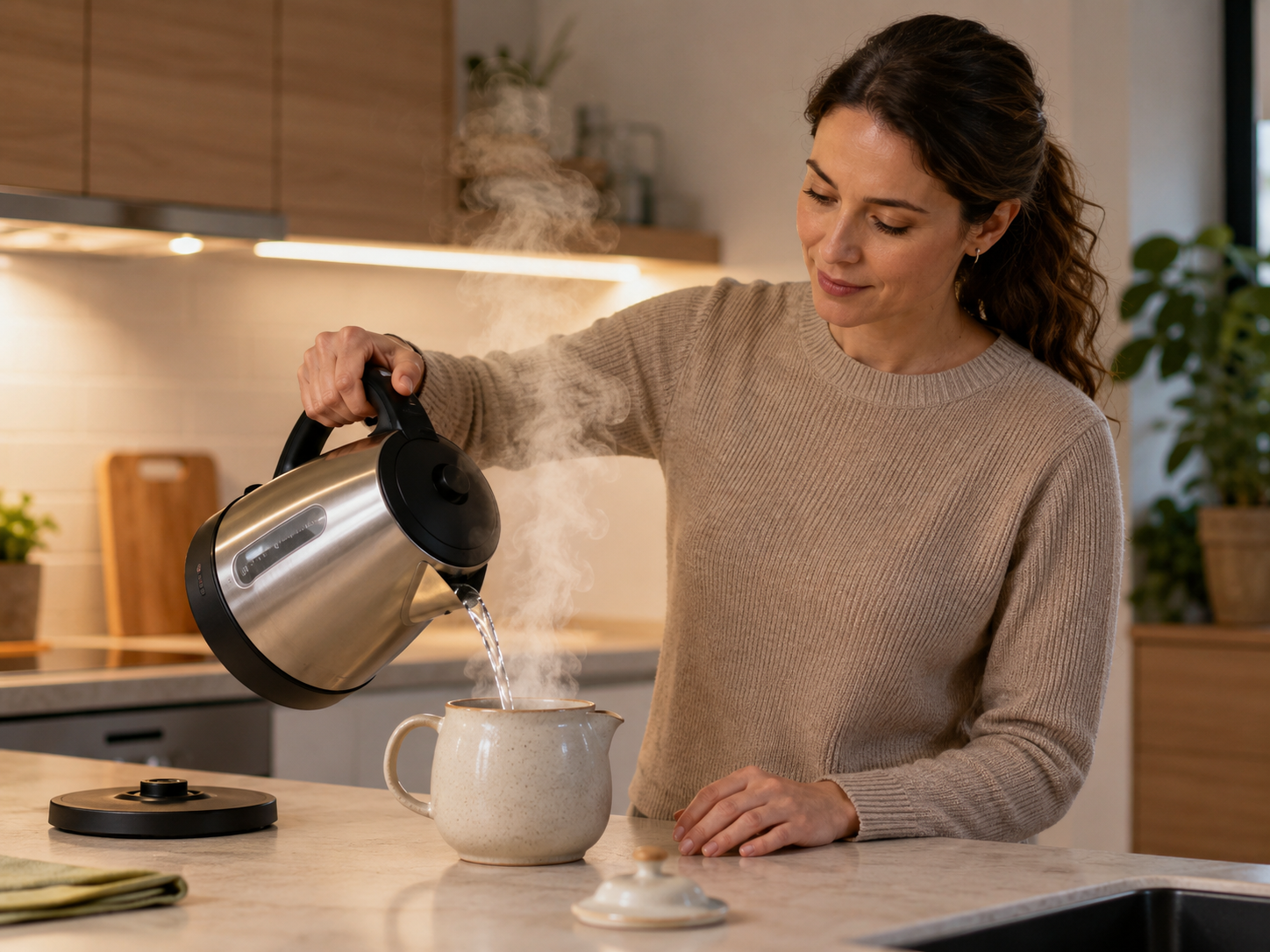
Electric kettles are convenient, but boiling water can cause painful burns if poured carelessly. Learn simple, practical safety habits to prevent scalds at home.

Why Electric Kettle Safety Matters in Everyday Kitchens
Electric kettles are one of those small appliances many people use without thinking twice. They are fast, simple, and perfect for making tea, coffee, instant oatmeal, ramen, hot cocoa, or a quick cup of warm water.
But because they feel so ordinary, it is easy to forget one important thing: the water inside is extremely hot.
A freshly boiled kettle can produce water near 212°F, which is hot enough to cause a scald burn very quickly. The risk is not only from touching the kettle itself. Many burns happen while pouring, when water splashes, steam rises, the kettle is tilted too quickly, or the cup tips over.
This is especially important in homes with children, older adults, pets, or crowded kitchen counters. A simple morning routine can turn uncomfortable if hot water spills onto hands, wrists, feet, or laps.
The good news is that most kettle-related burns are preventable with small habits. You do not need to be afraid of using an electric kettle. You just need to treat boiling water with a little more attention.
Common Ways People Get Burned When Pouring Hot Water
Most kettle burns do not happen because someone is being reckless. They usually happen during normal, rushed moments.
You might be half-awake in the morning, holding a mug in one hand and the kettle in the other. You may be making tea while answering a message. Maybe the counter is cluttered, the cup is too close to the edge, or the kettle is heavier than expected.
Small details matter when boiling water is involved.
Pouring Too Fast
One of the most common mistakes is pouring hot water too quickly. When the kettle is tilted sharply, water may rush out faster than expected. It can splash against the bottom of the cup, bounce back onto your hand, or overflow before you notice.
This can happen more easily with narrow mugs, travel cups, or bowls with uneven surfaces.
A slow, steady pour gives you more control. It also reduces splashing.
Holding the Cup While Pouring
Many people hold the mug in one hand and pour with the other. It feels natural, but it increases the chance of a burn.
If the mug shifts, slips, cracks from heat stress, or overflows, your hand is right next to the hot water. Even a small splash can hit your fingers or wrist.
Whenever possible, place the cup on a stable surface before pouring.
Pouring Near the Edge of the Counter
A cup placed near the edge of the counter is easier to knock over. It is also more dangerous if hot water spills downward onto legs, feet, children, or pets.
A safer habit is to move the mug farther back from the counter edge before pouring.
Overfilling the Kettle
An overfilled electric kettle may spit, leak, or pour unevenly. Some kettles also release extra steam or water from the spout when filled past the maximum line.
The fill line is there for a reason. Staying below it helps the kettle boil and pour more safely.
Ignoring Steam
Steam can burn too. When hot water is poured, steam rises directly from the cup and the kettle spout. If your hand, face, or wrist is too close, it can feel surprisingly hot.
This is especially common when people lean over the mug to check the water level.
Warning Signs That Pouring May Not Be Safe
Before pouring boiling water, take a second to look at the setup. A few warning signs can tell you that you should pause and adjust things first.
The Kettle Feels Too Heavy
If the kettle feels heavy when you lift it, it may be too full or difficult to control. A heavy kettle can strain your wrist and make the pour less steady.
This matters more for older adults, people with hand weakness, or anyone using a large kettle.
A simple fix is to boil only the amount of water you need.
The Spout Drips or Splashes
Some kettles pour smoothly. Others drip, sputter, or release water in an uneven stream. If your kettle often drips down the side or splashes as you pour, slow down and keep the spout closer to the cup.
If the problem continues, check whether mineral buildup is affecting the spout or filter.
The Cord Is in the Way
Electric kettle cords can become a tripping or pulling hazard. If the cord hangs over the counter or crosses a walkway, someone may catch it and pull the kettle down.
Before boiling, make sure the cord is tucked safely away from the edge.
The Cup Is Unstable
A lightweight plastic cup, narrow mug, or uneven bowl can tip when hot water hits it. Thin glass may also be risky if it is not meant for hot liquids.
Use a sturdy, heat-safe mug or bowl with a wide base.
Simple Steps to Prevent Burns When Pouring from an Electric Kettle
The safest routine is not complicated. It is mostly about slowing down, clearing space, and keeping your hands away from the path of hot water.
1. Clear the Pouring Area First
Before lifting the kettle, make sure the counter is clear.
Move away papers, plastic bags, dish towels, food wrappers, phone chargers, and anything that could catch on the kettle or block your movement.
Place the cup on a flat, stable surface. Keep it away from the edge of the counter.
This tiny pause can prevent many accidents.
2. Use the Right Cup or Bowl
Not every container is a good choice for boiling water.
Use mugs, cups, or bowls that are designed for hot liquids. They should feel sturdy, sit flat, and have enough room for the water you plan to pour.
Avoid pouring boiling water into containers that are cracked, very thin, flexible, or not heat-safe.
Travel mugs can also be tricky. Some have narrow openings, which makes splashing more likely. Pour slowly and aim carefully.
3. Let the Kettle Sit for a Few Seconds
You do not always have to pour the instant the kettle clicks off.
Letting the kettle sit for a few seconds can reduce bubbling and make the pour feel calmer. The water will still be very hot, but it may be less likely to surge or splash.
This is especially helpful if your kettle tends to boil vigorously.
4. Hold the Handle Firmly and Keep Your Wrist Steady
Use the handle as intended. Keep your hand away from the metal body, lid, steam opening, and spout.
Before pouring, make sure you have a secure grip. If the handle is slippery, dry your hand first.
Tilt the kettle slowly. A controlled pour is safer than a sudden pour.
5. Keep the Spout Close to the Cup
You do not need to hold the kettle high above the mug. The higher the water falls, the more it can splash.
Keep the spout reasonably close to the cup opening, without touching the cup or letting steam hit your hand.
This helps the water flow directly where it should go.
6. Pour Slowly and Stop Before the Cup Is Full
Leave some space at the top of the mug or bowl. Filling it to the brim makes spills much more likely when you move it.
A good habit is to stop below the top edge, especially if you plan to add a tea bag, coffee, milk, honey, noodles, or oatmeal.
Remember that adding ingredients can raise the water level.
7. Keep Children and Pets Away During Pouring
Children and pets move quickly, and they do not always understand the danger of hot water.
If you have kids nearby, place the kettle and cup well back from the counter edge. Do not pour hot water while holding a child. Avoid leaving a freshly filled mug where a child can reach it.
Pets can also bump your legs or jump near counters. It is worth taking a moment to make sure the area is calm before pouring.
8. Do Not Multitask with Boiling Water
It is tempting to check your phone, answer a question, or turn toward the stove while pouring. But boiling water deserves your full attention for a few seconds.
Finish the pour first. Then handle everything else.
This one habit can make your kitchen much safer.
Special Safety Tips for Families
Electric kettles are common in family kitchens, dorm rooms, home offices, and apartments. The more people sharing a space, the more important safe placement becomes.
Keep the Kettle Away from Counter Edges
A kettle should sit far enough back that it cannot be easily pulled or knocked down. The cord should not hang over the side.
This is especially important with toddlers, who may grab anything within reach.
Choose a Kettle with Helpful Safety Features
If you are buying a new electric kettle, consider features that make everyday use easier and safer.
Look for a comfortable handle, automatic shutoff, a stable base, a clear water level marker, and a spout that pours smoothly.
A cool-touch exterior can also be useful, especially in busy households.
Teach Older Kids a Safe Routine
Older children and teens may use a kettle for hot chocolate, instant noodles, or tea. Instead of simply saying “be careful,” teach a clear routine.
Place the cup on the counter. Keep it away from the edge. Pour slowly. Do not overfill. Leave the mug in place until it is safe to carry.
Simple instructions are easier to follow than vague warnings.
Common Mistakes to Avoid
Even careful people make small mistakes with electric kettles. These are some of the habits worth changing.
Pouring Into a Cup Held Over the Sink
Some people hold a cup over the sink while pouring because they think spills will go down the drain. But holding the cup in your hand puts your skin close to the hot water.
It is safer to put the cup down on a stable surface.
Carrying a Full Mug Across the Kitchen
A mug filled close to the top can spill while walking. This is especially risky if you are carrying it over carpet, around pets, or near children.
Leave space at the top and use a mug with a handle that feels comfortable.
Opening the Lid Right After Boiling
Opening the lid immediately after boiling can release a burst of steam. If you need to refill or check the kettle, let it cool slightly first and keep your face and hands away from the opening.
Using a Damaged Kettle
If the kettle leaks, the lid does not close properly, the handle feels loose, or the base seems unstable, stop using it until the issue is fixed or the kettle is replaced.
A kettle that does not pour reliably can increase the risk of spills.
What to Do If a Small Spill Happens
Small spills can happen even when you are careful. The main goal is to stay calm and avoid making the situation worse.
If hot water spills on the counter, step back first so you do not slip or spread it. Keep children and pets away. Wipe it up once it is safe to do so.
If water spills onto clothing, skin, or a large area, follow basic safety awareness and seek appropriate help if needed. For serious burns, large burns, or burns involving young children, older adults, the face, hands, or sensitive areas, it is best to contact a medical professional or local emergency services.
For everyday prevention, the better approach is to build habits that reduce spills before they happen.
A Safer Electric Kettle Routine You Can Use Every Day
Here is a simple routine that works well in most homes:
Put the mug on a flat counter, away from the edge.
Make sure the kettle cord is not hanging down.
Check that the mug is sturdy and heat-safe.
Let the kettle settle for a few seconds after boiling.
Hold the handle firmly.
Pour slowly, with the spout close to the cup.
Stop before the mug is full.
Set the kettle back on its base carefully.
This routine takes only a few extra seconds, but it can prevent painful splashes and spills.
When to Be Extra Careful
Some situations deserve a little more attention.
Be extra careful when you are tired, distracted, in a hurry, or using an unfamiliar kettle. Also slow down if your hands are wet, the kettle is full, the mug opening is narrow, or children and pets are nearby.
Dorm rooms and small apartments can also be tricky because counter space is limited. In that case, make a dedicated safe pouring spot instead of pouring near beds, desks, electronics, or clutter.
Home offices are another common place for accidents. A kettle near a computer, notebook, or power strip can create both burn and electrical concerns if water spills. Keep hot water routines away from electronics whenever possible.
Final Thoughts: Small Habits Make Hot Water Safer
Electric kettles are useful, convenient, and safe when used with care. The main risk comes from forgetting how hot the water really is, especially during everyday routines like making tea, coffee, oatmeal, or instant noodles.
The safest habits are simple: use a stable cup, keep it away from the counter edge, pour slowly, avoid multitasking, and keep children and pets out of the pouring area.
You do not need to overthink it. Just give boiling water a few seconds of attention. That small pause can help prevent painful burns and make your kitchen routine calmer, safer, and easier to manage.

Hi, I’m the creator and editor behind ZestyHabit. I research everyday safety, first aid, and practical wellness topics using official guidance and reliable public sources, then turn that information into clear, realistic steps for daily life.
My goal is to help readers make safer, better-informed choices at home and beyond.


