Halogen Bulb Fire and Burn Risks: How to Use Halogen Lighting Safely at Home
Minjin Park
·
Halogen bulbs can become dangerously hot and may cause fires or serious burns. Learn how to install, use, replace, and dispose of halogen lighting safely.
Halogen bulbs are known for producing bright, crisp light from a relatively small fixture. They have been widely used in floor lamps, desk lamps, recessed ceiling lights, outdoor security lights, work lights, and vehicle headlights. However, their brightness comes with an important drawback: halogen bulbs operate at extremely high temperatures.
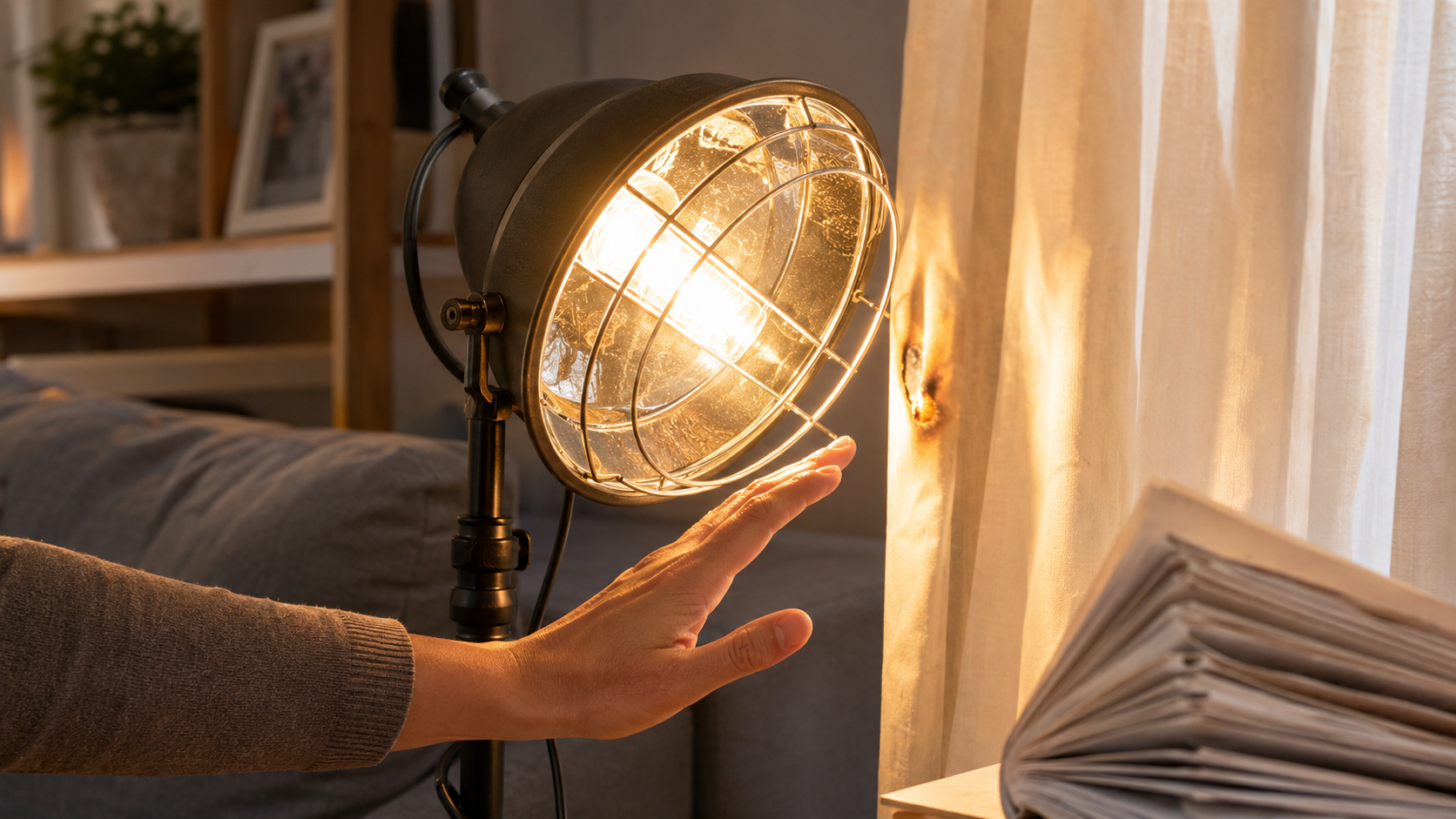
A bulb that looks harmless may become hot enough to burn skin, damage nearby materials, or ignite combustible items. Curtains, bedding, paper, clothing, insulation, and even dust can become dangerous when placed too close to a halogen light.
Halogen lighting is not automatically unsafe. Many fixtures were designed with guards, heat-resistant materials, and proper ventilation. Problems usually develop when people use the wrong bulb, remove a protective cover, block airflow, place the lamp near flammable materials, or touch the bulb before it has cooled.
Understanding these risks can help you decide whether to continue using halogen lighting or replace it with a cooler, more efficient LED alternative.
A halogen bulb is a type of incandescent lamp. Electricity passes through a tungsten filament, heating it until it glows and produces light. The small glass or quartz capsule surrounding the filament contains a halogen gas that helps the filament last longer and maintain its brightness.
The process is effective, but it is not particularly energy-efficient. A substantial portion of the electricity becomes heat instead of visible light. Because the filament operates at a higher temperature than the filament in a traditional incandescent bulb, the bulb’s surface and surrounding fixture can become extremely hot.
Fire and Rescue NSW warns that some halogen downlights can reach temperatures as high as approximately 370°C, or 698°F. If these lights are incorrectly installed or come into contact with insulation and other combustible materials, they may cause a fire. (Fire and Rescue NSW)
The heat may also remain in the bulb and fixture for several minutes after the light has been switched off. A bulb that is no longer glowing should not automatically be considered safe to touch.
How Halogen Bulbs Can Cause a Fire
A halogen bulb does not need to produce an open flame to start a fire. Heat can gradually raise the temperature of nearby material until it begins to discolor, melt, smolder, or ignite.
Several common situations create a particularly high risk.
Flammable Material Touching the Bulb
Curtains, bedding, clothing, towels, paper, and upholstered furniture can catch fire if they touch a hot bulb or its housing. Tall torchiere floor lamps are especially concerning because their open bowls face upward. A scarf, piece of paper, curtain, or child’s toy can fall onto the lamp and remain against the bulb without being noticed.
The U.S. Consumer Product Safety Commission has documented fires involving halogen lamps that were knocked over or came into contact with clothing, bedding, sofas, and curtains. (CPSC)
Never drape clothing over a lamp, even temporarily. A lamp should not be used as a drying rack, and nothing should be stored above an upward-facing halogen fixture.
Using a Bulb With Excessive Wattage
Every light fixture has a maximum wattage rating. Installing a bulb that exceeds this rating can generate more heat than the socket, wiring, shade, and housing were designed to tolerate.
The result may include:
A scorched or melted socket
Brittle electrical insulation
Discolored wiring
A damaged lampshade
Electrical arcing
Fire inside the fixture or wall
Always check the label on the lamp or fixture before buying a replacement bulb. Never assume that a bulb is safe simply because it fits the socket.
Missing Guards or Glass Covers
Some halogen fixtures include a protective glass shield, wire guard, or enclosed cover. These components prevent accidental contact and help contain fragments if the bulb breaks.
Do not operate a fixture with its safety shield or guard removed. Halogen bulbs operate under high pressure and can occasionally rupture, particularly if they are damaged, contaminated, incorrectly installed, or exposed to moisture. The CPSC notes that safety standards for portable halogen fixtures require guards and glass covers to reduce fire and burn hazards. (CPSC residential lighting guide)
If a cover is cracked or missing, stop using the light until the correct replacement part is installed.
Blocked Ventilation
Halogen fixtures need airflow to release heat. Covering ventilation openings, placing the fixture in an enclosed space, or installing a bulb that is not rated for an enclosed fixture may trap heat.
Never cover a lamp with fabric to soften or change the color of the light. Do not place a halogen desk lamp inside a cabinet, small shelf, blanket fort, or other poorly ventilated area.
Ceiling Insulation Around Downlights
Recessed halogen downlights can create a hidden fire risk above the ceiling. Insulation, leaves, dust, stored materials, pest nests, or electrical cables may come into contact with the hot fixture.
This problem is particularly dangerous because a fire may begin smoldering inside the ceiling or roof space before smoke becomes visible in the room below. Halogen downlights and their transformers should be installed with the required clearances and protective covers specified for the fixture.
Do not move or add ceiling insulation around existing downlights without first determining whether the fixtures are rated for insulation contact. If you are unsure, have a licensed electrician inspect them.
How Halogen Bulbs Cause Burn Injuries
Direct contact with an operating halogen bulb can cause a painful thermal burn almost immediately. Young children are at particular risk because a floor or desk lamp may be within their reach.
Pets may also knock over lamps or brush against exposed fixtures. A tipped lamp can burn flooring, bedding, or a person before anyone realizes what has happened.
Burns may also occur during bulb replacement. Switching off the lamp does not make it cool instantly. The bulb, socket, metal housing, and protective cover may all remain hot.
To reduce burn risk:
Keep halogen lamps beyond the reach of children and pets.
Do not place them near beds, couches, play areas, or narrow walkways.
Turn the light off before adjusting its angle.
Never touch the bulb or surrounding metal while it is operating.
Allow the fixture to cool completely before cleaning or replacing the bulb.
Use the fixture’s handle rather than touching the lamp head.
Warn family members when a recently used light is still hot.
If a lamp falls, unplug it by the plug—not by pulling on the cord—once it is safe to do so. Do not grab the hot lamp head with bare hands.
Safe Placement of Halogen Lamps
Placement is one of the most important parts of halogen lamp safety. The lamp should stand on a stable, level surface where it cannot easily be bumped or tipped.
Follow the manufacturer’s minimum-clearance instructions. If the manual is missing, create generous open space around the fixture and make sure no object can fall onto it.
Do not leave a portable halogen lamp operating when the room is empty. Turn it off before going to bed or leaving the house. Outdoor work lights should also be switched off when the job is finished rather than being left against wood, plastic sheeting, or building materials.
How to Replace a Halogen Bulb Safely
Replacing a halogen bulb requires more care than replacing many LED bulbs.
First, turn off the light and disconnect the power. Unplug portable lamps. For hardwired fixtures, switch off the appropriate circuit breaker if the manufacturer’s instructions require it.
Wait until the bulb and fixture are completely cool. Depending on the lamp, this may take longer than expected.
Before installing the new bulb:
Confirm the correct base, voltage, shape, and wattage.
Check the fixture’s maximum wattage label.
Inspect the socket for discoloration, cracking, or melted material.
Make sure the protective guard or glass cover is intact.
Read the bulb and fixture instructions.
Many exposed quartz halogen capsules should not be touched with bare fingers. Skin oils can remain on the glass, creating uneven heating and reducing the bulb’s performance or life. Use clean gloves, a lint-free cloth, or the packaging to hold the bulb.
If you accidentally touch an exposed capsule, follow the manufacturer’s cleaning directions. Some manufacturers recommend carefully cleaning fingerprints with alcohol and allowing the bulb to dry completely before installation. This rule may not apply to halogen bulbs with a separate outer glass envelope, so always follow the instructions for the specific product.
Do not force a bulb into the socket. If it does not fit easily, it may be the wrong type or incorrectly aligned.
Warning Signs That a Halogen Fixture Is Unsafe
Stop using the lamp and disconnect its power if you notice:
A burning or unusual electrical smell
Smoke or sparks
Flickering that continues after tightening the bulb
Do not solve repeated bulb failures by installing a higher-wattage bulb. Frequent failures may indicate overheating, poor electrical contact, vibration, incorrect voltage, or a damaged fixture.
A qualified electrician should inspect hardwired lights, recessed downlights, damaged sockets, and fixtures showing signs of overheating.
What to Do If a Halogen Lamp Starts a Fire
If material begins smoking or burning near a halogen lamp, warn everyone in the home and move toward safety. If possible without approaching the fire, switch off the power. Do not reach past flames or grab a burning lamp.
Use a fire extinguisher only if the fire is small, you have been trained, and you have a clear escape route behind you. Otherwise, leave the building, close doors as you exit, and call 911 from outside.
Never throw water onto an energized lamp, socket, or electrical fire. Water can conduct electricity and create an electrocution hazard.
Every home should have working smoke alarms on each level, inside bedrooms, and outside sleeping areas. Test them regularly and replace them according to the manufacturer’s instructions.
First Aid for a Halogen Bulb Burn
Move away from the heat source and cool the burn under clean, cool running water. The American Red Cross recommends cooling a thermal burn with running water for approximately 5 to 20 minutes. Do not use ice, butter, toothpaste, or oily creams, as these may worsen tissue damage or make treatment more difficult. (American Red Cross)
Remove rings, watches, or tight clothing before swelling begins, but do not pull away material that is stuck to the skin. After cooling, loosely cover the area with a clean, nonstick dressing.
Seek prompt medical care if the burn:
Is deep, white, charred, leathery, or numb
Is larger than the injured person’s palm
Affects the face, hands, feet, genitals, or a major joint
Goes completely around a finger, limb, or torso
Was caused by electricity as well as heat
Affects a baby, young child, or medically vulnerable person
Develops increasing pain, redness, swelling, drainage, or fever
Call 911 for a large or severe burn, breathing difficulty, smoke inhalation, loss of consciousness, or any life-threatening condition.
Should You Replace Halogen Bulbs With LEDs?
For most household uses, an LED replacement is the safer and more efficient choice. LEDs still produce heat, especially around their electronic bases, but they generally release far less heat than incandescent or halogen lighting while producing a similar amount of light.
ENERGY STAR reports that certified lighting can produce approximately 70% to 90% less heat than traditional incandescent lighting. (ENERGY STAR)
When switching to LED, compare lumens rather than simply matching wattage. Lumens describe brightness, while watts describe power consumption. Also confirm that the LED is compatible with the fixture, voltage, dimmer, and enclosure.
Recessed halogen downlights may require more than a simple bulb swap. Transformers, dimmers, insulation clearances, and fixture ratings can affect compatibility, so consider having an electrician assess older installations.
The Bottom Line
Halogen bulbs produce useful, high-quality light, but their intense operating heat should never be underestimated. Safe use depends on the correct wattage, intact protective guards, adequate ventilation, careful placement, and sufficient cooling time before anyone touches the fixture.
Never place a halogen lamp near curtains, bedding, paper, clothing, insulation, or other combustible materials. Stop using any fixture that smells burned, flickers, sparks, or shows heat damage. In many homes, replacing older halogen lights with compatible LEDs can reduce energy use as well as fire and burn risk.
Do you still use halogen bulbs, floor lamps, or recessed downlights in your home, and have you ever noticed how hot they become? Share your experience or your favorite lighting safety tip in the comments so other readers can make their homes safer.
Hi, I’m the creator and editor behind ZestyHabit. I research everyday safety, first aid, and practical wellness topics using official guidance and reliable public sources, then turn that information into clear, realistic steps for daily life.
My goal is to help readers make safer, better-informed choices at home and beyond.