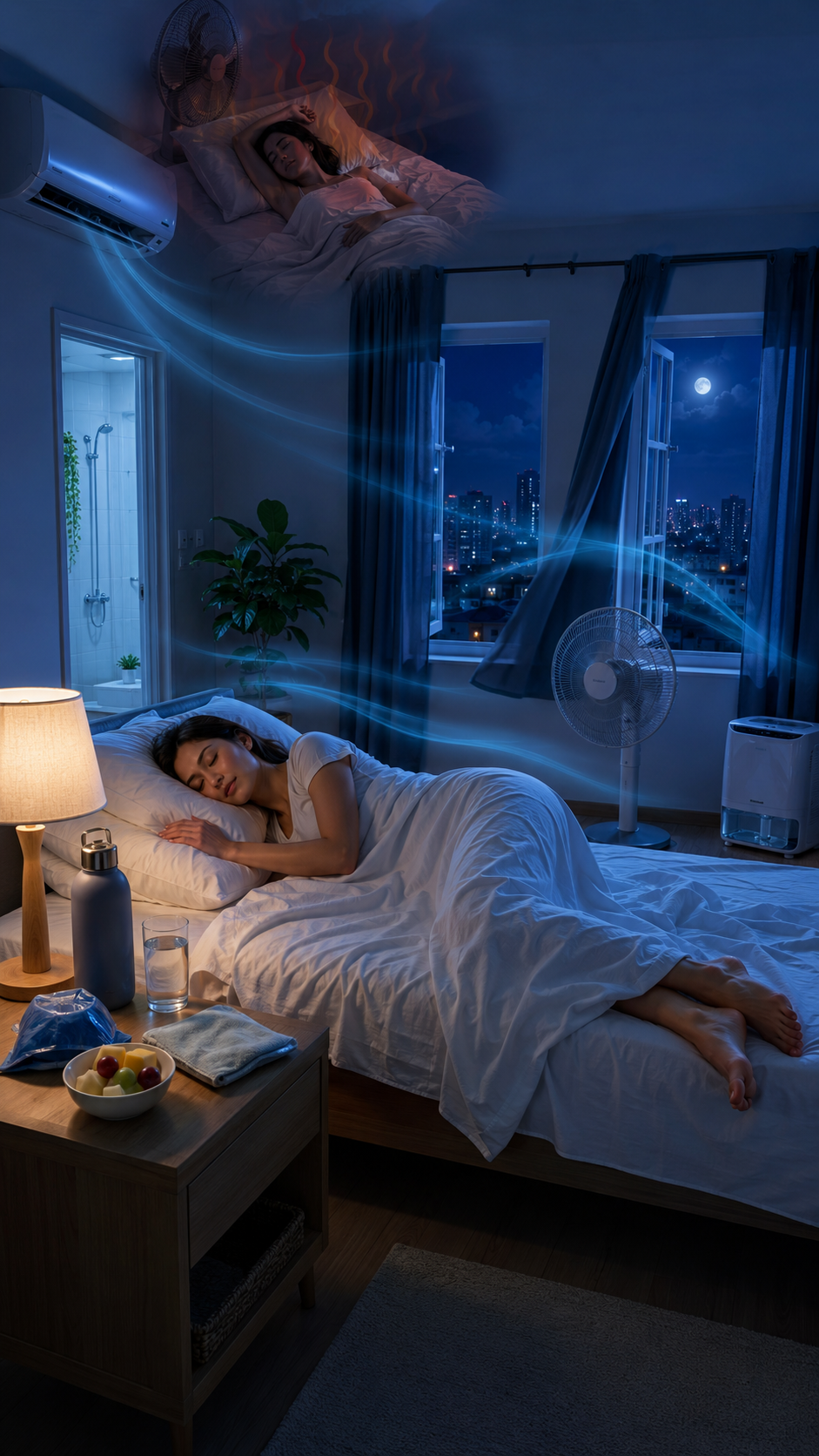
How to Stay Cool During Tropical Nights: 15 Practical Tips for Safe, Restful Sleep
Minjin Park
·
You turn off the light, lie down, and wait for sleep—but the sheets feel warm, the air refuses to move, and sweat begins collecting behind your neck. Opening a window provides little relief because the air outside is just as hot and humid as the bedroom.
This is what many people experience during a “tropical night.” In South Korea, the term generally describes a night when the temperature does not fall below 25°C, or 77°F. Other countries may use different thresholds, but the practical meaning is the same: the night remains too warm for the body and home to cool down properly.
A tropical night is more than an inconvenience. Hot conditions can disturb sleep, increase dehydration, and prevent the body from recovering from daytime heat. When several hot days and nights occur in succession, the risk of heat exhaustion and heat stroke can rise—particularly for older adults, infants, pregnant people, outdoor workers, and those with certain medical conditions.
Fortunately, a combination of home-cooling strategies, sensible hydration, and direct body cooling can make a significant difference.
Human body temperature naturally changes throughout the day. As bedtime approaches, the body normally begins releasing heat, which supports the transition into sleep. When the bedroom is extremely warm or humid, releasing that heat becomes more difficult.
Humidity adds to the problem because sweat cools the body most effectively when it evaporates. If the air already contains a large amount of moisture, sweat may remain on the skin without providing enough cooling. You can therefore feel sticky, overheated, and restless even when the recorded temperature does not seem extreme.
Hot nights can lead to:
Difficulty falling asleep
Frequent waking
Night sweats
Headaches and thirst
Faster heart rate
Fatigue and poor concentration the following day
Increased heat strain after several consecutive hot days
Research has also linked high nighttime temperatures with an additional risk of heat-related death, particularly among people with cardiovascular disease. This makes nighttime cooling an important part of heat safety rather than merely a matter of comfort.
A Real Example: South Korea’s Record-Breaking Tropical Nights
The summer of 2024 demonstrated how persistent nighttime heat can become a national concern. According to a climate analysis presented by the Korea Meteorological Administration, South Korea experienced a national average of 20.2 tropical nights during the summer—13.7 days above the normal average of 6.5 and the highest figure in the available ranking.
The combination of high temperatures, humidity, and long-lasting high-pressure systems meant that many buildings absorbed heat throughout the day and released it slowly after sunset. Residents could not assume that nightfall would bring meaningful relief.
This example shows why heat preparation should not end when the sun goes down. During a prolonged hot spell, the overnight period may be the only opportunity for the body to recover—and that opportunity can disappear if indoor temperatures remain dangerously high.
1. Stop Heat From Entering During the Day
The best time to prepare for a tropical night is several hours before bedtime. Once walls, floors, furniture, and bedding absorb heat, cooling the room becomes much more difficult.
Close curtains, blinds, or shades on windows receiving direct sunlight. Reflective shades or blackout curtains can be especially useful on west-facing windows that receive intense afternoon sun. If possible, close exterior shutters or use a temporary reflective window covering designed for residential use.
Keep windows closed while the outdoor temperature is higher than the indoor temperature. Opening every window during the hottest part of the day may simply allow more heat and humidity inside.
When the outdoor air finally becomes cooler than the indoor air, open windows on opposite sides of the home to create cross-ventilation. Window opening should always be balanced with security, fall prevention, outdoor air quality, and insect control.
2. Reduce Heat Produced Inside the Home
Many appliances quietly add heat to a room. Ovens, stovetops, clothes dryers, dishwashers, gaming computers, and powerful lighting can all make an already hot home more uncomfortable.
During a heatwave:
Prepare meals that require little or no cooking.
Use a microwave, air fryer, or outdoor cooking area when appropriate.
Run the dishwasher and dryer during cooler hours.
Turn off unused lights and electronics.
Avoid ironing or using heat-producing hair tools near bedtime.
Charge electronic devices outside the bedroom when practical.
Air conditioning remains one of the most effective protections against dangerous indoor heat. You do not necessarily need to turn your bedroom into a refrigerator. The objective is to create a safe environment in which your body can release heat and sleep comfortably.
Start cooling the room before bedtime rather than waiting until it becomes unbearable. Close doors and windows while the air conditioner is running, and clean the filter according to the manufacturer’s instructions. A dirty filter can reduce airflow and make the unit work harder.
If energy costs are a concern, cool one main sleeping room instead of the entire home. Family members may temporarily sleep in that room during the worst part of a heatwave.
People without home air conditioning can spend part of the day or evening in an air-conditioned library, shopping center, community facility, or designated cooling center. Even several hours in a cool place can reduce heat stress.
4. Do Not Rely on a Fan in Extreme Indoor Heat
A fan can make a warm room feel better by increasing air movement and helping sweat evaporate. However, it does not actually lower the room’s temperature.
The CDC currently advises using fans only when indoor temperatures are below 90°F, or approximately 32°C. Above that level, moving very hot air across the skin may increase body temperature instead of preventing heat illness. Review the CDC’s current heat and health recommendations when planning for extreme conditions.
When the room is warm but below that threshold, place a fan where it can move cooler air through the room. If the outdoor air is cooler, a window fan can help bring it inside or push accumulated hot air out. Keep electrical equipment away from water and make sure cords do not create a nighttime tripping hazard.
5. Lower Humidity When Possible
High humidity makes a tropical night feel much hotter because it slows the evaporation of sweat. An air conditioner naturally removes some moisture, while a dehumidifier may improve comfort in homes where humidity is the main problem.
However, dehumidifiers also release heat while operating. They are most useful when used strategically, such as before bedtime or in combination with appropriate ventilation or air conditioning. A small temperature-and-humidity monitor can help you understand whether your bedroom problem is primarily heat, humidity, or both.
Avoid drying wet laundry inside the bedroom on humid nights. The evaporating moisture can raise indoor humidity and make sleeping less comfortable.
6. Take a Cool Shower Before Bed
A cool or lukewarm shower can remove sweat and lower skin temperature before sleep. The water does not need to be painfully cold. An ice-cold shower may feel shocking and can cause temporary discomfort without offering a practical advantage over comfortably cool water.
Dry off lightly and put on loose, breathable sleepwear. If you become hot again, place a cool damp cloth on the back of your neck, wrists, or forehead.
People with reduced sensation, poor circulation, or fragile skin should avoid applying frozen objects directly to the body. Wrap a cold pack in cloth, use it for short periods, and check the skin regularly.
7. Choose Lightweight Bedding
Heavy comforters, memory-foam toppers, waterproof layers, and thick synthetic blankets may trap heat around the body. Replace them temporarily with a lightweight sheet or thin blanket.
Choose sleepwear and bedding that feel breathable and allow moisture to move away from the skin. Cotton, linen, and moisture-wicking fabrics are common options, but individual comfort matters more than the marketing label.
If two people share a bed, consider using separate lightweight sheets. This reduces shared body heat and allows each person to adjust their covering without disturbing the other.
Sleeping on a lower floor may also help because hot air rises. During an extreme heat event, a safe living-room floor or downstairs room may be cooler than an upstairs bedroom.
8. Hydrate Throughout the Day
Do not wait until bedtime to replace an entire day’s fluid loss. Drink water regularly throughout the day and evening, especially if you have been outdoors, exercising, or sweating heavily.
A glass of water near the bed is useful, but drinking an excessive amount immediately before sleep can lead to repeated bathroom trips. Steady hydration is generally more comfortable than suddenly consuming a large volume at night.
Limit alcohol before bed. Although alcohol may initially make a person feel sleepy, it can worsen sleep quality and contribute to dehydration. Large amounts of caffeine late in the day can also interfere with sleep already disrupted by heat.
People taking diuretics or those with heart, kidney, or liver disease may have medical restrictions on fluid intake. They should ask a healthcare professional how to manage hydration during hot weather rather than changing their intake independently.
9. Eat Lighter Evening Meals
A very large, heavy meal can make a hot evening feel even more uncomfortable. Choose a moderate meal with hydrating foods such as vegetables, fruit, soup served at a safe temperature, or yogurt if appropriate for your diet.
Food alone cannot prevent heat illness, but regular balanced meals help replace salt and nutrients lost through ordinary sweating. Most people do not need large quantities of sports drinks during normal indoor activity. People exercising intensely or sweating for prolonged periods may need a more individualized hydration plan.
Do not leave perishable food sitting in a warm room. Hot weather allows bacteria to multiply more quickly, so refrigerate leftovers promptly.
10. Adjust Your Evening Routine
Intense exercise shortly before bed can keep body temperature elevated. On very hot days, move workouts to the coolest available part of the morning, exercise in an air-conditioned location, or reduce the intensity.
Avoid unnecessary outdoor errands in the late afternoon and early evening, when roads, walls, and buildings may still be releasing stored heat. Check local heat alerts and the “feels like” temperature rather than relying only on the air temperature.
Begin your cooling routine early: close blinds in the afternoon, hydrate with dinner, cool the bedroom, shower, and prepare lightweight bedding. Waiting until midnight makes every step more difficult.
11. Check on People at Higher Risk
Some people may not recognize heat stress or may be unable to cool themselves without help. Check regularly on:
Older adults, especially those living alone
Babies and young children
Pregnant people
People with heart, lung, kidney, or neurological conditions
People with diabetes
Anyone taking medication that affects sweating, circulation, alertness, or hydration
People with limited mobility
Outdoor workers recovering from daytime heat
Anyone without reliable air conditioning
Do not judge an older adult’s safety only by asking whether they “feel hot.” Check the actual indoor temperature, confirm that cooling equipment works, and watch for weakness, confusion, dizziness, or unusual behavior.
Pets also need access to water and a cool space. Never confine an animal to an unventilated room, enclosed balcony, or vehicle.
12. Create a Plan for Power Outages
Electricity demand can rise sharply during heatwaves, making power interruptions especially dangerous. Keep flashlights, charged power banks, battery-operated fans, drinking water, medication information, and emergency contacts accessible.
Know where you could go if your home becomes unsafe, such as a relative’s air-conditioned home, a hotel, or a public cooling center. If someone in the household depends on electrically powered medical equipment, arrange backup power and contact the utility provider about available emergency programs.
Never operate a portable generator inside a home, garage, basement, or enclosed porch. Generators produce carbon monoxide, an odorless gas that can cause fatal poisoning. They must be used outdoors and placed well away from doors, windows, and vents.
Move the person to an air-conditioned or cooler location. Loosen unnecessary clothing, apply cool wet cloths, and provide small sips of water if the person is fully awake and able to swallow.
Seek medical help if symptoms worsen, vomiting prevents drinking, the person has significant underlying health problems, or recovery does not begin promptly.
14. Treat Heat Stroke as an Emergency
Heat stroke is a medical emergency. Warning signs may include:
Confusion or unusual behavior
Slurred speech
Loss of coordination
Fainting
Seizures
Very high body temperature
Hot skin, with or without sweating
Inability to drink safely
Call emergency services immediately. Move the person to a cooler area, remove excess clothing, and begin rapid cooling with cool wet cloths, water, ice packs wrapped in cloth, or a cool bath if it can be done safely. Do not give fluids to someone who is confused, vomiting repeatedly, having a seizure, or not fully conscious.
Do not leave the person alone while waiting for medical assistance.
15. Do Not Treat Sleep as the Only Concern
A sleepless night feels miserable, but persistent nighttime heat may signal that the home itself has become unsafe. If you cannot lower the indoor temperature, continue sweating heavily despite resting, or begin feeling dizzy, nauseated, confused, or abnormally weak, focus on cooling and medical safety rather than forcing yourself to remain in bed.
The World Health Organization describes a heatwave as the accumulation of unusual heat across a sequence of hot days and nights. Each night without adequate relief can add to the strain carried over from the previous day.
Tropical nights are becoming a familiar part of summer in many regions, but small preparations can prevent a warm bedroom from becoming a health emergency. Which cooling strategy works best in your home, and have you discovered an inexpensive trick that helps you sleep during extremely hot nights? Share your experience in the comments so other readers can build a safer and more comfortable tropical-night routine.
Hi, I’m the creator and editor behind ZestyHabit. I research everyday safety, first aid, and practical wellness topics using official guidance and reliable public sources, then turn that information into clear, realistic steps for daily life.
My goal is to help readers make safer, better-informed choices at home and beyond.