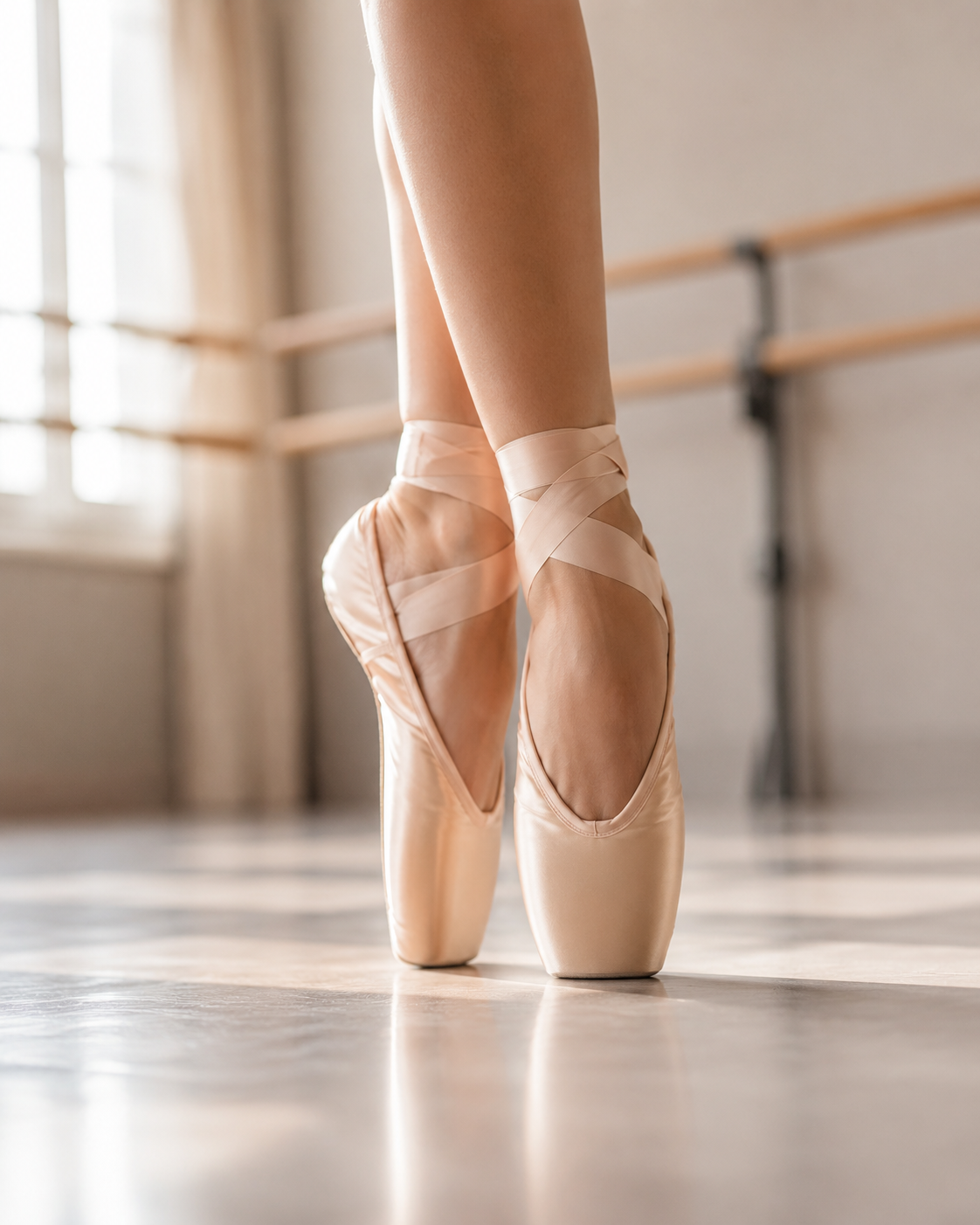
Ballet Fitness Precautions: How to Protect Your Feet and Ankles
Minjin Park
·
Ballet fitness has a graceful look from the outside. The movements seem light, controlled, and elegant. You may picture pointed toes, lifted posture, small pulsing movements, and long lines through the legs and arms. It can feel very different from running, weight training, or high-intensity workouts.
But ballet-inspired fitness is still real exercise.
Your feet and ankles work constantly. They help you balance, rise onto the balls of your feet, point and flex, turn out, shift weight, and control small movements that may look easy but feel surprisingly intense. If you are new to ballet fitness, it is easy to underestimate how much your lower legs, arches, toes, calves, and ankles are doing.
This is why foot and ankle care matters. Ballet fitness can be a beautiful way to build strength, balance, posture, and body awareness, but poor alignment, forced turnout, unstable ankles, or too much repetition can lead to soreness and strain.
The goal is not to make ballet fitness feel intimidating. It is to help you move with more control, protect your feet and ankles, and enjoy the workout without pushing your body into positions it is not ready for.
Why Ballet Fitness Can Challenge the Feet and Ankles
Ballet fitness often includes movements inspired by ballet technique: pliés, relevés, tendus, pulses, pointed feet, turned-out positions, and balance work. Even when the class is not traditional ballet, these movements ask a lot from the lower body.
Your feet may spend more time pointed than they are used to. Your ankles may work hard to stabilize you during relevés. Your calves may fatigue from repeated rising and lowering. Your toes may grip the floor if balance feels uncertain.
The feet and ankles are small compared with the hips and thighs, but they carry a huge responsibility. They are the base of your movement.
Common reasons beginners feel foot or ankle discomfort include:
Forcing turnout from the feet instead of the hips
Rising too high onto the toes without control
Letting ankles roll inward or outward
Gripping the floor with the toes
Doing too many relevés too soon
Wearing unsupportive or slippery footwear
Skipping warm-up movements
Ignoring soreness in the arches, calves, or ankles
Ballet fitness works best when the movement is controlled, not forced.
Start With Foot Alignment
Foot alignment is one of the most important things to watch in ballet fitness.
When standing in a ballet-inspired position, your weight should feel evenly distributed through the foot. Avoid collapsing into the inner arch or rolling onto the outer edge. Your big toe, little toe, and heel should all feel connected to the floor.
A helpful cue is to imagine your foot as a tripod. The three points are the base of the big toe, the base of the little toe, and the heel. Try to keep those points grounded when standing, bending, or rising.
If your arch collapses inward, your knees and ankles may also drift inward. If you roll outward, your ankle may feel unstable. Good alignment starts from the floor.
This does not mean your feet must look perfect. It means you should avoid forcing positions that make your ankles twist or your toes grip.
Do Not Force Turnout
Turnout is one of the most recognizable ballet positions. It means the legs rotate outward, creating that open stance often seen in ballet.
But turnout should come mainly from the hips, not from twisting the knees, ankles, or feet.
Beginners often try to copy a wide turnout by pointing their toes far apart. The problem is that the hips may not actually rotate that far. When the feet turn out more than the hips can support, the knees and ankles may become stressed.
A safer turnout is smaller and more honest. Your knees should generally track in the same direction as your toes during pliés and other bent-knee movements. If your toes point outward but your knees collapse inward, your turnout is too forced.
It is better to use a modest turnout with clean alignment than a wide turnout that strains your joints.
Watch Your Knees Over Your Toes
Even though this article focuses on feet and ankles, knee tracking matters because it affects the entire lower-body chain.
During pliés, pulses, and squats in turned-out positions, your knees should move in line with your toes. They should not cave inward or twist awkwardly.
If your knees do not follow the direction of your toes, check your turnout. You may need to bring your toes closer to forward or reduce the depth of the movement.
Your feet and ankles are often the first places to feel the problem when alignment is off. Keeping your knees and toes moving in the same direction helps protect the ankles from unnecessary twisting.
Be Careful With Relevés
A relevé is a rise onto the balls of the feet. It is common in ballet fitness, barre workouts, and dance-inspired classes. It strengthens the calves, feet, and ankles, but it can also be demanding.
When rising onto the balls of your feet, try to lift straight up rather than rolling inward or outward. Your weight should stay centered over the second and third toes, not collapse into the big toe side or drift toward the little toe side.
Lower with control. The lowering phase matters just as much as the rise. Dropping quickly can stress the calves, Achilles tendon, and ankles.
If your ankles wobble, reduce the height of the relevé. You do not need to rise as high as possible. A smaller lift with control is better than a high lift with instability.
Use a barre, chair, or wall for light support when needed.
Avoid Gripping the Floor With Your Toes
Toe gripping is very common in beginner ballet fitness. When balance feels difficult, the toes may claw into the floor automatically.
At first, this may feel like it helps. But over time, gripping can create foot fatigue, arch cramping, and tension through the calves.
Try to spread your toes gently instead of curling them. Keep the base of the toes connected to the floor, but do not claw. If you notice your toes gripping during balance work, lower your heel, reset your foot, and try again with less tension.
A good foot position should feel active but not cramped.
If you constantly need to grip the floor to stay balanced, the exercise may be too difficult or the surface may be too slippery.
Choose the Right Footwear or Surface
Ballet fitness may be done barefoot, in grip socks, in ballet slippers, or in light training shoes depending on the class style and studio rules.
Barefoot work can help you feel the floor, but it may not be comfortable for everyone. Grip socks can reduce slipping, especially in barre or Pilates-inspired classes. Ballet slippers allow smoother movement but may provide less traction. Regular sneakers may feel too bulky for pointed-foot movements but may be used in some fitness-based classes.
The best choice depends on the class and your body.
Avoid slippery socks on a smooth floor. Sliding unexpectedly can strain the ankles. Also avoid thick, unstable shoes if the class includes balance, small foot movements, or rises onto the balls of the feet.
If you are unsure, ask the instructor what they recommend for beginners.
Warm Up the Feet and Ankles
Because ballet fitness asks so much from the lower legs, a short warm-up is important.
Before class, or during the first few minutes, focus on waking up the feet, ankles, calves, and hips. Gentle movement helps your joints feel more prepared.
Helpful warm-up movements include:
Ankle circles
Pointing and flexing the feet
Slow calf raises
Gentle toe spreads
Marching in place
Small pliés
Hip circles
Easy bodyweight squats
Do not force deep stretches when your body is cold. The goal is to increase circulation and improve awareness before the more demanding movements begin.
Build Balance Gradually
Ballet fitness often includes balance work. You may stand on one leg, rise onto the balls of the feet, or hold a position while moving the arms.
Balance is a skill. It improves with practice, but it should not be rushed.
If you are new, use support. Lightly touch the barre, a wall, or a sturdy chair. Try not to hang on heavily, but allow the support to help you stay aligned.
As your balance improves, you can reduce how much you rely on the support. But there is no benefit in wobbling wildly through every rep. Controlled balance work trains the ankles better than constant near-falling.
If your ankle feels unstable, choose a smaller range or keep the heel down.
Do Not Push Through Arch Pain
The arches of the feet may feel tired during ballet fitness, especially if you are doing many relevés, pointed-foot movements, or balance exercises. Some fatigue can be normal, especially for beginners.
But sharp arch pain, cramping that keeps returning, or pain that worsens during class should not be ignored.
Arch discomfort may come from toe gripping, weak foot muscles, unsupportive footwear, sudden increases in activity, or too much time on the balls of the feet.
If your arches start hurting, lower your heels and pause. Stretch the feet gently. Roll the foot lightly over a soft ball if that feels comfortable after class. Avoid aggressive pressure if the area feels inflamed.
Pain is not a sign that you are doing better. It is a sign that your body needs adjustment.
Watch for Ankle Rolling
During ballet-inspired movements, the ankle should stay stable. Rolling inward or outward repeatedly can irritate the joint and make balance harder.
In relevé, look at whether your ankles stay lifted and centered. If they collapse inward, you may be putting too much pressure on the inner foot. If they roll outward, you may feel strain along the outer ankle.
A mirror can help, but do not stare down constantly. You can also ask the instructor to check your alignment.
If you notice ankle rolling, reduce the height of the movement, use support, and focus on pressing evenly through the ball of the foot.
Keep Your Movements Small When Needed
Ballet fitness often uses small movements, but beginners still sometimes make them too big.
A deeper plié, higher relevé, stronger point, or larger leg lift is not always better. Larger movement can make it harder to control alignment.
If your feet, ankles, or knees start shifting out of position, make the movement smaller. A tiny pulse with good alignment is more useful than a big movement that twists the ankle.
Small does not mean easy. In ballet fitness, small controlled movements can be very challenging when done correctly.
Do Not Overdo Calf Work
Repeated relevés and pulses can make the calves burn quickly. This is part of many ballet fitness classes, but too much too soon can leave the calves and Achilles tendons irritated.
If you are new, be cautious with high-repetition calf work. You may not feel the full soreness until later or the next day.
Modify when needed. Lower your heels, reduce the number of reps, or alternate between relevé and flat-foot positions. If the instructor gives an option to stay lower, take it.
Your calves will adapt over time, but they need gradual exposure.
Respect the Achilles Tendon
The Achilles tendon connects your calf muscles to your heel. It works hard during relevés, jumps, quick footwork, and pointed-foot movements.
Sudden increases in ballet fitness can irritate this area, especially if you do many calf raises or spend a lot of time on the balls of your feet.
Be cautious if you feel stiffness or pain at the back of the ankle, especially first thing in the morning or during repeated rising movements.
To protect the Achilles tendon:
Warm up before relevés
Lower your heels with control
Avoid bouncing
Increase calf work gradually
Do not force deep stretches when sore
Wear appropriate footwear for your class
If Achilles pain persists, stop the aggravating movements and consider professional guidance.
Avoid Locking the Knees
In ballet fitness, posture often emphasizes long lines. But long does not mean locked.
When standing tall, avoid snapping the knees backward or locking them tightly. Locked knees can affect balance and increase stress through the lower body. A soft, controlled leg position is usually safer.
This is especially important in standing balance work. If you lock the knee and then wobble, the ankle may have to work harder to save the position.
Think of lifting through the body while keeping the joints responsive.
Use the Barre Correctly
The barre is there for support, not for pulling your body into position.
Beginners sometimes grip the barre tightly, lean into it, or use it to force turnout. This can create tension in the shoulders and change lower-body alignment.
Use the barre lightly. Your hand can rest on it for balance, but your body should still support itself. If you need to hold on tightly, reduce the difficulty of the movement.
The barre should help you find control, not replace it.
Be Careful With Pointed Feet
Pointing the foot is common in ballet fitness. It creates a long line and strengthens the foot and ankle. But forcing a point can cause cramping or tension.
A good point should lengthen through the ankle and toes without curling the toes aggressively. Avoid scrunching the toes into a claw. Think of reaching through the ball of the foot and then softly extending the toes.
If your foot cramps, relax the point, flex the foot, and reset. Over time, your foot strength and control may improve.
Do not force your foot shape to look like someone else’s. Foot structure varies from person to person.
Listen to Soreness After Class
Some muscle soreness after a new class is normal. Your calves, glutes, thighs, and feet may feel worked. But soreness should gradually improve.
Pay attention to pain that feels sharp, one-sided, or located in a joint or tendon. Also watch for swelling, limping, or pain that gets worse over several days.
If your ankles or feet feel overly sore after class, take a rest day or choose a gentler workout. Repeating the same class while already irritated can turn a small issue into a bigger one.
Recovery is part of progress.
Strengthen the Feet and Ankles Outside Class
Foot and ankle strength can improve with simple exercises. You do not need complicated equipment.
Helpful exercises include:
Slow calf raises
Single-leg balance near a wall
Toe spreading
Towel scrunches
Ankle circles
Resistance band ankle movements
Heel-to-toe walking
Glute bridges for hip support
Strong hips also matter. If the hips are weak, the knees and ankles may compensate. Add basic glute and hip exercises to support better lower-body alignment.
Even a few minutes a few times per week can help.
Know When to Modify
Modification is not a sign that you are bad at ballet fitness. It is how you keep your movement clean.
Modify if:
Your ankles wobble too much
Your arches cramp
Your knees do not track with your toes
You cannot keep your balance
Your calves are overly fatigued
You feel sharp pain
Your form gets worse with each rep
Good modifications include lowering the heels, reducing turnout, using the barre, making the movement smaller, or taking a short break.
It is better to finish class with good alignment than to force every rep and leave with pain.
What Beginners Should Expect
Your first ballet fitness class may feel harder than expected. Small pulses may burn. Balance work may feel shaky. Your feet may feel tired in ways you are not used to.
That does not mean you are doing badly. It means your body is learning a new type of control.
Expect to need practice. Expect to modify. Expect your turnout to be smaller than a dancer’s. Expect your calves and feet to need time to adapt.
Ballet fitness is not about looking perfect. It is about building strength, alignment, and awareness over time.
Final Thoughts
Ballet fitness can be elegant, challenging, and surprisingly effective. But the beauty of the movement should not distract from the importance of safety, especially for the feet and ankles.
Protect yourself by using honest turnout, keeping your knees aligned with your toes, rising into relevé with control, avoiding toe gripping, and choosing the right footwear or surface. Warm up your feet and ankles, build balance gradually, and modify before discomfort becomes pain.
Your feet are the foundation of every ballet-inspired movement. Treat them with care, and your workouts will feel stronger, safer, and more enjoyable.
Hi, I’m the creator and editor behind ZestyHabit. I research everyday safety, first aid, and practical wellness topics using official guidance and reliable public sources, then turn that information into clear, realistic steps for daily life.
My goal is to help readers make safer, better-informed choices at home and beyond.