
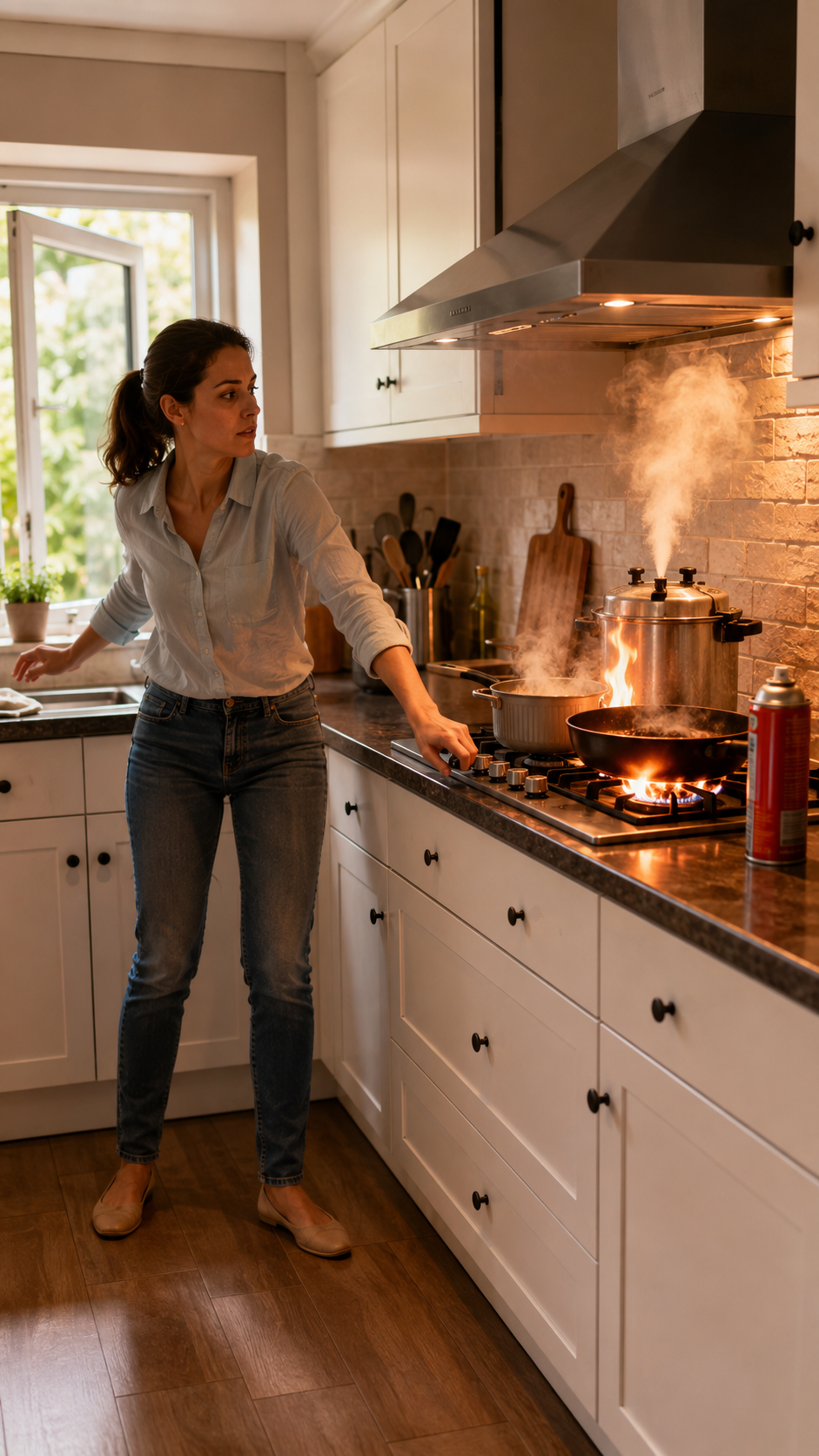

Learn what can cause an explosion in the kitchen, including gas leaks, pressure cookers, grease fires, portable stoves, and sealed containers—and what to do in an emergency.
Most people associate kitchen accidents with cuts, burns, or small cooking fires. Explosions may seem like something that happens only in restaurants or industrial buildings, but several ordinary household situations can create a sudden blast, fireball, or violent pressure release.
A leaking gas connection can fill a room with flammable vapor. An overheated butane canister can rupture. Water poured into burning oil can produce an explosive eruption of steam and flames. Even a blocked pressure-cooker valve or a sealed container placed in a microwave can release enough energy to cause serious injuries.
Fortunately, kitchen explosions are uncommon, and most are preventable. Understanding how pressure, fuel, heat, and ignition interact can help you recognize warning signs before a dangerous situation develops.
What Causes a Kitchen Explosion?
Most kitchen explosion accidents involve one or more of the following conditions:
- Flammable gas or vapor accumulates in an enclosed area.
- A spark, flame, or hot surface ignites that fuel.
- Pressure builds inside a sealed container or appliance.
- Hot oil reacts violently with water.
- A pressurized fuel container becomes damaged or overheated.
- An electrical appliance or battery overheats and catches fire.
Some events described as “explosions” are technically flash fires, pressure ruptures, or rapid steam expansions. The exact scientific term matters less during an emergency than recognizing that the event can spread fire, hot liquid, metal fragments, glass, or burning fuel across the room.
1. Natural Gas and Propane Leaks
Gas leaks are among the most serious kitchen explosion hazards. Natural gas and propane can ignite when they mix with air and encounter a flame, electrical spark, static discharge, or sufficiently hot surface.
Natural gas is normally odorless, but utility companies add an odorant that is often compared to rotten eggs or sulfur. Propane is similarly odorized. Other warning signs may include a hissing sound, an unusually weak or yellow burner flame, repeated problems lighting a burner, or dead vegetation near an outdoor gas line.
Leaks may come from damaged hoses, loose fittings, failing valves, improperly installed appliances, or a burner control that has been turned on without producing a flame. A pot that boils over can also extinguish a gas flame while the burner continues releasing fuel.
What to do if you smell gas
Treat a strong or unexplained gas odor as an emergency.
Do not light a match, smoke, use a lighter, or attempt to relight an appliance. Do not turn lights, exhaust fans, or electrical appliances on or off. Avoid using a phone inside the affected building because an electrical device could provide an ignition source.
Leave the building immediately and take everyone else with you. Once you are well away from the suspected leak, call 911, the fire department, or your gas utility’s emergency number. Warn other people not to enter. Do not return until emergency personnel or the utility company says it is safe.
The Pipeline and Hazardous Materials Safety Administration specifically warns against using electrical switches, telephones, engines, or flames in an area where gas may be present. PHMSA gas emergency guidance
Do not spend time searching for the source of a strong leak. Although shutting off an appliance may sound helpful, approaching the suspected source could expose you to concentrated gas or delay evacuation.
2. Delayed Ignition in Gas Ovens and Stoves
A smaller but still dangerous gas-related event can happen when fuel enters a burner or oven but does not ignite immediately. The accumulated gas may then ignite all at once, causing a flash or sudden “whoomp.”
If a burner does not light promptly, turn its control off and allow the gas to disperse according to the manufacturer’s instructions before trying again. If you continue to smell gas, stop using the appliance and leave the home if the odor is significant.
A burner that repeatedly clicks without lighting, produces an unstable flame, or creates soot should be inspected by a qualified technician. Do not use a needle, wire, or improvised tool to alter gas openings.
Gas appliances should also be installed and repaired by qualified professionals. Flexible connectors can be damaged if a stove is repeatedly pulled away from the wall, while incorrect parts or poorly tightened connections can create leaks.
3. Portable Butane Stoves and Fuel Canisters
Portable butane stoves are convenient for camping, emergency cooking, tabletop meals, and hot pot. However, the fuel canister sits close to the burner, which means improper setup can expose it to dangerous heat.
A large pan or griddle that extends over the canister compartment may redirect heat toward the fuel. Using two portable stoves side by side can create a similar problem. If internal pressure rises far enough, the canister may rupture or release fuel that ignites.
Use only the fuel type and canister specified by the manufacturer. Check the canister for rust, dents, swelling, or damage, and confirm that it is correctly aligned before locking it into place. Never force a canister into the stove.
Keep the appliance away from curtains, cabinets, paper products, and other burners. Do not use a portable outdoor stove indoors unless the manufacturer clearly states that it is designed and approved for indoor use. Outdoor fuel-burning equipment can also create carbon-monoxide hazards.
Turn the stove off if you hear unusual hissing, smell fuel, or notice that the canister compartment is becoming hot. Move away rather than attempting to remove an overheated canister.
Portable stoves and cylinders are occasionally recalled because of leaking valves or explosion risks. Checking the CPSC recall database before using an older or secondhand stove is a sensible precaution.
4. Pressure Cooker Accidents
Pressure cookers prepare food by trapping steam, which raises the pressure and temperature inside the pot. Modern models contain several safety mechanisms, but a cooker can still release hot steam or food violently if it is damaged, overfilled, blocked, or opened incorrectly.
Before every use, inspect the sealing ring, pressure valve, lid, and locking mechanism. Make sure the steam-release pathway is clean. Foods that foam, expand, or produce thick residue require particular care because they can block a vent. Never exceed the manufacturer’s maximum fill line, and use enough liquid for the selected cooking method.
Do not place your face or hands over the steam-release valve. Follow the recipe and appliance instructions to determine whether natural release or quick release is appropriate. Some thick foods can surge through the vent if pressure is released too quickly.
Most importantly, never force the lid open. If it does not open easily, assume that the cooker may still be pressurized. Turn off or unplug the appliance and wait for the pressure indicator to drop fully.
Stop using a pressure cooker if its lid, pot, seal, valve, or locking mechanism is warped, cracked, loose, or otherwise damaged. Replacement parts should be approved for that exact model. Improvised seals or mismatched lids can interfere with the safety system.
5. Grease Fires and Violent Reactions With Water
Cooking oil does not need to boil to become dangerous. When oil is overheated, it may begin to smoke and eventually ignite. Water poured into burning oil rapidly turns into steam, expanding and throwing burning droplets into the air. The result can look and behave like an explosion, spreading flames across the cooktop, cabinets, walls, and anyone standing nearby.
If oil begins to smoke, turn off the heat before it ignites. The U.S. Fire Administration recommends staying near the pan whenever frying and reducing or stopping the heat if smoke appears. USFA cooking fire guidance
If a small pan of oil catches fire:
- Do not pour water on it.
- Do not carry the burning pan to the sink or outdoors.
- Slide a metal lid or baking sheet over the pan if you can do so without reaching through flames.
- Turn off the burner if it is safe to reach the control.
- Leave the pan covered until it has completely cooled.
Never throw flour, baking mix, or other powdered ingredients onto a grease fire. They will not safely smother it and may create a combustible cloud. Baking soda may be mentioned in older household advice, but attempting to measure or throw it at a growing fire wastes valuable time and brings you closer to the flames.
If the fire is spreading, the room is filling with smoke, or you are unsure whether you can control it, evacuate immediately, close the door behind you if possible, and call 911 from outside.
6. Sealed Containers in Microwaves and Ovens
Heating a tightly sealed container causes pressure to rise as the contents expand and produce steam. The lid, container, or food itself may rupture without warning.
Never microwave a completely sealed jar, bottle, can, or food-storage container. Loosen or vent microwave-safe lids according to the manufacturer’s directions. Do not heat commercial cans in a microwave or conventional oven unless the product’s instructions specifically allow it.
Certain foods can also trap steam beneath a skin, shell, or outer layer. Whole eggs in their shells can burst, sometimes after they have been removed from the microwave. Potatoes, squash, tomatoes, sausages, and similar foods should be pierced or prepared according to reliable cooking directions.
Hot liquids require caution as well. Water heated in a very smooth container may become superheated without visibly boiling. Disturbing the cup or adding coffee, sugar, or a spoon can trigger sudden, vigorous boiling. Avoid heating water longer than necessary, follow the appliance’s instructions, and let the container stand briefly before moving it. Keep your face and hands away when stirring.
Conventional ovens create similar risks if sealed cans, glass jars, or tightly closed cookware are heated. Even a strong container can rupture when internal pressure exceeds its design limit.
7. Aerosol Cans and Pressurized Containers Near Heat
Cooking sprays, aerosol cleaners, whipped-cream dispensers, small fire extinguishers, and carbon-dioxide cylinders all contain pressurized material. Heat can increase the pressure inside these containers and cause them to rupture.
Do not store aerosol cans in a cabinet directly above a stove or next to an oven, dishwasher vent, boiler, or other heat source. Keep them away from open flames and never place a pressurized container in an oven, microwave, or freezer.
Cooking spray should be applied according to its label. Do not spray an aerosol toward an open gas flame or onto a very hot pan while the can is close to the burner. Fine droplets and flammable propellants may ignite.
Dispose of damaged, rusted, bulging, or leaking containers according to local hazardous-waste instructions. Do not puncture or burn an aerosol can, even when it appears empty.
8. Glass Containers and Sudden Temperature Changes
Glass cookware may shatter explosively when exposed to rapid temperature changes or when used outside its intended purpose. A hot glass dish placed on a wet or cold countertop can fail, as can cold glassware placed directly onto a hot burner.
Use cookware only on heat sources approved by the manufacturer. Do not use chipped, deeply scratched, or cracked glass dishes. Allow frozen glass containers to thaw as directed before heating them, and place hot dishes on a dry, heat-resistant pad rather than a cold metal or stone surface.
Be especially cautious when pouring liquid into hot glass cookware. Sudden cooling can cause breakage, sending hot food and sharp pieces across the kitchen.
9. Electrical Appliances and Lithium-Ion Batteries
A damaged toaster, air fryer, blender, microwave, or extension cord can overheat, spark, or ignite nearby materials. Although many electrical failures begin as fires rather than explosions, capacitors, batteries, and pressurized components can rupture.
Plug high-wattage kitchen appliances directly into suitable wall outlets whenever the manufacturer requires it. Avoid overloading power strips or using damaged extension cords. Keep electrical connections dry and stop using any appliance that produces sparks, burning odors, smoke, unusual heat, or repeated circuit-breaker trips.
Rechargeable appliances should use the charger supplied or approved by the manufacturer. Do not charge devices on the stove, near the sink, or beside combustible materials. A swollen, leaking, unusually hot, or damaged battery should not be charged or placed in household trash.
Unplugging a smoking appliance may be unsafe if flames or exposed wiring are present. Cut power at the circuit breaker only if you can reach it without entering a dangerous area; otherwise, evacuate and call emergency services.
How to Respond After a Kitchen Explosion
After any explosion or flash fire, focus first on getting people out—not on saving appliances or investigating the cause.
Leave immediately if there is fire, smoke, a gas odor, structural damage, or uncertainty about whether another explosion could occur. Call 911 from a safe location. Do not reenter to collect possessions.
If someone’s clothing catches fire, have them stop, drop, and roll while another person calls for help. Cool a minor thermal burn under clean, cool running water, but do not apply ice, butter, toothpaste, or greasy creams. Severe, deep, charred, blistering, facial, electrical, or large burns require prompt medical care.
Anyone exposed to smoke, gas, or an enclosed-space fire should be evaluated urgently if they develop trouble breathing, coughing, confusion, chest pain, weakness, severe headache, or loss of consciousness.
Do not turn the gas supply back on, reconnect an appliance, or reuse equipment involved in an explosion until qualified professionals have inspected it.
A Simple Kitchen Explosion Prevention Checklist
A safer kitchen depends on ordinary habits performed consistently:
- Stay nearby when frying, broiling, or cooking at high temperatures.
- Keep a metal lid or baking sheet within reach when cooking with oil.
- Never use water on burning grease.
- Have gas appliances installed and serviced professionally.
- Treat unexplained gas odors as an emergency.
- Inspect pressure-cooker seals and vents before every use.
- Never force open a pressurized appliance.
- Vent containers before microwaving them.
- Keep fuel canisters and aerosol products away from heat.
- Check portable stoves and appliances for safety recalls.
- Maintain working smoke and carbon-monoxide alarms.
- Keep exits clear and practice a household escape plan.
The CPSC recommends installing working smoke alarms throughout the home, replacing alarms that are more than ten years old, and creating a family escape plan. CPSC fire-safety information
Kitchen explosions are rare, but they usually involve familiar hazards: fuel, heat, pressure, and an ignition source coming together in the wrong way. A few consistent precautions—maintaining appliances, watching hot oil, respecting pressure, and leaving immediately when gas is suspected—can prevent a routine meal from becoming an emergency. Which kitchen hazard surprised you the most, and is there a safety habit you plan to change after reading this guide? Share your thoughts or experiences in the comments so other readers can learn from them too.

Hi, I’m the creator and editor behind ZestyHabit. I research everyday safety, first aid, and practical wellness topics using official guidance and reliable public sources, then turn that information into clear, realistic steps for daily life.
My goal is to help readers make safer, better-informed choices at home and beyond.


