
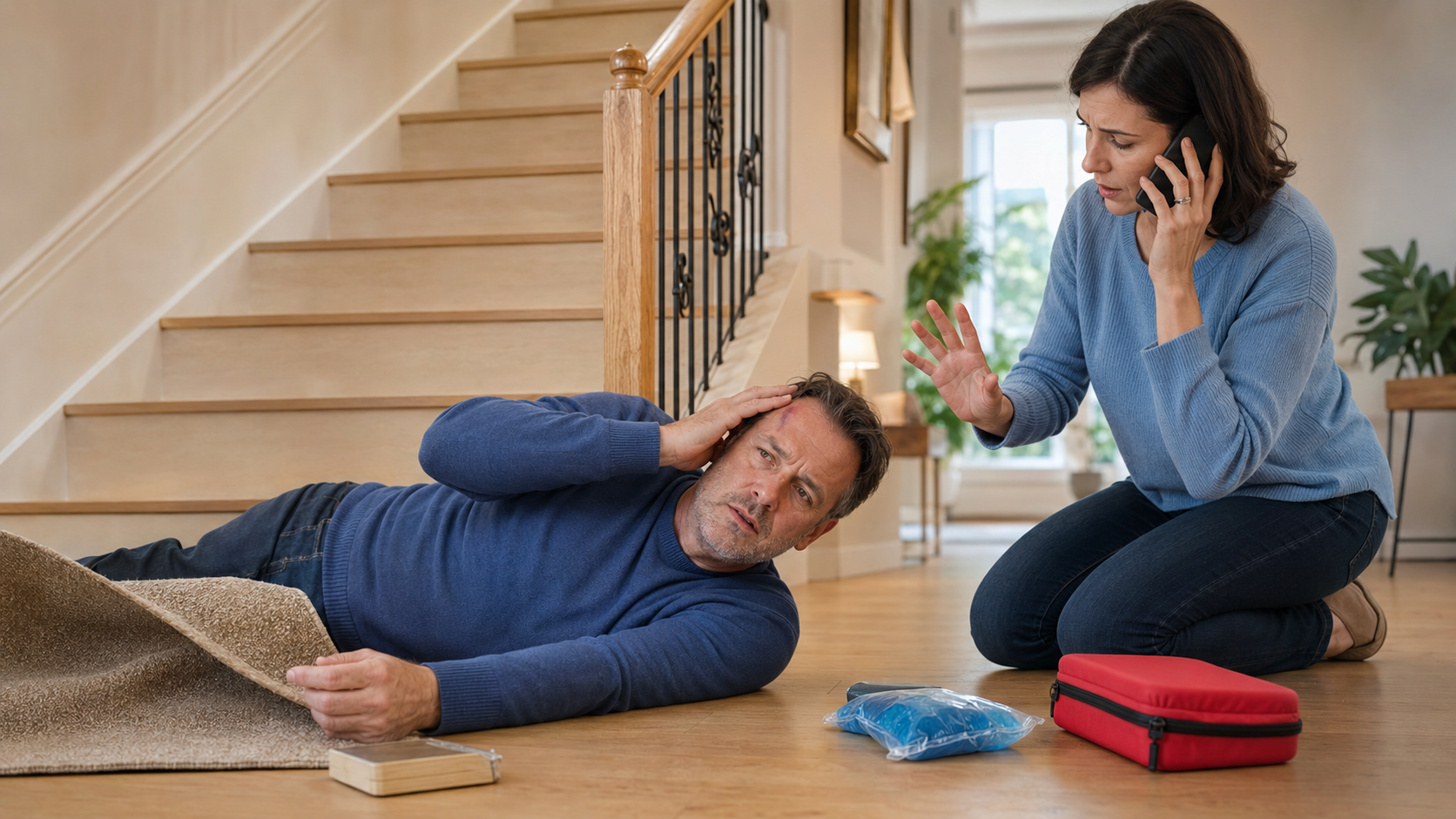

Home is where most people feel safest, yet everyday surroundings contain plenty of hard surfaces, elevated furniture, stairs, and heavy objects. A fall in the bathroom, a television tipping over, or an infant rolling from a changing table can result in more than a bump or bruise. In a serious accident, the impact may fracture the skull and injure the brain underneath it.
A skull fracture is not always obvious. The injured person may remain awake, speak normally, or have no visible wound at first. Some symptoms of brain injury can take hours or days to appear. That uncertainty makes it important to recognize the household accidents that can cause skull fractures, understand the emergency warning signs, and know which first-aid mistakes to avoid.
What Is a Skull Fracture?
A skull fracture is a break in one or more bones surrounding the brain. It usually results from a strong impact to the head, although the amount of force required varies with a person’s age, health, and the location of the impact.
Medical professionals may describe a fracture as:
- Linear: A relatively thin break without significant movement of the bone
- Depressed: A portion of bone has been pushed inward
- Basilar: A fracture involving the bones at the base of the skull
- Open or compound: The skin and other tissues over the fracture have been broken
These descriptions cannot be determined safely at home. Pressing a swollen area or trying to feel for a dent could worsen bleeding or push contaminated material into a wound.
The fracture itself is only part of the concern. The same force can cause concussion, bleeding around the brain, bruising of brain tissue, swelling, or injury to the neck and spine. Even a person without a fracture may have a serious traumatic brain injury.
Common Causes of Skull Fractures at Home
Most household head injuries happen quickly. A person loses balance, a child climbs something unstable, or an object falls before anyone has time to react.
Falls on Stairs
Stairs combine height, momentum, narrow surfaces, and hard edges. A person who slips may strike the head against a step, railing, wall, or floor below.
Common contributing factors include:
- Carrying laundry or boxes that block the view
- Walking in socks on polished steps
- Loose carpeting or damaged stair treads
- Poor lighting
- Missing or unstable handrails
- Toys, shoes, and electrical cords left on steps
- Children climbing near an unprotected stairway
Pressure-mounted baby gates should not be used at the top of stairs unless the manufacturer specifically approves them for that location. A gate that gives way can contribute to a longer fall.
Bathroom Slips
Water, soap, tile, and hard fixtures make bathrooms particularly hazardous. Someone who slips while entering a bathtub may hit the head on a faucet, toilet, countertop, or tile floor.
Older adults are at greater risk because balance problems, muscle weakness, vision changes, and certain medications can make falls more likely. The CDC reports that more than one in four Americans aged 65 and older falls each year, and a previous fall increases the likelihood of falling again. However, the agency emphasizes that older-adult falls can often be prevented.
Falls From Beds, Changing Tables, and High Chairs
Babies can roll unexpectedly, including before their caregivers have seen them roll on the floor. Turning away for a diaper, wipe, or clean piece of clothing may be enough time for an infant to fall from a changing surface.
High chairs, adult beds, couches, countertops, and infant carriers placed on elevated surfaces create similar risks. Safety straps reduce the danger but do not replace supervision.
The CPSC’s 2025 nursery-product report found that falls were the leading cause of nursery-product-related injuries treated in emergency departments in 2024, and the head was the most frequently injured body area.
Furniture and Television Tip-Overs
A dresser may appear stable until a child opens several drawers and uses them as steps. Televisions can also fall when a child pulls a cord or climbs onto the stand.
The weight of a dresser, bookcase, appliance, or television can produce severe head and crush injuries. These accidents can happen even while an adult is in the same room. The CPSC recommends anchoring furniture with drawers, doors, or shelves to the wall.
Falls From Windows and Balconies
Window screens are designed to keep insects out, not children in. A child leaning against a screen can fall through it with little warning. Beds, chairs, toy boxes, and other furniture positioned near windows give young children an easy climbing route.
CPSC guidance recommends window guards or stops that limit openings to four inches where young children are present. Any guard needed on an emergency escape window should allow adults and older children to open it quickly during a fire. The agency also advises families to keep climbable furniture away from windows.
Falling Objects and DIY Accidents
Heavy decorations, tools, cookware, storage boxes, or poorly secured shelves can strike someone standing below. Home repairs introduce additional risks from ladders, falling materials, and power tools.
Placing heavy objects on high shelves is particularly dangerous in homes with children or in earthquake-prone areas. A box does not have to fall from a great height to cause a serious injury if it is heavy or has a sharp corner.
Signs and Symptoms of a Possible Skull Fracture
A person does not need to lose consciousness to have a skull fracture or brain injury. There may also be no visible bleeding.
Possible skull fracture symptoms include:
- A dent, abnormal shape, or soft area on the head
- Severe swelling or an open wound
- Bleeding from the head, ears, or nose
- Clear or blood-tinged fluid draining from the nose or ears
- Bruising behind an ear
- Bruising around both eyes without a direct eye injury
- A worsening headache
- Repeated vomiting
- Dizziness or difficulty walking
- Confusion, memory loss, or unusual behavior
- Slurred speech
- Unequal pupils or double vision
- Weakness, numbness, or poor coordination
- Seizures
- Loss of consciousness
- Increasing drowsiness or difficulty waking
The CDC’s traumatic brain injury guidance identifies worsening headache, repeated vomiting, seizures, unequal pupils, slurred speech, weakness, confusion, unusual behavior, and inability to wake as emergency danger signs.
Symptoms may be delayed. A person who appears fine immediately after a fall may become confused, nauseated, or unusually sleepy later. Never use the lack of an immediate headache as proof that the injury is minor.
Warning Signs in Babies and Young Children
Babies cannot describe headache, dizziness, or vision problems. Caregivers must look for changes in behavior and physical condition.
Seek emergency help after a significant head injury if a baby or child:
- Will not stop crying and cannot be comforted
- Refuses to nurse, drink, or eat
- Vomits repeatedly
- Becomes unusually sleepy or difficult to wake
- Does not recognize familiar people
- Develops a seizure
- Has unequal pupils
- Moves one side of the body differently
- Loses balance or walks abnormally
- Has clear fluid or blood coming from the nose or ears
- Has a large, soft, or rapidly increasing area of swelling
- Behaves very differently from usual
Do not pick up a child immediately after a severe fall if there may be a neck or spine injury, unless the child is in immediate danger. Keep the child still, provide reassurance, and call emergency services.
First Aid for a Suspected Skull Fracture
A suspected skull fracture requires emergency medical evaluation. Call 911 in the United States or your local emergency number. While waiting, concentrate on breathing, minimal movement, and safe wound protection.
Keep the Person Still
Assume that a serious head injury may also involve the neck. Ask the person not to sit up, turn the head, or walk around. Support the head in the position found without twisting the neck.
Do not move the person unless there is an immediate threat such as fire, smoke, structural collapse, or another unavoidable danger.
Check Breathing
Watch for normal breathing and responsiveness. If the person is not breathing normally, begin CPR if you know how and follow the emergency dispatcher’s instructions. Maintaining oxygen flow takes priority, even when a neck injury is possible.
Do Not Press Directly on a Suspected Fracture
Ordinary scalp cuts can bleed heavily, but bleeding over a possible fracture requires special care. Do not push directly on a dent, exposed bone, soft area, or object embedded in the head.
Cover an open injury loosely with sterile gauze or a clean cloth. Do not probe the wound, clean deep inside it, or remove debris. If an object is protruding, leave it in place and arrange padding around it without pressing down.
MedlinePlus skull-fracture first-aid guidance advises against applying direct pressure over a suspected fracture or removing protruding objects.
Protect the Airway if Vomiting Occurs
If the injured person vomits and is at risk of choking, the head, neck, and body should be turned together as one unit while keeping the spine aligned. This is easier and safer with more than one helper. Follow instructions from the emergency dispatcher whenever possible.
Do Not Give Food, Drink, or Medication
Do not give pain medicine, sedatives, alcohol, food, or drinks before medical professionals provide guidance. The person may need urgent imaging, anesthesia, or surgery, and swallowing may not be safe if alertness decreases.
Do not leave the person alone. Record any changes in speech, behavior, breathing, pupil size, movement, or consciousness and tell emergency personnel.
Should You Keep Someone Awake After a Head Injury?
The idea that every person with a head injury must be forced to stay awake is oversimplified. The urgent concern is not sleep itself but abnormal drowsiness, worsening confusion, or inability to wake.
With a suspected skull fracture or any emergency warning sign, do not wait at home to perform “sleep checks.” Call emergency services. After a minor head injury has been professionally evaluated, follow the clinician’s instructions about rest, observation, and waking the patient.
How Doctors Diagnose and Treat Skull Fractures
At the hospital, clinicians assess consciousness, pupils, strength, sensation, coordination, breathing, and circulation. A CT scan is commonly used to look for fractures, bleeding, swelling, or pressure on the brain.
Some uncomplicated linear fractures may heal with observation and activity restrictions. Depressed, open, or basilar fractures may require specialist care, antibiotics in selected circumstances, surgery, or monitoring for complications. Treatment focuses not only on the bone but also on protecting the brain and preventing additional injury.
Preventing Skull Fracture Accidents at Home
A practical prevention plan should address the home room by room:
- Install secure handrails and bright lighting on stairways.
- Keep stairs free of toys, shoes, laundry, and cords.
- Repair loose flooring and damaged steps.
- Use nonslip mats and grab bars in bathrooms.
- Anchor televisions, dressers, bookcases, and tall cabinets.
- Put heavy objects on lower shelves.
- Keep toys and remote controls off furniture children may climb.
- Stay within arm’s reach of babies on changing surfaces.
- Use high-chair restraints every time.
- Install properly selected gates near stairs.
- Use window guards or stops and move furniture away from windows.
- Secure overhead shelves, mirrors, and heavy decorations.
- Use an appropriate ladder instead of standing on chairs.
- Wear a hard hat when performing work with overhead hazards.
- Encourage older adults to discuss falls, vision, balance, and medications with a healthcare professional.
Skull fracture accidents at home are not always preventable, but many risks can be reduced through supervision, anchoring, better lighting, fall-resistant surfaces, and thoughtful storage. Which area of your home do you think presents the greatest head-injury risk—stairs, the bathroom, furniture, or windows? Share what you have done to make it safer in the comments so other families can learn from your ideas.

Hi, I’m the creator and editor behind ZestyHabit. I research everyday safety, first aid, and practical wellness topics using official guidance and reliable public sources, then turn that information into clear, realistic steps for daily life.
My goal is to help readers make safer, better-informed choices at home and beyond.


