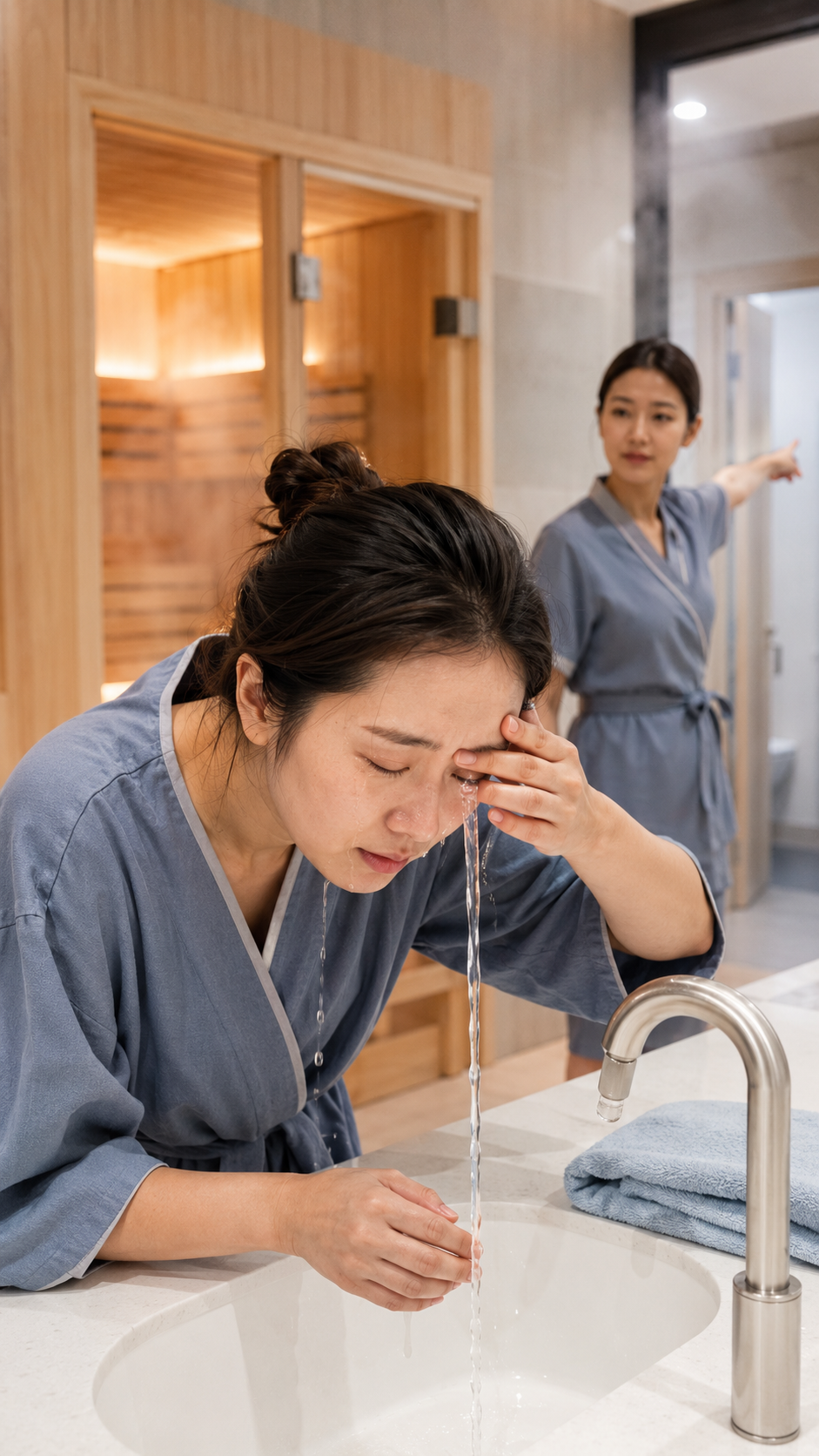
Can Jjimjilbang or Sauna Heat Burn Your Cornea? Symptoms, First Aid, and Prevention
Minjin Park
·
Can intense jjimjilbang or sauna heat cause a corneal burn? Learn the difference between dry-eye irritation and a true thermal eye injury, plus first aid, warning signs, and prevention tips.
A visit to a jjimjilbang can be deeply relaxing. The warmth loosens tight muscles, the quiet rooms encourage rest, and many people leave feeling refreshed. However, stepping into an extremely hot room can also produce an uncomfortable surprise: burning, watery, or painfully dry eyes.
Does this mean the heat has burned your corneas?
Usually, no. Ordinary exposure to ambient sauna heat is more likely to irritate or dry the surface of the eyes than to cause a true corneal burn. The eyelids, blink reflex, and tear film provide considerable protection from environmental heat. Genuine thermal burns of the cornea are uncommon and are more often associated with direct exposure to steam, hot liquid, flames, explosions, heated objects, or malfunctioning equipment.
Still, a severe eye injury is possible if the heat is intense enough, the face is too close to the source, or the eyes are exposed to a sudden jet of steam or scalding water. Because the symptoms of dry-eye irritation, a corneal abrasion, infection, and a thermal burn can overlap, significant pain or changes in vision should never be dismissed as “just the heat.”
The cornea is the transparent, curved tissue covering the iris and pupil. It helps focus light and acts as one of the eye’s main protective barriers. Its outermost layer, the epithelium, contains many nerve endings, which is why even a small surface injury can be intensely painful.
A thermal corneal burn occurs when heat damages this surface. Possible causes include:
Direct steam exposure
Splashing hot water or oil
Flames or explosions
Fireworks and hot particles
Contact with a heated object
Intense radiant heat at close range
Malfunctioning heating or steam equipment
Thermal eye injuries often affect the eyelids first because people instinctively close their eyes when exposed to sudden heat. The blink reflex and eyelids can prevent deeper damage, but they cannot provide complete protection.
Medical reviews note that thermal eye injuries are commonly associated with fire, steam, hot liquids, cooking oil, fireworks, and similar high-temperature sources. Most direct corneal injuries remain relatively superficial, although the outcome depends on temperature, proximity, exposure time, and the area affected. NCBI overview of ocular burns
Can Normal Sauna Heat Actually Burn the Cornea?
Sitting in a properly operated sauna or jjimjilbang room is unlikely to burn a healthy person’s cornea under normal conditions. Hot air transfers heat less efficiently than hot liquid or condensing steam, while blinking continuously renews the protective tear film.
That does not mean the eyes will always feel comfortable. Dry, heated air may increase tear evaporation, especially in people who already have dry-eye disease. The result can be burning, grittiness, redness, excessive tearing, or temporarily fluctuating vision. These symptoms can feel alarming even when no true thermal injury has occurred.
A real burn becomes more plausible when there is direct or unusually intense exposure. Examples include:
Placing the face close to a heating element or extremely hot wall
Looking directly into a steam outlet
Receiving a sudden blast of pressurized steam
Splashing very hot water into the eyes
Using an excessively hot towel or heat pack over the eyelids
Remaining near intense heat after falling asleep or becoming impaired
Entering a room with damaged or improperly controlled equipment
Steam is particularly concerning because it can carry and transfer heat more effectively than dry air. A normal humid steam room is not the same as having a concentrated jet of hot steam strike the face.
Published medical reports specifically documenting a corneal burn from routine ambient jjimjilbang use appear to be rare. Therefore, it would be misleading to suggest that ordinary sauna use commonly burns the corneas. The more realistic everyday problems are eye-surface dryness and irritation, while genuine burns are more likely to involve an abnormal, direct, or accidental heat exposure.
Dry-Eye Irritation or Corneal Burn: How Can You Tell?
It is not always possible to tell without an eye examination. A clinician may need to examine the cornea with a slit lamp and apply fluorescein dye, which highlights areas where the surface epithelium has been damaged.
However, the timing and severity of the symptoms can provide useful clues.
Symptoms More Consistent With Heat-Related Dryness
Heat-related dryness often affects both eyes and may cause:
Mild to moderate burning
A sandy or gritty sensation
Redness
Watery eyes
Temporary blurring that clears after blinking
Discomfort that improves after leaving the hot room
Symptoms that respond to preservative-free artificial tears
Interestingly, watery eyes do not rule out dryness. When the normal tear film becomes unstable, the eyes may react by producing a sudden flood of watery tears. These reflex tears do not necessarily provide the same long-lasting lubrication as a healthy tear film.
Symptoms That May Indicate a Corneal Burn
A thermal burn or other significant corneal injury may produce:
Sudden, intense eye pain
Severe burning that continues after leaving the room
Inability or reluctance to open the eye
Strong sensitivity to light
Constant tearing
Blurred or reduced vision
Eyelid swelling
Redness around the entire cornea
A white, cloudy, or hazy area on the eye
Burns or blisters on the eyelids or nearby skin
A clear history of steam, hot liquid, or direct heat striking the eye
Pain can be severe even when the visible injury looks small. The eye’s surface is extremely sensitive, and corneal epithelial damage cannot always be seen without specialized examination.
Why Steam Is More Dangerous Than Ordinary Hot Air
People often use “sauna” and “steam room” interchangeably, but the exposure is not identical. A traditional dry sauna uses high-temperature air with relatively low humidity. A steam room operates at a lower air temperature but with much higher humidity.
Direct steam can cause an injury quickly because water vapor releases heat when it condenses on a cooler surface. A concentrated burst from a pipe, valve, lid, container, or steam outlet is therefore different from sitting in a room filled with warm mist.
The same distinction applies in a jjimjilbang. Resting in a heated room is generally not comparable to placing your face near a heating opening, hot stones, kiln wall, or steam-producing appliance. Distance from the heat source matters as much as the room’s displayed temperature.
If a jet of steam hits your eyes, leave the area immediately. Do not wait to see whether the pain disappears before beginning first aid.
A Documented Example of Corneal Thermal Injury
Although published reports involving normal sauna use are limited, documented cases involving direct heat show how corneal burns can present.
In one case report, a 16-year-old girl accidentally made direct contact with the heated surface of an electric clothes iron. Within several hours, she developed eye pain, redness, tearing, sensitivity to light, and a marked decrease in vision. Examination confirmed burns involving the eyelid and cornea. She received prescription treatment and was successfully managed, but the case illustrates how quickly direct heat can injure the ocular surface. Published corneal thermal burn case report
This type of injury is much more intense than simply sitting in a warm room. Nevertheless, the symptoms—pain, tearing, redness, light sensitivity, and reduced vision—are the same warning signs that should prompt urgent care after any suspected sauna-related eye injury.
Who May Be More Vulnerable?
Anyone can experience heat-related eye irritation, but certain people may develop symptoms more easily or may be less able to protect themselves from excessive heat.
People With Dry-Eye Disease
A person with an unstable tear film may experience burning and fluctuating vision sooner than someone with a healthy ocular surface. Meibomian gland dysfunction, autoimmune diseases, eyelid inflammation, aging, hormonal changes, and some medications can contribute to dry eye.
Contact Lens Wearers
Contact lenses can become uncomfortable in hot, dry conditions. They may also make it harder to distinguish simple dryness from a developing corneal problem.
Jjimjilbangs commonly include showers, baths, pools, or hot tubs in addition to heated rooms. The CDC advises removing contact lenses before showering, swimming, or using a hot tub because water exposure can increase the risk of microbial keratitis, including the serious infection Acanthamoeba keratitis. CDC contact lens and water safety guidance
This infection is not a thermal burn, but the symptoms—pain, redness, blurred vision, light sensitivity, and a foreign-body sensation—can be similar. It may also develop after the visit rather than immediately.
People With Reduced Corneal Sensation
Previous eye surgery, diabetes, certain infections, nerve disorders, or long-term contact lens wear may reduce corneal sensitivity. A person with decreased sensation may not feel an injury as strongly as expected, allowing exposure to continue longer.
People Who Fall Asleep or Use Alcohol
Sleeping in an extremely hot area can reduce normal behavioral responses to discomfort. Alcohol, sedatives, exhaustion, or illness may also delay recognition of dangerous heat. Jjimjilbang visitors should never assume that staying in the hottest room for as long as possible provides additional health benefits.
Children and Older Adults
Children may move close to a heat source without recognizing the danger, while older adults may be more affected by dehydration, medications, or impaired temperature awareness. Both groups should be supervised carefully.
First Aid for a Suspected Corneal Heat Burn
If hot water, direct steam, or intense heat strikes the eye, act immediately.
1. Leave the Heat Source
Move into a cool, well-ventilated area. If equipment is malfunctioning, alert staff so other visitors do not enter the area.
2. Remove Contact Lenses if They Come Out Easily
Do not struggle with a lens that appears stuck. Begin rinsing instead. Irrigation may help the lens loosen naturally.
3. Rinse the Eye With Clean, Cool or Lukewarm Water
Hold the eyelids open and allow a gentle stream of clean water to flow across the eye. Do not use hot water or direct a high-pressure stream at the eyeball.
General eye-injury guidance from the UK National Health Service recommends rinsing an injured eye with plenty of clean water for at least 20 minutes. NHS eye-injury first aid
Although immediate and prolonged irrigation is especially critical for chemical burns, cooling and flushing are also sensible after exposure to hot liquid, steam, or possible contaminants. If chemicals, cleaning products, or mineral residues may also have entered the eye, continue irrigation while arranging emergency care.
4. Do Not Rub the Eye
Rubbing can worsen an epithelial injury or grind particles against the cornea. Do not attempt to remove material embedded in the eye.
5. Do Not Apply Ice Directly
Ice or extremely cold water may cause additional tissue damage. Use clean, cool or lukewarm running water instead.
6. Avoid Unapproved Drops and Home Remedies
Do not put butter, oil, herbal extracts, skin ointment, disinfectant, or homemade saline into the eye. Avoid redness-relief drops, leftover antibiotics, and steroid drops unless an eye-care professional specifically recommends them.
Numbing eye drops may provide temporary relief during an examination, but repeated home use can delay healing and cause serious corneal damage. They should only be used under medical supervision.
When Should You Seek Emergency Eye Care?
Obtain urgent medical evaluation after a direct steam or hot-liquid exposure, even if the eye looks relatively normal. Go to an emergency department or contact an ophthalmologist promptly if you experience:
Thermal burns often have a favorable outcome because blinking limits exposure and many injuries remain superficial. However, burns involving the cornea may require prescription antibiotic ointment, pain control, pupil-relaxing drops, lubrication, or close follow-up. Severe burns should be treated by an ophthalmologist to reduce the risk of infection, scarring, persistent epithelial defects, and vision loss. Merck Manual overview of thermal eye-burn treatment
Do not drive yourself if your vision is blurred or light sensitivity is severe.
How Are Corneal Thermal Burns Diagnosed?
An eye-care professional will ask what happened, how close you were to the source, whether steam or liquid was involved, and how long the exposure lasted.
The examination may include:
A visual-acuity test
Inspection of the eyelids and eyelashes
Fluorescein dye to identify epithelial defects
Slit-lamp examination of the cornea and conjunctiva
Evaluation for foreign material
Measurement of eye pressure when appropriate
Assessment of the limbus, the area containing cells that help regenerate the corneal surface
Mild surface burns often heal quickly with proper treatment. Deeper injuries involving the limbus have a greater risk of delayed healing, corneal clouding, abnormal blood-vessel growth, and scarring.
How to Protect Your Eyes at a Jjimjilbang
Most eye problems can be prevented with a few simple habits:
Remove contact lenses before bathing, showering, or using pools and hot tubs.
Do not place your face near heaters, steam outlets, hot stones, or kiln openings.
Choose a lower-temperature room if your eyes begin to burn.
Leave immediately if you experience sharp pain or visual changes.
Keep sauna sessions reasonable and take cooling breaks.
Drink water and avoid entering when dehydrated or unwell.
Do not sleep close to a heating element.
Avoid alcohol or sedatives before using an extremely hot room.
Supervise children near hot rooms and equipment.
Use only comfortably warm—not hot—eye compresses.
Report leaking, hissing, overheating, or damaged equipment to staff.
People with chronic dry eye can ask their eye doctor whether preservative-free artificial tears should be used before or after heat exposure. Artificial tears may reduce ordinary dryness, but they are not a substitute for medical evaluation after a suspected burn.
The Bottom Line
A properly operated jjimjilbang or sauna is far more likely to cause temporary dryness than a true corneal burn. Genuine burns generally involve direct steam, scalding water, heated objects, malfunctioning equipment, or unusually close and prolonged exposure to intense heat. The safest response is to leave the heat, rinse the eye with clean water, avoid rubbing or unapproved drops, and seek urgent care for pain, light sensitivity, or any change in vision.
Have your eyes ever become painfully dry or irritated after visiting a jjimjilbang, sauna, or steam room? What helped, and are there any eye-safety precautions you now follow? Share your experience in the comments so other readers can enjoy heated facilities more safely.
Hi, I’m the creator and editor behind ZestyHabit. I research everyday safety, first aid, and practical wellness topics using official guidance and reliable public sources, then turn that information into clear, realistic steps for daily life.
My goal is to help readers make safer, better-informed choices at home and beyond.