Why Rubbing Your Eye After Sand Gets In Can Scratch the Cornea
Minjin Park
·
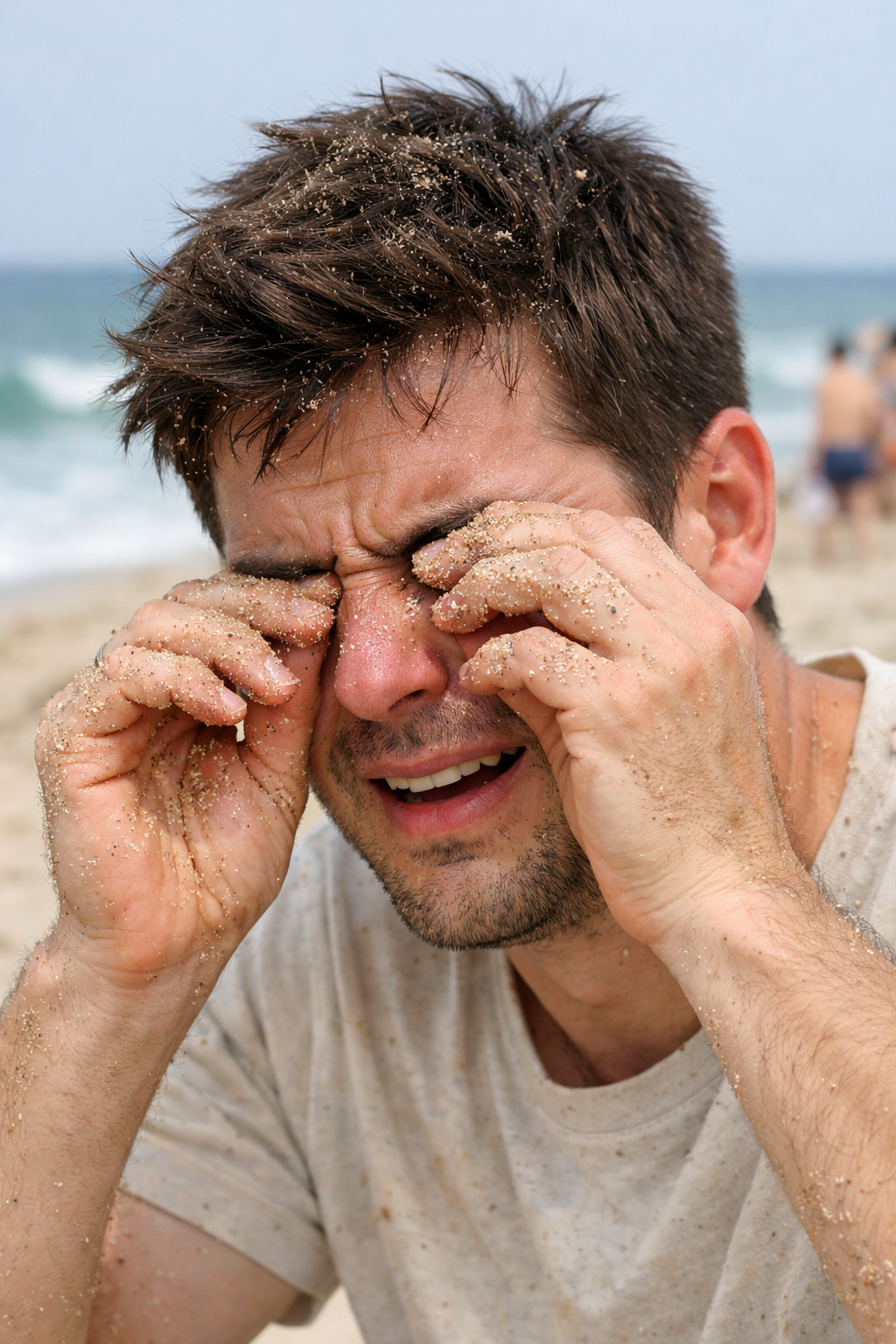
There is something almost automatic about the way we react when sand gets into an eye. The moment that gritty, sharp sensation appears, the hand goes up. We rub first and think later. It feels instinctive, almost impossible to resist. But that quick reaction is exactly what can turn a small irritation into a real eye injury.
If you have ever been at the beach on a windy day, hiking on a dusty trail, cleaning out an old storage space, or even just standing outside during a gusty afternoon, you may have experienced that awful feeling. One tiny grain of sand suddenly feels enormous. Your eye starts watering. Blinking becomes uncomfortable. The natural assumption is that rubbing will help “wipe it out.” In reality, rubbing often does the opposite.
The reason has everything to do with the structure of the eye, the rough nature of sand, and the surprising fragility of the cornea.
The cornea is tougher than it looks, but still vulnerable
The cornea is the clear, dome-shaped surface at the very front of the eye. It covers the iris and pupil and plays a huge role in focusing light so that you can see clearly. Because it is transparent, people often do not think of it as a physical barrier, but that is exactly what it is.
It is also full of nerve endings. That is why even a tiny speck of dust can feel dramatic. The cornea is extremely sensitive because the eye needs a fast warning system against anything that could damage vision. In a way, that intense discomfort is protective. Your body is telling you that something foreign is on a surface that needs to stay smooth and clear.
Although the cornea is built in layers and has impressive healing ability, its outermost surface can still be scratched fairly easily. When that happens, the injury is called a corneal abrasion. Even a small abrasion can cause pain, redness, tearing, light sensitivity, and the uncomfortable feeling that something is still stuck in the eye.
Why sand is especially risky
Not all foreign particles behave the same way in the eye. A soft eyelash is annoying, but it is usually less dangerous than a grain of sand. Sand is made of tiny mineral particles, often with irregular, jagged edges. Under a microscope, sand is not smooth or rounded the way many people imagine. It can be angular, rough, and abrasive.
That means when sand lands between the eyelid and the cornea, it creates a bad situation right away. Every blink drags the eyelid over the foreign particle. The eye may already be under stress before you even touch it. Add rubbing to that, and you increase the pressure and movement dramatically.
Instead of gently removing the grain, rubbing can press it harder into the surface of the eye and drag it across the cornea like sandpaper.
That comparison may sound exaggerated, but it is actually very close to what happens. Sand is abrasive by nature. That is why it is used in industrial sanding, polishing, and blasting. On the beach, it feels harmless under your feet. On the cornea, it becomes a different story.
What actually happens when you rub your eye
To understand why rubbing is risky, picture the eyelid as a soft but mobile surface and the sand grain as a tiny hard object caught in between. When you rub the eye, several things can happen at once.
First, you increase pressure. That pressure can push the grain directly against the cornea. Second, you increase movement. The grain may slide across the eye multiple times, scraping as it goes. Third, you may trap the particle under the lid more firmly, which makes it harder for tears to wash it away naturally.
The result is friction. And friction is the real problem.
The cornea needs to remain smooth for clear vision. When a hard particle is dragged across it, that smooth surface can develop tiny scratches. Sometimes the abrasion is superficial and heals quickly. Sometimes it is deeper and more painful. In either case, rubbing transforms a foreign body problem into a mechanical injury.
This is why people often say, “It was just a little sand, but afterward my eye hurt much worse.” The worsening pain is not always because the sand is still there. Sometimes it is because the rubbing has already damaged the corneal surface.
Why it feels like rubbing should help
Part of the danger comes from how convincing the urge to rub can be. The discomfort is intense and immediate. Rubbing seems like the fastest way to fix it. There is also a common belief that the eye works like skin: if something is on it, you can wipe it away with your hand.
But the eye is not like skin.
The surface is wetter, more delicate, and much more sensitive. Also, the fingers themselves are not gentle tools. Even if your hands look clean, they may carry dust, bacteria, sunscreen residue, makeup particles, or other irritants. So when you rub, you are not only grinding the sand into the cornea. You may also be introducing more contamination.
In many cases, the movement of rubbing does not remove the particle at all. It simply relocates it, shifts it under the eyelid, or breaks it into smaller abrasive bits.
That is why the “quick fix” can become a longer-lasting problem.
The blink reflex already creates enough friction
One detail people often overlook is that the eye is already trying to solve the problem on its own. Once sand enters the eye, the tear glands may start producing more tears. Blinking increases. This is the body’s natural flushing system. Tears are designed to rinse away foreign matter, while blinking helps spread moisture and move debris toward the inner corner of the eye.
That system is not perfect, especially with a stubborn grain of sand, but it is still much safer than aggressive rubbing.
The problem is that each blink can already cause some irritation when sand is trapped in the eye. So if normal blinking is causing mild scraping, vigorous rubbing multiplies that force. It is like the difference between sliding a rough pebble lightly over glass versus pushing it hard and back and forth.
The more force, the greater the chance of scratching.
What a corneal scratch feels like
A scratched cornea usually does not feel subtle. People often describe it as sharp pain, burning, stinging, or the sensation that there is still something stuck in the eye even after they think the particle is gone. The eye may water heavily. It may become red. Bright light can suddenly feel unbearable. Some people have trouble keeping the eye open.
This can be confusing because the original grain of sand may no longer be present. The injury itself creates symptoms very similar to the presence of a foreign body. In other words, you may keep feeling like sand is in the eye because the cornea has been scraped, not because the sand is still there.
That is one reason repeated rubbing is such a bad cycle. The sensation persists, so the person rubs more. But more rubbing can worsen the abrasion and extend the irritation.
Why scratches matter more than people think
A lot of corneal abrasions heal well, especially small ones. The cornea can repair superficial damage surprisingly quickly. But that does not mean scratches are trivial.
A scratched cornea can open the door to infection, especially if the foreign material was dirty or if the person touches the eye with unwashed hands. It can also make everyday activities miserable for a while. Reading, driving, working on screens, and going outside in daylight may all become uncomfortable.
In some cases, deeper scratches or untreated injuries can lead to complications. If the abrasion is severe, or if a piece of debris remains stuck in the eye, medical care may be necessary. contact lens wearers need to be especially cautious, since eye surface injuries combined with contact lens use can raise the risk of infection.
So while “a little sand in the eye” sounds minor, the consequences of handling it the wrong way can be more serious than expected.
What you should do instead of rubbing
The safest response is simple, though it requires patience.
Do not rub the eye.
Instead, blink several times to encourage natural tearing. If that does not help, rinse the eye gently with clean water or sterile saline solution. Let the fluid flow across the eye rather than pressing on the eyelid. Sometimes pulling the upper eyelid gently over the lower lid can help the lashes sweep the particle away, but this should be done carefully and without rubbing.
If you wear contact lenses, remove them if possible. If the irritation continues after rinsing, or if pain becomes significant, it is better to get the eye checked than to keep trying random home fixes.
You should also seek prompt medical attention if you notice ongoing sharp pain, worsening redness, blurred vision, strong light sensitivity, or the feeling that something is still embedded in the eye after flushing it.
Those are signs that the problem may be more than simple surface irritation.
Beach days, windy weather, and small prevention habits
The easiest eye injury to treat is the one that never happens. If you spend time in sandy, dusty, or windy environments, protective eyewear is worth more than most people realize. Sunglasses can help reduce exposure, though wraparound styles offer better protection when the wind is strong. Safety goggles are even better for yard work, construction, sweeping, or any task that throws particles into the air.
It also helps to avoid touching your eyes with sandy fingers. At the beach, this is incredibly common. You adjust your towel, dig in the sand, brush hair out of your face, and then touch your eye without thinking. By that point, you may be transferring particles directly to the eye surface.
Children are especially prone to this because they react quickly and rub hard. That is why adults should pay attention when kids start crying about something in their eye. A calm rinse is far safer than telling them to “just rub it out.”
The bigger lesson: your eye is not built for friction
At the heart of this issue is one simple fact. The eye can handle exposure. It can handle tears, blinking, and brief irritation. What it does not handle well is friction from a hard, sharp particle being dragged across a sensitive transparent surface.
That is why rubbing is such a bad idea.
When sand gets into the eye, the instinct is understandable. The discomfort feels urgent, and rubbing seems practical. But the physics are working against you. A rough particle plus pressure plus motion equals abrasion risk. The cornea may be resilient, but it is not meant to be scrubbed with a mineral fragment trapped under the lid.
So the next time sand blows into your eye, remember this: the pain is real, but rubbing is not the solution. Let tears do their job. Rinse gently. Give the eye a chance to protect itself.
That one moment of restraint can be the difference between a brief irritation and a painful scratched cornea.
Final thoughts
It is amazing how something as tiny as a grain of sand can cause so much trouble. But once you understand how delicate and important the cornea is, the reason becomes obvious. Sand is abrasive. The cornea is sensitive. Rubbing pushes the two together with more force than the eye can safely tolerate.
That is the whole reason a simple reflex can lead to a scratch.
So yes, sand in the eye is miserable. But rubbing only raises the odds of turning irritation into injury. Sometimes the smartest response is the least dramatic one: pause, flush, and leave the eye alone.
Hi, I’m the creator and editor behind ZestyHabit. I research everyday safety, first aid, and practical wellness topics using official guidance and reliable public sources, then turn that information into clear, realistic steps for daily life.
My goal is to help readers make safer, better-informed choices at home and beyond.