Close Encounter With a Skunk: How to Reduce the Risk and Respond Safely
Minjin Park
·
Learn what to do during a close encounter with a skunk, how to recognize spray warnings, treat skunk spray exposure, protect pets, and prevent future visits.
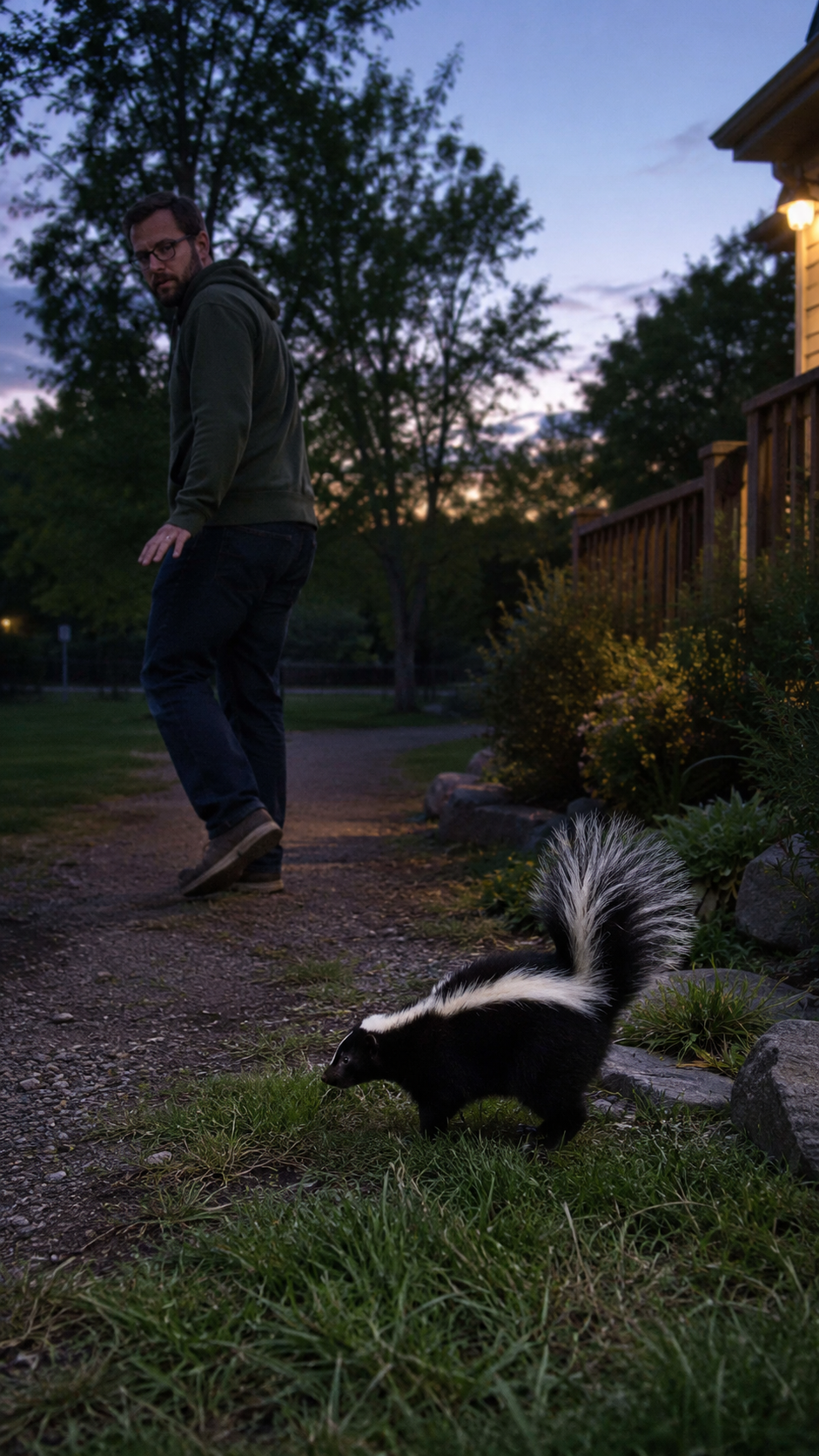
A nighttime walk to the trash can can change quickly when a black-and-white animal steps out from behind the bins. Your dog pulls forward, the animal raises its tail, and suddenly every movement feels risky.
A close encounter with a skunk is frightening mainly because people know what may happen next. Skunk spray has an intensely unpleasant odor, can irritate the eyes and airways, and may cling to skin, fur, clothing, and household surfaces. However, skunks are generally reluctant to use this defense unless they feel threatened, trapped, or unable to escape.
Your goal is not to frighten the skunk away. It is to give the animal enough space and a clear escape route so the situation can end without a spray, bite, or scratch.
Here is how to respond calmly, recognize warning signs, clean up after an exposure, and make your property less attractive to future visitors.
Skunks produce an oily defensive liquid in glands near the anus. The spray contains sulfur-based compounds responsible for its powerful odor. Rather than releasing it continuously, a skunk deliberately directs the spray toward an animal or person it believes is threatening it.
Spraying is primarily a defense, not a form of hunting or unprovoked attack. Skunks usually prefer to retreat and may give several warnings before spraying. Depending on the animal and conditions, the spray can travel several yards, so standing a few feet away is not a safe distance. Utah State University Extension notes that skunks may spray approximately 8 to 15 feet when disturbed or cornered.
Skunks often live surprisingly close to people. They may forage in lawns, eat insects and rodents, investigate unsecured garbage, or shelter beneath porches, decks, sheds, and other structures. Most are active at night, although seeing one during daylight does not automatically mean it has rabies.
What to Do When You Suddenly See a Skunk
The safest response is usually simple: stop, stay calm, and create distance without making the animal feel chased.
Stop moving toward it
The moment you notice the skunk, pause. Do not continue walking just because you believe you can pass beside it. Your idea of a comfortable distance may be very different from the skunk’s.
If you are holding a flashlight, avoid shining an intense beam directly into its face. Keep enough light to see where you are stepping, but do not use the light to harass or drive the animal away.
Restrain children and pets
Quietly call children back to you. Pick up a small child only when you can do so without rushing toward the animal.
Shorten your dog’s leash and keep the dog beside or behind you. Do not allow barking, lunging, or chasing. Dogs commonly ignore a skunk’s warnings and move closer, making them especially likely to be sprayed.
A retractable leash can make control difficult during a wildlife encounter. Lock it at a short length rather than trying to drag the dog backward after it has already reached the skunk.
Back away slowly
Move backward or diagonally away at a slow, steady pace. Avoid running, waving your arms, shouting, throwing objects, or making sudden lunges.
Give the skunk access to an open path. If it is between you and your door, vehicle, tent, or trail, do not attempt to squeeze past it. Wait at a distance or choose another route.
Skunks generally use their defensive spray when they or their young feel threatened and cannot escape. Moving away slowly and quietly reduces that pressure.
Warning Signs That a Skunk May Spray
A relaxed skunk may continue sniffing the ground, walking, or foraging without focusing on you. A threatened animal often changes its posture.
Warning behaviors may include:
Stamping or pounding the front feet
Raising or stiffening the tail
Hissing
Making short forward charges
Turning the rear end toward you
Twisting its body while watching you
Performing a handstand, particularly in some spotted skunk species
These behaviors are not an invitation to take a photograph from closer range. They mean the skunk is giving you a final opportunity to leave.
If its rear end is pointed toward you and the tail is raised, stop advancing immediately. Turn your face away enough to protect your eyes while continuing to retreat carefully. Do not provoke the animal to find out whether it will actually spray.
What If the Skunk Will Not Move?
Sometimes the skunk is not choosing to stand its ground. It may be trapped, confused, protecting young, or blocked by people and pets.
Move everyone indoors or into a vehicle when this can be done without approaching the animal. Turn off unnecessary outdoor activity and give the skunk time to leave. A quiet yard is far more helpful than a crowd watching from several feet away.
Do not surround it, poke it with a broom, spray it with a hose, or use a dog to drive it away. If a skunk enters a garage or outbuilding, open a clear exterior exit when it is safe to do so, then leave the area. Wildlife guidance recommends avoiding harassment and allowing the animal to leave on its own whenever possible.
Contact animal control or a licensed wildlife professional when the skunk is injured, trapped inside an occupied building, repeatedly approaching people, or unable to escape safely.
What to Do If You Are Sprayed
Skunk spray is usually more irritating and overwhelming than medically dangerous to a healthy person. Direct exposure can nevertheless cause burning eyes, tearing, nasal irritation, coughing, nausea, or headache. Moving into fresh air and removing the oily material promptly can reduce symptoms.
Move to fresh air
Walk away from the contaminated area and breathe fresh air. Avoid immediately entering your home or vehicle while wearing heavily contaminated clothing, since the oil can transfer to upholstery, carpets, and other surfaces.
Seek urgent medical assistance if you develop severe trouble breathing, persistent chest tightness, collapse, confusion, or another serious reaction.
Remove contaminated clothing
Take off sprayed clothing carefully. Avoid pulling a heavily contaminated shirt over your face when possible. Place clothing in a bag or separate container until it can be washed.
Wear disposable gloves when helping another person or handling contaminated belongings. Do not rub the oily spray farther across the skin.
Wash exposed skin and hair
Begin with lukewarm water and soap. Dishwashing liquid can help break up oily residue, but keep it away from the eyes.
A commonly recommended odor-neutralizing mixture consists of:
1 quart of 3% hydrogen peroxide
1/4 cup of baking soda
1 teaspoon of liquid dish detergent
Mix the ingredients in an open container and use the solution immediately. Apply it to affected hair, intact skin, or fur for about five minutes, avoiding the eyes and mouth, and then rinse thoroughly. Repeat only when necessary.
Never mix this solution in advance or store it in a closed bottle. The chemical reaction releases gas and can build enough pressure to rupture the container. Hydrogen peroxide may also lighten hair, fur, clothing, and fabric.
Tomato juice may temporarily cover part of the odor, but it does not reliably neutralize the oily sulfur compounds. Commercial skunk-odor removers are another practical option, particularly for pets, carpeting, and washable surfaces.
What If Skunk Spray Gets in Your Eyes?
Begin rinsing immediately. Remove contact lenses when they come out easily, and flush the eyes gently with plenty of room-temperature water for at least 15 minutes. Encourage blinking while rinsing.
Do not use the peroxide-and-baking-soda mixture, detergent, bleach, vinegar, deodorizer, or other household remedy in the eyes. Only use clean water or an appropriate sterile eye-rinsing solution.
Seek urgent medical evaluation if severe pain, blurred vision, redness, swelling, light sensitivity, difficulty opening the eye, or continued tearing remains after thorough irrigation. Severe symptoms justify immediate care rather than waiting to see whether they disappear.
If spray enters the mouth, rinse with water and spit it out. Contact a poison center or healthcare professional if significant material was swallowed or vomiting, breathing difficulty, or persistent irritation develops.
What to Do If Your Dog Is Sprayed
Keep the dog outdoors or in an easily cleaned area. A frightened, contaminated dog can spread the oil through the entire house within minutes.
Prevent the dog from rubbing its face against furniture or carpeting. Wear gloves, rinse visible residue, and use a commercial pet deodorizer or the freshly prepared peroxide mixture on the coat. Keep every cleaning solution away from the eyes, mouth, nose, and broken skin.
Flush the dog’s eyes with cool water if the face was sprayed. Cornell University’s veterinary guidance recommends immediate veterinary care when a dog receives a direct spray to the eyes or mouth. Severely exposed dogs should also be monitored for lethargy, weakness, poor appetite, vomiting, or unusual behavior.
A pet that was bitten or scratched needs prompt veterinary evaluation even when the wound appears small. Tell the veterinarian whether the pet’s rabies vaccination is current and avoid handling the skunk yourself.
A Bite or Scratch Is More Serious Than a Spray
An unpleasant smell is not the main danger when physical contact occurs. Skunks are important wildlife reservoirs of rabies in parts of North America, and bites or scratches must be assessed promptly.
Wash any bite or scratch immediately and thoroughly with soap and running water. Contact a healthcare professional and local public-health or animal-control authority without delay. Do not wait for symptoms, and do not attempt to capture, kill, or transport the animal unless authorities give specific instructions.
Rabies exposure can occur when infectious saliva enters a bite, scratch, open wound, or mucous membrane. Post-exposure treatment may include wound care, rabies immune globulin, and a vaccine series for someone who was not previously vaccinated. A public-health risk assessment determines what treatment is appropriate.
CDC surveillance guidance identifies skunks as significant rabies reservoirs in much of the Midwestern and Western United States. The actual risk varies by location, which is why local public-health advice matters after every direct exposure.
How to Recognize Concerning Behavior
Daytime activity alone is not proof that a skunk has rabies. A healthy adult may search for food during the day, particularly when caring for young.
More concerning signs include:
Staggering or poor coordination
Circling
Partial paralysis
Unprovoked aggression
Repeatedly approaching people
Unusual tameness
Severe disorientation
Inability to walk normally
Stay well away and keep pets indoors. Report the animal to local animal control, wildlife authorities, or public health rather than trying to examine it yourself.
Preventing Skunk Encounters Around Your Home
The best long-term strategy is to remove easy food, water, and shelter.
Secure garbage cans with tight-fitting lids. Bring pet food and water indoors before evening. Clean food residue from grills, pick up fallen fruit, manage compost responsibly, and avoid leaving birdseed scattered beneath feeders.
Block access beneath decks, porches, sheds, steps, and crawl spaces, but never seal an opening until you are certain no adult or young animals are inside. Trapping a skunk beneath a building creates a serious welfare, odor, and safety problem. Wildlife professionals can help determine whether a den is active and perform humane exclusion.
Remove unnecessary brush, lumber, rock piles, and outdoor clutter near the home. Repair damaged vents, screens, and foundation openings. When walking a dog after dark, turn on the outdoor light first, scan the yard, and use a standard leash that provides reliable control.
Avoid using mothballs, poisons, or improvised chemical repellents. Mothballs used outside their labeled purpose can endanger children and pets, and wildlife guidance indicates that they are not a dependable skunk deterrent.
Common Mistakes During a Skunk Encounter
Most bad outcomes happen when someone tries to control the animal too quickly.
Do not chase it, corner it, allow a dog to investigate, attempt a close-up photograph, throw objects, or stand between the skunk and its escape route. Do not assume that a raised tail is harmless because the animal has not sprayed yet.
After an exposure, do not bring contaminated clothing and pets directly into carpeted living areas. Never put odor-removing chemicals in the eyes, and never store a peroxide-and-baking-soda mixture in a sealed container.
Most importantly, do not dismiss a bite or scratch as a minor wildlife incident. Odor cleanup can wait; possible rabies exposure cannot.
The Bottom Line
A close encounter with a skunk usually ends safely when people remain calm, restrain pets, respect the animal’s warning signals, and back away slowly. Give the skunk room to escape rather than trying to frighten or force it from the area. If spraying occurs, move to fresh air, rinse exposed eyes immediately, remove contaminated clothing, and clean the oily residue carefully. Treat every bite or scratch as an urgent reason to contact medical, veterinary, and public-health professionals.
Have you ever come face-to-face with a skunk in your yard, on a trail, or while walking your dog? Share what happened and how you handled it in the comments—your experience could help another reader stay calm during an unexpected wildlife encounter.
Hi, I’m the creator and editor behind ZestyHabit. I research everyday safety, first aid, and practical wellness topics using official guidance and reliable public sources, then turn that information into clear, realistic steps for daily life.
My goal is to help readers make safer, better-informed choices at home and beyond.