
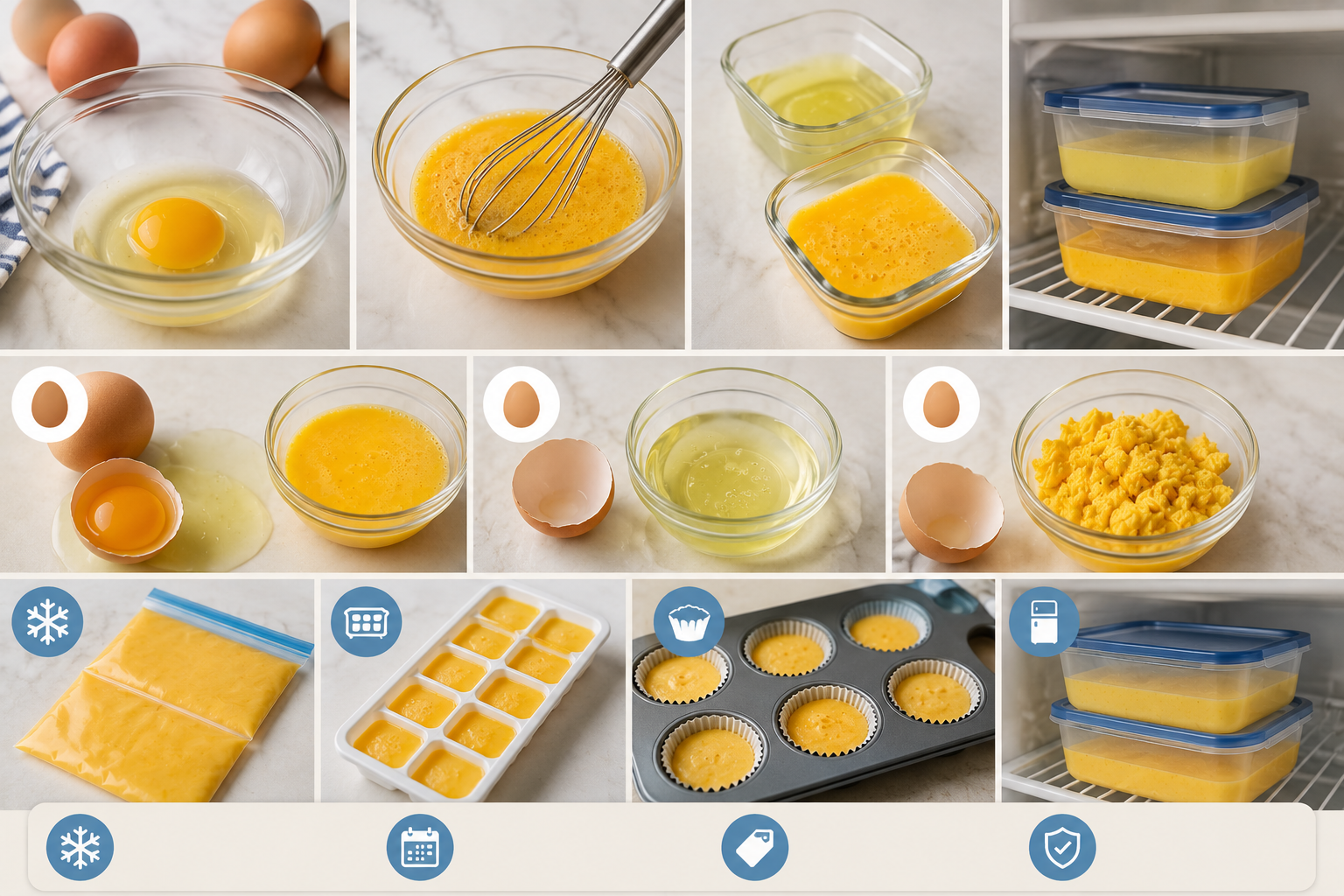

Learn how to freeze raw eggs safely, prevent rubbery yolks, thaw frozen eggs correctly, and store whole eggs, whites, and yolks for later use.
Suggested URL slug: /how-to-freeze-raw-eggs-safely/
Finding an extra carton of eggs in the refrigerator can feel like both a blessing and a problem. Eggs are useful for everything from breakfast to baking, but there may be times when you cannot use them all while they are still fresh. Fortunately, raw eggs can be frozen—but not in their shells.
Freezing raw eggs correctly can help reduce food waste, save money when eggs are on sale, and make future baking or meal preparation more convenient. However, the freezing method matters. Whole eggs must be mixed before freezing, egg whites and yolks should be handled differently, and yolks often need a small amount of salt or sugar to prevent an unpleasant gel-like texture.
This guide explains how to freeze raw eggs safely, what texture changes to expect, how to thaw them, and how long they can remain in the freezer.
Can You Freeze Raw Eggs?
Yes, raw eggs can be frozen after they have been removed from their shells.
The FDA’s egg safety guidance recommends beating whole eggs together before freezing. Raw egg whites can also be frozen separately. Properly prepared frozen eggs should be used within one year for the best quality.
However, fresh eggs should never be deliberately frozen in their shells. The liquid inside expands as it freezes, which can crack the shell and allow bacteria or other contaminants to reach the egg.
The basic rule is simple:
- Whole raw eggs: Remove from the shell and mix before freezing.
- Egg whites: Freeze separately without additional ingredients.
- Egg yolks: Mix with a small amount of salt, sugar, or corn syrup.
- Eggs in the shell: Do not freeze intentionally.
- Hard-boiled eggs: Generally do not freeze well.
Why Shouldn’t You Freeze Eggs in Their Shells?
A raw egg contains a large amount of water. When that water freezes, it expands. Because the shell does not stretch, pressure can build inside the egg and cause it to crack.
A cracked frozen egg creates two problems. First, the egg may leak as it thaws. Second, the damaged shell can expose the egg to bacteria from the shell surface, refrigerator, freezer, or surrounding food.
Even if a shell does not visibly crack, the yolk can become unusually thick after freezing. For consistent quality and easier portioning, it is better to crack the eggs into a clean bowl and prepare them before placing them in the freezer.
How Freezing Changes the Texture of Raw Eggs
Egg whites and yolks react differently to freezing.
Egg Whites
Raw egg whites generally freeze very well. After thawing, they usually return to a liquid state with relatively little change in texture. They can still be used in omelets, cakes, meringues, and many other recipes.
For recipes that depend heavily on volume, such as angel food cake or meringue, thawed whites may take slightly longer to whip. Allowing them to reach a safe cool room temperature shortly before whipping may help, but do not leave them unrefrigerated for more than two hours.
Egg Yolks
Yolks are more difficult to freeze. Untreated yolks can undergo a process known as gelation, causing them to become thick, sticky, grainy, or almost rubbery after thawing. A gelled yolk may be difficult to combine with other ingredients, even when vigorously whisked.
A small amount of salt, sugar, or corn syrup helps limit this texture change. The ingredient should be chosen according to how the yolks will eventually be used.
- Use salt for savory recipes.
- Use sugar or corn syrup for desserts and sweet baked goods.
Whole Eggs
Whole eggs usually freeze well when the whites and yolks are gently mixed. Avoid whipping a large amount of air into them. Some separation or slight graininess may still occur, but a gentle whisk after thawing is usually enough to restore a usable consistency.
How to Freeze Whole Raw Eggs
Freezing whole eggs is useful when you expect to make scrambled eggs, casseroles, pancakes, muffins, or other recipes that require both the white and yolk.
Step 1: Check the Eggs
Use fresh, clean eggs without cracked shells. Crack each egg separately into a small bowl before adding it to the larger mixture. This allows you to inspect each egg and remove any shell fragments without ruining the entire batch.
Do not freeze an egg that smells unusual or appears spoiled.
Step 2: Mix the Whites and Yolks
Stir the eggs gently with a fork or whisk until the whites and yolks are evenly combined. Do not beat them until foamy. Excess air can make portioning less accurate and may affect quality during storage.
Step 3: Add Salt or Sugar if Desired
According to Utah State University Extension’s egg-freezing guidance, you can add one of the following per cup of whole egg mixture:
- ½ teaspoon salt
- 1½ tablespoons sugar
- 1½ tablespoons corn syrup
These additions help prevent graininess. Choose salt for savory dishes and sugar or syrup for sweet recipes.
Be sure to record which ingredient you used. Otherwise, you could accidentally add sweetened eggs to a casserole or salted eggs to a cake.
Step 4: Strain the Mixture
Pouring the mixture through a fine sieve helps remove shell fragments and thick strands while creating a more uniform consistency. This step is optional but useful when preparing a large batch.
Step 5: Portion and Package
Pour the eggs into freezer-safe containers, silicone molds, or ice cube trays. Leave approximately ½ inch of headspace in rigid containers because the mixture will expand during freezing.
For convenient recipe portions, measure three tablespoons of whole egg mixture per compartment. Approximately three tablespoons of mixed egg equals one large egg.
Once portions in a tray are completely frozen, transfer them to a moisture-resistant freezer bag or airtight container.
How to Freeze Egg Whites
Egg whites are the easiest part of an egg to freeze.
- Separate the whites carefully, making sure no shell or yolk enters the bowl.
- Stir them gently without whipping in air.
- Pour them through a clean sieve if you want a uniform consistency.
- Measure them into a freezer-safe container or tray.
- Label the package with the quantity and date.
No salt or sugar is required.
For portioning, approximately two tablespoons of egg white equals the white from one large egg. Once frozen, transfer individual portions to an airtight freezer bag to protect them from odors and freezer burn.
Frozen whites are useful for:
- Meringues
- Angel food cake
- Macarons
- Royal icing made with properly handled eggs
- Egg-white omelets
- Soufflés
- Protein-rich breakfast dishes
If a recipe will remain raw or only lightly cooked, use pasteurized egg whites rather than ordinary raw shell eggs.
How to Freeze Egg Yolks
Raw yolks require special treatment because they become thick and gelatinous when frozen by themselves.
For Four Egg Yolks
Gently mix approximately four yolks with either:
- ⅛ teaspoon salt for savory dishes, or
- 1½ teaspoons sugar or corn syrup for sweet dishes
For a larger batch, use ½ teaspoon salt or 1½ tablespoons sugar or corn syrup per cup of yolks.
Stir just enough to combine the ingredients. Strain the mixture if desired, package it in small freezer-safe containers, and leave some headspace.
Approximately one tablespoon of yolk mixture equals one large egg yolk. Label the container clearly with:
- The number of yolks
- The freezing date
- Whether salt, sugar, or syrup was added
Untreated yolks are not necessarily unsafe after freezing, but their thick, gummy texture can make them nearly impossible to use successfully in recipes.
Choosing the Right Freezer Container
Good packaging helps prevent freezer burn, moisture loss, and odor absorption.
Suitable options include:
- Rigid freezer-safe containers with tight lids
- Heavy-duty freezer bags
- Silicone portion trays
- Ice cube trays followed by freezer-bag storage
- Small freezer-safe jars with adequate headspace
Avoid thin sandwich bags, ordinary drinking glasses, and containers that do not seal tightly. Raw eggs can absorb odors from onions, seafood, meat, and other strongly scented foods.
Remove as much excess air as practical from freezer bags before sealing them. Store eggs toward the back of the freezer, where the temperature is more stable, rather than in the freezer door.
How Long Can Raw Eggs Be Frozen?
The FDA recommends using properly frozen raw eggs within one year. Keep the freezer at 0°F (-18°C) or below.
Although continuously frozen food may remain safe beyond recommended storage periods, egg quality can gradually decline. The mixture may develop freezer burn, absorb odors, or become less effective in delicate recipes.
For the best results:
- Label every container.
- Use the oldest eggs first.
- Freeze them in practical portions.
- Keep the freezer at a stable temperature.
- Avoid repeated thawing and refreezing.
How to Thaw Frozen Raw Eggs Safely
The safest way to thaw raw eggs is in the refrigerator.
Move the required portion from the freezer to the refrigerator the night before you plan to use it. Small portions often thaw overnight, while larger containers may take longer.
Never leave frozen raw eggs on the kitchen counter to thaw. The outer portion can enter a temperature range that encourages bacterial growth while the center remains frozen.
After thawing:
- Keep the eggs refrigerated.
- Stir or whisk them gently to restore an even texture.
- Use them promptly.
- Cook them thoroughly.
- Do not leave them at room temperature for more than two hours.
If eggs are thawed using cold water or a microwave, they should be cooked immediately. Refrigerator thawing is generally better because it provides more even defrosting and helps preserve texture.
Can You Refreeze Thawed Raw Eggs?
Refreezing is not ideal. Even when eggs have remained cold enough to be refrozen safely, another freeze-and-thaw cycle can further damage their texture and make them less useful in recipes.
Instead, freeze eggs in portions small enough to use at one time. If you thaw more than you need, consider cooking the remaining eggs promptly and then refrigerating the cooked dish according to safe storage guidelines.
Never refreeze eggs that have been left above 40°F (4°C) for more than two hours.
How to Cook Thawed Eggs Safely
Freezing does not destroy all Salmonella that may be present in raw eggs. Thawed eggs should therefore be treated with the same care as fresh raw eggs.
The FDA advises cooking eggs until the white and yolk are firm. Casseroles and other dishes containing eggs should reach an internal temperature of 160°F (71°C).
Wash your hands, bowls, utensils, and work surfaces with hot, soapy water after contact with raw eggs. Avoid allowing raw egg to touch ready-to-eat foods.
For dishes that traditionally contain raw or undercooked eggs, such as homemade mayonnaise, Caesar dressing, eggnog, mousse, or certain ice creams, use pasteurized eggs or pasteurized egg products.
Children, older adults, pregnant people, and individuals with weakened immune systems face a greater risk of serious illness from Salmonella and should avoid raw or undercooked eggs.
What If an Egg Accidentally Freezes in Its Shell?
Eggs can accidentally freeze when stored against the coldest part of a refrigerator or left in an unheated location during winter.
According to the USDA’s freezing and food-safety guidance, an egg whose shell cracked during freezing should be discarded.
If the shell remains intact, keep the egg frozen until you are ready to use it, then thaw it in the refrigerator. Use it promptly and cook it thoroughly. Its yolk may have become thick, so the egg may work better in a fully cooked dish than in a recipe requiring smooth blending.
Do not use an accidentally frozen egg if it leaks, smells unusual, or has a damaged shell.
Best Ways to Use Thawed Raw Eggs
Previously frozen eggs work especially well in recipes where they will be mixed with other ingredients and thoroughly cooked. Good choices include:
- Scrambled eggs
- Omelets and frittatas
- Pancakes and waffles
- Muffins and quick breads
- Cookies and cakes
- French toast
- Quiche
- Breakfast casseroles
- Meatloaf and meatballs
- Custards that will be fully cooked
For baking, remember to account for any salt or sugar added before freezing. Reduce the recipe’s salt or sugar slightly when necessary.
Frequently Asked Questions
Can raw eggs be frozen in an ice cube tray?
Yes. Mix the eggs first and measure them into the compartments. After they are solid, transfer the portions to an airtight freezer bag. Do not leave them uncovered in the tray for long-term storage.
Can I freeze eggs without beating them?
Whites can be frozen with only gentle stirring, but whole eggs should be mixed so the yolks and whites freeze evenly. Yolks should also be stirred with salt, sugar, or corn syrup to limit gelation.
Do frozen eggs taste different?
Properly packaged eggs usually retain their flavor well. Texture changes are more noticeable than flavor changes, particularly in untreated yolks. Eggs stored too long or in poorly sealed containers may absorb freezer odors.
Can hard-boiled eggs be frozen?
Freezing whole hard-boiled eggs is not recommended because the whites can become tough, watery, and rubbery. Cooked yolks tolerate freezing somewhat better, but the overall result is usually inferior to freshly cooked eggs.
Can frozen eggs be used for baking?
Yes. Thawed whole eggs, whites, and treated yolks can be used in most baked goods. Measure the portions before freezing and label any salt or sugar added so you can adjust the recipe.
Final Thoughts
Freezing raw eggs is a safe and practical way to reduce waste, provided you remove them from their shells first. Mix whole eggs gently, freeze whites separately, and add a little salt or sugar to yolks to prevent a thick, rubbery texture. Store the portions at 0°F (-18°C), use them within one year, thaw them in the refrigerator, and cook them thoroughly before eating. Have you ever frozen extra eggs for baking or breakfast? Share your method, favorite portion size, or results in the comments so other readers can learn from your experience.

Hi, I’m the creator and editor behind ZestyHabit. I research everyday safety, first aid, and practical wellness topics using official guidance and reliable public sources, then turn that information into clear, realistic steps for daily life.
My goal is to help readers make safer, better-informed choices at home and beyond.


