
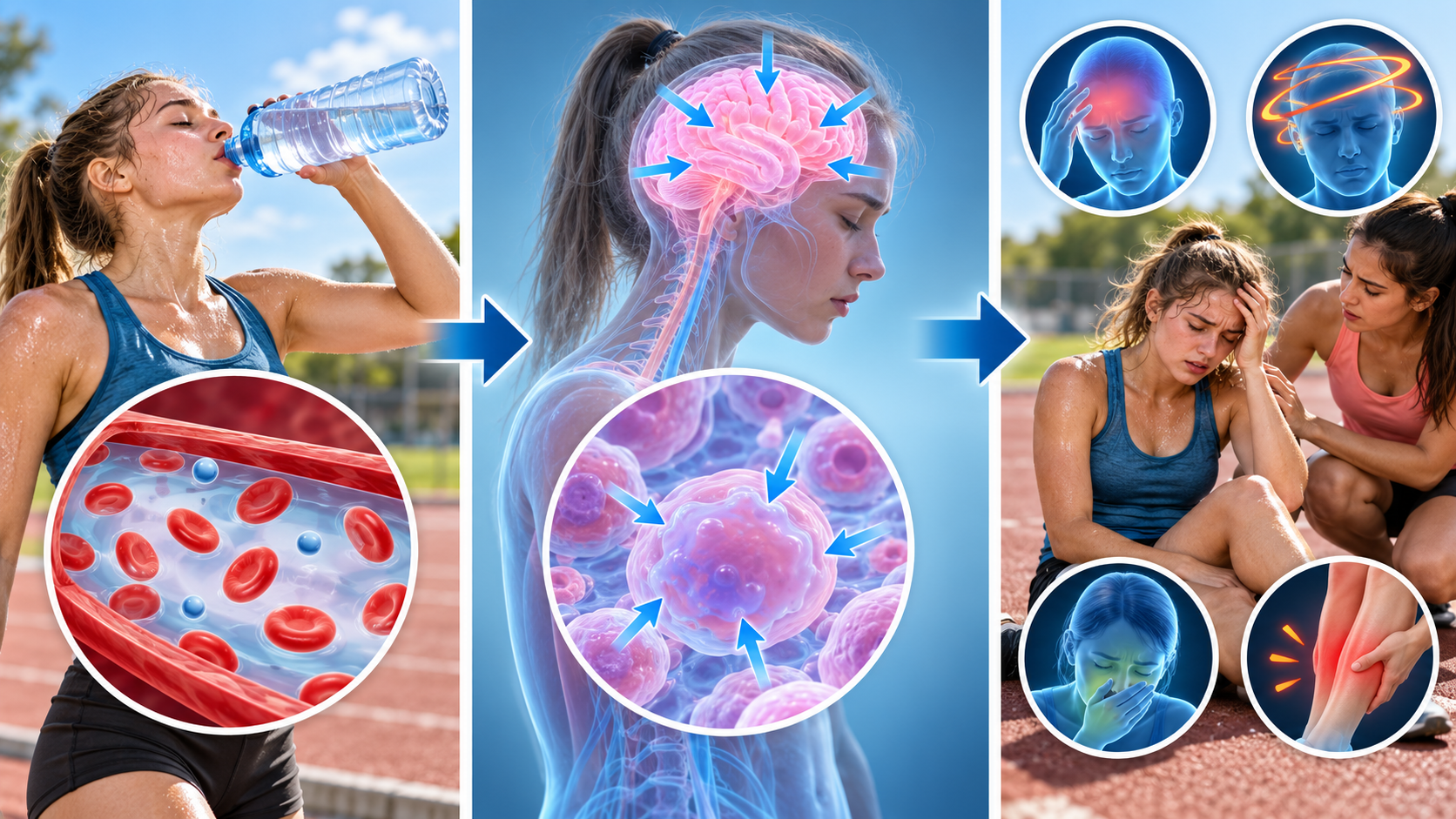

Learn the early warning signs of exercise-associated hyponatremia, what to do in an emergency, and how to prevent dangerously low sodium during endurance exercise.
Most athletes understand that dehydration can become dangerous. Far fewer realize that drinking too much can also cause a medical emergency.
Exercise-associated hyponatremia, often shortened to EAH, occurs when the sodium concentration in the blood falls during physical activity or within approximately 24 hours after it ends. In many cases, the problem is not that the athlete has failed to consume enough salt. It is that the person has consumed more fluid than the body can eliminate, diluting the sodium in the bloodstream.
Early symptoms can look deceptively ordinary: nausea, dizziness, fatigue, headache, or a bloated feeling. These complaints may be mistaken for dehydration, heat exhaustion, low blood sugar, or the normal discomfort of a long event. Giving the athlete more water without considering hyponatremia can make the condition worse.
Severe EAH can cause brain swelling, confusion, seizures, coma, breathing problems, and death. Recognizing the pattern early—and understanding that sports drinks do not automatically prevent it—can save a life.
This article explains the warning signs of exercise-associated hyponatremia, appropriate emergency action, common mistakes, and practical ways to reduce the risk.
What Is Exercise-Associated Hyponatremia?

Hyponatremia means that the sodium concentration in the blood is lower than normal. EAH is generally diagnosed when blood sodium is below 135 mmol/L during exercise or within the following 24 hours. A blood test is required to confirm it because symptoms alone are not specific enough to establish the diagnosis.
Sodium helps regulate fluid balance and supports normal nerve and muscle function. When too much relatively dilute fluid enters the body, water moves into cells. Swelling in most tissues may be uncomfortable, but swelling inside the skull is especially dangerous because the brain has very little room to expand.
The main cause of EAH is prolonged overconsumption of water, sports drinks, or other hypotonic beverages. During strenuous activity, the body may also release arginine vasopressin, sometimes called antidiuretic hormone. This reduces the kidneys’ ability to eliminate excess water, allowing fluid to accumulate even after the athlete has stopped drinking.
Although EAH was first widely recognized in ultramarathon runners and triathletes, it is not limited to elite endurance racing. Cases have occurred during hiking, cycling, open-water swimming, football, yoga, canoeing, mountain biking, shorter running events, and other prolonged or demanding activities. It can develop in hot or cool conditions.
The Biggest Risk Factor: Drinking Beyond Your Needs

The most important preventable risk factor is consuming fluid faster than the body loses it through sweat, urine, and breathing. This can happen when an athlete follows a rigid drinking schedule, repeatedly drinks at every aid station, or believes that clear urine is necessary throughout an event.
Sports drinks are not a guaranteed solution. Although they contain some sodium, they are still mostly water and are usually less concentrated than blood. Drinking excessive volumes of a sports drink can therefore produce the same dilution problem as drinking excessive plain water.
Other circumstances associated with greater EAH risk include:
- Exercise lasting more than four hours
- Gaining weight during an event
- A slow pace that creates more opportunities to drink
- Limited experience or inadequate event-specific training
- Very low or high body size
- Frequent and easily accessible drink stations
- A belief that thirst must be prevented at all costs
Long events deserve special attention, but duration is not the only factor. Symptomatic cases have occurred after activities lasting only a few hours, especially when participants consumed large amounts of fluid before and during exercise.
Early Warning Signs During Exercise
Mild EAH can be difficult to recognize because its symptoms overlap with dehydration, heat exhaustion, gastrointestinal distress, and ordinary fatigue.
Possible early warning signs include:
- Nausea
- Dizziness or lightheadedness
- Headache
- Unusual weakness or fatigue
- Irritability
- A bloated or “waterlogged” feeling
- Puffiness in the hands, fingers, face, or ankles
- Tight rings, watches, shoes, or wristbands
- Unexpected weight gain during the event
- Vomiting
A person may also notice that clothing feels tighter or that the stomach feels full despite continued thirst or encouragement to drink. Urine output is not a reliable way to distinguish EAH from dehydration because hormone-related water retention can produce variable urination patterns.
One of the most useful clues is the combination of symptoms with a history of aggressive drinking. A headache in an athlete who has been drinking continuously, feels bloated, and has maintained or gained body weight should raise more concern for EAH than the same headache in someone who has consumed little fluid and lost substantial weight.
These observations cannot confirm the diagnosis, but they can help event staff and companions avoid the dangerous reflex of automatically handing the athlete another bottle.
Emergency Warning Signs
As sodium falls and brain swelling increases, neurological symptoms may develop. Severe EAH, also called exercise-associated hyponatremic encephalopathy, is a life-threatening emergency.
Call emergency medical services immediately when an athlete develops:
- Confusion or disorientation
- Unusual agitation or irrational behavior
- Difficulty walking or loss of coordination
- Repeated vomiting
- A severe or rapidly worsening headache
- Collapse
- A seizure
- Extreme drowsiness or difficulty waking
- Loss of consciousness
- Coma
- Shortness of breath or frothy sputum
Severe EAH may also cause non-cardiogenic pulmonary edema, in which fluid accumulates in the lungs. This can produce breathlessness, low oxygen levels, coughing, or frothy sputum.
Do not assume that confusion after exercise is simply exhaustion. Altered mental status following a long event can also indicate heat stroke, low blood sugar, a cardiac problem, head injury, altitude illness, or another medical emergency. All require urgent professional assessment.
What to Do When EAH Is Suspected
Stop the activity and move the person to a safe location. Contact event medical staff or emergency services, particularly when symptoms include headache with vomiting, confusion, poor coordination, collapse, breathing difficulty, or seizure.
Tell responders how much the athlete drank, what types of beverages were consumed, when symptoms began, whether the person urinated, and whether pre-event and current body weights are available. An accurate fluid history is particularly useful when immediate blood sodium testing is unavailable.
Do not encourage the athlete to “hydrate through it.” Stop routine drinking until the person has been medically evaluated. This includes plain water and ordinary sports drinks. Wilderness Medical Society guidance recommends restricting oral and intravenous fluids in suspected EAH until appropriate assessment and the onset of urination, although exceptions may apply when another condition such as shock is present.
Keep the person under continuous observation. Do not allow someone with confusion, severe headache, repeated vomiting, or poor balance to walk away alone, drive, or return to the event.
If a seizure occurs, protect the person from nearby hazards and call emergency services. Do not force anything into the mouth and do not attempt to give food, salt tablets, or drinks to someone who is confused, vomiting repeatedly, seizing, or not fully alert.
What Not to Do
The most dangerous mistake is treating suspected EAH as routine dehydration and giving large amounts of fluid. Because heat exhaustion and hyponatremia can cause similar symptoms, the wrong treatment may worsen the athlete’s condition.
Do not rely on a sports drink to correct severe symptoms. The sodium concentration in standard sports beverages is far below that of the hypertonic saline used by medical professionals for hyponatremic encephalopathy.
Do not ask a severely ill person to swallow concentrated salt water. It may cause vomiting or aspiration, delay emergency treatment, and does not provide the controlled sodium correction required in a medical emergency.
Do not use urine color as proof that someone needs more water. Pale urine may reflect high fluid intake rather than ideal hydration, while urine output can vary during EAH.
Finally, do not delay emergency care while trying to determine the diagnosis yourself. Blood sodium measurement and professional evaluation are essential when neurological symptoms are present.
How Severe EAH Is Treated
Medical treatment depends on symptom severity, blood sodium concentration, and the athlete’s overall condition.
For severe EAH with signs of cerebral edema, trained clinicians use intravenous 3% hypertonic saline. Wilderness Medical Society guidance describes 100-mL boluses that may be repeated at ten-minute intervals while neurological symptoms and sodium levels are monitored. The immediate goal is a modest rise in blood sodium sufficient to reduce brain swelling—not rapid normalization of the entire laboratory value.
This treatment should be provided by qualified medical personnel. Ordinary intravenous saline is not interchangeable with hypertonic saline and may be inappropriate before sodium correction in some cases. The patient also requires monitoring for airway, breathing, neurological status, urine output, and other exercise-related complications.
Early recognition matters because mildly symptomatic athletes can deteriorate rapidly.
Hyponatremia or Heat Illness?
EAH and heat illness frequently overlap in appearance. Both may produce weakness, nausea, dizziness, headache, vomiting, collapse, or confusion.
A person with EAH may be normally warm rather than dangerously hot, but skin temperature and weather conditions cannot reliably exclude either problem. Heat stroke is defined by central nervous system dysfunction in the setting of severe hyperthermia, while heat exhaustion usually causes milder symptoms without major neurological impairment.
A history of drinking large volumes, bloating, puffiness, or weight gain supports suspicion of EAH. Very high core temperature supports exertional heat stroke. However, field assessment is difficult, and the conditions can coexist.
When someone has altered mental status during or after exercise, activate the emergency plan rather than debating the diagnosis. Emergency personnel can assess core temperature, blood sodium, glucose, circulation, and other possible causes.
Preventing Exercise-Associated Hyponatremia
The simplest prevention message is to avoid forcing fluid beyond thirst. Both EAH and current heat-illness guidance support drinking according to thirst rather than following an inflexible schedule designed to prevent every possible amount of weight loss.
Thirst is not perfect in every circumstance, and competitive athletes may use individualized plans developed through training. However, a plan should be based on realistic sweat losses rather than the maximum amount the stomach can tolerate.
Learn Your Approximate Sweat Rate
For long events, compare body weight immediately before and after a training session under similar conditions. Record how much you drank and whether you urinated. This provides a rough estimate of hourly fluid loss.
The goal is not necessarily to finish at exactly the same weight. Maintaining or gaining weight during prolonged exercise can indicate excessive fluid consumption. Some weight loss is expected as stored fuel, water, and other substances are used. WMS guidance recommends using body-weight changes during training to estimate individual needs.
Practice Your Hydration Strategy
Do not introduce an aggressive new drinking routine on race day. Test your approach during training in similar weather, terrain, intensity, clothing, and duration.
Pay attention to thirst, stomach fullness, swelling, urination, pace, and body-weight change. Adjust your strategy if you consistently finish heavier than you started or feel bloated from drinking.
Use Sodium Appropriately
Salty foods and sodium-containing products may help replace sweat losses during long, hot events, particularly for athletes with high sweat rates. However, sodium cannot reliably prevent EAH when it is combined with excessive fluid intake.
Salt tablets should not be treated as permission to drink unlimited water. High doses can also cause stomach upset and other problems. Athletes with kidney disease, heart disease, high blood pressure, or prescribed sodium restrictions should discuss supplementation with a healthcare professional.
Avoid Pre-Event Overhydration
Drinking several liters shortly before an event does not create a protective reservoir. It may leave the athlete starting with excess body water, especially when stress, nausea, pain, or medications reduce water excretion.
Begin normally hydrated, drink with thirst, and avoid turning hydration into a competition.
Educate Support Crews
Friends and volunteers often urge struggling athletes to drink because dehydration is the most familiar concern. Support crews should know that headache, nausea, confusion, puffiness, and weight gain after heavy fluid intake may signal overhydration instead.
Event organizers should train medical teams and volunteers to consider EAH whenever a participant becomes ill during or after prolonged exertion.
The Bottom Line
Exercise-associated hyponatremia is usually linked to consuming more fluid than the body can eliminate. Early symptoms—including nausea, dizziness, headache, fatigue, bloating, and puffiness—may look harmless or resemble dehydration. Severe headache, repeated vomiting, confusion, poor coordination, seizures, collapse, breathing problems, or loss of consciousness require immediate emergency care.
When EAH is suspected, stop exercise, stop routine fluid intake, contact medical professionals, and provide a clear history of drinking and symptom progression. Do not automatically give water or sports drinks to a confused or vomiting athlete.
Prevention does not require ignoring hydration. It requires respecting both sides of fluid safety: too little can contribute to heat strain, while too much can dangerously dilute blood sodium. Drink according to thirst, learn your needs during training, avoid weight gain from excessive drinking, and remember that extra sodium cannot compensate for unlimited fluid intake.
Have you ever felt unusually bloated, nauseated, or confused during a race, hike, cycling event, or long workout? Share what happened, what you had been drinking, and what you learned in the comments. Your experience could help another athlete recognize the warning signs before a manageable problem becomes an emergency.

Hi, I’m the creator and editor behind ZestyHabit. I research everyday safety, first aid, and practical wellness topics using official guidance and reliable public sources, then turn that information into clear, realistic steps for daily life.
My goal is to help readers make safer, better-informed choices at home and beyond.


