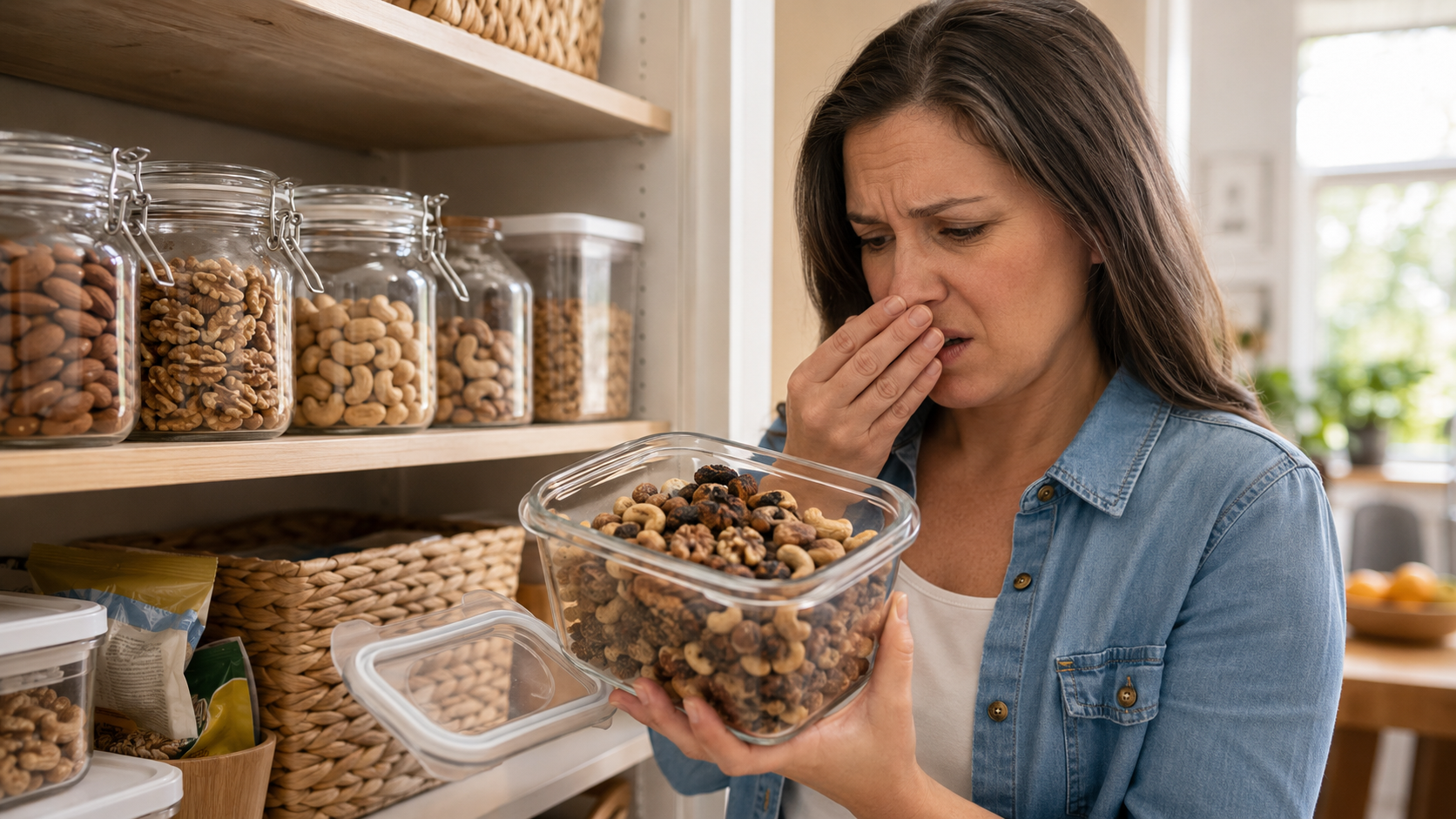
Introduction: When a Healthy Snack Smells a Little Off
Nuts are one of those foods that feel safe to keep around forever.
A bag of almonds in the pantry. Walnuts for baking. Pecans from the holidays. Cashews for snacking. A container of mixed nuts that somehow keeps getting pushed behind the oats.
Because nuts are dry and sturdy, it is easy to assume they last much longer than they actually do. But nuts contain natural oils, and those oils can go rancid over time. When that happens, the nuts may smell sharp, taste bitter, or feel stale in a way that is hard to ignore once you notice it.
Rancid nuts are not usually the kind of food safety issue that needs panic. But they are a practical kitchen concern. They taste unpleasant, they lose quality, and eating spoiled or badly stored nuts is not a habit worth keeping.
The good news is that rancid nuts are usually easy to spot if you know what to look for. Even better, a few simple storage habits can help you keep nuts fresh longer, reduce waste, and avoid that disappointing moment when a recipe starts with a handful of bitter walnuts.
Why Nuts Go Rancid
Nuts contain fat. That is part of what makes them satisfying, flavorful, and useful in cooking.
But those fats are also the reason nuts can spoil.
Many nuts are rich in unsaturated fats. These fats are more delicate than they seem. When they are exposed to oxygen, heat, light, or moisture, they can break down through a process called oxidation. That breakdown is what creates rancid smells and flavors.
You may notice rancidity as a paint-like smell, a bitter taste, a stale oily flavor, or a harsh aftertaste.
This is different from nuts simply being a little old or less crunchy. Stale nuts may lose texture. Rancid nuts taste and smell wrong because the oils have deteriorated.
That is why a dry-looking nut can still be past its best. Spoilage is not always about visible mold or slime. With nuts, your nose and taste buds often catch the problem first.
Is Rancidity the Same as Mold?
Rancidity and mold are different problems.
Rancidity happens when fats and oils break down. Mold is fungal growth that may appear when food is exposed to moisture or poor storage conditions.
A nut can be rancid without being moldy. It can smell bitter, oily, sour, or like old paint even if it looks normal.
A nut can also be moldy without smelling strongly rancid. Mold may appear as fuzzy growth, dark spots, powdery patches, or a musty odor.
Both are reasons to discard nuts.
Do not try to save moldy nuts by picking out the worst pieces. If mold is visible in a bag or container, the safer choice is to throw the batch away, especially if the nuts smell musty or have been stored in damp conditions.
Rancidity is unpleasant and a sign of fat breakdown. Mold may carry additional food safety concerns. Neither belongs in your snack bowl.
Why Rancid Nuts May Be Bad for You
Eating a few rancid nuts by accident does not mean something terrible will happen. Most people realize the taste is unpleasant and stop eating.
The concern is more about repeated or careless eating of food whose fats have broken down.
When oils oxidize, they form compounds that can affect flavor, smell, and quality. Rancid food is no longer fresh, and it is not something to treat as normal just because it is dry or expensive.
Rancid nuts may also irritate your stomach or leave a lingering bad taste. More importantly, ignoring rancidity can make you less careful about other spoilage signs, such as mold, moisture damage, or old pantry storage.
The practical rule is simple: if nuts smell or taste rancid, throw them away.
Do not bake with them. Do not toast them to “fix” them. Do not hide them in granola. Once the oils have gone rancid, the quality is gone.
How to Tell If Nuts Are Rancid
Rancid nuts usually give you clues.
Start with smell. Fresh nuts should smell mild, nutty, slightly sweet, or earthy, depending on the type. Rancid nuts may smell sour, bitter, sharp, oily, stale, musty, or like paint or chemicals.
Then look at them. Nuts that are darkened, shriveled, oily-looking, soft, moldy, or dusty in an unusual way should be treated with caution.
Texture can also help. Some older nuts become rubbery or chewy instead of crisp. Others feel oily or sticky.
Finally, taste only if the nuts look normal and smell mostly normal. Try a tiny piece. If it tastes bitter, sour, harsh, stale, or unpleasant, spit it out and discard the nuts.
Do not keep eating while trying to decide. Your first reaction is usually enough.
Different Nuts Spoil at Different Speeds
Not all nuts age the same way.
Nuts with higher oil content tend to become rancid faster, especially when stored at room temperature. Walnuts, pecans, pine nuts, and macadamia nuts can be more delicate because of their fat content.
Almonds and hazelnuts may hold up a little better, but they still need proper storage.
Chopped, sliced, or ground nuts spoil faster than whole nuts because more surface area is exposed to air. Nut flours and meals can become rancid more quickly than whole nuts for the same reason.
Roasted nuts may also spoil faster than raw nuts in some cases, especially if they are stored warm or exposed to air after opening. Flavored nuts can be tricky because salt, sugar, spices, or coatings may hide early off-flavors.
The smaller and more processed the nut, the more careful you should be.
Whole almonds in a sealed container are one thing. A half-used bag of ground walnuts in a warm pantry for months is another.
Pantry Storage Is Not Always Best
Many people store nuts in the pantry because that is where dry goods go.
For short-term storage, that can be fine. If you buy a small bag and finish it within a few weeks, a cool, dark pantry may work well.
But for longer storage, the refrigerator or freezer is usually better.
Heat and light speed up rancidity. A pantry near the stove, dishwasher, oven, sunny window, or refrigerator motor may be warmer than you realize. Even a cabinet that feels normal can become warm during summer.
If you buy nuts in bulk, use them slowly, or live in a warm climate, cold storage is a better habit.
Think of nuts less like dry pasta and more like cooking oil. They may look dry, but their oils need protection.
The Best Way to Store Nuts at Home
The best storage setup is simple: airtight, cool, dark, and dry.
Use a clean container with a tight lid. Glass jars, sealed food containers, freezer bags, or vacuum-sealed bags can all work.
Keep the container away from heat and sunlight.
For nuts you will use soon, a cool pantry is usually fine.
For nuts you will keep longer, use the refrigerator.
For bulk nuts, baking nuts, nut flours, or delicate nuts, use the freezer.
The freezer is especially helpful because nuts do not freeze into a solid block the way watery foods do. You can usually scoop out what you need and return the rest.
Label the container with the purchase date. This small habit helps a lot. Without a date, every container eventually becomes a mystery container.
Why Airtight Containers Matter
Air exposure speeds oxidation.
That means a loosely folded bag is not ideal once the package is opened. The nuts may still be edible for a while, but they will lose freshness faster.
An airtight container slows contact with oxygen and helps protect the nuts from kitchen odors. This is especially useful in the refrigerator or freezer, where nuts can absorb smells from onions, garlic, leftovers, or other strongly scented foods.
Before storing nuts, make sure the container is dry. Moisture can encourage mold and spoilage.
If you transfer nuts from a store package to a jar, check them first. Do not seal up nuts that already smell old or look questionable. A clean container cannot rescue food that is already going bad.
Should You Refrigerate or Freeze Nuts?
If you eat nuts quickly, refrigeration is not always necessary.
But if you keep nuts for more than a month or two, refrigeration can help preserve quality. Freezing is even better for long-term storage.
Refrigeration slows the breakdown of oils.
Freezing slows it even more.
This is especially useful for walnuts, pecans, pine nuts, nut flours, and large bags from warehouse stores.
If you freeze nuts, portion them into smaller containers if possible. That way, you are not opening the whole bag repeatedly and introducing moisture or odors.
When using frozen nuts for baking, you can often add them directly to recipes. For snacking, let them sit a few minutes if you prefer a softer texture.
Do Not Store Nuts Near Heat
Heat is one of the quickest ways to ruin nuts.
Avoid storing nuts:
Above the stove
Near the oven
Next to the dishwasher
On top of the refrigerator
In a sunny pantry
Near heating vents
In a hot garage
In a car after grocery shopping
A bag of nuts left in a hot car for an afternoon may not look different, but the oils can suffer. Bring nuts inside with other groceries and store them properly.
This is especially important in summer or in warm climates.
If your kitchen is naturally warm, skip long pantry storage and use the fridge or freezer instead.
Bulk Bins and Large Bags: Be Practical
Bulk nuts can be a good deal, but only if they are fresh and you can store them well.
Before buying from a bulk bin, consider how quickly the store turns over its stock. Nuts sitting in a warm, open bin for a long time may already be losing quality.
If possible, smell the nuts before using them at home. Fresh nuts should smell pleasant and mild.
Large bags from warehouse stores can also be useful, but do not keep the whole bag open in the pantry for months. Divide the nuts when you get home. Keep a small amount in the pantry for current use and freeze the rest.
This makes the large bag easier to manage and helps prevent waste.
What About Nut Butters?
Nut butters can also become rancid because they contain nut oils.
Natural nut butters, especially those without stabilizers, may separate. Oil separation alone does not mean the nut butter is bad. Stirring it back in is normal.
But rancid nut butter smells and tastes off. It may smell bitter, sour, metallic, waxy, or like old oil. If it has mold, unusual discoloration, or a strange texture, throw it away.
Always use a clean knife or spoon. Crumbs, jelly, butter, or moisture introduced into the jar can shorten its life.
Check the label for storage directions. Some nut butters are best refrigerated after opening, especially natural varieties.
What About Seeds?
Seeds can go rancid too.
Sunflower seeds, pumpkin seeds, sesame seeds, flaxseed, and chia seeds all contain oils. Ground flaxseed is especially delicate because grinding exposes more surface area to oxygen.
Like nuts, seeds should be stored in airtight containers away from heat and light. Refrigeration or freezing is helpful for long-term storage.
If seeds smell fishy, bitter, stale, oily, or musty, throw them away.
This matters because seeds often sit in cabinets for a long time. People buy them for smoothies, oatmeal, salads, or baking, then use them slowly. Without cold storage, they may lose freshness before the bag is finished.
Can Toasting Fix Rancid Nuts?
Toasting can improve nuts that are slightly stale but not rancid.
It can make them crunchier and bring back some aroma.
But toasting does not fix rancidity.
If nuts smell or taste bitter, sour, sharp, or like old oil, do not toast them and hope for the best. Heat may actually make the unpleasant smell stronger.
Use toasting for fresh or slightly tired nuts, not spoiled ones.
A good test is to smell the nuts before toasting. If they already smell wrong, skip the pan and discard them.
What If You Accidentally Ate Rancid Nuts?
If you ate a small amount of rancid nuts before noticing the taste, do not panic.
Stop eating them, throw away the rest, and rinse your mouth if you want to. Most people simply find the flavor unpleasant.
If you develop symptoms that concern you, or if a child, older adult, pregnant person, or someone with a medical condition ate a larger amount of questionable nuts, contact a healthcare professional or Poison Control for guidance.
If a pet ate rancid, moldy, or spoiled nuts, contact a veterinarian. Some nuts and nut products can be problematic for pets, and moldy foods can be a separate concern.
For everyday prevention, the best step is to check nuts before eating, especially if the package has been open for a while.
Watch for Mold and Moisture Too
Rancidity is common, but it is not the only issue.
Nuts stored in damp conditions may develop mold. This can happen if they are kept in a humid pantry, a poorly sealed container, or a bag that collected condensation.
Throw away nuts if you see mold, smell mustiness, or notice damp clumps.
Do not rinse moldy nuts and try to dry them. Do not pick through the bag and save the pieces that look normal.
Moisture-damaged nuts are not worth saving.
A dry, airtight container and cool storage are your best defense.
A Simple Nut Storage Routine
Here is an easy routine for most kitchens.
When you buy nuts, check the date and smell them when you open the package.
Keep a small amount in an airtight container for daily use.
Store the rest in the refrigerator or freezer.
Label containers with the purchase date.
Keep nuts away from heat, sunlight, and moisture.
Smell nuts before adding them to recipes.
Toss anything bitter, sour, musty, moldy, or paint-like.
This routine takes almost no effort once you get used to it. It also prevents the disappointment of ruining cookies, salads, granola, or banana bread with old nuts.
How to Use Fresh Nuts Before They Go Bad
If you bought more nuts than you can snack on, build them into meals before they age.
Add walnuts to oatmeal.
Use almonds in salads.
Blend cashews into sauces.
Sprinkle pecans on roasted vegetables.
Make a small batch of granola.
Freeze pre-measured portions for baking.
Use older but still fresh nuts in cooked dishes where texture matters less.
The key is using them while they still smell and taste good. Once they become rancid, they are no longer worth saving.
Final Thoughts
Nuts may look like long-lasting pantry food, but their natural oils need care. Heat, air, light, and time can turn those oils rancid, leaving nuts bitter, stale, and unpleasant.
The easiest way to avoid the problem is to store nuts like a food with delicate oils: sealed tightly, kept cool, protected from light, and moved to the refrigerator or freezer if you will not use them soon.
Before eating or baking, take a moment to smell them. That small pause can save a whole recipe.
Fresh nuts should taste rich, mild, and pleasant. If they smell like paint, old oil, must, or bitterness, let them go. A clean pantry is not about keeping food forever. It is about keeping food you can actually enjoy and trust.
Hi, I’m the creator and editor behind ZestyHabit. I research everyday safety, first aid, and practical wellness topics using official guidance and reliable public sources, then turn that information into clear, realistic steps for daily life.
My goal is to help readers make safer, better-informed choices at home and beyond.