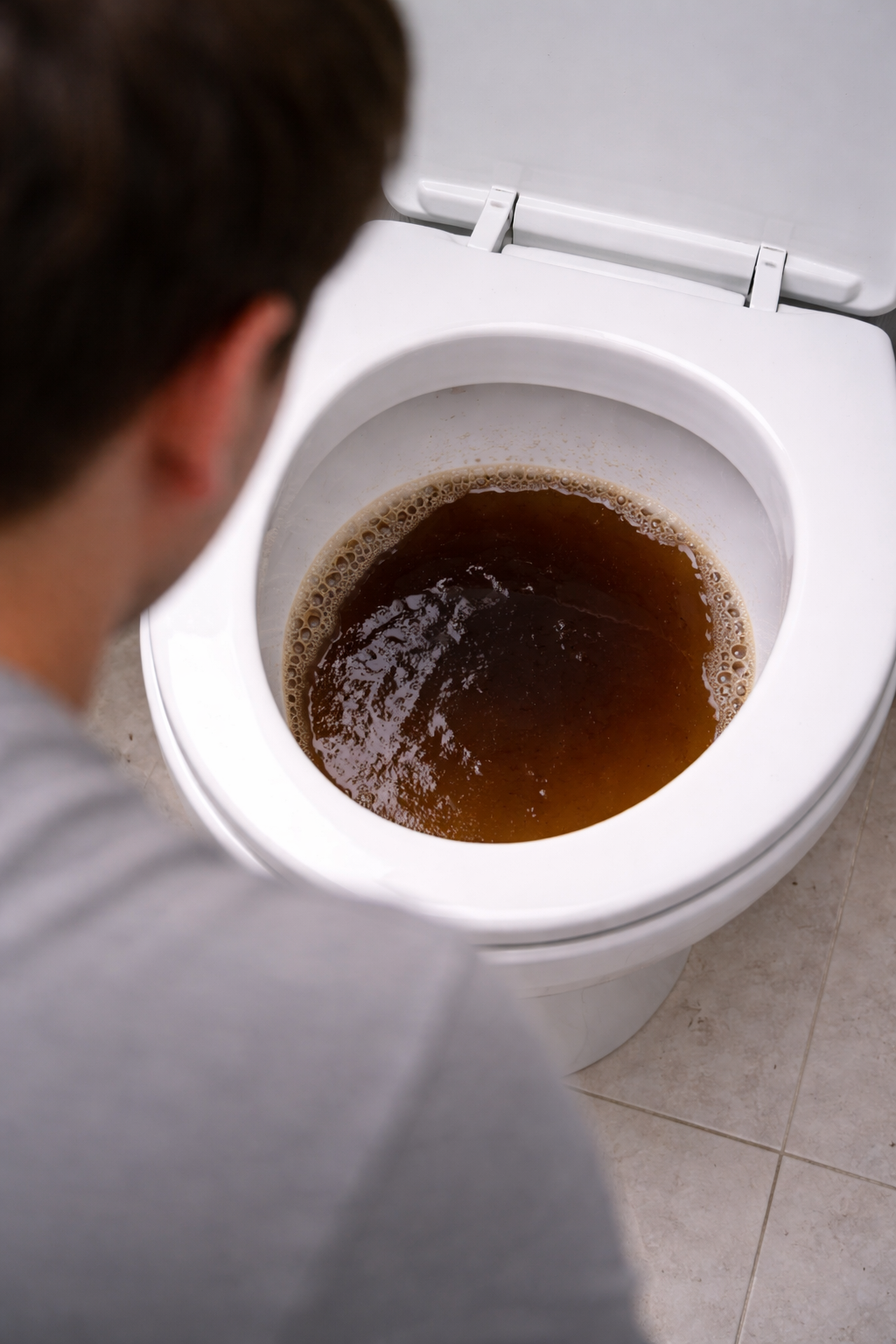
Why Red or Brown Urine Should Be Checked Right Away
Minjin Park
·
Seeing red or brown urine can be alarming. But many people try to explain it away at first. They assume it happened because of dehydration, fatigue, food, or something temporary that will go away on its own. And sometimes that is true. Certain foods, medications, and even intense exercise can affect urine color. The problem is that red or brown urine may also mean blood in the urine, and that is not something that should be ignored.
This is exactly why it needs to be checked right away. The issue is not that every case is serious. The issue is that you cannot reliably tell at home which cases are harmless and which ones need medical attention. A color change that looks minor can sometimes be the first visible sign of infection, kidney stones, kidney disease, or another condition that should be addressed sooner rather than later.
In other words, the danger is not only in the symptom itself. It is in assuming too quickly that the symptom must be harmless.
1. Red or brown urine may actually be a sign of bleeding
When people think of blood in urine, they often imagine obvious bright red bleeding. But it does not always look that way. Even a small amount of blood can change urine color dramatically. It may look pink, red, tea-colored, rust-colored, or dark brown.
That is one reason this symptom gets underestimated. A person may think, “It is brown, not red, so it probably is not blood.” But that is not a safe assumption. Blood in the urine does not always look fresh or bright. Sometimes it changes the urine into a darker shade that can easily be mistaken for concentrated urine or the effect of something you ate.
So the main point is simple: a color change is not always just a color change. It may be the body’s way of showing that blood is present somewhere in the urinary system.
2. There are too many possible causes to guess on your own
Another reason red or brown urine should be checked promptly is that the list of possible causes is very broad.
Some causes are relatively straightforward, such as:
urinary tract infection
kidney stones
irritation after strenuous exercise
certain foods or medications
But other causes can be more significant, including:
kidney inflammation
structural problems in the urinary tract
bladder or kidney disorders
chronic kidney disease
less commonly, tumors or cancer
The problem is that these very different conditions can all produce a similar-looking symptom. At home, you cannot tell the difference just by looking into the toilet bowl. One person may have a temporary and treatable infection. Another may have a kidney stone. Another may have bleeding from a deeper kidney problem. The visible symptom can look surprisingly similar in each case.
That is why self-diagnosis is risky here. The symptom is too non-specific.
3. It can matter even if there is no pain
A man appears anxious as others enter a public restroom behind him
Many people use pain as their main guide for deciding whether something is serious. If it hurts badly, they seek help. If it does not hurt, they wait. But red or brown urine does not always follow that rule.
Sometimes bleeding in the urinary tract causes pain, especially with infections or kidney stones. But in other cases, there may be little or no pain at all. That is what makes this symptom tricky. A person may feel otherwise fine and assume there is no urgent problem, even though the urine color is clearly abnormal.
This is one of the most important reasons not to ignore it. Lack of pain does not automatically mean lack of risk. In some situations, visible blood in the urine without pain can still point to a condition that deserves timely medical evaluation.
So if the urine looks red, brown, or cola-colored, “it doesn’t hurt” is not enough reason to dismiss it.
4. Early evaluation can quickly identify treatable problems
The phrase “get it checked” often makes people think immediately of worst-case scenarios. But one of the best reasons to seek prompt evaluation is actually much more practical: many common causes are easier to manage when identified early.
If the cause is a urinary tract infection, treatment can begin sooner and reduce the risk of worsening symptoms. If the cause is a kidney stone, imaging and medical evaluation can guide pain management and next steps. If the issue turns out to be food-related or medication-related, then getting checked can also bring peace of mind.
So the purpose of checking is not only to rule out serious disease. It is also to avoid unnecessary worry and to address common causes before they become bigger problems.
In that sense, early confirmation is often reassuring rather than frightening.
5. Brown urine may point to kidney-related problems
Brown urine deserves special attention because people often mistake it for simple dehydration. Dark urine can certainly happen when someone is not drinking enough fluids. But when the color is unusually brown, tea-colored, or cola-colored, it may also suggest that something more is going on.
In some kidney-related conditions, blood or blood-related pigments can change urine into a darker shade rather than bright red. This can happen in disorders involving inflammation in the kidneys, including conditions that affect the kidney’s filtering system.
That is why brown urine should not automatically be written off as “just concentrated urine.” Context matters. If the color seems unusual, keeps happening, or appears together with swelling, foamy urine, fatigue, or high blood pressure, the need for evaluation becomes even more important.
Sometimes the kidneys send subtle signals before other symptoms become obvious. Urine color can be one of the earliest clues.
6. Food and medication may explain it, but that should not be your only conclusion
Yes, it is true that certain foods and medicines can change urine color. Beets are the classic example. Some medications can also make urine look orange, red, or brown. That is real.
But the problem is that “it could be food” is not the same thing as knowing it is food. People often use that possibility to reassure themselves too quickly. They remember something they ate and stop thinking about other explanations. Sometimes they are right. Sometimes they are not.
This is especially risky when the color change keeps happening, cannot be clearly linked to a food or medication, or appears along with other symptoms like burning during urination, fever, flank pain, swelling, or repeated urgency.
So while food and medication can be part of the explanation, they should not be used as an excuse to ignore a symptom that may need medical review.
7. Associated symptoms can make the situation more urgent
Red or brown urine becomes even more important when it happens together with other warning signs.
These can include:
pain while urinating
fever
back or side pain
lower abdominal pain
difficulty passing urine
nausea or vomiting
swelling in the legs, face, or around the eyes
foamy urine
unusual fatigue
When these symptoms appear alongside abnormal urine color, the concern is no longer just about a single isolated change. It may suggest infection, obstruction, inflammation, or kidney involvement.
In other words, the body may be giving more than one warning at the same time. And when that happens, waiting becomes a much weaker strategy.
8. The cause may involve the kidneys, bladder, or urinary tract
Another reason prompt checking matters is that abnormal urine color does not tell you where the problem is coming from.
The source could be:
the kidneys
the ureters
the bladder
the urethra
That makes a big difference medically, but not visually. Blood from different parts of the urinary tract may still end up producing a similar red or brown appearance. That is why proper evaluation usually includes more than just asking what the urine looked like. It often involves urine testing, medical history, and sometimes blood tests or imaging.
Without that evaluation, people are left guessing not only about the cause, but even about the location of the problem.
9. Even one episode can matter
Some people assume that if it only happened once, it is not worth mentioning. But even a single episode of clearly red or brown urine can be important.
Of course, not every one-time episode means something serious. But visible abnormal urine color is one of those symptoms that should not be normalized too easily. If it was real blood, then the body has already given you a clear sign that something abnormal happened.
A single episode may be the beginning of a pattern. Or it may be the only outward clue before symptoms become more frequent. That is why “it only happened once” should not automatically end the conversation.
10. In children, it should not be brushed aside either
If a child has pink, red, or brown urine, that also deserves attention. Children may not describe pain or urinary symptoms clearly, so adults often have to rely on visible signs. In that situation, urine color becomes an especially important clue.
The same general principle applies: the cause may be minor, but it may also point to infection, kidney inflammation, or another urinary issue that should be assessed.
Because children cannot always explain what they feel, visible symptoms often matter even more.
What usually happens when you get it checked?
One reason people delay care is fear of complicated testing. But the first step is usually straightforward. Medical evaluation often starts with:
a discussion of symptoms and recent history
a urine test
sometimes a blood test
additional imaging or referral if needed
The goal is not to create panic. The goal is to answer a practical question: is this actually blood, and if so, where might it be coming from?
That process helps separate common causes from more serious ones and guides the next step in treatment or follow-up.
Final thoughts
Red or brown urine should be checked right away because it may be more than a harmless color change. It can be a sign of blood in the urine, and the causes range from treatable infections and stones to kidney disease and other problems that should not be missed.
The key point is not that every case is dangerous. The key point is that the symptom is too important and too non-specific to judge on your own. Color alone cannot tell you whether the cause is minor, urgent, or somewhere in between.
So if your urine suddenly looks red, brown, tea-colored, or cola-colored, do not rely only on guesswork. A symptom like that is worth confirming properly. In many cases, that leads to relief. In some cases, it leads to treatment that should not have been delayed.
And that is exactly why it is better to check early than to explain it away.
Hi, I’m the creator and editor behind ZestyHabit. I research everyday safety, first aid, and practical wellness topics using official guidance and reliable public sources, then turn that information into clear, realistic steps for daily life.
My goal is to help readers make safer, better-informed choices at home and beyond.