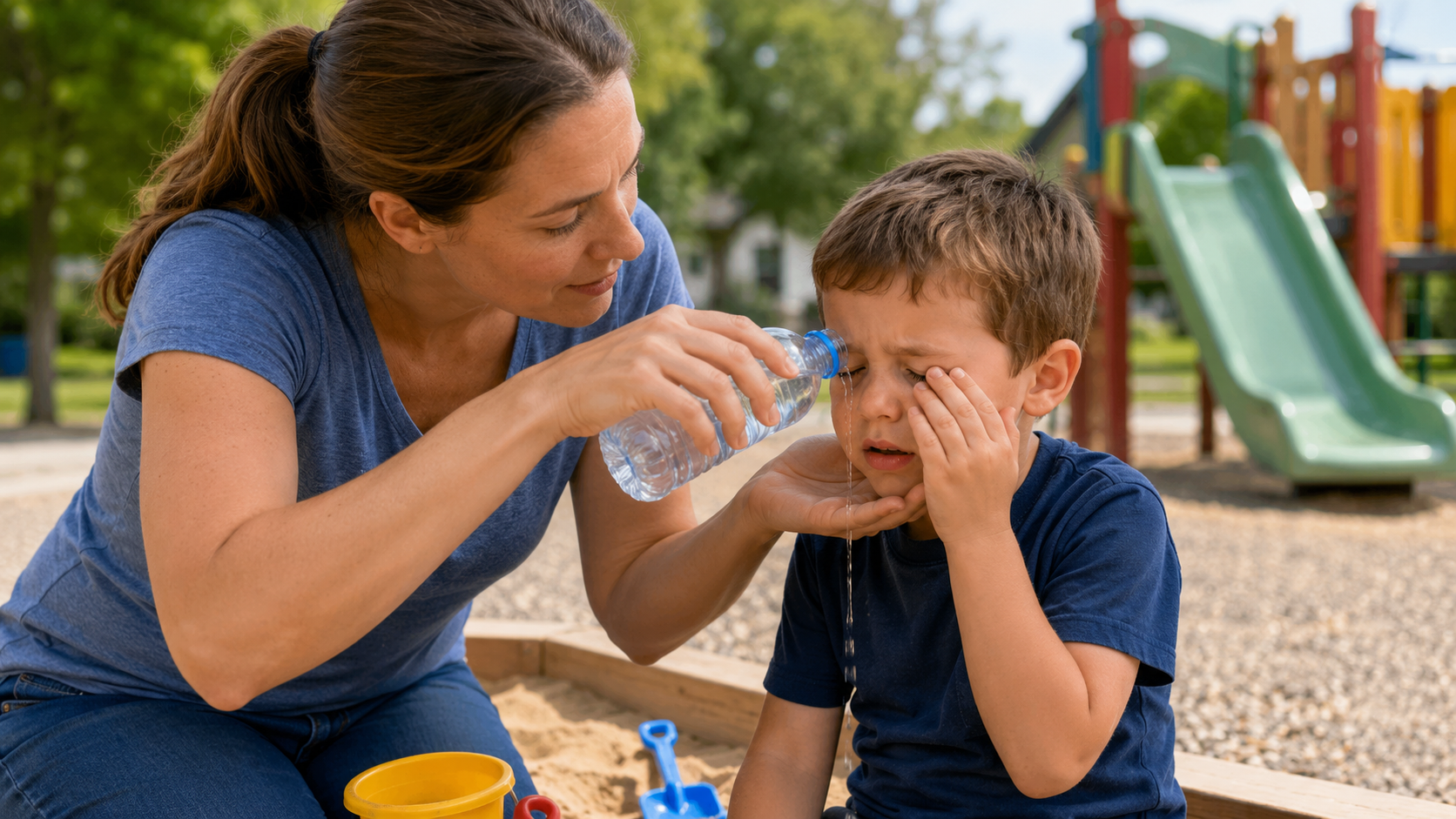
What to Do When Playground Sand or Small Gravel Gets in Your Eye
Minjin Park
·
Playground sand, dirt, or tiny stones in the eye can be painful and irritating. Learn simple first-aid steps, common mistakes to avoid, warning signs to watch for, and practical prevention tips for kids and adults.
Why a Little Sand in the Eye Can Feel Like a Big Problem
If you have ever had playground sand, dust, or a tiny pebble get into your eye, you know how quickly a normal day can become uncomfortable.
One minute a child is running across the playground, sliding down a chute, digging in the sandbox, or kicking a ball across a gravel patch. The next minute, they are crying, blinking hard, rubbing their face, and saying, “Something’s in my eye.”
Adults can run into the same problem while coaching, gardening, walking on a windy day, watching a sports game from a dusty field, or helping kids at recess.
Most small particles can be rinsed out safely with patience and clean water or saline. But the eye is delicate, and the biggest risk often comes from what people do after the sand gets in: rubbing, poking, using tissues, or trying to scrape the particle out.
A calm response matters. The goal is simple: stop rubbing, rinse gently, watch for warning signs, and know when the situation needs professional care.
What Happens When Sand or Small Gravel Gets in the Eye?
The front surface of the eye is sensitive. Even a tiny grain of sand can feel huge because it rubs against the eye or gets trapped under the eyelid.
That scratchy, gritty feeling may cause tearing, blinking, redness, and discomfort. Sometimes the particle washes out naturally with tears. Other times it stays under the eyelid and keeps irritating the eye.
Why It Feels Worse When You Blink
Blinking normally protects the eye, but when grit is trapped inside, each blink may drag the particle across the surface. That is why rubbing makes things worse.
Rubbing may push the particle deeper, scratch the eye surface, or make irritation last longer. Mayo Clinic’s first-aid guidance for eye injuries specifically advises not to rub the eye after an injury and not to touch the eye with cotton swabs, tweezers, or other tools.
First Step: Stop Rubbing Immediately
This is the most important first step, especially with children.
A child’s instinct is to rub hard because the eye feels itchy, painful, or “full.” Adults do it too. But rubbing can turn a simple piece of sand into a scratch.
Try saying something short and clear:
“Hands down. Blink gently.”
“Don’t rub. Let your tears help.”
“I know it feels bad, but rubbing can make it worse.”
If it is a child, gently hold their hands or give them something else to hold, like a water bottle, jacket, or your hand. Keeping them calm is part of the first aid.
Wash Hands Before Touching the Eye Area
Before helping someone rinse their eye, wash your hands with soap and water if you can. If you are outdoors and soap is not available, use hand sanitizer and avoid touching the eye directly.
Dirty fingers can add more irritation. Playground hands may have sand, soil, sunscreen, food residue, or germs on them.
This step sounds basic, but in the moment, people often forget it because the child is crying or the adult is uncomfortable.
Try Gentle Blinking First
If the particle is small and loose, natural tears may wash it out.
Ask the person to blink gently several times. Do not squeeze the eyelids tightly. Do not press on the eye. Just blink normally and let the tears move.
Sometimes looking down while blinking helps the particle move toward the lower lid. If tears are flowing, let them. Wiping tears from the cheek is fine, but avoid wiping across the eye itself.
Rinse the Eye With Clean Water or Saline
If blinking does not help, rinsing is usually the next simple step for loose sand, dust, or small debris.
Mayo Clinic recommends washing hands first, then trying to flush a foreign object from the eye with a gentle stream of clean, warm water. It also notes that an eyecup, clean drinking glass, or a gentle shower stream can be used to help rinse the affected eye.
How to Rinse Gently
Use clean lukewarm water or sterile saline if available.
Have the person tilt their head so the affected eye is lower than the other eye. This helps water flow away instead of washing debris into the other eye.
Pour or stream the water gently across the eye. Do not blast water directly into the eye with high pressure.
Encourage slow blinking while rinsing.
If you are helping a child, keep your voice calm. Children may resist the water at first, especially if they are scared. A gentle, steady rinse is better than a rushed one.
Practical Outdoor Options
At a playground, you may not have a perfect eyewash setup. You can still use common clean options.
A sealed bottle of drinking water can help. So can saline from a first-aid kit. At home, a sink, clean cup, or shower may work better.
Avoid using dirty water from puddles, splash pads, lakes, or playground fountains that do not look clean.
Do Not Use Tissues, Cotton Swabs, or Tweezers
This is where many people accidentally make things worse.
It is tempting to pull down the eyelid and wipe the eye with a tissue, napkin, towel corner, cotton swab, or finger. But soft materials can still scratch, leave fibers behind, or push the particle farther into the eye.
Tweezers are even riskier. They should not be used near the eye for loose sand or small gravel.
Mayo Clinic specifically advises not touching the eye with cotton swabs, tweezers, or other instruments after an eye injury.
What If the Particle Is Under the Eyelid?
Sometimes the person keeps saying, “It still feels like it’s in there,” even after rinsing. A grain of sand may be under the upper eyelid or lower lid.
For a small loose particle, more gentle rinsing may help. Looking in different directions while rinsing can sometimes move the particle out.
But avoid aggressive eyelid flipping, scraping, or digging. If the gritty feeling continues, it is safer to have an eye care professional check it.
Cleveland Clinic notes that if something went into the eye and has not come out, or if it still feels like something is there after you think it was removed, that is a sign to see a doctor.
Contact Lenses: Take Extra Care
If the person wears contact lenses, sand or grit can become trapped between the lens and the eye.
If the lens comes out easily, remove it with clean hands and rinse the eye. Do not keep wearing the lens if the eye is irritated.
Do not force a stuck lens out while the eye is painful or the person cannot keep the eye open. In that case, get professional help.
It is also wise to switch to glasses until the eye feels normal again. Mayo Clinic advises not wearing contact lenses while the eye is healing after a corneal abrasion.
Warning Signs That Need Professional Care
Most loose playground sand will rinse out. But some symptoms should not be ignored.
Get medical or eye-care help if:
The pain is severe or getting worse.
The person cannot open the eye.
Vision is blurry, changed, or reduced.
The eye keeps watering heavily after rinsing.
The gritty feeling does not go away.
There is blood, a cut, or a puncture concern.
A piece of gravel, wood, glass, or metal seems stuck.
Light feels unusually painful.
Redness or swelling gets worse.
The person was hit in the eye with force.
A small scratch on the eye surface can feel like something is still inside. It may need proper evaluation and care, especially if symptoms do not improve.
When Not to Rinse
For ordinary loose sand or dust, rinsing is usually helpful. But not every eye injury should be treated the same way.
If an object appears stuck in the eye, if there is a cut or puncture, or if something is protruding from the eye, do not try to remove it. Do not press on the eye.
The American Academy of Ophthalmology advises not to remove objects stuck in the eye and not to rub or apply pressure to the eye in serious eye injury situations.
In that situation, keep the person from touching the eye and seek urgent professional care.
Common Mistakes Parents, Teachers, and Coaches Make
Letting the Child Keep Rubbing
It can be hard to stop a crying child from rubbing their eye. But rubbing is one of the easiest ways to make irritation worse.
Give them a job: hold a water bottle, squeeze your hand, count slowly, or keep both hands on their knees while you help.
Saying “It’s Nothing” Too Quickly
A little sand may be minor, but the discomfort is real. If a child feels dismissed, they may rub more or panic.
A better response is: “I know it hurts. We’re going to rinse it gently.”
Using a Dry Napkin
A dry napkin may seem clean, but it is not meant for the eye. It can scratch, shed fibers, or push grit around.
Use rinsing instead of wiping.
Returning to Play Too Soon
If the eye is still red, watery, painful, or sensitive to light, do not send the child right back to the sandbox or field. Give the eye time to settle and keep watching symptoms.
Ignoring Windy Conditions
Windy playgrounds, dry ballfields, gravel lots, and dusty schoolyards make eye irritation more likely. If kids are throwing sand, kicking dirt, or sliding into dusty areas, the risk goes up.
Simple Prevention Tips for Playgrounds and Sports Fields
You cannot prevent every grain of sand from flying around, but you can reduce the chances.
Teach Kids Not to Throw Sand or Gravel
This sounds obvious, but young children often do not understand how serious it feels when sand gets in someone’s eye.
Use simple language:
“Sand stays low.”
“We dig with it, but we don’t throw it.”
“Rocks stay on the ground.”
Repeat it before play starts, not only after something happens.
Use Sunglasses or Sports Glasses When Needed
For windy days, dusty fields, or children who are extra sensitive, sunglasses or sports glasses can help block blowing particles.
This is especially useful during baseball, soccer, track practice, hiking, beach trips, and playground visits in dry weather.
Keep a Small Eye Rinse Item in a First-Aid Kit
A family, school, or coach’s first-aid kit can include sterile saline, clean gauze for wiping tears from cheeks, hand sanitizer, and a small bottle of clean water.
You do not need a complicated setup. Having one clean rinsing option nearby can make the situation easier.
Watch Playground Surfaces
Loose pea gravel, dusty sand, dry dirt, and mulch can all get kicked into the air. Slides, swings, and running games can increase flying debris.
If one area is especially dusty or windy, move play to another part of the playground when possible.
What to Do After the Sand Comes Out
Once the particle is gone, the eye may still feel irritated for a while. That does not always mean something is still inside. The surface may simply be sensitive from the rubbing or grit.
Have the person rest the eye. Avoid rubbing. Avoid contact lenses. Keep hands clean.
If symptoms fade and vision is normal, the situation may be over. But if pain, redness, watering, or light sensitivity continues, it is better to have the eye checked.
A calm follow-up matters because children may not describe eye symptoms clearly. They may say “it feels weird,” “it’s blurry,” or “it still hurts” without being able to explain more.
A Practical Playground Response Plan
Here is a simple plan to remember:
Stop rubbing.
Wash or sanitize hands.
Blink gently.
Rinse with clean water or saline.
Do not use tissues, swabs, tweezers, or fingers.
Remove contact lenses only if easy and safe.
Watch for pain, vision changes, stuck objects, or symptoms that do not improve.
Get professional care if anything seems serious or does not settle.
This plan works for playground sand, dust from a ballfield, tiny bits of dirt, and many everyday loose particles.
Conclusion: Stay Calm, Rinse Gently, and Do Not Rub
Sand or small gravel in the eye can feel surprisingly painful, especially for kids. The good news is that many small particles can be handled with calm, simple steps.
The most important habit is to stop rubbing right away. Then wash your hands, let tears and gentle blinking help, and rinse with clean water or saline if needed.
Avoid the common mistakes: wiping the eye with a tissue, poking with cotton swabs, using tweezers, or sending a child back to play while the eye is still clearly irritated.
And remember the warning signs. If pain is strong, vision changes, the eye will not open, something seems stuck, or symptoms do not improve, have the eye checked by a professional.
Playgrounds, sports fields, and dusty outdoor spaces are part of normal life. A little preparation and a calm response can keep a small eye irritation from becoming a bigger problem.
Hi, I’m the creator and editor behind ZestyHabit. I research everyday safety, first aid, and practical wellness topics using official guidance and reliable public sources, then turn that information into clear, realistic steps for daily life.
My goal is to help readers make safer, better-informed choices at home and beyond.