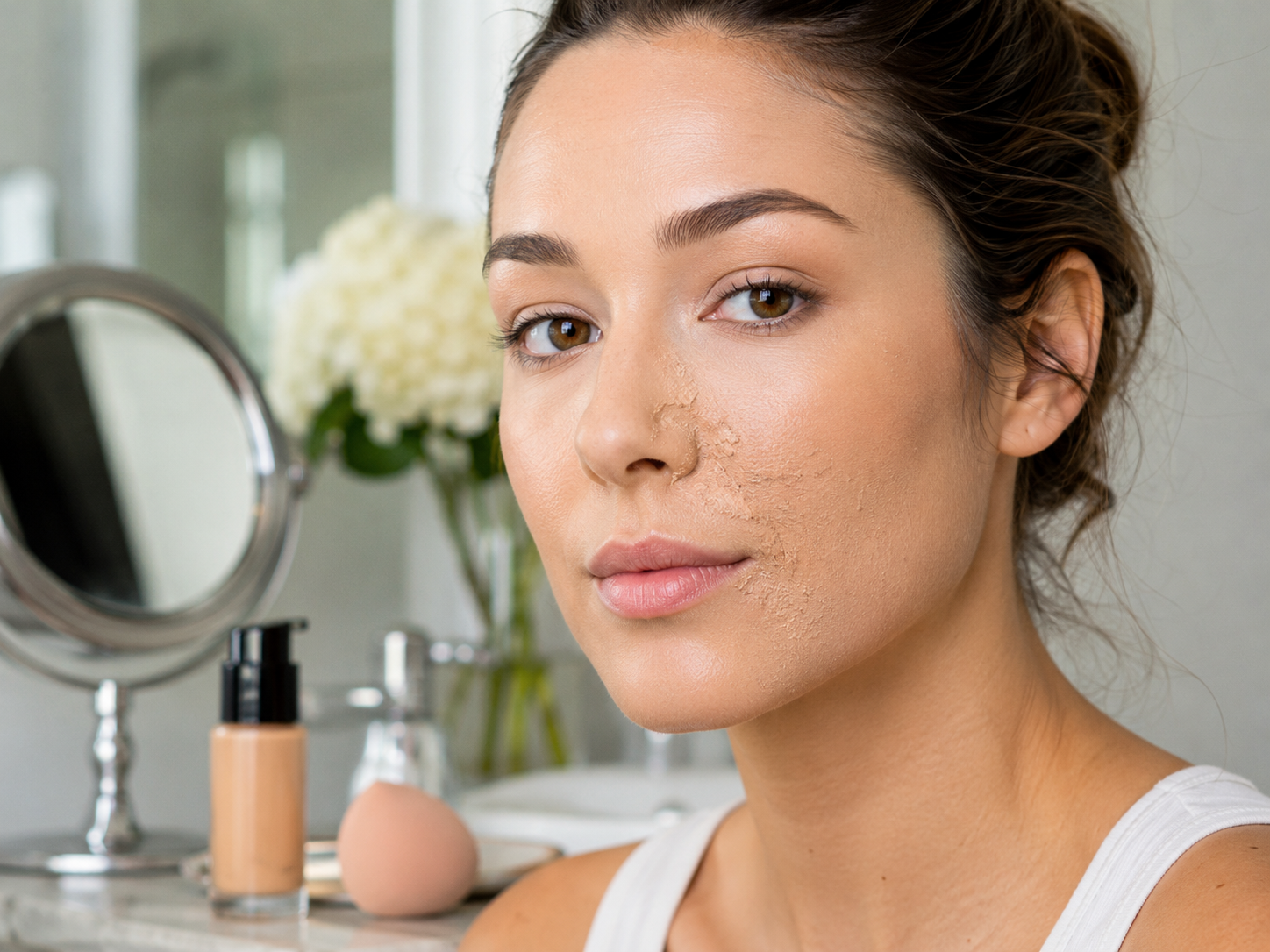
Foundation Clumping: How to Keep Your Makeup Looking Clean and Polished
Minjin Park
·
Foundation clumping is one of those makeup problems that can ruin your mood faster than it should.
You start with good intentions. Skincare is done. Foundation goes on. Maybe you’re thinking, “Today, we’re going for clean, smooth, effortless.” Then five minutes later, the foundation starts gathering around your nose, separating on your cheeks, sticking to dry patches, or sitting in little dots around your pores.
Suddenly the whole face looks heavier than you planned.
And the annoying part is that clumped foundation does not always mean you used a bad product. Sometimes the foundation is fine. Sometimes the problem is skincare underneath, dry skin, too much product, the wrong primer, poor blending, or simply not giving layers enough time to settle.
Makeup is a little dramatic like that.
The good news is that foundation clumping is usually fixable. You don’t need a professional kit or twenty new products. You mostly need smoother skin prep, lighter layers, and a better match between your skincare and makeup.
Let’s talk about how foundation clumps, why it happens, and how to keep your base looking clean instead of cakey.
Foundation clumping can show up in a few different ways.
Sometimes it looks like tiny balls or flakes on the skin. Sometimes it gathers in certain areas, like around the nose, mouth, chin, or between the eyebrows. It may look patchy, thick, cracked, dry, or uneven.
You might notice:
foundation sticking to dry skin
makeup separating into little patches
product collecting around pores
cakey texture on the cheeks
clumps around the nose
foundation peeling or rolling off
powder making the base look rough
makeup looking heavy even when you didn’t apply much
People often describe this as “cakey makeup,” but clumping is a little more specific. It’s when the product doesn’t spread evenly or sit smoothly. Instead, it gathers, rolls, or attaches to certain parts of the skin.
And once you notice it, it’s hard not to stare at it.
Especially under car mirrors. Car mirrors are cruel.
Skin Prep Is Usually the First Problem
Most foundation problems begin before the foundation even touches your face.
If your skin is dry, flaky, oily, irritated, or covered in too many skincare layers, foundation has a harder time sitting smoothly. Think of foundation like paint. If the surface underneath is rough, uneven, or slippery, the finish will not look clean.
This doesn’t mean your skin has to be perfect. Nobody’s skin is a glass sheet.
But it does mean skin prep matters.
A good base starts with skin that is clean, hydrated, and not overloaded with product. If you apply foundation over dry flakes, it will cling. If you apply it over a greasy layer of moisturizer or sunscreen that hasn’t settled, it may slide or separate. If you layer too many serums, creams, primers, and oils, the foundation may pill.
Makeup looks best when the skin underneath feels balanced.
Not tight. Not greasy. Not sticky. Just comfortable.
That’s the goal.
Dry Skin Makes Foundation Clump Faster
Dry skin and foundation are not always best friends.
When the skin surface is dry or flaky, foundation grabs onto those uneven areas. Instead of creating a smooth layer, it highlights texture. The product may collect around flakes and make them look even more obvious.
This is why foundation can look worse after applying it, even though you were trying to even everything out.
Dry areas that commonly cause clumping include:
around the nose
between the eyebrows
around the mouth
chin
cheeks
under the eyes
The fix is not always more foundation. Usually, it’s better hydration before makeup.
Use a gentle moisturizer and give it a little time to absorb. If you have very flaky areas, avoid rubbing foundation aggressively over them. That can lift more skin and make the texture worse. Instead, press product lightly over the area with a damp sponge or fingertips.
Also, don’t exfoliate harshly right before makeup. It sounds logical to scrub flakes away, but if you irritate your skin, foundation may sit even worse.
Softening dry skin usually works better than attacking it.
Too Much Skincare Can Cause Pilling
Pilling is when products roll up into little balls on your skin. It can happen with skincare, sunscreen, primer, foundation, or a mix of everything.
It feels incredibly unfair.
You did your skincare. You tried to be responsible. Then your face starts shedding tiny product crumbs like an eraser.
Pilling often happens when layers don’t absorb well or when formulas don’t work together. Too much product can also sit on top of the skin instead of sinking in. Then, when you rub foundation over it, the layers roll up.
Common causes include:
too much serum
thick moisturizer under foundation
silicone-heavy products layered together
sunscreen that hasn’t set
applying makeup too soon after skincare
rubbing instead of pressing
using products that don’t mix well
To prevent this, use thinner layers. Let each step settle. You don’t need three serums, a cream, sunscreen, primer, and foundation all fighting for space on your face.
On makeup days, simple skincare often works better.
Cleanse. Moisturize. Sunscreen. Maybe primer if needed.
That’s enough for many people.
Your foundation does not need to sit on top of a skincare lasagna.
The Wrong Primer Can Make Foundation Clump
Primer can help makeup last longer and look smoother, but the wrong primer can make things worse.
The biggest issue is formula mismatch.
Some primers are silicone-based. Some foundations are water-based. Some are oil-based. Some are long-wear and set quickly. If the textures don’t work well together, your foundation may separate, pill, or clump.
You don’t always need to obsess over ingredients, but it helps to notice patterns. If a foundation looks fine without primer but clumps when you use primer, the primer may be the problem.
Also, using too much primer can create a slippery layer. Foundation may sit on top instead of blending into the skin.
A small amount is usually enough. Focus primer only where you need it: pores, oily areas, texture, or places where makeup fades quickly.
Primer should support foundation.
It should not become a whole second face underneath it.
Foundation Formula Matters
Sometimes the foundation simply does not match your skin type.
A matte, long-wear foundation can look beautiful on oily skin but cling badly to dry patches. A dewy foundation can look fresh on dry skin but separate quickly on oily areas. A thick full-coverage foundation can look smooth in photos but heavy in real life if applied too much.
If your foundation clumps no matter how carefully you prep, the formula may not be right for you.
For dry skin, lighter hydrating formulas may sit better. Skin tints, serum foundations, moisturizing foundations, or satin finishes often look more natural.
For oily skin, long-wear or soft-matte formulas may help, but they still need proper skin prep. Oily skin can be dehydrated too, so skipping moisturizer completely may backfire.
For combination skin, you may need different strategies on different areas. A thin layer of moisturizer on oily zones, more hydration on dry cheeks, and powder only where needed.
Your skin does not have to fit one category perfectly.
Most faces are complicated little maps.
Using Too Much Foundation Is a Common Mistake
More foundation does not always mean better coverage.
In fact, too much foundation is one of the fastest ways to get clumping, creasing, and cakiness. When there is more product than the skin can hold smoothly, it gathers in lines, pores, and textured areas.
A cleaner approach is to apply a thin layer first. Blend it well. Then add coverage only where you need it.
Most people do not need the same amount of foundation on every part of the face. The center of the face may need more evening out. The forehead or outer cheeks may need less. Some areas may only need concealer.
A thin base often looks more polished than a thick one.
It can feel strange at first, especially if you’re used to full coverage. But real skin showing through a little often looks cleaner than heavy foundation trying to hide everything.
The goal is not to erase your face.
It’s to make it look balanced.
Blending Method Makes a Big Difference
How you apply foundation can change the whole finish.
A brush can give coverage quickly, but if your skin is dry or textured, it may emphasize flakes if you swipe too much. A damp sponge can press foundation into the skin more softly, but it may sheer out coverage. Fingers can warm up the product and help it melt in, but they may not always blend evenly.
There is no one perfect tool.
For clumping, pressing usually works better than rubbing. Rubbing can disturb skincare underneath and lift dry skin. Pressing helps the product sit more evenly.
If foundation is clumping around the nose or mouth, try using less product there and blend with gentle tapping motions. Those areas move a lot and often have texture, so thick foundation tends to gather.
Also, blend in thin sections. Don’t dot foundation all over your face and then take five minutes to blend. Some formulas set quickly, and by the time you get to one side, it may already be drying down.
Work in small areas.
Your foundation will behave better when it’s not rushed into a panic.
Powder Can Either Save or Ruin the Base
Powder is useful, but it can also make clumping worse.
If your foundation is still wet or sitting unevenly, powder can lock in that uneven texture. If your skin is dry, too much powder can make it look rough, dusty, or cracked. If you apply powder with a heavy hand, it may collect around pores and lines.
The trick is to powder strategically.
You don’t need powder everywhere unless your skin truly needs it. Focus on areas that get oily or where makeup moves: T-zone, sides of the nose, under the eyes, around the mouth, or chin.
Use a light layer. Tap off excess. Press instead of dragging.
If your foundation already looks dry, adding powder usually won’t fix it. It may make it more obvious. In that case, a hydrating mist or a tiny bit of moisturizer pressed onto the area may help soften the look.
Powder is not the enemy.
Too much powder is the enemy.
Foundation Clumps Around the Nose for a Reason
The nose is probably the most difficult area for foundation.
It has pores, oil, texture, curves, and movement. It also gets touched often. Glasses sit there. Tissues rub there. Sunscreen may collect around the edges. Dry skin can form near the nostrils. It’s a lot.
Foundation often clumps around the nose because too much product is applied there. People try to cover redness, so they add more foundation. Then the product gathers in the creases and pores.
A better method is to apply a very thin layer of foundation first. Then use concealer only where redness remains. Press it in gently. Set lightly if needed.
If the sides of your nose are dry, moisturize well before makeup. If they are oily, use a tiny amount of mattifying primer or powder, but don’t overdo it.
The nose requires patience.
Unfortunately, it is also in the middle of the face, demanding attention like a main character.
Under-Eye Clumping Is Usually About Texture and Product Amount
Under-eye makeup clumps easily because the skin there is thin and moves constantly.
If you apply too much foundation or concealer under the eyes, it can settle into fine lines. If the area is dry, it can look crepey. If you powder too much, it can look heavy.
For a cleaner under-eye, use less product than you think. Apply concealer only where you need brightness or coverage, usually near the inner corner and shadowed areas. Blend gently with a sponge or fingertip.
Let it settle for a moment, then tap out any creases before applying powder. Use very little powder, especially if your under-eyes are dry.
A hydrated under-eye usually looks better than a heavily concealed one.
This is annoying if you have dark circles, I know. But thick product under the eyes often draws more attention to texture.
Sometimes less really does look fresher.
Makeup Separating Is Not Always the Same as Clumping
Foundation separating means the product breaks apart on the skin. It may look patchy, oily, or cracked. Clumping is more about product gathering or balling up. But they often happen together.
Separation can happen when the skin is too oily, too dry, or when the foundation does not mix well with the products underneath. It can also happen if you touch your face often, sweat, or layer incompatible formulas.
If your foundation separates during the day, look at where it happens.
If it separates on the nose and forehead, oil may be the issue. If it separates on cheeks and around the mouth, dryness or friction may be the issue. If it separates everywhere, product mismatch may be the issue.
This helps you fix the actual problem instead of blaming the whole routine.
Makeup troubleshooting is basically detective work, but with more powder.
How to Fix Clumped Foundation Without Starting Over
Sometimes foundation clumps after you’ve already finished your makeup. Starting over is not always an option, especially if you’re already dressed and late.
Here’s what can help.
First, don’t keep adding more foundation. That usually makes it worse.
For dry clumps, take a clean fingertip or damp sponge and gently press over the area. You can add the tiniest amount of moisturizer to your fingertip and tap it over the rough patch. Not rub. Tap.
For oily separation, blot first with tissue or blotting paper. Then lightly press the area with a sponge. Add a small amount of powder only if needed.
For pilling, gently brush away the little product balls with a clean spoolie, fluffy brush, or dry sponge. Then tap the area smooth. Avoid rubbing more product over it.
For nose creasing, use a sponge to remove excess product from the creases, then apply a tiny amount of concealer only where needed.
The goal is to remove or redistribute product, not pile on more.
When foundation clumps, less is usually the rescue.
A Clean Base Routine That Actually Works
A polished foundation look starts before makeup.
Here’s a simple routine:
Cleanse gently. Apply a light moisturizer. Let it settle. Apply sunscreen if it’s daytime. Let that settle too. Use primer only where needed. Apply foundation in thin layers. Add concealer only to areas that need extra coverage. Set lightly with powder where necessary.
This routine is not exciting, but it works because it avoids overload.
The waiting time matters. You don’t need to sit around for twenty minutes, but giving skincare a short moment to absorb can prevent slipping, pilling, and clumping.
If you’re in a rush, use fewer layers rather than stacking everything quickly.
Fast makeup with too many products is how clumping starts.
Match Your Skincare to Your Makeup Day
Your nighttime skincare can be rich and active. Your makeup-day skincare should be practical.
If you are wearing foundation, avoid heavy oils, thick sleeping creams, or sticky serums right before makeup unless you know they layer well. Save those for nighttime.
In the morning, choose products that absorb cleanly. Lightweight moisturizer. Smooth sunscreen. Primer only if it helps.
If you use exfoliating acids or retinoids, be careful the night before a big makeup day. If your skin peels the next morning, foundation may cling. Sometimes it’s better to focus on hydration before an event rather than trying to “resurface” your skin at the last minute.
This is a lesson many people learn the hard way.
The night before an important day is not the time to test a peeling product.
Your skin deserves peace before foundation.
Don’t Ignore Facial Hair and Texture
Tiny facial hair and natural texture can make foundation look less smooth.
This does not mean you need to remove facial hair. Plenty of people wear foundation beautifully with peach fuzz. But if you notice foundation collecting around fine hairs, application method matters.
Use less product and blend in the direction of hair growth. Press with a sponge instead of buffing aggressively. Heavy powder can also cling to facial hair, so use it lightly.
If you choose to dermaplane or remove facial hair, be careful. Do not do it right before a big makeup day if your skin is sensitive. Hair removal can cause irritation, bumps, or redness, which makes foundation harder to apply.
Smooth skin is nice.
Angry freshly scraped skin under foundation is not.
Seasonal Changes Can Affect Foundation
A foundation that looked perfect in spring may clump in winter. A base that stayed smooth in dry weather may separate in humid summer.
Skin changes with weather.
Cold air and heating can make skin dry and flaky. Summer heat can increase sweat and oil. Air conditioning can dehydrate the skin. Humidity can make foundation slide around. Your skincare and foundation may need small adjustments depending on the season.
In winter, you may need more moisturizer and a more flexible foundation. In summer, you may need lighter layers and strategic powder. In dry indoor air, hydration matters more. In humid weather, long-wear formulas may work better.
Your makeup routine does not have to be the same all year.
Skin is not consistent enough for that. Very inconvenient, but true.
Tools Need Cleaning Too
Dirty makeup tools can make foundation apply unevenly.
Brushes and sponges collect old foundation, oil, skincare, dust, and bacteria. When you use them again, they can make makeup look patchy or textured. A dirty sponge may also absorb product strangely and press old residue back onto your skin.
Clean tools make a cleaner base.
You don’t need to deep-clean every brush after every use, but foundation brushes and sponges should be washed regularly. Sponges especially need frequent cleaning because they stay damp and hold product.
If your foundation suddenly starts applying badly, check your tool before blaming the product.
Sometimes the problem is not your skin.
Sometimes your sponge is simply disgusting.
Respectfully.
When Foundation Clumping Is Really a Skin Barrier Issue
If every foundation clumps, every product stings, and your skin feels tight or rough no matter what you do, the issue may be your skin barrier.
A damaged barrier can make makeup sit badly because the surface is irritated, dry, and uneven. In that case, more primer or more powder won’t solve it.
You may need a few days of gentle skincare:
No scrubs. No strong acids. No new retinoids. No harsh cleansers. No picking.
Use a gentle cleanser, moisturizer, and sunscreen. Let your skin calm down before trying to force a flawless base.
Makeup can cover discoloration, but it struggles to cover irritated texture.
Healthy skin prep is the real primer.
So, How Do You Keep Foundation From Clumping?
Foundation clumping usually happens because of dryness, too much product, poor layering, formula mismatch, heavy powder, or skin texture that hasn’t been prepped gently.
To keep your base clean and polished, focus on the basics:
Hydrate dry areas before makeup. Use thin skincare layers. Let sunscreen and moisturizer settle. Choose a foundation that matches your skin type. Apply less foundation than you think. Build coverage only where needed. Press instead of rubbing when blending. Powder lightly and only where necessary. Clean your brushes and sponges. Don’t over-exfoliate right before makeup.
A smooth foundation look is not about hiding every pore or making your face look airbrushed in real life. Real skin has texture. It moves. It gets oily. It gets dry. It has little moods.
The goal is not perfection.
The goal is a base that looks fresh, even, and comfortable.
And most of the time, that comes from doing less, but doing it better.
Hi, I’m the creator and editor behind ZestyHabit. I research everyday safety, first aid, and practical wellness topics using official guidance and reliable public sources, then turn that information into clear, realistic steps for daily life.
My goal is to help readers make safer, better-informed choices at home and beyond.