Stair Climbing Precautions: How to Protect Your Knees
Minjin Park
·
Stair climbing can strengthen your legs and boost your heart rate, but poor form may stress your knees. Learn practical stair climbing precautions for safer workouts.
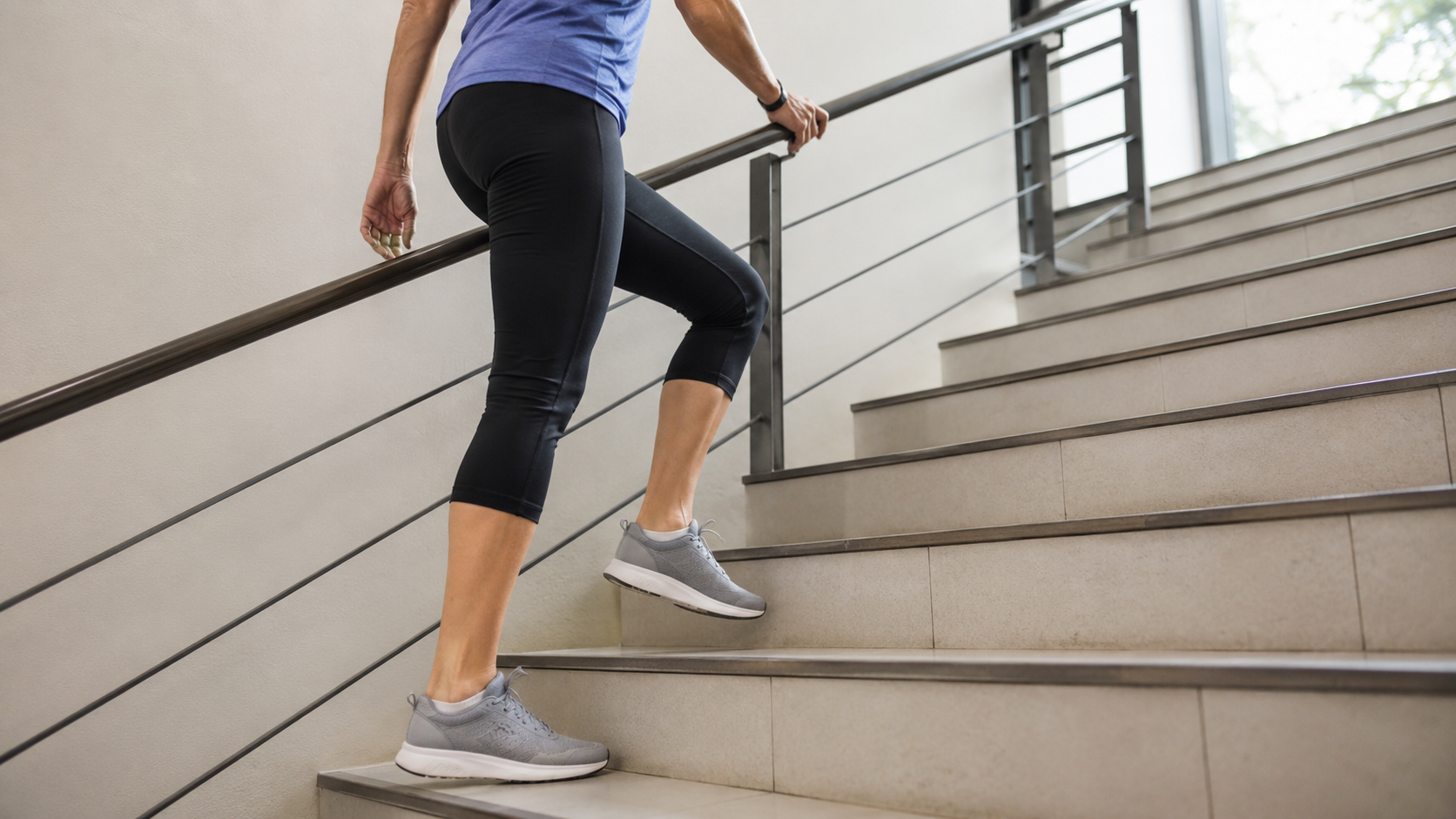
Stair climbing looks simple. You step up, step down, repeat, and somehow your heart rate rises faster than expected. It is one of those exercises that feels ordinary because stairs are everywhere, yet it can be surprisingly intense on the legs, lungs, and joints.
For many people, stair climbing is a convenient way to add movement without needing a gym. You can use stairs at home, in an apartment building, at work, in a park, or on a stair machine. It can help build lower-body strength, improve cardiovascular fitness, and make everyday movement feel easier.
But there is one area that often gets attention for the wrong reason: the knees.
If your knees feel sore, achy, tight, or unstable after climbing stairs, it does not always mean stair climbing is “bad.” More often, it means your body may need better pacing, better technique, stronger support muscles, or more recovery. Stairs are not dangerous by default, but they do ask a lot from your knees, especially if you rush, lean forward too much, skip warm-ups, or suddenly increase the volume.
Here is how to climb stairs more safely and protect your knees while still getting the benefits.
Your knees work hard during stair climbing because they help control your body weight while your legs push you upward. Going up stairs mainly challenges your quadriceps, glutes, calves, and hip muscles. Going down stairs can be even more demanding because your muscles have to slow your body down with each step.
That lowering action is one reason some people feel knee discomfort more when descending than climbing. Your knee joint is not just moving; it is absorbing and controlling force.
The stress can become stronger when:
You climb too many flights too soon
You land heavily on each step
Your knees collapse inward
Your heels lift too much and your calves fatigue
Your hips and glutes are not helping enough
You use stairs as a hard workout without warming up
You already have knee irritation or poor recovery
Stair climbing is not only a knee exercise. It is a whole lower-body movement. When your hips, ankles, calves, and core do their part, your knees usually feel better. When they do not, the knees often become the place where the strain shows up.
Start With a Gentle Warm-Up
It can be tempting to jump straight onto the stairs, especially if you are short on time. But cold muscles and stiff joints do not handle repeated stepping as well as warm, prepared ones.
Before stair climbing, spend 5 to 10 minutes easing your body into movement. This does not need to be complicated. A short walk, gentle marching in place, ankle circles, leg swings, or a few slow bodyweight squats can help.
The goal is not to tire yourself out before the workout. The goal is to wake up your joints, increase circulation, and make your first few flights feel smoother.
A simple warm-up could look like this:
Walk on flat ground for 3 minutes. Then do 10 gentle calf raises, 10 slow knee bends, and 10 leg swings on each side. After that, begin your stair climbing at an easy pace for the first few minutes.
Your knees often appreciate a slower beginning.
Use the Whole Foot, Not Just the Toes
One common mistake during stair climbing is stepping mostly with the front of the foot. This can make the calves work harder and may increase tension around the knees, especially during longer sessions.
Try to place most of your foot on the step when possible. Your heel does not always need to press heavily into the stair, but your foot should feel stable. Pushing through the midfoot and heel can help bring the glutes and hamstrings into the movement instead of forcing the knees and calves to do everything.
If the steps are narrow and your full foot does not fit, slow down and focus on control. Avoid bouncing on your toes unless you are intentionally doing a short, advanced drill and your body is ready for it.
For everyday stair workouts, stable foot placement is usually better than speed.
Keep Your Knees Aligned With Your Toes
Your knees should generally track in the same direction as your toes. They do not need to be perfectly rigid, but they should not repeatedly cave inward as you step up.
When the knee collapses inward, it may place extra strain on the knee joint and surrounding tissues. This often happens when the hips are tired or the glutes are not engaging well.
As you climb, glance down occasionally and notice your leg position. When your foot lands on the step, your knee should point roughly toward your second or third toe. Think of your thigh, knee, and foot moving as one team.
A helpful cue is: “Knee follows toes.”
If you notice your knees drifting inward, slow down. Shorten the workout. You may also benefit from strengthening your glutes and hips with exercises like side steps, clamshells, bridges, and controlled step-ups.
Avoid Leaning Too Far Forward
A slight forward lean is natural when climbing stairs. You are moving upward, so your torso will not stay perfectly vertical. But folding too much at the waist can shift your body mechanics and make the movement feel heavier.
Try to keep your chest lifted, shoulders relaxed, and core lightly engaged. Your body can lean forward a little from the ankles, but avoid hunching over or looking down the entire time.
If you are using a stair machine, do not dump your body weight onto the handrails. Lightly holding the rails for balance is fine, especially if you are new or tired. But if your arms are carrying half the workout, your posture and leg mechanics may suffer.
On real stairs, use the railing when needed, especially going down. Safety matters more than looking athletic.
Do Not Skip the Downstairs Precaution
Many people focus on climbing up, but coming down can be where the knees complain the most. Descending stairs requires control. Each step down asks your quadriceps and knee joint to manage your body weight as gravity pulls you lower.
If your knees are sensitive, take descending seriously.
Step down slowly. Do not rush, hop, or let your foot slap onto the step. Keep your knee aligned with your toes. Use the railing if needed. If you are doing stair repeats for exercise, consider walking down more slowly than you go up.
For some people, especially beginners or those with knee discomfort, it may be better to climb up the stairs and take an elevator down when possible. That might sound like cheating, but it can be a smart way to build fitness while reducing repeated downhill stress.
You can still get a solid workout without forcing your knees through more than they are ready for.
Increase Volume Gradually
Stair climbing can feel deceptively easy at first. You may think, “It is just stairs,” and suddenly do 20 minutes on the first day. Then the next morning your knees, calves, or thighs feel wrecked.
That does not mean you failed. It means the workload was probably too much too soon.
Start smaller than you think you need to. If you are new to stair climbing, begin with 5 to 10 minutes at a comfortable pace, or a few short rounds with rest between them. See how your knees feel later that day and the next day.
If everything feels fine, gradually add time, flights, or intensity. Avoid increasing everything at once. Do not add speed, duration, and extra sessions all in the same week.
A gentle progression may look like this:
Start with two or three short stair sessions per week. Keep each session easy to moderate. After one or two weeks, add a few extra minutes or an extra flight. Let your knees adjust before making the workout harder.
Your body usually adapts better to stair climbing when the increase is steady, not sudden.
Pay Attention to Calf Fatigue
Stair climbing can quietly exhaust your calves. When your calves fatigue, your foot and ankle control may change. You may start bouncing, landing harder, or pushing off awkwardly. That can affect how your knees feel.
If your calves start burning intensely, slow down or take a break. Stretching your calves after the workout may feel good, but do not rely on stretching alone. Calf strength and endurance matter too.
Gentle calf raises, ankle mobility work, and flat-ground walking can help support your stair climbing over time.
Also, check your shoes. Thin, unsupportive, or slippery shoes may make stair climbing harder on your feet, calves, and knees. You do not need fancy shoes, but you do want a stable pair with decent grip.
Strengthen the Muscles Around the Knees
Protecting your knees is not only about what you do on the stairs. It is also about what your muscles can handle.
Strong quadriceps help support knee movement. Strong glutes and hips help keep your knees aligned. Strong calves and ankles help control each step. A stable core helps your posture stay steady.
If step-ups bother your knees, use a lower step. If squats feel uncomfortable, reduce the depth. If lunges feel too intense, skip them for now. Strength training should build confidence, not create more pain.
Watch Your Speed
Speed can turn stair climbing from a controlled workout into a joint-pounding session. Fast stair climbing may be fine for trained athletes, but it is not necessary for most people trying to improve fitness or stay active.
A moderate pace often gives plenty of benefit while allowing better control. You should be able to place your feet carefully, keep your knees aligned, and breathe steadily.
If you are gasping, stumbling, gripping the railing tightly, or losing form, slow down. Your knees do not care how impressive the pace looks. They care about repeated force and control.
Intervals can be useful, but they should be realistic. For example, climb at a steady pace for one minute, then slow down or rest for one minute. That is often safer than sprinting up stairs until your legs feel shaky.
Know the Difference Between Effort and Pain
Stair climbing should feel challenging. Your thighs may burn. Your breathing may get heavier. Your calves may feel worked. That kind of effort is normal.
Sharp knee pain is different. So is pain that changes your walking, makes you feel unstable, or gets worse as you continue. Swelling, locking, catching, or pain that lingers after exercise should not be ignored.
A useful rule: muscle fatigue is usually okay; joint pain deserves attention.
If you feel mild discomfort, slow down and check your form. If the discomfort continues, stop the session. If knee pain keeps returning, it may be worth speaking with a healthcare professional or physical therapist, especially if you have a history of injury.
Pushing through knee pain is rarely the heroic choice. It often just makes recovery longer.
Be Careful With Extra Weight
Carrying a backpack, groceries, or weighted vest while climbing stairs increases the load on your knees. This does not mean you can never do it, but it should be treated as a progression.
If you are already struggling with knee discomfort, avoid adding extra weight until your form, strength, and recovery are solid. Even a small load can make stair climbing feel much harder.
For fitness, master bodyweight stair climbing first. Then, if you want more challenge, increase slowly.
For daily life, carry items evenly when possible. Avoid rushing up or down stairs with heavy bags. Use the railing when your hands are free. If you are carrying something awkward, take smaller steps and move carefully.
Choose the Right Stair Height
Not all stairs feel the same. Higher steps require more knee bend and more effort from the hips and thighs. Lower steps are usually easier to control.
If you are using stairs for exercise, choose a staircase that feels manageable. Very steep stairs may not be the best choice if your knees are sensitive or if you are just starting.
On a stair machine, avoid setting the speed so high that you can barely keep up. The machine should match your body, not force your body into sloppy movement.
If your gym has different machines, try a lower-intensity setting first. A slower stair machine session with good posture is often better than a dramatic session where your knees cave inward and your hands cling to the rails.
Give Your Knees Recovery Time
Stair climbing uses repeated knee bending under load. Even if your workout is short, your joints and muscles still need recovery.
Avoid doing intense stair workouts every day, especially as a beginner. Mix in lower-impact activities like walking, cycling, swimming, or mobility work. These can help you stay active without constantly loading the knees in the same pattern.
Recovery also includes sleep, hydration, and enough food. If you are under-fueled and tired, your form may break down more easily.
You can also pay attention to how your knees feel the day after stair climbing. If they feel fine, your plan may be reasonable. If they feel irritated every time, reduce the volume or intensity.
Your knees are giving feedback. Use it.
A Knee-Friendly Stair Climbing Routine for Beginners
Here is a simple routine if you want to start carefully.
Begin with 5 minutes of easy walking on flat ground. Then climb stairs slowly for 1 minute. Rest or walk on flat ground for 1 minute. Repeat this 4 to 6 times. End with easy walking and gentle calf stretching.
Keep the pace comfortable. Focus on foot placement, knee alignment, and controlled breathing. Do not race.
After the workout, notice how your knees feel. Check again later and the next morning. If you feel only normal muscle soreness, you can repeat the routine another day. If your knees ache or feel irritated, reduce the number of rounds or take more rest before trying again.
This kind of routine may look simple, but simple is often what keeps people consistent.
Common Mistakes to Avoid
One mistake is using stairs only when you are already exhausted. If you add a hard stair session after an intense leg workout, your knees may not have enough support from tired muscles.
Another mistake is ignoring the descent. Running downstairs, skipping steps, or landing heavily can bother the knees quickly.
A third mistake is chasing sweat instead of form. A sweaty workout is not always a better workout. Stair climbing with clean, controlled movement is more useful than a chaotic session that leaves your knees angry.
Also, avoid comparing yourself to others. Some people can run stadium stairs without a problem. Others need slow, careful progress. Your knees, fitness level, injury history, and body mechanics are your own.
Final Thoughts
Stair climbing can be a practical, powerful exercise. It strengthens the lower body, raises the heart rate, and fits into everyday life better than many workouts. But because it places repeated demand on the knees, it deserves respect.
Protecting your knees does not mean avoiding stairs forever. It means warming up, using good foot placement, keeping your knees aligned, controlling your speed, building supporting muscles, and increasing gradually.
The best stair workout is not the one that leaves you limping. It is the one you can repeat, recover from, and build on.
Take the stairs seriously, but do not fear them. With patience and better technique, stair climbing can become a safer and more useful part of your fitness routine.
Hi, I’m the creator and editor behind ZestyHabit. I research everyday safety, first aid, and practical wellness topics using official guidance and reliable public sources, then turn that information into clear, realistic steps for daily life.
My goal is to help readers make safer, better-informed choices at home and beyond.
[…] weight affects the forces transmitted through the knee during walking, climbing stairs, squatting, and other weight-bearing activities. Carrying excess weight may increase mechanical […]
Loading…
Discover more from
Subscribe now to keep reading and get access to the full archive.



[…] weight affects the forces transmitted through the knee during walking, climbing stairs, squatting, and other weight-bearing activities. Carrying excess weight may increase mechanical […]