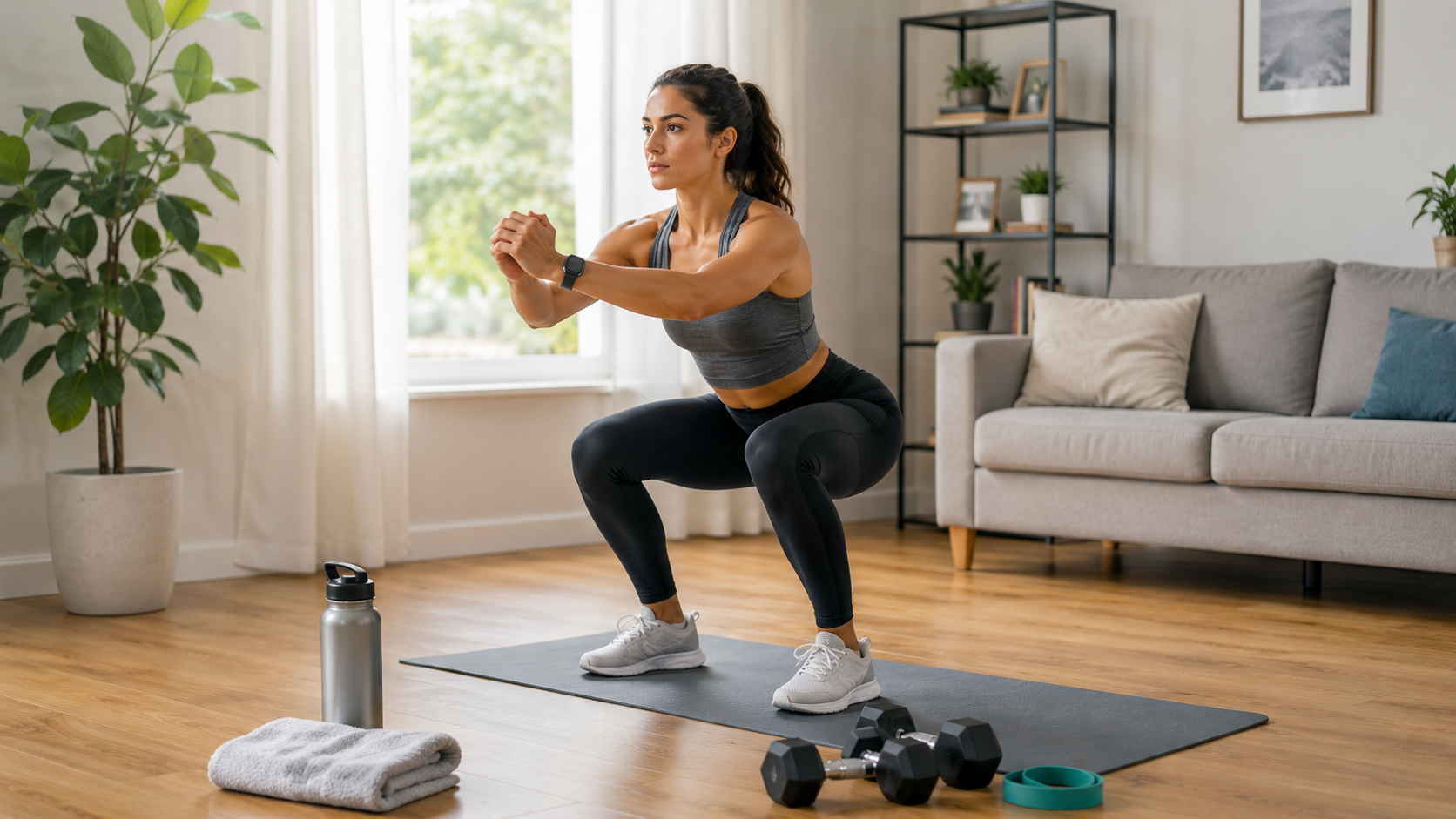
Home Workout Precautions: How to Exercise Safely Without a Trainer
Minjin Park
·
Working out at home sounds simple. You roll out a mat, open a video, grab a pair of dumbbells, and get moving. No commute, no crowded gym, no waiting for equipment. For many people, home workouts are the easiest way to stay consistent.
But home exercise also comes with one big challenge: there is no trainer watching your form.
That does not mean home workouts are unsafe. It simply means you need to be a little more aware of your space, your body, your equipment, and your limits. A small mistake, like exercising on a slippery floor or choosing weights that are too heavy, can turn a healthy habit into an avoidable injury.
The good news is that safe home workouts do not require fancy gear or expert-level knowledge. With a few practical precautions, you can exercise confidently, protect your joints, and build strength without feeling like you are guessing your way through every movement.
At home, it is easy to relax your standards. You might work out barefoot on a slick floor, skip your warm-up because you are short on time, or try an advanced move because it looks manageable on video. Unlike a gym, your living room was not designed as an exercise space.
Most home workout injuries are not dramatic accidents. They often come from repeated small mistakes: poor posture, rushed movements, unstable surfaces, or doing too much too soon. A knee may start aching after several days of jump squats. A wrist may feel sore after too many planks. A lower back may tighten because you lifted weights without bracing your core properly.
The goal is not to be scared of movement. The goal is to make your home workout environment more forgiving, so you can focus on building strength, stamina, and confidence.
Check Your Workout Space First
Before you press play on a workout video, take a quick look around the room. You need enough space to move your arms and legs without bumping into furniture, walls, pets, or sharp corners.
For most bodyweight workouts, you should have enough room to lie down fully, step forward and back, and raise your arms overhead. If the workout includes lunges, side steps, burpees, or jumping movements, give yourself extra space.
Clear away small rugs, charging cables, bags, toys, or anything that could slide under your feet. A cluttered workout area may not seem dangerous at first, but when your heart rate is up and you are moving quickly, even a small object can cause a trip.
Your floor matters more than you might think. A surface that feels fine for walking may not be safe for squats, lunges, planks, or jumping exercises.
Hardwood, tile, and laminate floors can be slippery, especially if you are wearing socks. Thick carpet may feel comfortable, but it can make balance exercises unstable. A thin exercise mat can help with floor work, but it may slide during standing exercises if it does not grip well.
For strength training, you want a surface that feels stable and predictable. For yoga or stretching, a non-slip mat is useful. For high-impact workouts, avoid surfaces that are too hard or too slippery. If you are doing jumping exercises, your knees and ankles will thank you for choosing a surface with some grip and shock absorption.
One simple test: stand in your workout shoes and do a few slow squats, lunges, and side steps. If your feet slide, your mat bunches up, or you feel unsteady, adjust the setup before starting.
Wear the Right Shoes for the Workout
It may be tempting to exercise barefoot at home, especially if you are only doing a quick workout. Barefoot training can be fine for certain low-impact exercises, yoga, Pilates, or controlled mobility work. But for many home workouts, shoes are safer.
If your routine includes jumping, fast footwork, lateral movements, or weighted lower-body exercises, supportive athletic shoes can help protect your feet, ankles, and knees. Shoes also provide traction, which is especially important on smooth indoor floors.
Avoid working out in socks on slippery surfaces. This is one of the easiest ways to lose balance during lunges, mountain climbers, or quick transitions.
That said, not every workout needs the same footwear. For heavy strength exercises, very cushioned running shoes may feel unstable. For dance cardio, shoes with too much grip can make twisting movements harder on the knees. Choose shoes that match the type of workout you are doing, not just whatever pair is closest to the door.
Do Not Skip the Warm-Up
A warm-up does not need to be long, but it should prepare your body for the movements ahead. Going from sitting at a desk to doing squats, push-ups, or burpees is a sudden jump for your muscles and joints.
A good warm-up gradually increases your heart rate and helps your joints move through a comfortable range of motion. Think of it as a gentle transition, not a separate workout.
Try simple movements like marching in place, arm circles, hip circles, bodyweight squats, shoulder rolls, and gentle lunges. If your workout includes jumping, start with low-impact versions first. If your workout includes weights, practice the movement without weight before loading it.
Five to ten minutes is usually enough for a basic home workout. The more intense the workout, the more important the warm-up becomes.
Match the Workout to Your Current Fitness Level
One of the biggest home workout mistakes is choosing a routine based on motivation instead of readiness. A video may say “beginner,” but that does not always mean it is right for your body today.
If you have not worked out in a while, start easier than you think you need to. It is better to finish a workout feeling like you could do a little more than to push too hard and feel sore for days.
Pay attention to the pace, complexity, and impact level. A workout with lots of jumping, fast transitions, or long plank holds may be more demanding than it looks. Strength routines can also be challenging if they involve high repetitions or short rest periods.
Modify when needed. Do push-ups from your knees or against a wall. Step instead of jump. Reduce the range of motion in lunges. Use lighter weights. Take longer breaks. These adjustments are not signs of weakness. They are how you keep exercising safely and consistently.
Learn Basic Form Before Adding Speed
Fast workouts can be exciting, but speed should come after control. When you rush through movements before learning proper form, your joints often take the stress your muscles should be handling.
For squats, keep your chest lifted, your feet stable, and your knees tracking in the same general direction as your toes. For lunges, avoid letting the front knee collapse inward. For planks, think about keeping your body long and steady instead of letting your lower back sag. For push-ups, keep your hands placed firmly and avoid shrugging your shoulders toward your ears.
You do not have to perform every movement perfectly, but you should feel in control. If you cannot maintain your form, slow down or switch to an easier version.
A mirror can be helpful, but do not stare at it the whole time if it causes neck strain. You can also record a short clip of yourself from the side to check basic posture. Sometimes what you feel and what you are actually doing are not the same.
Be Careful With Online Workout Videos
Online workouts are convenient, but they are not personalized. The instructor cannot see your body, your fitness level, your past injuries, or your form. That means you need to treat every video as a guide, not a command.
Be cautious with videos that encourage you to “push through pain,” move extremely fast, or do advanced exercises without explaining modifications. A good workout video should offer alternatives and remind you to listen to your body.
Also watch the transitions. Some workouts move quickly from standing exercises to floor exercises and back again. If you feel dizzy, rushed, or unsteady, pause the video. There is no rule that says you have to keep up exactly.
You are allowed to take breaks. You are allowed to repeat a beginner workout. You are allowed to ignore a move that does not feel right for your body.
Choose Equipment Carefully
Home workout equipment does not have to be expensive, but it should be safe and appropriate.
If you use dumbbells, make sure they are not too heavy for the movement. A weight that feels fine for biceps curls may be too heavy for shoulder raises or overhead presses. If your form changes dramatically when you pick up the weight, it is probably too heavy.
Resistance bands should be checked for small tears or weak spots. Bands can snap if they are old, damaged, or stretched beyond their limit. Anchor them carefully and avoid placing them against sharp edges.
Chairs, stools, and coffee tables are often used for step-ups, triceps dips, or elevated push-ups, but not all furniture is stable enough for exercise. If an item wobbles, slides, or feels light, do not use it as workout equipment.
Also store equipment safely. Dumbbells left on the floor can become tripping hazards. Bands, mats, and jump ropes should be put away after use, especially if there are children or pets in the home.
Avoid Doing Too Much Too Soon
Motivation can be surprisingly risky. When you finally decide to exercise regularly, you may want to work out every day, try long sessions, or push yourself hard to see quick results. But your muscles, tendons, and joints need time to adapt.
Doing too much too soon can lead to soreness, fatigue, and overuse injuries. This is especially common with squats, lunges, push-ups, planks, running-in-place workouts, and high-intensity interval training.
Start with a manageable schedule. For many beginners, three workouts per week is enough. You can add walking, stretching, or light mobility work on other days. As your body adjusts, gradually increase duration, intensity, or resistance.
A useful rule: change one thing at a time. Do not increase workout length, weight, and frequency all in the same week. Small progress is safer and more sustainable.
Know the Difference Between Discomfort and Pain
Exercise can feel uncomfortable. Your muscles may burn during a set. Your breathing may get heavier. You may feel challenged and tired. That is normal.
Pain is different. Sharp pain, sudden pulling, joint pain, numbness, tingling, chest pain, or dizziness should not be ignored. Stop the exercise and reassess. If the pain continues, it is better to get professional advice instead of trying to train through it.
Joint pain deserves special attention. A muscle working hard is one thing. A knee, shoulder, wrist, or lower back feeling irritated is another. Often, joint discomfort means the movement needs to be modified, your form needs attention, or your body needs more recovery.
The “no pain, no gain” mindset is not helpful for long-term fitness. A safer mindset is: challenge your muscles, respect your joints.
Protect Your Wrists, Knees, and Lower Back
Certain areas tend to complain during home workouts because many routines use repetitive bodyweight movements.
For wrists, exercises like planks, push-ups, and mountain climbers can create pressure. Warm up your wrists, spread your fingers, and press through your whole hand. If your wrists hurt, try doing planks on your forearms or using push-up handles.
For knees, be careful with jumping, deep lunges, and fast squat variations. Keep your knees aligned and avoid collapsing inward. Step-back lunges may feel better than forward lunges for some people. If jumping bothers your knees, choose low-impact options.
For the lower back, watch your core position. During planks, dead bugs, bridges, and weighted movements, avoid letting your lower back arch excessively. Brace your core gently, as if preparing for someone to tap your stomach. When lifting weights from the floor, bend through your hips and knees instead of rounding your back.
Give Yourself Enough Rest
Rest is part of training, not a break from training. Your body gets stronger when it has time to recover.
If you do intense lower-body work one day, your legs may need a day or two before another hard session. If your shoulders are sore from push-ups or presses, avoid repeating the same strain the next day. You can still move, but choose lighter activity like walking, stretching, or gentle mobility.
Sleep, hydration, and food also affect recovery. If you are under-eating, sleeping poorly, or stressed, a workout that normally feels fine may suddenly feel much harder.
Consistency does not mean doing maximum effort every day. It means building a routine your body can actually keep up with.
Keep Water Nearby, but Do Not Overthink It
For most home workouts, drinking water before and after exercise is enough. Keep a bottle nearby so you do not have to interrupt your workout or rush to the kitchen when you are tired.
If your room is hot, your workout is intense, or you sweat heavily, hydration becomes more important. Open a window, use a fan, or reduce intensity if the room feels stuffy. Exercising in a hot, poorly ventilated room can make you feel dizzy or drained faster.
You do not need complicated sports drinks for every short workout. For everyday home exercise, water is usually fine. Longer, sweatier sessions may require more attention to fluids and electrolytes, but most people do not need to make hydration complicated.
Be Mindful of Pets, Kids, and Shared Spaces
Home workouts often happen in real life, not in a perfect fitness studio. A dog may walk across your mat. A child may come near your weights. A family member may step into the room while you are doing lunges.
Before starting, make the space as safe as possible for everyone. Keep weights away from children. Do not swing kettlebells or resistance bands near pets. Avoid jumping exercises if someone may suddenly walk behind you.
If you live in an apartment, also think about noise and impact. Low-impact workouts are often better for downstairs neighbors and easier on your joints. Step jacks, slow mountain climbers, glute bridges, wall sits, and controlled strength exercises can still be very effective.
Cool Down Instead of Collapsing on the Couch
When the workout ends, give your body a few minutes to come down gradually. This is especially helpful after cardio, intervals, or anything that leaves you breathing hard.
Walk around the room, slow your breathing, and do gentle stretches for the areas you used most. Your cool-down does not need to be fancy. Stretch your calves after lower-body work. Open your chest after push-ups. Stretch your hips after squats and lunges.
Avoid forcing deep stretches when your muscles are tired. Stretching should feel comfortable, not painful. The goal is to help your body transition back to normal, not to prove flexibility.
When to Get Professional Guidance
You do not need a personal trainer for every workout, but there are times when professional guidance is worth considering.
If you have a history of injuries, chronic pain, balance problems, or a medical condition that affects exercise, check with a qualified professional before starting a new routine. If a certain movement repeatedly causes pain, do not keep guessing. A physical therapist, trainer, or healthcare provider may help you find safer alternatives.
Even one session with a knowledgeable trainer can be useful if you want to learn basic form for squats, hinges, presses, rows, and core exercises. Think of it as learning the rules before practicing on your own.
A Simple Safe Home Workout Checklist
Before your next home workout, ask yourself:
Is the floor clear and non-slip?
Do I have enough space to move?
Am I wearing the right shoes for this workout?
Did I warm up first?
Can I control the movement before making it faster?
Is this exercise right for my current level?
Do I feel muscle effort, not sharp pain?
Do I have water nearby?
Did I leave room for recovery?
This quick check can prevent many common problems before they happen.
Final Thoughts
Home workouts can be safe, effective, and surprisingly empowering. You do not need a gym membership or a trainer standing beside you to build a strong routine. But you do need awareness.
Create a safe space. Start with movements you can control. Choose equipment carefully. Modify exercises without guilt. Listen to pain signals. Give your body time to recover.
The best home workout is not the one that looks the most intense online. It is the one you can repeat, improve, and feel good about over time. When you exercise safely, your home becomes more than a convenient place to move. It becomes a place where healthy habits can actually last.
Hi, I’m the creator and editor behind ZestyHabit. I research everyday safety, first aid, and practical wellness topics using official guidance and reliable public sources, then turn that information into clear, realistic steps for daily life.
My goal is to help readers make safer, better-informed choices at home and beyond.