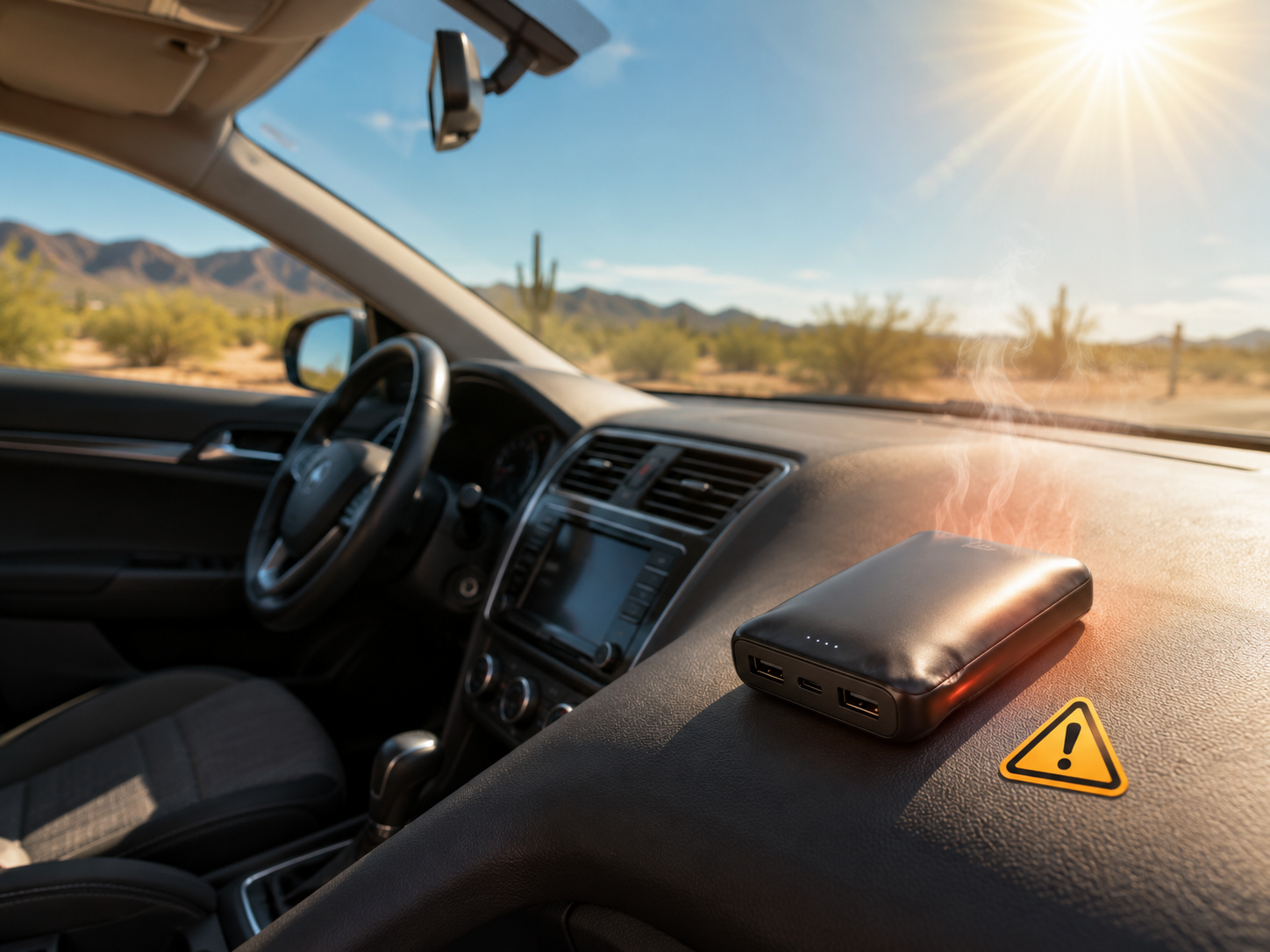
Leaving a portable power bank in your car may seem convenient, but heat, sunlight, damage, and improper storage can create safety risks. Learn simple ways to store and use power banks more safely.
A portable power bank is one of those small gadgets that feels useful in almost every situation. It can charge your phone during a long commute, keep your kids’ tablets alive on a road trip, or help when you forget to charge your device before leaving home.
Because of that, many people keep one in the car “just in case.”
At first, that seems practical. The glove box feels like a good place. The center console is easy to reach. The trunk seems out of the way. Some drivers even keep a power bank plugged into a car charger so it is always ready.
But a car is not always a gentle storage space for electronics.
On a warm day, the inside of a parked car can become much hotter than the outside air. In winter, the temperature can drop sharply. Items slide around during braking and turns. Bags get tossed into trunks. Drinks spill. Sunlight hits the dashboard for hours.
For many everyday objects, this is only annoying. For a lithium-ion battery pack, it can be more serious.
That does not mean you should be afraid of power banks. Most quality power banks are safe when used and stored properly. But like many modern devices, they need a little care. Leaving one in a hot, parked car day after day is not the best habit.
What Makes Power Banks Different From Ordinary Car Items
A power bank is not just a plastic box with electricity inside. Most power banks contain rechargeable lithium-ion or lithium-polymer battery cells. These batteries are popular because they can store a lot of energy in a small size.
That is why they are used in phones, laptops, tablets, cordless tools, e-bikes, and many other devices.
The same feature that makes them useful also means they should be handled with care. They are designed to work within certain temperature ranges. They should not be crushed, punctured, overheated, or charged with damaged cables.
When a power bank is treated well, it can be a reliable everyday tool. When it is exposed to heat, physical stress, or poor charging habits, the risk of problems increases.
The Biggest Issue: Heat Inside a Parked Car
The main reason a power bank should not be left in a car is heat.
Cars can heat up quickly when parked in direct sun, even if the weather does not feel extreme outside. The dashboard, seats, console, and closed compartments can become especially warm.
A power bank left in one of those areas may sit in heat for hours. If this happens repeatedly, it can affect the battery’s condition over time.
Heat Can Damage the Battery
High temperatures can stress the battery cells inside a power bank. Over time, heat may reduce battery life, make charging less reliable, or increase the chance of swelling and malfunction.
You may notice that an old power bank no longer holds a charge well. It may charge your phone more slowly. It may feel warmer than it used to. These signs do not always mean danger, but they do suggest the battery is aging or stressed.
Heat speeds up that aging process.
Direct Sunlight Makes It Worse
A power bank left on the dashboard, front seat, or near a window is exposed to direct sunlight. This can make the surface of the device very hot.
Dark-colored power banks may absorb even more heat. A black power bank sitting on a black dashboard in summer is not a great combination.
A safer habit is simple: do not leave power banks where sunlight can hit them directly.
Cold Weather Can Also Be a Problem
Heat gets most of the attention, but cold temperatures can also affect battery performance.
A power bank left overnight in a freezing car may not work as well the next morning. It may charge devices more slowly or appear to have less power than expected.
In many cases, the power bank may return to normal once it warms up. But repeated temperature extremes are not ideal for battery health.
The lesson is not that every cold night will ruin a power bank. It is that a car is an unstable storage environment. Electronics generally last longer when stored in a moderate, dry place.
Charging a Power Bank in the Car Adds Another Risk
Some people keep a power bank plugged into the car’s USB port or 12-volt adapter so it is always charged.
This may seem convenient, but it can create problems if the power bank is charging in a hot vehicle, using a low-quality cable, or left unattended.
Charging naturally creates some heat. If the power bank is already sitting in a hot car, the extra heat from charging is not helpful.
Avoid Charging in Direct Sun
If you need to charge a power bank in the car while driving, keep it out of direct sunlight. Place it somewhere stable and shaded, not on the dashboard or in the driver’s footwell.
Do not bury it under blankets, clothing, or other items while charging. Batteries need some airflow. A power bank charging under a pile of coats or in a tightly packed bag may become warmer than expected.
The same goes for car adapters. A reliable charging setup is worth it, especially for something you use often.
Physical Damage Matters More Than People Realize
Cars are busy spaces. Items get dropped, kicked, crushed, and tossed around. A power bank may slide under a seat, get stepped on, or end up under a heavy grocery bag.
Physical damage can affect the battery inside, even if the outside case does not look terrible.
Watch Out for Crushing and Bending
Power banks should not be stored where they can be crushed. Avoid placing them under heavy tools, sports equipment, car seats, luggage, or stacked boxes.
A trunk may seem safe, but if the power bank is loose under a heavy load, it can be damaged during turns or sudden stops.
A better option is to keep it in a small pouch, organizer, or compartment where it will not be squeezed.
Do Not Use a Swollen Power Bank
A swollen power bank is a clear warning sign. The case may bulge, split, warp, or stop sitting flat on a table. It may feel puffy or look slightly expanded.
Do not press it, squeeze it, or continue using it.
Swelling can mean the battery inside has been damaged or is failing. The safest step is to stop using it and follow local guidance for proper battery recycling or disposal.
Do not throw lithium batteries into regular household trash if your local area provides a safer battery recycling option.
Common Warning Signs to Notice
A power bank does not need to look dramatic to be unsafe. Pay attention to small changes.
It Feels Unusually Hot
It is normal for a power bank to become slightly warm while charging or discharging. But it should not feel extremely hot.
If it becomes too hot to hold comfortably, unplug it and stop using it.
It Smells Strange
A chemical, burning, sweet, metallic, or unusual odor can be a warning sign. If a power bank smells odd during charging or use, do not ignore it.
Move it away from flammable items if you can do so safely, stop using it, and do not plug it back in.
The Case Is Cracked or Split
A cracked outer case may expose the device to dust, moisture, or physical stress. Even if it still works, it may no longer be reliable.
A damaged power bank should not be treated like a normal one.
It Charges Erratically
If the power bank turns on and off by itself, refuses to charge, drains unusually fast, or causes connected devices to flicker between charging and not charging, it may be failing.
Sometimes the cable is the issue. But if the same problem happens with different cables and devices, the power bank itself may need to be replaced.
Where People Commonly Store Power Banks in Cars
Many storage spots seem convenient but are not ideal for long-term storage.
The Dashboard
This is one of the worst places because it receives direct sunlight and can become extremely hot.
A power bank should not sit on the dashboard while parked.
The Center Console
The center console may be shaded, but it can still become very warm in a parked car. It is better than the dashboard, but not ideal for leaving a power bank for days or weeks.
If you keep one there temporarily, take it with you when possible.
The Glove Box
The glove box feels protected, but it can still heat up inside a parked car. It may also trap heat around the power bank.
It is not the best place for long-term storage, especially during summer.
The Trunk
The trunk keeps the power bank out of direct sunlight, but it can still get hot or cold. It also creates a risk of crushing if the power bank is loose among tools, groceries, luggage, or sports gear.
For short trips, a secured organizer may be fine. For daily storage, it is better to bring the power bank indoors.
Everyday Mistakes That Increase Risk
Most power bank problems come from ordinary habits, not extreme behavior.
Leaving It in the Car All Summer
This is probably the most common mistake. A power bank tossed into the console in May may still be there in August.
Repeated heat exposure can weaken the battery over time. Even if nothing happens immediately, the device may become less reliable.
Keeping It Plugged In All the Time
A power bank does not need to be constantly charging in the car. Leaving it plugged in whenever the car is running may add unnecessary heat and wear.
Charge it when needed, then unplug it.
Buying Very Cheap No-Name Power Banks
Not all power banks are made with the same quality controls. Very cheap, no-name battery packs may have weaker protection features, unclear capacity claims, or poor build quality.
You do not need the most expensive model. But it is wise to choose a reputable brand, read the instructions, and avoid products that seem suspiciously cheap for their size and advertised capacity.
Ignoring Manufacturer Instructions
Many people never read the small instruction booklet that comes with a power bank. But it often includes basic temperature, charging, and storage guidance.
Those instructions are not just legal fine print. They help you understand how the device is meant to be used safely.
Safer Ways to Use a Power Bank on the Road
You can still keep a power bank available for travel. The goal is to handle it thoughtfully.
Bring It With You Instead of Storing It Permanently
The safest routine is to treat your power bank like your phone or wallet: bring it when you need it, and take it indoors when you leave the car.
This is especially important during hot weather.
Store It in a Shaded, Stable Place During a Trip
If you are using it during a drive, keep it somewhere shaded and secure. It should not roll around, fall under the pedals, or sit in direct sun.
A small organizer, seat-back pocket, or closed bag placed away from heat can work for short periods.
Do Not Leave It Charging Unattended in a Parked Car
If you are not in the vehicle, it is better not to leave a power bank charging inside.
Charging while parked in a hot car adds unnecessary risk and can shorten the life of the battery.
Keep It Away From Loose Metal Objects
Avoid storing a power bank together with loose coins, keys, tools, or metal accessories. Many power banks have protected ports, but it is still better to keep charging ports clean and free from objects that could cause damage.
A small pouch can help protect both the power bank and the items around it.
What to Do Before a Road Trip
Road trips are one of the most common times people rely on power banks. Phones, tablets, cameras, headphones, portable fans, and kids’ devices all need charging.
Before a long drive, take a few minutes to prepare.
Charge your power bank indoors before leaving.
Check the case for swelling, cracks, or damage.
Bring a reliable cable.
Keep it out of direct sunlight.
Avoid burying it under heavy luggage.
Unplug it when it is fully charged or not in use.
These small steps make travel smoother and safer.
What About Emergency Kits?
Many people keep emergency supplies in the car. That can be a smart habit, especially for long commutes or road trips.
But a lithium power bank may not be the best item to leave in a car emergency kit year-round, especially in areas with hot summers or freezing winters.
If you want backup power for emergencies, consider checking it regularly. Bring it indoors during extreme weather, recharge it on a schedule, and inspect it before putting it back in your kit.
A dead or damaged power bank is not helpful in an emergency.
A Simple Power Bank Safety Routine
Here is an easy routine that works for most households:
Final Thoughts: Convenience Is Good, But Storage Matters
A portable power bank is a useful tool. It can make travel easier, help during long days away from home, and provide backup power when your phone battery runs low.
But leaving one in the car all the time is not the best idea. Heat, direct sunlight, charging stress, physical damage, and temperature swings can all affect the battery.
The safest habit is simple: use your power bank when you need it, keep it shaded and secure during travel, and take it indoors when you leave the car.
You do not need to worry every time you carry a power bank. Just treat it like the battery-powered device it is. A little attention goes a long way toward keeping your car, your devices, and your everyday routine safer.
Hi, I’m the creator and editor behind ZestyHabit. I research everyday safety, first aid, and practical wellness topics using official guidance and reliable public sources, then turn that information into clear, realistic steps for daily life.
My goal is to help readers make safer, better-informed choices at home and beyond.