Rock Climbing Precautions: How to Protect Your Fingers and Shoulders
Minjin Park
·
Rock climbing is one of the most rewarding sports you can try. It challenges strength, balance, patience, problem-solving, and confidence all at once. A good climb feels almost like a puzzle your body has to solve. You look for the next hold, shift your weight, trust your feet, control your breathing, and move with focus.
But climbing is also demanding in a very specific way. It places a lot of stress on areas many people do not train carefully before they start: the fingers, hands, forearms, elbows, shoulders, and upper back.
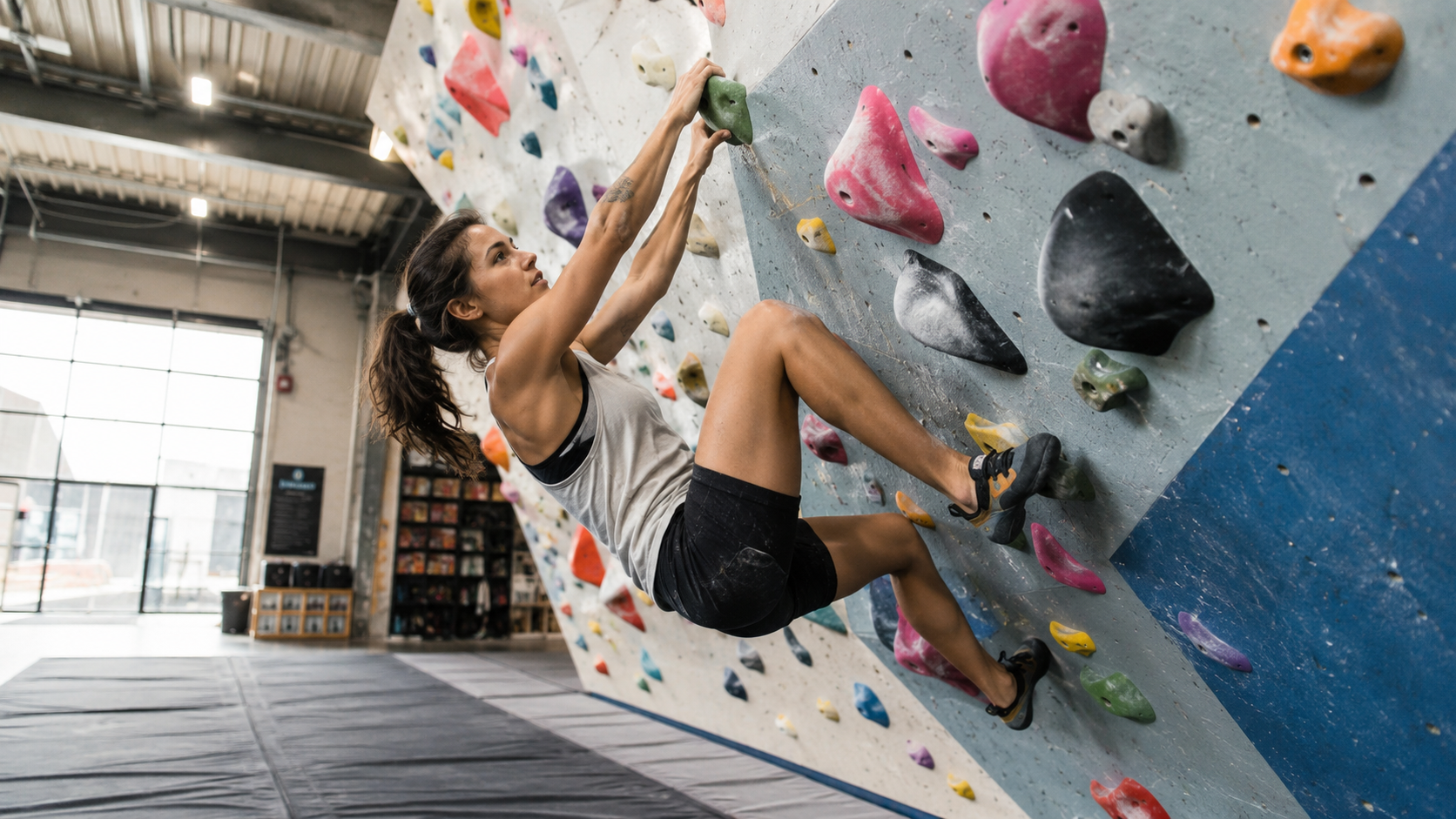
Unlike general gym workouts, climbing asks your fingers to hold body weight on small edges, slopers, pinches, pockets, and awkward angles. It asks your shoulders to stabilize while your arms are overhead, reaching, pulling, locking off, and catching your body when you move dynamically. Even indoor climbing, where the environment is controlled, can create overuse problems if you progress too quickly or rely too much on raw pulling strength.
The goal is not to make climbing feel scary. Climbing can be safe, fun, and long-lasting when approached with the right habits. Whether you are bouldering, top-rope climbing, lead climbing, or just starting at a climbing gym, protecting your fingers and shoulders should be part of your routine from the beginning.
Here are practical rock climbing precautions to help you climb stronger, smarter, and with fewer avoidable aches.
Why Fingers and Shoulders Take So Much Stress in Climbing
Climbing is different from many sports because the hands often act as the main connection between your body and the wall. Your fingers do not just grip lightly. They may hold a large portion of your body weight, sometimes on very small surfaces.
This makes the fingers vulnerable to overuse, especially the tendons and pulleys that help support gripping. A climber may feel fine during a session, then notice soreness around the finger joints later. In more serious cases, a sudden “pop” or sharp pain can happen when a finger is overloaded on a small hold.
The shoulders are also heavily involved. When you climb, your shoulders help position your arms, stabilize your body, control pulling movements, and manage body tension. If your shoulder blades are not moving well, or if you constantly hang passively from the joints, the shoulders can become irritated.
Beginners often think climbing is mostly about arm strength. In reality, safer and better climbing uses the whole body. Feet, hips, core, back, and legs should all share the work. When the fingers and shoulders are forced to do everything, problems are more likely.
Warm Up Before You Touch Hard Holds
A proper warm-up is one of the most important climbing precautions. Many finger and shoulder issues happen because people start pulling hard before their tissues are ready.
Your warm-up should begin before you get on the wall. Start with light general movement: walking, easy jogging, jumping jacks, or dynamic mobility. You want your body temperature to rise slightly.
Then move into joint preparation. Do wrist circles, shoulder rolls, arm swings, scapular movements, gentle forearm rotations, and finger opening and closing. Keep everything smooth. This is not the time to force deep stretches or yank your fingers backward.
After that, warm up on easy climbs. Choose routes or problems well below your limit. Focus on relaxed movement, quiet feet, and controlled breathing. Avoid tiny crimps, powerful lock-offs, dynos, or steep overhangs at the start.
A good climbing warm-up should gradually increase intensity. Start with big holds and easy positions. Then move to slightly smaller holds and more involved movements. Only after your body feels ready should you attempt harder climbs.
If you only have a short session, it is still worth warming up. Skipping the warm-up to “save time” often leads to lower-quality climbing and higher injury risk.
Respect Finger Load
Finger strength is one of the slowest things to develop in climbing. Your muscles may get stronger faster than your tendons and connective tissues. This is why a new climber may feel powerful enough to try harder routes but still be at risk of finger strain.
Small holds, crimps, pockets, and repeated hard attempts can load the fingers heavily. The danger is not just one move. It is the total amount of stress across a session and across the week.
Be careful with full crimping, especially as a beginner. A full crimp places high stress on the finger joints and pulleys. It can be useful for experienced climbers in certain situations, but relying on it too much can increase risk. When possible, use an open-hand grip or half crimp with control.
Pockets also deserve caution. One- and two-finger pockets can put intense force on fewer fingers. If you are newer to climbing, avoid aggressively pulling on small pockets. Use your feet more, move slowly, and do not twist hard while loading one finger.
If your fingers feel sore, stiff, swollen, or unusually sensitive, take that seriously. Finger injuries can linger if ignored. Climbing through finger pain is rarely worth it.
Do Not Grip Harder Than Necessary
Many beginners overgrip every hold. It feels natural because climbing can be intimidating. You want to stay on the wall, so you squeeze as hard as possible.
The problem is that overgripping tires your forearms quickly and increases stress on the fingers. It can also make your movement stiff and inefficient.
Try to use the minimum grip needed to stay secure. On big holds, relax your hands. On easier routes, practice noticing when you are squeezing too much. Your fingers should not feel like they are fighting for survival on every move.
A helpful habit is to breathe before moving. When you hold your breath, your whole body tends to tighten. When you breathe steadily, it becomes easier to relax your hands, shoulders, and neck.
Good climbers often look strong because they move efficiently, not because they are squeezing at maximum effort all the time. Learning to relax on the wall is both a performance skill and a safety habit.
Use Your Feet More Than Your Arms
Footwork is one of the best ways to protect your fingers and shoulders. If your feet are sloppy, your arms do too much work. If your feet are precise, your legs can help carry your weight.
Beginners often pull themselves up the wall with their arms while their feet drag behind. This makes the climb harder than it needs to be. It also overloads the fingers and shoulders.
Instead, focus on placing your feet carefully. Look at the foothold before stepping. Put your toe where you want it. Shift weight onto the foot. Then push with the legs instead of pulling only with the arms.
Your legs are much stronger than your fingers. Let them help.
Good footwork also reduces swinging. When your body swings unexpectedly, your shoulders may catch the force and your fingers may grip suddenly. Staying balanced and controlled protects your joints.
A simple cue is: “step first, then pull less.”
Keep Your Shoulders Active
Hanging passively from the shoulders can feel easy in the moment, but it may irritate the joint over time. Passive hanging means you let your body weight sink into the shoulder structure without muscular support.
In climbing, you want active shoulders. This does not mean shrugging aggressively or staying tense the whole time. It means your shoulder blades and upper back are engaged enough to support your body.
When hanging from a hold, avoid letting your shoulders collapse up around your ears. Think about gently pulling your shoulder blades down and around your ribcage. Keep the neck long. Stay supported.
This matters especially on overhangs, big reaches, and dynamic moves. If your shoulder is loose and uncontrolled, sudden movement can create strain.
Shoulder stability is not just for advanced climbers. Beginners benefit from learning it early because it builds safer movement patterns from the start.
Be Careful With Dynamic Moves
Dynamic moves can be exciting. Jumping to a hold, throwing for a target, or making a powerful deadpoint can feel satisfying. But dynamic climbing also increases force on the fingers and shoulders.
When you move dynamically, you may catch your body weight suddenly. If your fingers land on a small hold or your shoulder is not stable, the load can be much higher than during slow movement.
Beginners should practice controlled movement before chasing big dynamic moves. Learn how to shift weight, use your legs, and move smoothly. If you are trying a dynamic move, make sure the holds are appropriate and the landing or fall zone is safe.
Do not repeatedly throw yourself at the same move when tired. Fatigue makes timing worse, grip less accurate, and shoulder control weaker.
There is nothing wrong with powerful climbing, but it should be earned gradually. Control first, power later.
Learn How to Fall Safely
Falls are part of climbing. In bouldering, you fall onto mats. In roped climbing, the rope catches you. Either way, knowing how to fall reduces panic and injury risk.
For bouldering, check the landing area before you climb. Make sure pads are positioned properly and that there are no bottles, brushes, shoes, or other objects in the fall zone. If you are climbing outdoors, pad placement and spotting become even more important.
When falling, try not to reach backward with stiff arms. This can injure wrists, elbows, or shoulders. Instead, land with bent knees, absorb the impact, and roll if needed. Practice controlled falls from low heights before climbing higher.
For roped climbing, communicate clearly with your belayer. Check knots, harnesses, belay devices, and commands. A safe belay system protects both the climber and the belayer.
Fear of falling can make you overgrip, freeze, or move awkwardly. Learning safe falling technique helps you stay calmer, which also reduces unnecessary finger and shoulder tension.
Avoid Too Much Volume Too Soon
Climbing is addictive. Once you start improving, it is tempting to climb for hours or go to the gym every day. But your fingers may not be ready for that much volume.
Overuse injuries often come from doing too much too soon. This can mean too many sessions per week, too many attempts on hard problems, too much crimping, or too much hangboard training before your body is prepared.
Beginners should build gradually. Two or three climbing sessions per week may be plenty for many people at first, depending on intensity and recovery. Hard sessions should not all be finger-intensive.
Pay attention to how your body feels the next day. If your fingers are sore every morning, your elbows ache, or your shoulders feel irritated, you may need more rest or easier sessions.
Progress in climbing is not only about trying harder grades. It is also about building durable tissues and better technique.
Be Cautious With Hangboard Training
Hangboards can be useful for experienced climbers, but they are not necessary for most beginners. In fact, starting hangboard training too early can increase the risk of finger injury.
A hangboard loads the fingers directly, often with high intensity. If your tendons and pulleys are not conditioned, this can be too much.
New climbers usually improve faster and safer by climbing easier routes, practicing footwork, learning body positioning, and developing general strength. You do not need intense finger training right away.
If you eventually add hangboard work, start conservatively. Use large holds, keep sessions short, avoid max-effort hangs, and rest properly. Stop if you feel sharp pain or unusual finger discomfort.
Hangboarding should support climbing, not replace smart climbing habits.
Strengthen the Muscles That Support Your Shoulders
Climbing develops pulling strength, but it may not automatically build balanced shoulder health. If you only pull and never train support muscles, your shoulders may become irritated over time.
Useful exercises include rows, band external rotations, face pulls, scapular pull-ups, wall slides, and controlled push-ups. These help strengthen the upper back, rotator cuff, and shoulder blade muscles.
Scapular pull-ups are especially helpful when done correctly. Hang from a bar with straight arms, then gently move the shoulder blades without bending the elbows much. The movement is small but teaches shoulder control.
Do not rush into heavy exercises if you are new. Control matters more than weight. A few short sessions per week can help create better shoulder stability.
Also include some pushing exercises to balance all the pulling. Push-ups, light dumbbell presses, and serratus-focused movements may help keep the shoulders more balanced.
A strong shoulder is not just one that can pull hard. It is one that can stabilize, rotate, and recover.
Take Rest Days Seriously
Rest is part of training. Your fingers and shoulders need time to adapt after climbing stress. If you climb hard again before tissues recover, irritation can build.
Rest days do not mean you are losing progress. They are when your body repairs and becomes more prepared for the next session.
On rest days, you can still do gentle movement, walking, mobility work, or light stretching. Avoid turning every rest day into another hard workout that loads the same tissues.
Sleep and nutrition also matter. Climbing places stress on muscles, tendons, skin, and the nervous system. Eating enough and sleeping well support recovery.
If you are constantly tired, your grip strength drops, your technique gets sloppy, and your shoulders may lose control. Rest is not a weakness. It is part of climbing for the long term.
Pay Attention to Skin and Grip Conditions
Finger protection is not only about tendons. Skin matters too. Torn skin, flappers, and raw fingertips can change how you grip and move.
When your skin is painful, you may compensate by gripping awkwardly or avoiding certain fingers. This can place more stress elsewhere.
Keep your skin in decent condition. File rough calluses gently so they do not catch and tear. Wash chalk off after climbing. Moisturize when needed, but avoid making your skin too soft right before a session.
Chalk can help with sweat, but using too much does not replace good technique. If you feel like you need to chalk constantly, you may be overgripping or climbing beyond your current control level.
Respect your skin. It is part of your climbing system.
Know When to Stop a Session
One of the best injury-prevention skills is knowing when to call it for the day.
Stop or reduce intensity if you feel sharp finger pain, sudden shoulder pain, unusual weakness, numbness, tingling, or pain that changes how you move. Do not keep testing a painful hold to “see if it still hurts.” That often makes things worse.
Also be careful when you are mentally tired. Climbing requires attention. When focus drops, foot placements get sloppy, falls get worse, and grip becomes desperate.
A good session does not have to end with total exhaustion. In fact, stopping while you still have decent form can help you recover better and return stronger.
Climbing should challenge you, not grind your joints into frustration.
Use Proper Technique Instead of Forcing Moves
Technique protects the body. When your hips are close to the wall, your feet are active, and your body position is efficient, your fingers and shoulders do not have to work as hard.
Learn basic climbing skills like flagging, drop knees, hip turns, straight-arm resting, quiet feet, and weight shifting. These techniques help you solve problems with movement instead of brute force.
Straight-arm climbing is especially useful. Beginners often keep their arms bent all the time, which quickly fatigues the forearms and shoulders. When possible, hang with straighter arms and active shoulders, letting your skeleton and back muscles share the load.
Use rests when available. Shake out one hand at a time. Breathe. Look for better feet. Think before moving.
The strongest move is often the smartest one, not the hardest one.
Get Coaching or Feedback Early
Climbing gyms can feel casual, but technique feedback is extremely valuable. A coach, experienced climber, or good introductory class can help you avoid habits that lead to overuse.
You may not notice that you overgrip, pull with bent arms, ignore your feet, collapse your shoulders, or twist awkwardly on small holds. Someone watching from the ground can often spot these patterns quickly.
If you are new, consider taking a beginner class. Learn belay safety, falling basics, warm-up habits, route reading, and efficient movement. It is much easier to build good habits early than to undo bad ones later.
Feedback is not only for people trying to climb hard grades. It is for anyone who wants to climb safely and enjoy the sport longer.
A Simple Pre-Climb Safety Checklist
Before your next climbing session, ask yourself:
Are my fingers pain-free today?
Do my shoulders feel stable and comfortable?
Did I warm up before trying hard climbs?
Am I avoiding tiny crimps at the start of the session?
Am I using my feet instead of pulling with my arms?
Am I keeping my shoulders active when I hang?
Is the fall zone clear?
Am I taking enough rest between hard attempts?
Am I willing to stop if pain appears?
These questions take only a moment, but they can help prevent careless decisions.
Final Thoughts
Rock climbing is a beautiful mix of strength, skill, fear management, and problem-solving. It can make you feel powerful, focused, and connected to your body. But because climbing loads the fingers and shoulders in unusual ways, it deserves patience.
Protecting your fingers means respecting grip intensity, warming up well, avoiding too much crimping, building volume gradually, and not rushing into advanced finger training. Protecting your shoulders means staying active in the joint, strengthening the upper back and rotator cuff, using your feet, and avoiding uncontrolled dynamic moves when tired.
You do not have to climb aggressively to improve. You have to climb consistently, thoughtfully, and with enough respect for recovery.
The best climbers are not just strong. They are efficient, aware, and patient with their bodies. Build those habits now, and climbing can stay exciting for years instead of becoming a cycle of sore fingers, irritated shoulders, and forced breaks.
Hi, I’m the creator and editor behind ZestyHabit. I research everyday safety, first aid, and practical wellness topics using official guidance and reliable public sources, then turn that information into clear, realistic steps for daily life.
My goal is to help readers make safer, better-informed choices at home and beyond.