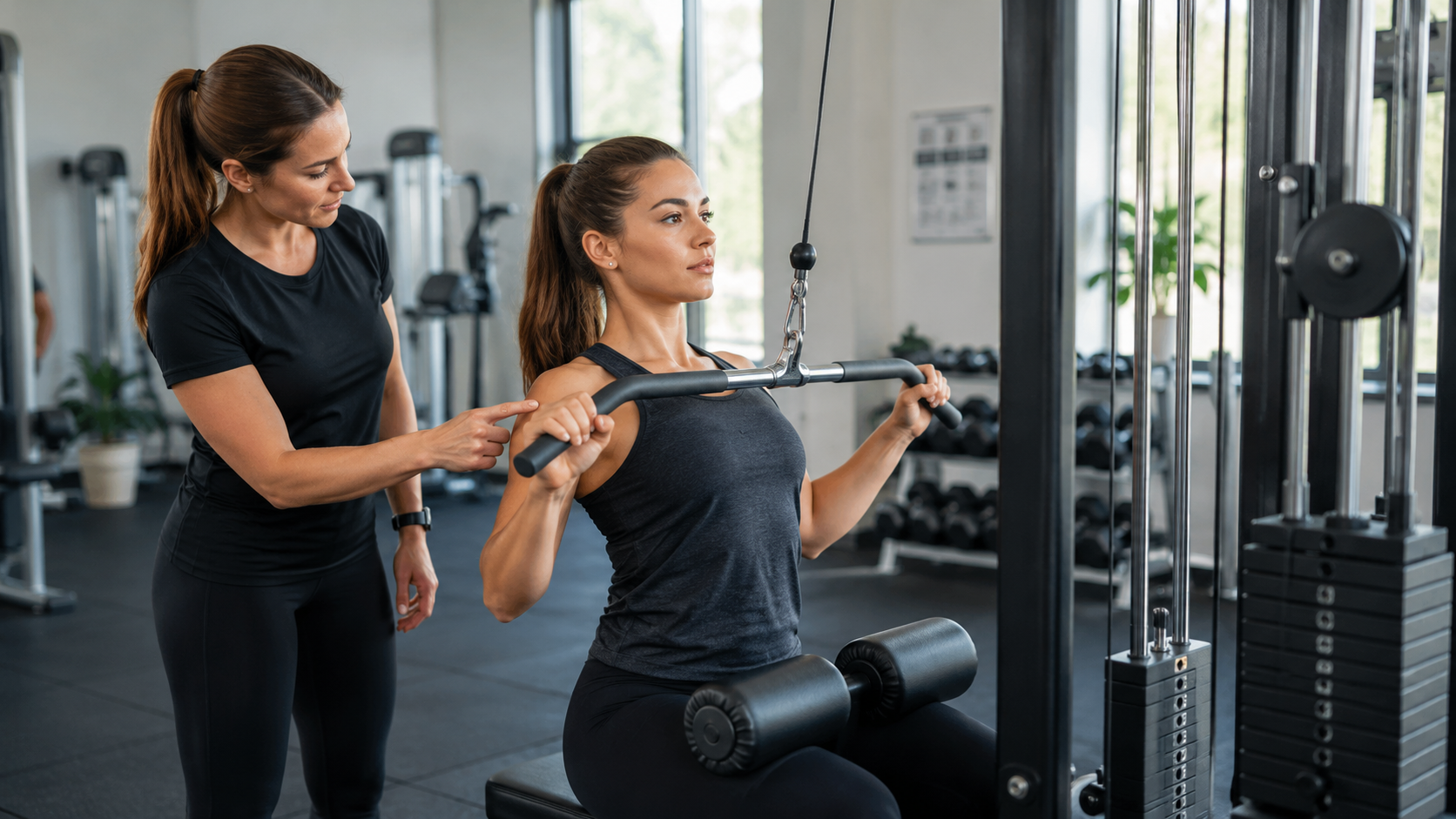
Lat Pulldown Precautions: How to Avoid Shoulder and Neck Tension
Minjin Park
·
The lat pulldown is one of the most popular back exercises in the gym. It looks simple enough: sit down, grab the bar, pull it toward your upper chest, and let it rise back up. For beginners, it can feel more approachable than pull-ups because you can adjust the weight and practice vertical pulling without lifting your full body weight.
But like many gym exercises, the lat pulldown can cause discomfort when it is done with poor control. Shoulder tightness, neck tension, wrist strain, and upper trap soreness are common signs that something needs to be adjusted.
The goal of the lat pulldown is not just to move the bar down. The goal is to train your back with a smooth, controlled pulling pattern. Your shoulders should feel stable, your neck should stay relaxed, and your arms should help without taking over the whole movement.
If you are new to lat pulldowns, or if you often feel your neck and shoulders more than your back, this guide will help you understand the key precautions: bar path, shoulder control, grip, posture, weight selection, and why behind-the-neck pulldowns are usually best avoided.
The lat pulldown mainly targets the latissimus dorsi, often called the “lats.” These are the large muscles on the sides of your back that help pull your arms down and back.
The exercise also involves:
Upper back muscles
Biceps
Forearms
Rear shoulders
Core stabilizers
Muscles around the shoulder blades
Although your arms bend during the movement, the lat pulldown should not feel like only a biceps exercise. Your arms are part of the motion, but your back should be doing a lot of the work.
A good lat pulldown feels controlled through the upper back and sides of the torso. A poor one often feels like neck shrugging, elbow pulling, wrist bending, or swinging backward to force the weight down.
Set the Seat and Thigh Pad Correctly
Before you even pull the bar, check your setup.
The thigh pad should hold your legs comfortably in place. It should not crush your thighs, but it should be snug enough that your body does not lift off the seat when the weight rises.
If the pad is too high, you may feel unstable and get pulled upward between reps. If it is too low, it may dig painfully into your legs.
Sit with your feet flat on the floor. Your knees should feel secure under the pad. Your torso should be upright or slightly leaned back, not twisted or awkwardly stretched.
A stable lower body helps your upper body pull with better control. If you are sliding around, lifting off the seat, or using your whole body to yank the bar down, the setup needs work.
Choose a Weight You Can Control
One of the most common lat pulldown mistakes is using too much weight. When the stack is too heavy, the body finds ways to cheat.
You may start leaning far backward. Your shoulders may shrug up. Your neck may tense. Your elbows may flare awkwardly. The bar may slam upward after each rep. Your lower back may arch to help move the weight.
A good weight lets you pull the bar smoothly, pause briefly near the bottom, and return it with control. You should feel challenged, but not pulled out of position.
For beginners, lighter is usually better. Learn the pattern first. Add weight later.
If you cannot lower the bar without swinging or raising your shoulders toward your ears, reduce the load.
Start with the Bar in Front, Not Behind the Neck
Behind-the-neck lat pulldowns are still seen in some gyms, but they are not ideal for most beginners. Pulling the bar behind the neck requires a lot of shoulder mobility and control. It can place the shoulders and neck in an uncomfortable position, especially if you force the range.
For most people, pulling the bar in front of the body toward the upper chest is a safer and more natural option.
A front pulldown allows you to:
Keep your neck more relaxed
Control your shoulder blades better
Avoid forcing the shoulders into an extreme position
Maintain a cleaner bar path
Use a range of motion that feels more natural
This does not mean every behind-the-neck pulldown is automatically harmful for every person. But for general fitness, beginners, and anyone with shoulder or neck tension, it is usually unnecessary.
You can train your back very effectively by pulling the bar to the front.
Use a Comfortable Grip Width
Grip width affects how the exercise feels. Many people assume wider is always better for the lats, but an extremely wide grip can limit range of motion and make the shoulders feel strained.
A comfortable grip is usually slightly wider than shoulder width. Your hands should feel secure, and your wrists should stay fairly neutral.
If your grip is too wide:
Your shoulders may feel pinched
Your range of motion may shorten
Your elbows may move awkwardly
Your neck may tense up
You may struggle to bring the bar down smoothly
If your grip is too narrow:
Your wrists may feel cramped
Your biceps may dominate
Your elbows may not track comfortably
Experiment with a moderate grip first. If your machine has a neutral-grip attachment, that may feel even better for some people because the palms face each other and the shoulders often feel more natural.
Comfort matters. The best grip is the one that lets you pull smoothly without pain.
Keep Your Wrists Neutral
Wrist position is easy to overlook. During lat pulldowns, many beginners bend their wrists backward or let the bar sit awkwardly in the fingers. This can create unnecessary forearm and wrist tension.
Grip the bar firmly but not desperately. Your wrists should stay close to neutral, not sharply bent.
Think of your hands as hooks connecting you to the bar. Your grip should be strong enough to control the weight, but your hands should not be squeezing so hard that your forearms take over.
If your grip fails before your back feels challenged, the weight may be too heavy, or you may need to work on grip strength gradually. Straps are sometimes used by experienced lifters, but beginners usually benefit from first learning clean grip control.
Start the Pull with Your Shoulders, Not Your Neck
A good lat pulldown begins with shoulder control. Before bending your elbows, gently draw your shoulder blades down. This is sometimes called scapular depression.
A simple cue is: put your shoulders in your back pockets.
This does not mean forcing your shoulders down aggressively. It means avoiding the common mistake of shrugging upward as you pull.
When the neck gets involved too much, the movement often looks like this:
Shoulders rise toward the ears. The neck tightens. The elbows bend quickly. The upper traps do most of the work. The lats are hard to feel.
Instead, try this:
Sit tall. Brace lightly. Let the arms reach up without losing control. Gently pull the shoulders down. Then drive the elbows down toward your sides.
Your neck should stay long and relaxed. If you feel tension building around the top of your shoulders, pause and reset.
Pull Your Elbows Down, Not Just Your Hands
Another helpful cue is to think about pulling with your elbows instead of your hands.
If you focus only on dragging the bar down, your biceps and forearms may dominate. But if you imagine driving your elbows down and slightly back, it can help you feel your lats more clearly.
The bar is simply following the path created by your elbows.
For a standard front lat pulldown, your elbows should move down toward your sides, not wildly behind your body. Keep the movement controlled and natural.
Avoid turning the exercise into a backward row by leaning far back and pulling the bar toward your stomach. A slight lean is fine, but excessive leaning changes the exercise and often reduces control.
Keep the Bar Path Smooth
The bar should travel in a clean path from overhead to the upper chest area. It does not need to touch your chest hard. In fact, forcing the bar to touch by leaning back or craning your neck forward can create tension.
A good bottom position usually looks like this:
Chest lifted naturally Shoulders down Elbows near the sides Bar near the upper chest or collarbone area Neck relaxed Core lightly braced
Do not pull the bar behind your head. Do not pull it to your stomach. Do not bounce it off your chest.
On the way back up, let your arms extend with control. Do not let the weight stack slam down or yank your shoulders upward. The return phase is part of the exercise.
Avoid Shrugging at the Top
At the top of the lat pulldown, your arms reach overhead. This is where beginners often lose shoulder control. The weight pulls the arms up, the shoulders rise toward the ears, and the neck becomes tense.
You do not need to keep your shoulders locked down unnaturally the whole time, but you should avoid being pulled into a loose, uncomfortable position.
Let the arms lengthen, but keep control through the shoulders. Then begin the next rep by setting the shoulders down again before pulling.
If the top position feels painful, reduce the range slightly or lower the weight. You should not feel like the machine is yanking your shoulders apart.
Do Not Use Momentum
Momentum is one of the fastest ways to turn lat pulldowns into a messy exercise. If you swing your torso backward to start every rep, you are probably using too much weight or moving too quickly.
Some natural body movement is normal, especially as the weight gets challenging. But the movement should not become a full-body yank.
Avoid:
Jerking the bar down
Leaning far back with every rep
Bouncing at the bottom
Letting the weight pull you up
Slamming the stack
Rushing the return
Controlled reps build better strength and reduce unnecessary neck and shoulder tension.
A good tempo for beginners is simple: pull down smoothly, pause briefly, return slowly.
Keep Your Chest Lifted Without Overarching
Many people are told to “keep your chest up” during pulldowns. This can be useful, but some beginners take it too far and overarch the lower back.
You want a proud, open chest, not a dramatic backbend.
Your ribs should stay reasonably controlled. Your lower back should not be doing the work. Your torso can lean slightly back, but your core should still feel engaged.
Think of sitting tall rather than leaning back hard.
If you notice your lower back arching, reduce the weight and reset your posture. The lat pulldown is a back exercise, but it should not feel like you are using your spine to move the bar.
Relax Your Jaw and Neck
Neck tension can come from more than poor shoulder position. Many people clench their jaw, hold their breath, or tighten their face during difficult reps.
This tension can travel into the neck and upper traps.
During the set, check in with yourself:
Is my jaw clenched? Are my shoulders creeping up? Am I holding my breath? Is my chin jutting forward? Am I pulling my head toward the bar?
Keep your neck neutral. Avoid reaching your chin toward the bar. The bar should come down because your back and arms pull it, not because your head moves forward.
Breathe with Control
Breathing helps with rhythm and bracing.
A simple pattern:
Inhale as the bar rises. Brace lightly at the top. Exhale as you pull the bar down. Reset before the next rep.
You do not need to overthink it, but avoid holding your breath through the whole set, especially with lighter or moderate weights. Breath-holding can make your neck and face tense.
For heavy strength work, some lifters use a stronger brace, but beginners should focus on smooth breathing and controlled movement first.
Warm Up Your Shoulders and Upper Back
Before jumping into working sets, spend a few minutes preparing the shoulders, upper back, and arms.
A simple warm-up may include:
Shoulder rolls
Arm circles
Band pull-aparts
Light rows
Scapular pulldowns
Easy lat pulldown sets with low weight
Gentle thoracic rotation
You do not need a long routine. The goal is to wake up the muscles that help control the shoulder blades.
Your first few sets on the machine should feel like practice. Start light and gradually increase the weight if everything feels good.
Try Scapular Pulldowns
Scapular pulldowns are a useful drill for learning shoulder control.
Sit at the lat pulldown machine and hold the bar with straight arms. Instead of bending your elbows, gently pull your shoulder blades down. The bar will move only a small amount. Then relax with control and repeat.
This teaches you how to start the movement from the shoulders rather than immediately bending the elbows or shrugging the neck.
Use very light weight. The movement is small and controlled.
This drill can help beginners feel the difference between using the lats and overusing the upper traps.
Do Not Chase Maximum Weight Too Soon
The lat pulldown is easy to load heavier because you are sitting down and the machine feels controlled. But heavy weight with poor technique often leads to shoulder and neck tension.
Instead of asking, “How much can I pull?” ask, “Can I feel the right muscles working?”
For beginners, a good set usually includes:
Smooth reps
Stable torso
Shoulders controlled
No neck strain
No swinging
Full but comfortable range of motion
Controlled return
If those things disappear, the weight is too heavy.
Progress can come from better form, more controlled reps, slightly more range, or better muscle connection — not just adding plates to the stack.
Avoid Pulling Too Low
Pulling the bar too low can create awkward shoulder positioning. For a standard lat pulldown, bringing the bar near the upper chest is usually enough.
If you have to lean far back, flare your ribs, or curl your wrists to pull the bar lower, you are probably forcing the range.
The bottom of the rep should feel strong and natural. Your elbows should be down, your shoulders controlled, and your neck relaxed.
Do not turn the movement into a struggle just to make the bar touch a certain spot.
Use Attachments That Suit Your Body
Most gyms have several pulldown attachments: wide bars, short straight bars, neutral-grip handles, V-bars, and single handles.
The standard wide bar is common, but it is not the only option.
If your shoulders feel uncomfortable with a wide overhand grip, try a neutral-grip attachment. If your wrists feel strained, try a different handle shape. If one side feels weaker, single-arm pulldowns may help you learn better control.
There is no rule that everyone must use the same attachment. Your body proportions, shoulder mobility, and training goals matter.
Stop If You Feel Sharp Pain
Muscle effort is normal. Mild fatigue in the back, arms, and grip is expected. But sharp pain is different.
Stop the set if you feel:
Sharp shoulder pain
Pinching in the front of the shoulder
Numbness or tingling down the arm
Neck pain that worsens with each rep
Elbow pain
Sudden pulling sensation
Dizziness or unusual discomfort
Do not try to force your way through pain. Reduce the weight, change the grip, shorten the range, or choose a different exercise.
If the same pain keeps returning, consider getting help from a qualified trainer, physical therapist, or healthcare professional.
Balance Pulldowns with Other Back Work
Lat pulldowns are useful, but they should not be your only back exercise forever. A balanced routine usually includes both vertical pulling and horizontal pulling.
Vertical pulling includes lat pulldowns and pull-ups. Horizontal pulling includes rows, cable rows, dumbbell rows, and machine rows.
Rows help train the mid-back, rear shoulders, and shoulder blade control in a different way. This can support better posture and reduce overreliance on one movement pattern.
You can also include exercises like face pulls, rear delt raises, or light band work if your shoulders need extra control.
A stronger, more balanced upper back often makes pulldowns feel better.
Pay Attention After the Workout
Sometimes tension does not show up during the set. It shows up afterward as a tight neck, sore upper traps, or irritated shoulders.
After your workout, notice:
Did your neck feel tight after pulldowns?
Did one shoulder feel different from the other?
Did your upper traps take over?
Did your lats actually feel worked?
Did your grip fail early?
Did the weight feel controlled?
These clues can help you adjust next time.
If your neck always feels more tired than your back, lower the weight and focus on shoulder blade control. If your shoulders feel pinched, try a different grip or attachment. If your body keeps swinging, slow down the tempo.
Final Thoughts
The lat pulldown is a great exercise for building back strength, especially for beginners working toward pull-ups. But it works best when you use control, not force.
Set the machine properly. Choose a weight you can manage. Pull the bar in front of your body, not behind your neck. Keep your shoulders controlled, your neck relaxed, and your wrists neutral. Focus on pulling your elbows down instead of yanking with your hands.
Most shoulder and neck tension during lat pulldowns comes from too much weight, poor bar path, shrugging, or rushing the movement. A few small adjustments can make the exercise feel completely different.
A good lat pulldown should feel strong, smooth, and controlled. When you respect the basics, it can become one of the most useful movements in your upper-body routine.
Hi, I’m the creator and editor behind ZestyHabit. I research everyday safety, first aid, and practical wellness topics using official guidance and reliable public sources, then turn that information into clear, realistic steps for daily life.
My goal is to help readers make safer, better-informed choices at home and beyond.