American Football Precautions: What Beginners Should Know About Safety
Minjin Park
·
American football is exciting for a reason. It is fast, physical, strategic, and full of explosive moments. A clean catch, a strong run, a well-timed block, or a perfectly executed play can feel incredible. For many beginners, football is also one of the most memorable team sports because it requires trust, communication, discipline, and courage.
But football is not a sport to approach casually. It involves contact, speed, tackling, blocking, sudden direction changes, and repeated physical impact. That does not mean beginners should be scared of it, but they should respect it. Safety in football is not just about wearing a helmet and shoulder pads. It is about learning proper technique, using the right equipment, understanding concussion awareness, building the body gradually, and knowing when to stop.
If you are new to American football, whether you are joining a school team, recreational league, adult flag-to-contact program, or simply learning the sport, your first goal should not be hitting harder. It should be learning how to play correctly and protect yourself and others.
Football is a contact sport. Even when everyone follows the rules, bodies collide. Players fall. Helmets and pads absorb some impact, but they do not make the body invincible.
Beginners are especially vulnerable because they may not yet know how to tackle, block, land, brace, or avoid dangerous positions. Many injuries happen not because someone is trying to be reckless, but because the movement is poorly controlled.
A new player might lower their head during a tackle. They might reach awkwardly instead of moving their feet. They might wear loose equipment that shifts during contact. They might ignore dizziness after a hit because they do not want to seem weak.
These are the habits that safety education is meant to prevent.
Good football safety starts with respect: respect for the sport, your teammates, your opponents, your coaches, and your own body. The strongest players are not careless. They are controlled, aware, and coachable.
Get the Right Equipment and Make Sure It Fits
Football equipment is not decoration. It is there to reduce risk during contact. But equipment only helps if it fits correctly and is worn properly.
A helmet should feel snug without causing painful pressure. It should not slide around when you move your head. The chin strap should be secured every time. A loose helmet can shift during contact and reduce protection.
Shoulder pads should cover the shoulders and upper chest properly. They should not ride up too high or feel so loose that they move around during running or blocking. Pads that are too large can limit movement, while pads that are too small may leave important areas exposed.
Mouthguards are also essential. They help protect the teeth, lips, and jaw area. A mouthguard should fit well enough that you can keep it in place without constantly chewing on it.
Cleats matter too. Football involves sprinting, cutting, pushing, and stopping. Shoes should match the playing surface and give enough traction without causing your foot to stick dangerously. Poor footwear can increase the chance of slipping, twisting, or losing balance.
Do not borrow random gear and assume it is fine. If something feels loose, broken, painful, or awkward, speak up before practice starts.
Understand That Pads Do Not Make You Invincible
One of the biggest beginner mistakes is feeling too protected by equipment. A helmet and pads may make contact feel less scary, but they do not remove the risk.
You should never use your helmet as a weapon. You should never lead with the crown of your head. You should never launch yourself blindly into another player just because you are wearing pads.
Protective equipment reduces some types of injury, but poor technique can still hurt your head, neck, shoulders, spine, knees, or hands.
Think of equipment as a safety layer, not a permission slip to be reckless.
The goal is not to create the biggest collision possible. The goal is to play with control, use proper form, and complete your assignment safely.
Learn Tackling Technique Slowly
Tackling is one of the most important skills in football, and it is also one of the skills that must be taught carefully. Beginners should not jump straight into full-speed tackling without learning the basics first.
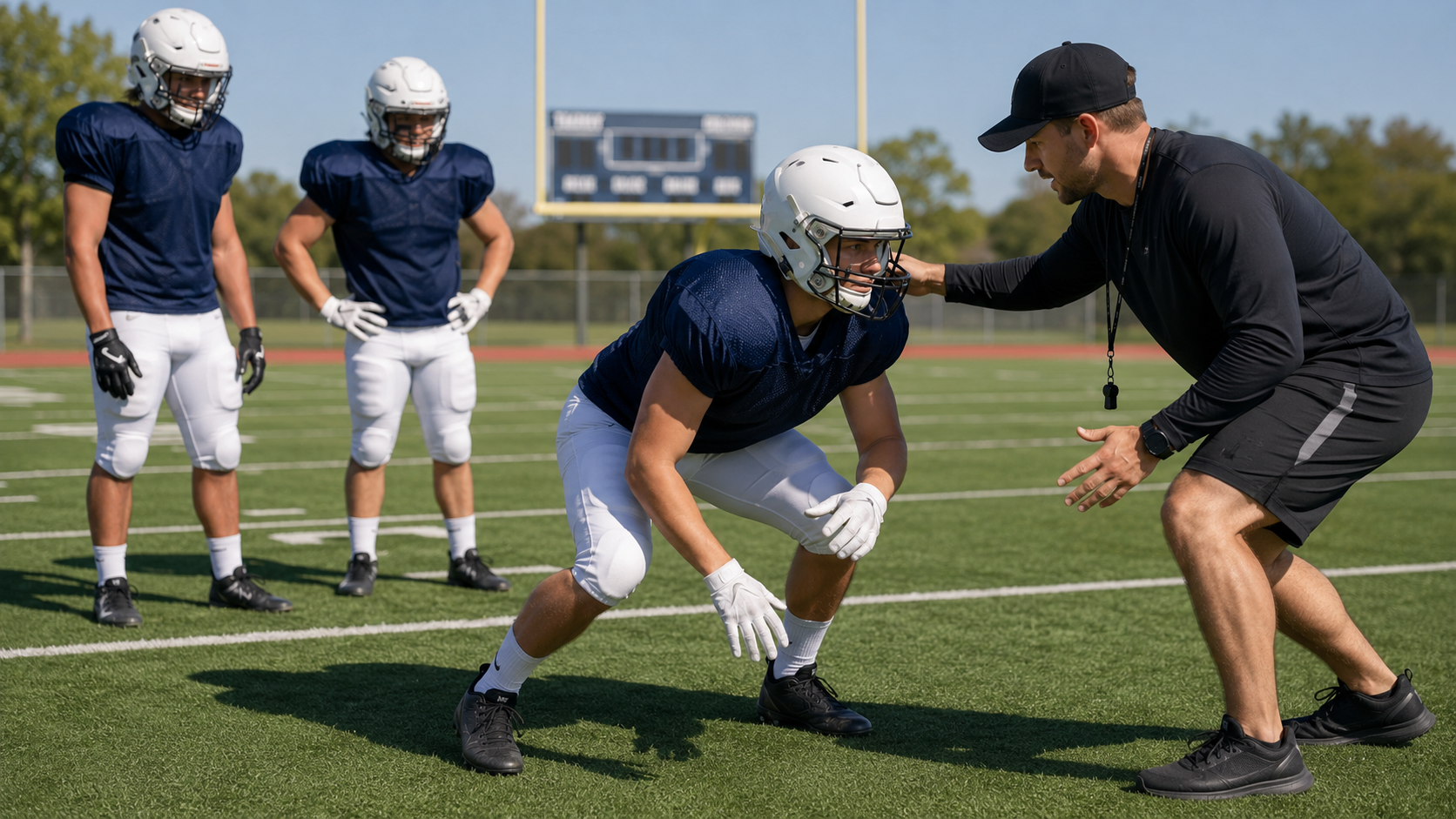
Good tackling starts with body position. Keep your head up, eyes forward, and neck neutral. Do not drop your head before contact. When you cannot see what you are hitting, you put yourself in a dangerous position.
Use your legs and hips, not just your upper body. A safe tackle is not about throwing your head into someone. It is about getting into position, keeping your body controlled, wrapping with the arms, and driving with the legs.
Coaches often teach tackling in stages. You may start with footwork, then body position, then controlled contact, then form tackling, and only later progress to more realistic speed. This step-by-step approach is not boring; it is what helps protect you.
If you are nervous about tackling, that is normal. Do not hide it. Ask for more instruction. A good coach would rather help you learn properly than watch you guess your way through contact.
Never Lead With Your Head
This point deserves its own section because it is one of the most important safety rules in football.
Do not lead with your head when tackling, blocking, or making contact.
Lowering the head increases the risk of serious head and neck injury. It also reduces your ability to see the play clearly. If your eyes are down, your body is guessing. That is dangerous for you and the other player.
Keep your head up and your eyes on the target area. Your shoulders, arms, hips, and legs should do the work. Your helmet is not a battering ram.
This habit must be practiced constantly because beginners may naturally duck their heads when they are nervous. Coaches, teammates, and players should all correct it immediately.
If you catch yourself looking at the ground before contact, slow down and reset. Form matters more than pride.
Take Concussion Awareness Seriously
Concussion awareness is a major part of football safety. A concussion is a brain injury that can happen from a hit to the head, a blow to the body that moves the head quickly, or a fall. You do not have to be knocked unconscious to have a concussion.
Possible warning signs may include headache, dizziness, confusion, nausea, balance problems, blurred vision, sensitivity to light or noise, feeling slowed down, memory problems, or just feeling “off.”
If you suspect a concussion, stop playing and tell a coach, athletic trainer, parent, or medical professional. Do not try to tough it out. Do not go back into the game because you feel embarrassed. Returning too soon can be dangerous.
Teammates should also watch out for each other. Sometimes a player with a concussion may not realize what is happening or may try to hide symptoms. If someone seems confused, unstable, unusually emotional, or not like themselves after a hit, speak up.
Football toughness does not mean ignoring brain health. Real toughness includes protecting your future.
Warm Up Before Practice and Games
Football demands speed, strength, reaction time, and explosive movement. A proper warm-up helps prepare your muscles, joints, and nervous system.
Start with light movement such as jogging, skipping, side shuffling, or backpedaling. Then move into dynamic stretches: leg swings, arm circles, walking lunges, hip openers, ankle bounces, and torso rotations.
After that, warm up with football-specific movements. Practice short accelerations, decelerations, stance starts, light route running, controlled blocking footwork, or defensive movement patterns. Build intensity gradually.
Do not start practice by sprinting full speed or hitting hard before your body is ready. Cold muscles and stiff joints do not respond as well to sudden force.
A good warm-up should make you feel alert, loose, and ready—not tired.
Build Conditioning Gradually
Football can be exhausting for beginners. Plays may be short, but they are intense. You sprint, stop, push, brace, and recover over and over again.
If you are not conditioned, fatigue can make your technique worse. When you are tired, you may tackle with poor form, forget footwork, stand too upright, or react late. That increases injury risk.
Conditioning should be built gradually. Do not try to go from no training to full-contact practice several days a week without giving your body time to adapt.
Focus on a mix of strength, speed, mobility, and recovery. Beginners often benefit from basic bodyweight strength, short sprints, agility drills, and controlled practice reps.
More is not always better. Good conditioning makes you safer and more effective. Exhaustion that destroys your form does not help.
Protect Your Knees and Ankles
Football involves quick cuts, sudden stops, pivots, tackles, and bodies falling around your legs. The knees and ankles take a lot of stress.
Good footwork helps reduce unnecessary strain. Stay balanced, keep your feet active, and avoid twisting awkwardly when your foot is planted. Many lower-body injuries happen when the body turns but the foot stays stuck.
Strengthening the hips, glutes, hamstrings, quads, calves, and core can help support the knees. Exercises like squats, lunges, step-ups, glute bridges, calf raises, and lateral movements are useful when done with good form.
Landing and falling technique also matter. If you jump for a catch or get knocked off balance, try to avoid landing with stiff legs. Bend your knees and hips when possible. Learn how to fall safely during controlled drills.
Also pay attention to the field surface. Holes, uneven ground, wet turf, or poor traction can increase the risk of slips and twists. If something on the field looks unsafe, tell a coach.
Use Proper Blocking Technique
Blocking may not look as dramatic as tackling, but it is still a contact skill that needs proper form.
Beginners sometimes block with straight arms, poor balance, or a lowered head. This can put stress on the shoulders, wrists, neck, and back. Good blocking uses footwork, body position, hand placement, and leverage.
Keep your head up. Stay balanced. Use your hands and shoulders properly according to coaching instruction. Move your feet instead of reaching desperately. If your feet stop and your upper body lunges, you are more likely to lose control.
Blocking should be strong but not wild. You are trying to control space and position, not simply crash into someone.
If you play on the line, learning safe blocking technique is especially important because contact happens repeatedly. Small form errors can build up over a full practice or season.
Stay Hydrated and Watch for Heat Stress
Football practices often happen in warm weather, sometimes with heavy equipment. Helmets and pads can trap heat, making hydration and heat awareness important.
Drink water before, during, and after practice. Do not wait until you feel extremely thirsty. If practice is long or very hot, coaches may also recommend electrolyte replacement.
Heat-related warning signs may include dizziness, headache, nausea, chills, muscle cramps, unusual weakness, confusion, or stopping sweating despite feeling hot. These signs should be taken seriously.
Beginners may try to push through because they want to impress the team. Do not do that. Heat illness can become serious quickly.
Take breaks when allowed. Remove your helmet during rest periods if coaches permit it. Find shade when possible. Tell someone if you feel unwell.
Being responsible about heat is not weakness. It is basic sports safety.
Communicate With Coaches and Teammates
Football is a team sport, and communication is part of staying safe.
Tell your coach if you are new, unsure about a drill, uncomfortable with a technique, or recovering from soreness. Coaches cannot help with problems they do not know about.
Listen carefully during instruction. Many safety details are hidden in simple coaching cues: keep your head up, bend your knees, wrap properly, move your feet, stay low, do not reach, stop at the whistle.
Also respect the whistle. Once a play is over, stop. Late hits and unnecessary contact increase injury risk and create a bad team culture.
Good teammates protect each other. They do not shame someone for reporting pain, dizziness, or confusion. They do not encourage reckless hits in practice. They help beginners learn instead of pressuring them to pretend they already know everything.
A safer team is usually a better team.
Do Not Ignore Pain
Football is physical, so some muscle soreness can happen. But pain is not something to casually ignore.
Sharp pain, joint pain, swelling, numbness, dizziness, difficulty moving, or pain that changes your technique should be taken seriously. If you limp through practice or protect one shoulder during contact, you may create more problems.
Pain is information. It does not always mean something severe, but it means you should pause and assess.
Tell a coach, athletic trainer, parent, or medical professional. Rest may be enough for minor irritation, but continuing full-contact football through worsening pain is not smart.
It is better to miss one drill than to miss a season.
Practice Falling and Contact Control
Falling is part of football. You may be tackled, blocked, tripped, or knocked off balance. Beginners often stiffen up when they fall, which can increase the chance of wrist, shoulder, or head impact.
Controlled drills can teach safer falling habits. You learn how to protect yourself without posting your hand awkwardly, twisting your body, or letting your head hit the ground unnecessarily.
Contact control is also important. Not every drill needs to be full force. Many skills can be learned through walk-throughs, half-speed reps, pad work, and controlled contact before live action.
A smart practice progression builds confidence. It teaches your body what to do before the game gets fast.
Do not rush this process. Good football players are built through repeated controlled practice, not chaos.
Respect Your Position’s Specific Risks
Different positions face different safety challenges.
Linemen deal with repeated contact, blocking, hand fighting, and pressure on the neck, shoulders, back, and knees. Running backs and receivers may face tackles at speed. Quarterbacks need awareness of blindside contact and throwing shoulder care. Defensive players must learn safe tackling and pursuit angles. Kickers and punters may need to protect their hips, groin, and kicking leg.
Your training should match your role. A beginner wide receiver and a beginner offensive lineman do not need exactly the same preparation.
Ask your coach what risks are most common for your position and what habits help prevent them. Learning position-specific safety early can save you from developing bad habits.
Recovery Is Part of Football
Recovery is not optional in a contact sport. Your body needs time to repair after practice, strength training, and games.
Sleep is one of the most important recovery tools. Tired athletes react slower, move worse, and make poorer decisions. Nutrition matters too. Football uses a lot of energy, so balanced meals with enough protein, carbohydrates, healthy fats, and fluids support training.
Rest days matter. Light movement, stretching, walking, or mobility work may help on easier days, but constant hard training without recovery can lead to overuse and burnout.
Also pay attention to your mental recovery. Football can be intense, especially for beginners trying to learn plays, techniques, and team expectations. Feeling overwhelmed is normal. Ask questions, take notes, and give yourself time to learn.
You do not have to master everything immediately.
Choose a Safe Practice Environment
A good football environment should value safety, instruction, and respect.
Coaches should teach technique before full contact. They should take concussion symptoms seriously. They should encourage proper equipment use and hydration. They should not pressure injured players to continue.
Players should follow rules and avoid unnecessary hits. Practice should have structure, not random collisions. Beginners should be taught step by step.
If you are choosing a program for yourself or a child, observe how safety is handled. Are players corrected when they lower their heads? Are water breaks provided? Is equipment checked? Are injured players cared for properly? Are coaches calm and instructional, or do they rely on fear and pressure?
Football is already physical. The environment should not make it more dangerous than necessary.
A Simple Beginner Football Safety Checklist
Before stepping onto the field, run through these basics:
Is your helmet fitted and chin strap secured?
Are your shoulder pads, mouthguard, and cleats appropriate?
Did you warm up before intense drills?
Do you understand the technique being practiced?
Are you keeping your head up during contact?
Are you avoiding leading with the helmet?
Are you drinking enough water?
Do you know the signs of a possible concussion?
Are you willing to speak up if something feels wrong?
These questions may seem simple, but simple habits are often what prevent serious mistakes.
Final Thoughts
American football can be a powerful, rewarding sport. It builds teamwork, confidence, discipline, strength, and resilience. But because it involves contact, speed, and repeated impact, beginners need to take safety seriously from the first practice.
The most important precautions are not complicated. Wear properly fitted equipment. Learn tackling and blocking step by step. Never lead with your head. Take concussion symptoms seriously. Warm up, build conditioning gradually, stay hydrated, and communicate with coaches.
You do not need to be fearless to play football. You need to be prepared, aware, and coachable.
Playing safely does not make the sport less exciting. It helps you stay healthy enough to keep improving, keep competing, and keep enjoying the game.
Hi, I’m the creator and editor behind ZestyHabit. I research everyday safety, first aid, and practical wellness topics using official guidance and reliable public sources, then turn that information into clear, realistic steps for daily life.
My goal is to help readers make safer, better-informed choices at home and beyond.