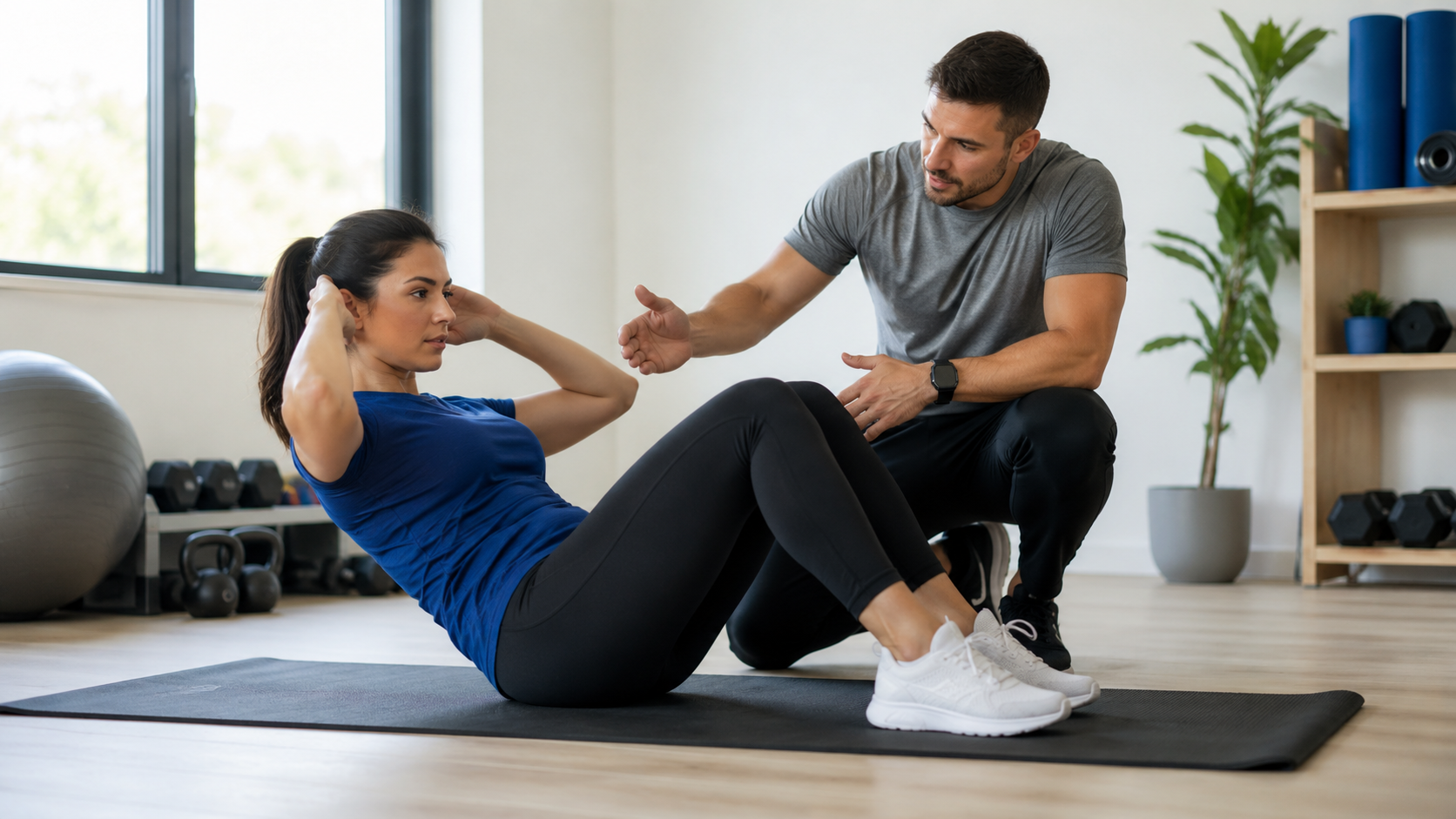
Sit-Up Precautions: How to Avoid Neck and Lower Back Strain
Minjin Park
·
Sit-ups are one of the most familiar core exercises. Many people first learn them in school, sports practice, fitness tests, or basic home workout routines. They look simple: lie down, bend your knees, lift your upper body, and come back down.
But simple does not always mean harmless.
Sit-ups can be useful for building abdominal endurance, but they are also one of those exercises that people often rush through with poor form. If you pull on your neck, arch your lower back, rely too much on your hip flexors, or force too many repetitions, sit-ups can leave you with soreness in all the wrong places.
A good core workout should challenge your abs, not make your neck feel stiff or your lower back feel irritated. The key is learning how to move with control, protect your spine, and know when a different exercise might be a better choice.
Here are the most important sit-up precautions to keep in mind, especially if you want to avoid neck strain, lower back discomfort, and unnecessary spine stress.
Sit-ups involve lifting your torso from the floor into an upright position. That movement uses the abdominal muscles, but it also brings in the hip flexors, the muscles at the front of your hips. When the hip flexors dominate the movement, they can pull on the pelvis and increase stress around the lower back.
Neck strain usually happens for a different reason. Many people place their hands behind their head and pull themselves upward. Instead of using the abs to lift the torso, they yank the head and neck forward. This can create stiffness, soreness, or a strained feeling after the workout.
Lower back strain can happen when you move too quickly, arch excessively, slam your body down, or continue after your core is already fatigued. Once the abdominal muscles stop controlling the movement well, the lower back often takes over.
Sit-ups are not automatically bad for everyone, but they do require attention. If your form breaks down, the exercise can quickly shift away from your core and into your neck, hips, and spine.
Do Not Pull on Your Neck
This is probably the most common sit-up mistake.
When your hands are behind your head, it is tempting to use them for help. As the movement gets harder, you may start tugging your head forward without realizing it. Your chin moves toward your chest, your neck rounds, and your upper body follows.
That may help you complete the rep, but it defeats the purpose of the exercise.
Your hands should not be a handle for your head. They should only be lightly placed near your ears, across your chest, or resting beside your body.
If you prefer hands behind the head, keep your touch gentle. Imagine holding an egg between your chin and chest. You want the neck to stay long, not jammed. Your eyes can look slightly upward or forward rather than straight down at your stomach.
A helpful cue is: lift with your ribs, not your head.
If your neck gets tired before your abs, your form probably needs adjusting.
Keep Your Chin Relaxed
Neck position matters throughout the movement. Many people tuck the chin too hard, as if they are trying to curl the head into the chest. Others throw the head backward and strain the front of the neck.
Neither position is ideal.
Try to keep your neck in a natural line with your upper spine. A slight chin tuck is okay, but it should not feel forced. Your jaw should stay relaxed. Your face should not be tense.
If you notice yourself clenching your teeth, squeezing your eyes, or pushing your head forward, slow down. Those are signs that you may be using tension instead of control.
The sit-up should be an abdominal movement first. The neck should simply come along for the ride.
Start With a Smaller Range of Motion
You do not have to sit all the way up to train your core.
For many beginners, a full sit-up is too demanding at first. As they try to reach the top, they end up pulling on the neck, swinging the arms, or jerking through the lower back. A smaller range of motion can be safer and more effective.
Crunches, partial sit-ups, or curl-ups may be better starting points. In these variations, you lift your head, shoulders, and upper back slightly off the floor while keeping the movement controlled. This lets you focus more directly on the abdominal muscles without forcing the whole torso upward.
Think quality before height. A small, controlled lift that makes your abs work is better than a full sit-up done with momentum and neck pulling.
Avoid Using Momentum
Sit-ups should not look like you are throwing your body upward.
When you swing your arms, kick your legs, or bounce off the floor, you are using momentum instead of muscular control. Momentum may help you get through more reps, but it also increases the chance of irritating your lower back or neck.
A controlled sit-up should have a steady rhythm. Lift smoothly. Pause briefly if needed. Lower back down with control.
The lowering phase matters just as much as the upward phase. If you drop your back onto the floor after every rep, your spine absorbs unnecessary impact. Lower slowly enough that your abs stay engaged.
A slower sit-up often feels harder, but that is the point. It means your muscles are doing the work.
Watch for Hip Flexor Dominance
One of the biggest issues with sit-ups is hip flexor dominance. This happens when the front hip muscles do more work than the abdominal muscles.
You may notice this if you feel the exercise mostly in the front of your hips or thighs instead of your abs. You may also feel your lower back arching or tightening during the movement.
Anchoring the feet can make this worse for some people. When your feet are held down under a couch, bar, or partner’s hands, your hip flexors may pull harder to lift your torso. This can reduce abdominal focus and increase strain on the lower back.
If you feel sit-ups mostly in your hips, try reducing the range of motion. You can also switch to exercises like dead bugs, planks, or curl-ups, which may train the core with less hip flexor involvement.
Your abs should be the main worker, not just a passenger.
Keep Your Lower Back Comfortable
Some people naturally flatten their lower back during a sit-up. Others arch strongly. Either extreme can become uncomfortable if forced.
Before starting, lie on your back with your knees bent and feet flat. Gently engage your core, as if preparing for someone to tap your stomach. You do not need to squeeze as hard as possible. Just create enough support so your lower back does not feel loose or uncontrolled.
As you move, avoid excessive arching. If your lower back lifts sharply off the floor before the rest of your torso moves, you may be losing core control or relying too much on your hip flexors.
Also avoid forcing your back completely flat if that creates discomfort. The goal is not a rigid position. The goal is control.
Your spine should feel supported, not jammed.
Do Not Force High Repetition Sets
Many people treat sit-ups as a numbers game. They try to do 50, 100, or more as quickly as possible.
High-rep sit-ups can be risky when form breaks down. The first 15 reps may look fine, but by rep 40, the neck starts pulling, the lower back starts arching, and the movement becomes sloppy.
For most people, fewer controlled reps are more useful than many rushed ones. A set of 8 to 15 slow, clean repetitions can be more effective than 50 careless reps.
Stop the set when your form changes. If you cannot lift without pulling your neck or swinging your body, the set is done. That is not failure. That is smart training.
Breathe Instead of Holding Your Breath
Core exercises often make people hold their breath. They brace hard, lift, and forget to breathe until the rep is over.
Holding your breath may create unnecessary tension in the neck, jaw, shoulders, and chest. It can also make the movement feel more stressful than it needs to.
Try exhaling as you lift and inhaling as you lower. The exhale can help your ribs move down and your abs engage more naturally.
You do not need to overthink every breath, but do not turn sit-ups into a breath-holding contest. Smooth breathing supports smoother movement.
Keep Your Feet Light
If your feet are planted too aggressively or anchored tightly, the sit-up may turn into more of a hip flexor exercise. This does not mean your feet can never be supported, but beginners should pay attention to what they feel.
Try doing sit-ups or curl-ups with your feet resting lightly on the floor. If your feet lift, that may be a sign the movement is too difficult or your body is trying to use momentum.
You can also place your feet slightly farther from your hips to reduce the urge to pull with the hip flexors, though comfort varies from person to person.
The goal is to feel the abs working without yanking from the hips.
Warm Up Before Core Work
A warm-up helps your body move better, even for floor exercises. Sit-ups may not seem intense compared with running or heavy lifting, but they still ask your spine, hips, and abdominal muscles to coordinate.
Before doing sit-ups, spend a few minutes warming up. Light cardio, gentle spinal mobility, hip circles, cat-cow movements, or easy bodyweight movements can help.
A simple warm-up might include:
Warm-Up Move
Why It Helps
Marching in place
Increases blood flow
Cat-cow
Gently mobilizes the spine
Glute bridges
Wakes up the hips and core
Dead bugs
Prepares abdominal control
Bodyweight squats
Warms the hips and legs
You do not need a long routine. Just avoid going from cold and stiff straight into repeated spinal flexion.
Consider Alternatives if Sit-Ups Bother You
Sit-ups are not mandatory. You can build a strong core without doing them.
Some people simply do not tolerate sit-ups well. Their lower back gets irritated, their neck strains easily, or their hip flexors take over every time. That does not mean they are weak. It may mean another core exercise fits their body better.
Good alternatives include:
Exercise
Why It May Be Useful
Dead bug
Trains core control with low back support
Plank
Builds bracing strength without repeated bending
Side plank
Strengthens obliques and hip stability
Bird dog
Trains back-friendly core coordination
Glute bridge
Supports pelvis and lower back control
Modified curl-up
Trains abs with less full-body strain
A smart workout is not about forcing one specific exercise. It is about choosing movements that train the target muscles safely.
Try the Modified Curl-Up
If full sit-ups bother your back or neck, the modified curl-up can be a better option.
Lie on your back with one knee bent and the other leg straight. Place your hands under your lower back to help maintain a natural curve. Gently brace your core. Lift your head and shoulders just slightly off the floor without pulling your neck. Hold briefly, then lower with control.
The movement is small, but it can be surprisingly effective. The goal is not to curl as high as possible. The goal is to create abdominal tension while keeping the spine supported.
This variation encourages control rather than momentum.
Pay Attention to Surface and Setup
Where you do sit-ups matters too. A hard floor can make the lower back or tailbone uncomfortable. A very soft bed or couch can make your spine unstable and encourage poor form.
Use an exercise mat or a firm but comfortable surface. Your body should feel supported without sinking.
Make sure you have enough space around you. If you are cramped, you may rush or twist awkwardly. Small setup details can affect how the exercise feels.
Avoid Sit-Ups When Your Back Is Already Irritated
If your lower back is already sore from work, driving, lifting, or another workout, sit-ups may not be the best choice that day. Repeated bending can aggravate a sensitive back.
Choose gentler core exercises instead, such as dead bugs, bird dogs, or short planks. You can return to sit-ups later if they feel comfortable.
Exercise should support your body, not punish it for already being tired.
If you have a history of back injury, disc problems, or ongoing pain, it is wise to speak with a qualified healthcare professional or physical therapist before making sit-ups a regular part of your routine.
Common Sit-Up Mistakes to Avoid
Here are some common errors that can lead to neck or lower back strain:
Mistake
Why It Can Be a Problem
Pulling on the head
Strains the neck and reduces abdominal work
Rushing reps
Uses momentum instead of control
Anchoring feet too hard
Can increase hip flexor dominance
Dropping down quickly
Adds unnecessary stress to the spine
Doing too many reps
Form often breaks down with fatigue
Holding the breath
Increases tension in the neck and shoulders
Forcing full range
May irritate the lower back
Most of these mistakes are easy to fix once you notice them. Slow down, reduce the range, and focus on the right muscles.
A Safer Sit-Up Checklist
Use this quick checklist before and during your next core workout:
Form Check
What to Do
Neck
Keep it long and relaxed
Hands
Do not pull the head
Chin
Slightly tucked, not jammed down
Core
Gently braced before lifting
Lower back
Supported, not painfully arched
Speed
Slow and controlled
Feet
Light, not aggressively anchored
Reps
Stop before form breaks
This kind of awareness can make sit-ups feel very different. Instead of chasing numbers, you train with intention.
Final Thoughts
Sit-ups may be a classic core exercise, but they are not something to rush through carelessly. Neck pulling, hip flexor dominance, poor breathing, and sloppy high-rep sets can turn a simple workout into an uncomfortable one.
To protect your neck and lower back, keep your movement controlled. Avoid yanking your head forward. Use a smaller range of motion if needed. Pay attention to whether you feel the exercise in your abs or mostly in your hips and back.
And remember, sit-ups are optional. If they do not feel good for your body, you can still build a strong, stable core with planks, dead bugs, bird dogs, curl-ups, and other back-friendly exercises.
The best core training is not the exercise that looks hardest. It is the one you can perform with control, comfort, and consistency.
Hi, I’m the creator and editor behind ZestyHabit. I research everyday safety, first aid, and practical wellness topics using official guidance and reliable public sources, then turn that information into clear, realistic steps for daily life.
My goal is to help readers make safer, better-informed choices at home and beyond.