Walking Exercise Precautions: How to Protect Your Feet and Knees
Minjin Park
·
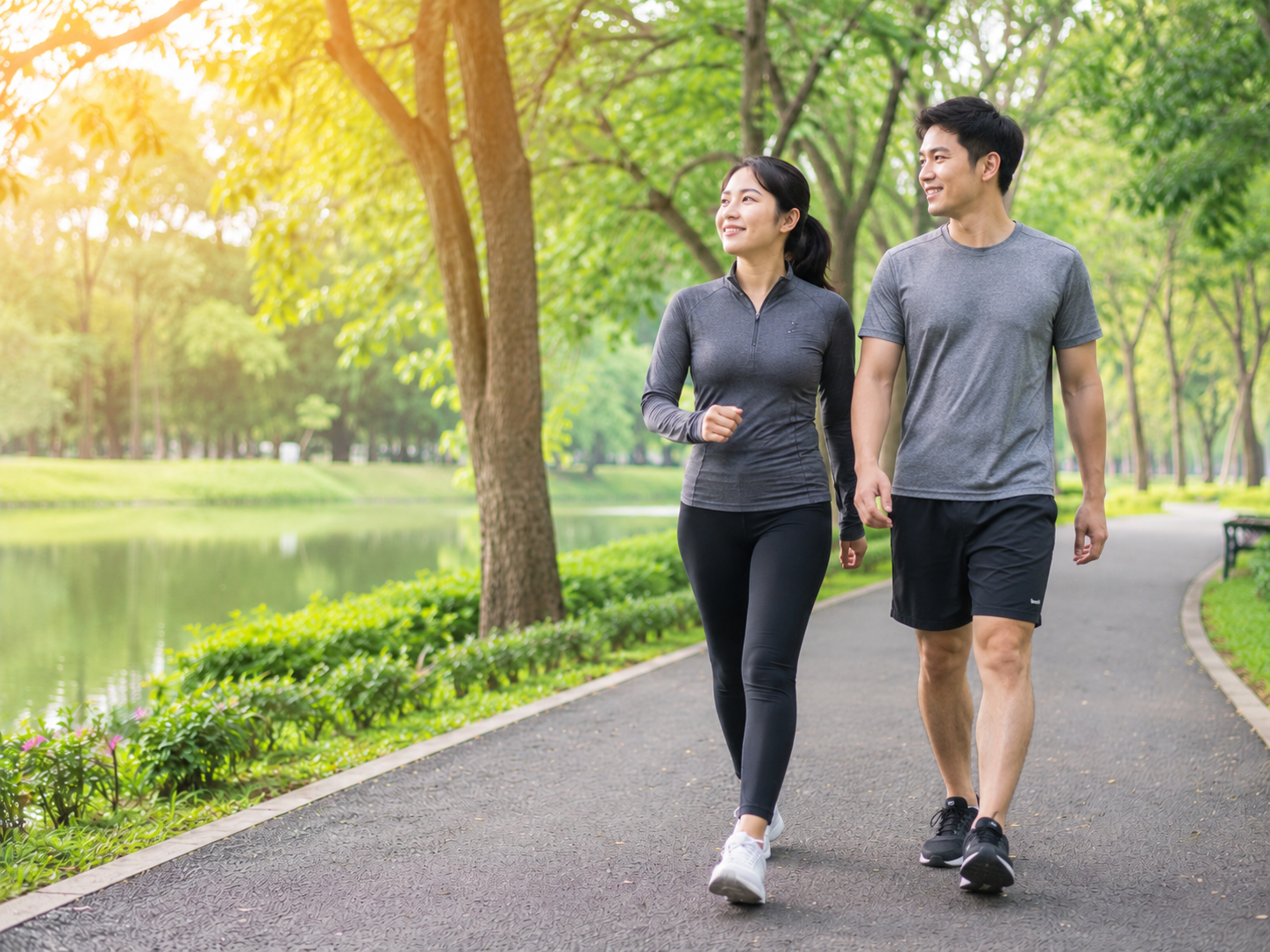
Walking looks simple, and in many ways, that is exactly why people love it. You do not need a gym membership, complicated equipment, or a strict training plan to get started. A walk around the neighborhood, a few laps at the park, or even a longer route after dinner can help you feel more active and clear-headed.
But because walking feels so natural, many people also underestimate it.
Your feet, ankles, knees, hips, and lower back all work together every time you take a step. When your shoes are worn out, your posture is off, your pace increases too quickly, or you suddenly start walking much longer distances than usual, small aches can build into real discomfort.
Walking is one of the most approachable forms of exercise, but it still deserves a little care. The goal is not to make walking feel complicated. It is to help you walk more comfortably, avoid unnecessary strain, and keep the habit going for the long run.
Walking is low-impact compared with running, jumping, or high-intensity workouts. That does not mean it is impact-free.
Each step places pressure through your heel, arch, toes, ankle, and knee joint. Over a short walk, your body usually handles this easily. Over thousands of steps, especially on hard pavement or uneven ground, small problems can become more noticeable.
Common reasons walking may bother your feet or knees include:
The good news is that most walking-related discomfort can be reduced with practical changes.
Start with the Right Shoes
Your shoes are one of the biggest factors in comfortable walking. They do not need to be expensive or trendy, but they should fit well and support the way you move.
A good walking shoe should feel secure around the heel, roomy enough around the toes, and comfortable from the first walk. You should not need to “break in” a painful pair of shoes. Mild stiffness is normal with some new shoes, but rubbing, pinching, numbness, or pressure spots are signs that the fit is wrong.
Pay attention to the toe box. Your toes should have enough room to spread naturally. If your shoes squeeze the front of your foot, you may notice blisters, toenail pressure, or pain near the ball of the foot after longer walks.
The heel should also feel stable. If your foot slides up and down with every step, you may develop friction or feel less balanced. On the other hand, if the heel area is too tight, it can irritate the back of your foot or Achilles tendon.
A simple test: after putting on your walking shoes, stand up and wiggle your toes. Then walk around for a minute. Your foot should feel supported, not trapped.
Replace Worn-Out Shoes Before They Cause Problems
Many people keep walking shoes long after the support has faded. The outside of the shoe may still look acceptable, but the cushioning and structure inside can wear down.
Signs your walking shoes may need replacing include:
The sole looks unevenly worn
The heel is compressed or tilted
You feel more impact than before
Your knees or feet ache after normal walks
The shoe no longer feels stable
The inside lining is torn or rough
If you walk often, it helps to check your shoes regularly. A pair that once felt great can become a source of strain once the cushioning breaks down.
You do not have to replace shoes at the first sign of age, but do not wait until they are completely flat or painful. Your feet and knees often notice worn-out shoes before your eyes do.
Choose Socks That Reduce Friction
Socks may seem like a small detail, but they matter more than people think. Thin, rough, or poorly fitting socks can cause rubbing, hot spots, and blisters.
For regular walking, choose socks that fit snugly without bunching. Moisture-wicking socks can be helpful if your feet sweat easily or if you walk in warm weather. Cotton socks are comfortable for casual use, but they may hold moisture during longer walks.
If you often get blisters, check where they happen. Blisters on the toes may come from tight shoes or toe friction. Blisters on the heel may come from heel slippage. Blisters under the ball of the foot may come from pressure, moisture, or thin cushioning.
Small adjustments, like changing socks or tightening your laces differently, can make walking feel much better.
Warm Up Before Longer Walks
For a short casual walk, you may not need a formal warm-up. But if you are planning a brisk walk, a long walk, or a route with hills, taking a few minutes to ease in can protect your feet and knees.
Start at a comfortable pace for the first five to ten minutes. Let your ankles, calves, knees, and hips gradually adjust before increasing speed.
You can also do a few gentle movements before heading out:
Ankle circles
Calf raises
Slow marching in place
Gentle leg swings
Hip circles
The point is not to stretch aggressively. It is simply to wake up the joints and muscles that help absorb impact.
Pay Attention to Your Walking Posture
Good walking posture helps your body distribute effort more evenly. Poor posture can place extra strain on your knees, feet, hips, and lower back.
Try to keep your head lifted, shoulders relaxed, and chest open. Look ahead rather than staring down at your feet the whole time. Your arms can swing naturally at your sides, with elbows slightly bent if you are walking briskly.
Avoid leaning too far forward from the waist. A slight forward angle may happen naturally when walking uphill, but folding forward can stress your back and change how your knees track.
Also avoid locking your knees. Your steps should feel smooth and natural, not stiff.
A helpful cue is to imagine your body being gently lifted from the top of your head. You do not need a rigid “perfect” posture. You just want to avoid collapsing into your shoulders, hips, or knees while walking.
Do Not Overstride
Overstriding means taking steps that are too long, often with the foot landing far in front of the body. This can increase impact through the heel and knee.
Many people overstride when they try to walk faster. Instead of taking huge steps, aim for slightly quicker, shorter steps. Your foot should land closer under your body, not way out in front of you.
A smoother stride usually feels easier on the knees. It also helps your feet roll more naturally from heel to toe.
If your knees feel sore after brisk walking, try shortening your stride during your next walk. You may be surprised how much difference it makes.
Increase Distance Gradually
One of the most common walking mistakes is doing too much too soon.
Maybe you decide to get healthier and suddenly go from 2,000 steps a day to 12,000. Or you take one long weekend walk after being mostly inactive during the week. Your motivation may be good, but your feet, knees, and calves may not be ready for the sudden jump.
A better approach is to build gradually. Add time or distance in small amounts, especially if you are new to walking exercise.
For example, if you currently walk 15 minutes comfortably, try 20 minutes for a few days before moving to 25 or 30. If your goal is 10,000 steps a day, work toward it steadily instead of forcing it immediately.
Your body adapts well when you give it time. Rushing the process often leads to soreness that makes it harder to stay consistent.
Be Careful with Hills and Stairs
Hills can make walking more challenging, especially for your calves, ankles, glutes, and knees. Walking uphill usually requires more muscle effort. Walking downhill can place extra stress on the knees because your legs have to control your body weight with each step.
If you are adding hills, start with gentle slopes. Keep your steps shorter, especially when going downhill. Avoid pounding your feet into the ground or leaning back too much.
Stairs can also be useful, but they are more demanding than flat walking. If your knees are sensitive, do not suddenly add a lot of stair climbing to your routine. Increase slowly and pay attention to how your knees feel later that day and the next morning.
Choose Surfaces Wisely
The surface you walk on can change how your body feels.
Concrete and asphalt are convenient, but they are hard surfaces. Trails, tracks, grass, and packed dirt may feel gentler, although uneven ground can challenge your ankles and balance.
There is no single perfect surface for everyone. The best option depends on your body, shoes, and route.
If your feet or knees feel sore after walking on pavement, try mixing in softer surfaces when possible. A park trail, school track, or treadmill may feel more comfortable. If you walk on uneven paths, slow down and watch your footing to avoid twisting an ankle.
Variety can help. Repeating the same hard route every day may irritate the same areas over time.
Watch for Foot Pain Early
Foot discomfort often starts small. A little rubbing. A tight arch. A sore heel. Tenderness near the toes.
It can be tempting to ignore these signs and keep walking. But early foot pain is useful information. It tells you something needs adjustment.
Common walking-related foot issues include blisters, heel soreness, arch discomfort, toe pressure, and pain around the ball of the foot. These can come from shoe fit, walking volume, surface, or foot mechanics.
If you feel a hot spot forming during a walk, stop and check your sock or shoe. If your toes feel numb, your shoes may be too tight or your laces may be pressing too much. If your heel hurts repeatedly, your shoes may lack cushioning or support.
Pain that is sharp, worsening, or persistent should not be treated as normal exercise soreness.
Protect Your Knees with Strength, Not Just Rest
Many people think knee protection is only about avoiding impact. Rest can help when your knee is irritated, but long-term knee comfort often depends on strength and control.
Your knees are influenced by the muscles around your hips, thighs, and calves. Weak glutes or poor hip control can affect how your knees move during walking. Tight calves or hamstrings can also change your stride.
Simple strength exercises may support your walking routine:
Glute bridges
Bodyweight squats to a comfortable depth
Step-ups on a low step
Calf raises
Side leg raises
Wall sits for short holds
You do not need to train like an athlete. Even a few minutes of basic strengthening a few times a week can help your body handle walking more comfortably.
If an exercise causes pain, stop and choose an easier version.
Stretch Gently After Walking
Stretching after a walk can help reduce tightness, especially in the calves, hamstrings, hips, and feet.
Keep stretches gentle and comfortable. You should feel mild tension, not pain. Hold each stretch calmly and breathe normally.
Helpful post-walk stretches include:
Calf stretch against a wall
Hamstring stretch
Hip flexor stretch
Figure-four glute stretch
Gentle foot arch massage
Toe stretch
Stretching is not a magic fix, but it can be a useful part of a walking routine, especially if you often feel tight after longer walks.
Do Not Ignore Recovery
Walking every day can be healthy for many people, but your body still needs recovery. This is especially true if you are increasing distance, walking briskly, adding hills, or trying to lose weight through higher activity.
Recovery does not always mean doing nothing. It may mean taking a shorter walk, choosing a slower pace, walking on a softer surface, or doing gentle mobility work instead of pushing hard.
Look at patterns. If your feet or knees feel worse every day, your body may need a lighter day. If soreness improves as you warm up and disappears afterward, it may be normal adjustment. If pain gets sharper or lingers, that is a sign to back off.
Consistency is built through smart pacing, not constant pushing.
Be Mindful of Body Weight, Load, and Bags
Walking while carrying extra weight, such as a heavy backpack, groceries, or work bag, can increase stress on your feet and knees.
If you walk for exercise, try not to carry unnecessary weight. If you must carry a bag, use one that distributes weight evenly. A backpack with two straps is usually better than a heavy shoulder bag on one side.
Uneven loads can change your posture and stride. Over time, that can contribute to hip, knee, or foot discomfort.
For long walks, keep your load light. Bring only what you need: water, phone, keys, and maybe a small snack if you will be out for a while.
Stay Hydrated and Dress for the Weather
Foot and knee protection is not only about joints. Overall comfort affects how you walk.
In hot weather, dehydration and fatigue can change your posture and make your steps feel heavier. In cold weather, stiff muscles may need more time to warm up. Rainy or icy conditions increase the risk of slipping.
Wear breathable clothing in warm weather and layers in cooler weather. Choose shoes with enough grip if the ground is wet. If visibility is low, wear reflective details or carry a light.
When your body is comfortable, your walking form usually stays better too.
Know the Difference Between Soreness and Pain
Mild muscle soreness after increasing your walking routine can be normal. You might feel it in your calves, thighs, or glutes. It should gradually improve and should not stop you from moving normally.
Do not try to “walk through” serious pain. Rest, adjust your routine, and consider getting professional advice if symptoms persist or feel concerning.
A Simple Walking Routine That Is Easier on Feet and Knees
A comfortable walking routine does not need to be complicated.
Start with five minutes at an easy pace. Let your body warm up. Then walk at a moderate pace where you can still speak in short sentences. Keep your stride natural and avoid taking overly long steps. Finish with five minutes slower, then do a few gentle stretches.
For beginners, 15 to 25 minutes may be enough. For more experienced walkers, 30 to 60 minutes may feel comfortable. The best routine is the one your body can repeat without increasing pain.
You can also split walking into shorter sessions. Two 15-minute walks may feel better than one 30-minute walk, especially if your knees or feet are sensitive.
Final Thoughts
Walking is simple, but it is still exercise. Your feet and knees carry you through every step, so they deserve attention before discomfort becomes a bigger problem.
Good shoes, comfortable socks, gradual distance increases, better posture, shorter strides, and enough recovery can make walking feel smoother and safer. You do not have to obsess over every detail. Just notice how your body responds and make small adjustments early.
A good walk should leave you feeling better, not beaten up. Protect your feet and knees, and walking can become one of the easiest habits to keep for years.
Hi, I’m the creator and editor behind ZestyHabit. I research everyday safety, first aid, and practical wellness topics using official guidance and reliable public sources, then turn that information into clear, realistic steps for daily life.
My goal is to help readers make safer, better-informed choices at home and beyond.
[…] this article, we will explore why exercise is especially important during the growth period, how it affects physical and mental development, and how establishing healthy movement habits early […]
Loading…
Discover more from
Subscribe now to keep reading and get access to the full archive.



[…] this article, we will explore why exercise is especially important during the growth period, how it affects physical and mental development, and how establishing healthy movement habits early […]