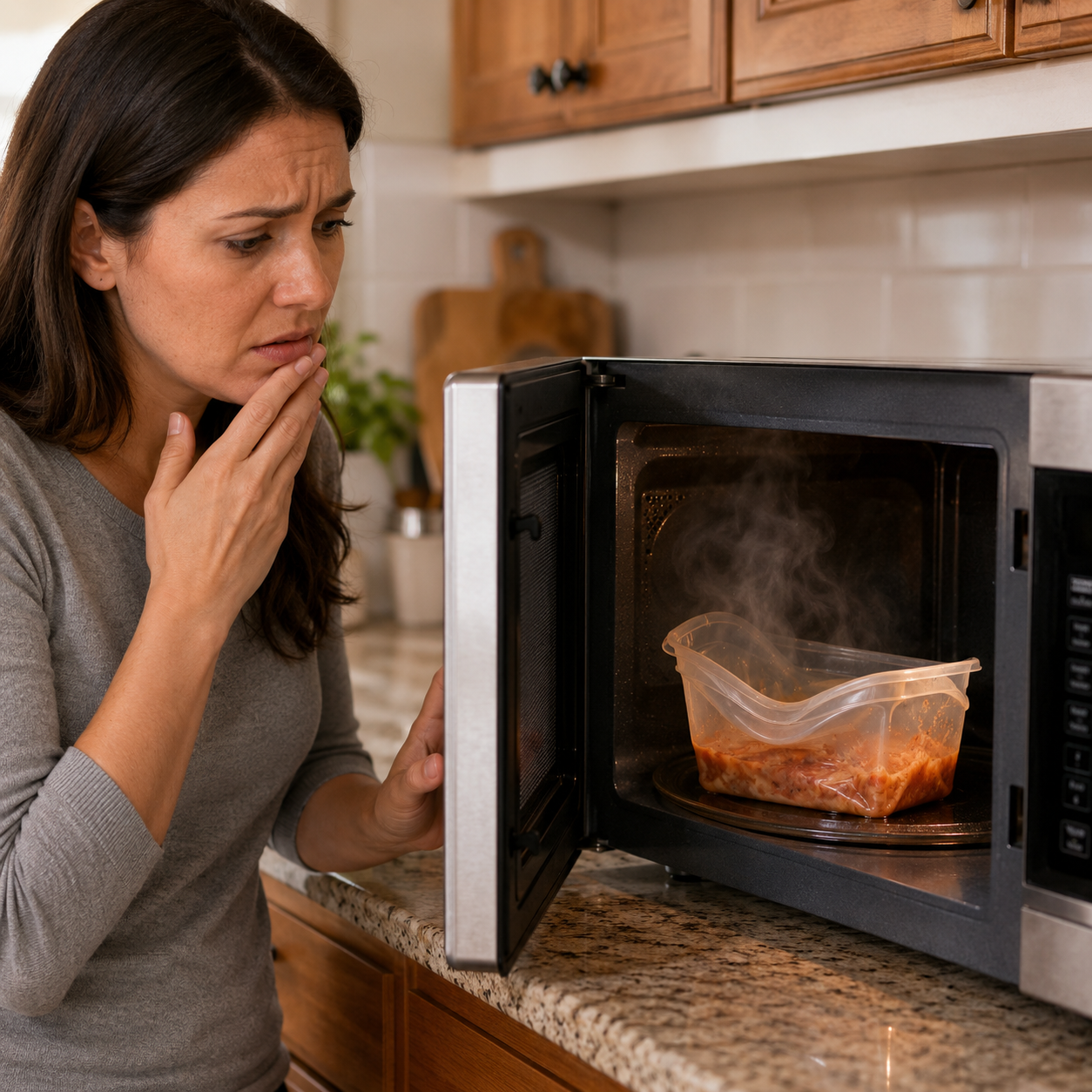
Why You Shouldn’t Microwave Plastic Containers That Aren’t Microwave-Safe
Minjin Park
·
Learn why non-microwave-safe plastic containers can warp, melt, leak chemicals, or create messy food hazards, and how to choose safer containers for reheating meals.
You come home tired, pull leftovers from the fridge, pop the container in the microwave, and dinner is ready in two minutes. For busy families, students, office workers, and anyone trying to avoid cooking from scratch every night, reheating food in its storage container feels practical.
But not every plastic container belongs in the microwave.
Some plastic containers are designed to handle microwave heat. Others are not. The difference matters because a container that looks sturdy at room temperature may soften, warp, crack, melt, or release unwanted substances when heated.
This does not mean every plastic container is automatically dangerous. It means the label matters. The food matters. The heat level matters. And the condition of the container matters.
A quick check before reheating can prevent melted lids, messy spills, damaged containers, strange odors, and avoidable food safety concerns.
What “Microwave-Safe” Actually Means
A microwave-safe label means the container was made and tested for microwave use under certain conditions. It should be able to handle normal microwave heating without melting, breaking down, or becoming unsafe when used as directed.
You may see words like “microwave-safe,” “microwavable,” or a microwave symbol on the bottom of a container. Some containers also include instructions such as “vent lid,” “top-rack dishwasher safe,” “reheat only,” or “do not use for high-fat foods.”
Those details matter.
Microwave-Safe Does Not Mean Indestructible
Even microwave-safe containers have limits.
A container may be safe for reheating leftovers, but not for cooking bacon until crispy. A lid may be okay for covering loosely, but not for sealing tightly. A container may be fine when new, but not after years of scratches, stains, and heat damage.
So the label is the starting point, not an excuse to ignore the container’s condition.
Why Non-Microwave-Safe Plastic Can Warp or Melt
Plastic is not one single material. There are many types of plastic, and they behave differently under heat.
Some plastics soften at relatively low temperatures. Others can tolerate more heat. A container used for cold salad, cookies, takeout, berries, or deli food may not be designed for microwave temperatures at all.
When non-microwave-safe plastic gets hot, it may lose its shape. The bottom may sag. The lid may shrink. The sides may bow outward. In worse cases, it can melt into the food or onto the microwave turntable.
Food Can Get Hotter Than You Think
Many people assume the microwave only makes food warm. But certain foods can become very hot, especially sauces, cheese, oil, butter, soup, rice, pasta, and foods with sugar or fat.
That is why a container’s performance once does not prove it is always safe.
Hot Spots Make the Problem Worse
Microwaves do not always heat food evenly.
One part of the meal may be lukewarm while another part is bubbling hot. These hot spots can overheat small areas of the plastic, especially where oily or sugary food touches the container.
This is one reason you may see staining, pitting, bubbling, or rough patches inside old plastic containers.
Saucy and Fatty Foods Are Especially Tricky
Foods with oil, butter, cream, cheese, meat fat, or thick sauce can get very hot. Think of lasagna, curry, chili, stew, macaroni and cheese, spaghetti sauce, or leftover takeout.
These foods may heat unevenly and hold heat well. If the container is not made for microwave use, it may soften or degrade faster.
When reheating these foods, glass or ceramic is often the better choice.
Chemical Migration: What People Worry About
One concern with microwaving the wrong plastic is that substances from the plastic may migrate into food, especially when the container is heated, scratched, old, or used with fatty foods.
You do not need to become a plastics expert. You just need to avoid shortcuts that increase risk.
Heat, Fat, and Time Matter
Chemical migration is more likely to be a concern when plastic is exposed to high heat, long heating times, repeated use, oily foods, or damaged surfaces.
A quick warm-up in a labeled microwave-safe container is different from repeatedly heating greasy food in a scratched takeout tub.
The safest everyday habit is to transfer food to a microwave-safe dish when the container label is unclear.
Takeout Containers Are Often Not Meant for Reheating
Takeout containers are one of the most common sources of confusion.
Some takeout containers are sturdy. Some look like regular storage containers. Some even survive a few microwave trips without obvious damage. But many are designed mainly for transportation, not repeated heating.
Foam containers, thin plastic boxes, deli tubs, disposable trays, and condiment cups are especially questionable unless clearly labeled microwave-safe.
“It Came With Hot Food” Does Not Mean It Is Microwave-Safe
This is a common mistake.
A container may hold hot food for a short trip from a restaurant to your home, but that does not mean it can handle microwave heating. The microwave can create concentrated heat, steam pressure, and hot spots that the container was never designed for.
If the container does not say microwave-safe, transfer the food to a proper dish.
Plastic Lids Can Be a Problem Too
Sometimes the container is microwave-safe, but the lid is not. Or the lid is meant to be used only loosely, not snapped shut.
A tightly sealed lid can trap steam. Pressure can build up, causing the lid to pop off, splatter food, or deform. Even if the lid does not explode, trapped steam can make it dangerously hot when opened.
Vent the Lid
If the lid is labeled microwave-safe, follow the instructions. Usually that means venting it, leaving it slightly open, or using it as a loose cover.
If you are unsure about the lid, use a microwave-safe plate, paper towel, or microwave-safe cover instead.
Watch for Warning Signs on Plastic Containers
Plastic containers do not last forever.
Even microwave-safe containers can become worn out after repeated heating, washing, staining, and scratching. Once a container is damaged, it may not behave the same way it did when new.
Signs a Plastic Container Should Be Replaced
Throw away or stop microwaving plastic containers that have:
Warped sides or lids
Melted spots
Rough or bubbled surfaces
Deep scratches
Cracks
Sticky texture
Strong odors
Permanent heavy staining
Cloudy or brittle plastic
A lid that no longer fits properly
A scratched, warped container is not just ugly. It may be harder to clean and less reliable under heat.
Do Not Microwave Plastic Bags or Wrap Unless Labeled
They can melt, shrink, stick to food, or create unpleasant odors when heated. Some wraps are labeled for microwave use, but even then, they should be used according to directions and kept from touching the food when recommended.
Use a Proper Cover Instead
To prevent splatter, use a microwave-safe cover, a microwave-safe plate, or a paper towel when appropriate.
A cover does not need to seal the food. It just needs to reduce splatter while allowing steam to escape.
The Problem With Heating Food in Thin Disposable Plastic
Thin plastic is often made for convenience, not heat.
This includes many containers used for yogurt, sour cream, margarine, deli salads, berries, bakery items, and prepared grocery foods. These containers may be perfect for cold storage but poor for microwave reheating.
They can soften quickly, especially with hot soup, sauce, or oily leftovers.
Reusing Is Not Always Safe
Reusing containers can feel thrifty and eco-friendly. It is fine to reuse some containers for organizing dry goods, holding leftovers in the fridge, or storing non-food items.
But using thin disposable plastic for microwave reheating is not the best place to save money.
If you want reusable containers, choose ones labeled microwave-safe.
What About Recycling Numbers?
Many plastic containers have a recycling number on the bottom. This number tells you about the type of plastic for recycling purposes, but it does not automatically tell you the container is microwave-safe.
A recycling symbol is not the same as a microwave-safe symbol.
Look for Microwave-Safe Labeling
Do not rely only on the number inside the triangle. Look for words or symbols that specifically say the container is safe for microwave use.
If you cannot find that information, choose glass, ceramic, or another clearly microwave-safe dish.
Why Glass and Ceramic Are Often Better Choices
For reheating, plain microwave-safe glass and ceramic dishes are often the easiest option.
They do not warp like plastic, they handle saucy foods well, and they are easier to inspect for cleanliness. They are especially useful for foods that stain plastic, such as tomato sauce, curry, chili, and oily dishes.
Check for Microwave Safety
Not all glass or ceramic belongs in the microwave. Avoid dishes with metallic trim, gold decoration, or unknown materials. Use dishes labeled microwave-safe when possible.
Also be careful with sudden temperature changes. Do not take a dish from the freezer and immediately microwave it unless it is designed for that use.
Common Foods That Are Hard on Plastic
Some foods are more likely to stain, overheat, or damage plastic containers.
Tomato Sauce
Tomato sauce can stain plastic and may become very hot in spots. Spaghetti, lasagna, pizza sauce, and chili can leave permanent orange or red stains.
Curry
Curry can stain plastic deeply and often contains oil, which can get hot quickly. It is one of the foods that is often better reheated in glass or ceramic.
Cheese and Cream Sauces
Mac and cheese, creamy pasta, queso, and casseroles can become very hot and sticky. These foods may cling to plastic and create hard-to-clean spots.
Oily Foods
Foods with oil, grease, or meat fat can overheat certain areas of plastic. Bacon, fried foods, oily noodles, and greasy takeout are better transferred to a proper dish.
Sugary Foods
Syrups, desserts, and sugary sauces can become extremely hot. They can also bubble over or stick to surfaces.
Do Not Microwave Empty Plastic Containers
Microwaving an empty or nearly empty plastic container is a bad idea.
Without enough food or liquid to absorb microwave energy, the container may heat unevenly or become damaged. This can happen if you are trying to warm a small amount of sauce in a large plastic container or dry a damp container in the microwave.
Use the microwave for food, not as a shortcut for drying or warming plastic.
Be Careful With Children’s Dishes and Bottles
Children’s plates, bowls, cups, and bottles should be used exactly as directed by the manufacturer.
Some items are dishwasher-safe but not microwave-safe. Some are safe for warming food but not for long heating. Some parts, like lids, nipples, straws, or valves, may have different instructions from the main container.
Heat Evenly and Check Temperature
When warming food for children, stir well and check the temperature before serving. Microwaves can create hot spots, even if the container is safe.
The container choice is only one part of safe reheating.
How to Reheat Food More Safely
A few simple habits can make microwave reheating cleaner and safer.
Transfer When Unsure
If you are not sure whether a container is microwave-safe, transfer the food to a microwave-safe glass or ceramic dish.
Mistake 1: Assuming Any Food Container Is Microwave-Safe
A container that holds food is not automatically safe for microwave heating.
Mistake 2: Microwaving Takeout Containers
Unless clearly labeled, transfer takeout to a proper dish.
Mistake 3: Snapping the Lid Shut
A sealed lid can trap steam and cause pressure buildup.
Mistake 4: Reusing Disposable Containers for Hot Food
Yogurt tubs, deli containers, and thin trays are usually better for cold storage than reheating.
Mistake 5: Ignoring Damage
Warped, scratched, stained, or melted plastic should not keep going back into the microwave.
Mistake 6: Heating Oily Foods in Plastic
Oil-heavy foods can get very hot and may be harder on plastic.
A Simple Microwave Container Checklist
Before microwaving food in plastic, ask yourself:
Does it say microwave-safe?
If not, transfer the food.
Is the container in good condition?
No cracks, melting, heavy scratches, or warping.
Is the lid also microwave-safe?
If unsure, use another cover.
Can steam escape?
Loosen the lid or vent it.
Is the food oily, sugary, or very saucy?
Consider using glass or ceramic.
Am I heating for too long?
Use shorter intervals and stir.
This checklist takes only a few seconds, but it can prevent most problems.
Better Storage and Reheating Habits
One easy system is to separate storage from reheating.
You can store leftovers in plastic containers if they are meant for food storage, then transfer them to glass or ceramic before microwaving. This is especially helpful if your household already owns many plastic containers but not all of them are microwave-safe.
Create a Reheating Shelf
Keep a few microwave-safe bowls and plates in an easy-to-reach cabinet. If the safer option is convenient, people are more likely to use it.
Label Containers
If your family has a mix of containers, consider keeping only microwave-safe ones for leftovers. Use non-microwave-safe containers for dry snacks, craft supplies, or cold storage only.
Replace Old Containers Gradually
You do not need to throw away every plastic container at once. Start by replacing damaged ones. Then add a few sturdy microwave-safe or glass containers over time.
Why This Matters in Everyday Life
Microwaving plastic is not a rare event. Many people do it several times a week, sometimes every day.
That is why a small habit matters. If you occasionally make one mistake, it may not seem dramatic. But repeated heating in the wrong containers can damage containers, make food smell or taste strange, create messes, and increase unnecessary exposure to plastic breakdown products.
The safer approach is simple and realistic: check the label, use the right container, vent the lid, and transfer food when unsure.
This is not about making lunch complicated. It is about making a common kitchen shortcut a little smarter.
Final Thoughts: When in Doubt, Transfer It
Non-microwave-safe plastic containers can warp, melt, crack, stain, smell, or break down when heated. The risk is higher with hot, oily, sugary, or saucy foods, and with containers that are old, scratched, thin, or disposable.
The best habit is easy to remember: if the container does not clearly say microwave-safe, do not microwave it.
Transfer leftovers to a microwave-safe glass, ceramic, or properly labeled container. Loosen the lid, stir food during reheating, and replace plastic containers that show signs of damage.
Microwaves are meant to make life easier, and they still can. A quick container check before pressing start helps keep your food cleaner, your kitchen safer, and your everyday routine a little more reliable.
Hi, I’m the creator and editor behind ZestyHabit. I research everyday safety, first aid, and practical wellness topics using official guidance and reliable public sources, then turn that information into clear, realistic steps for daily life.
My goal is to help readers make safer, better-informed choices at home and beyond.